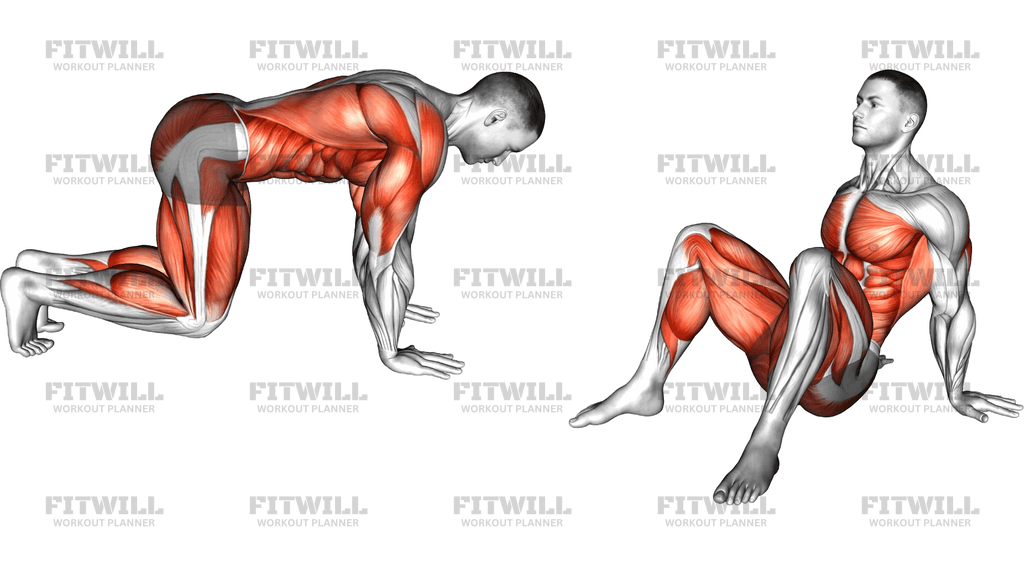
Spider Crawl Push-Up
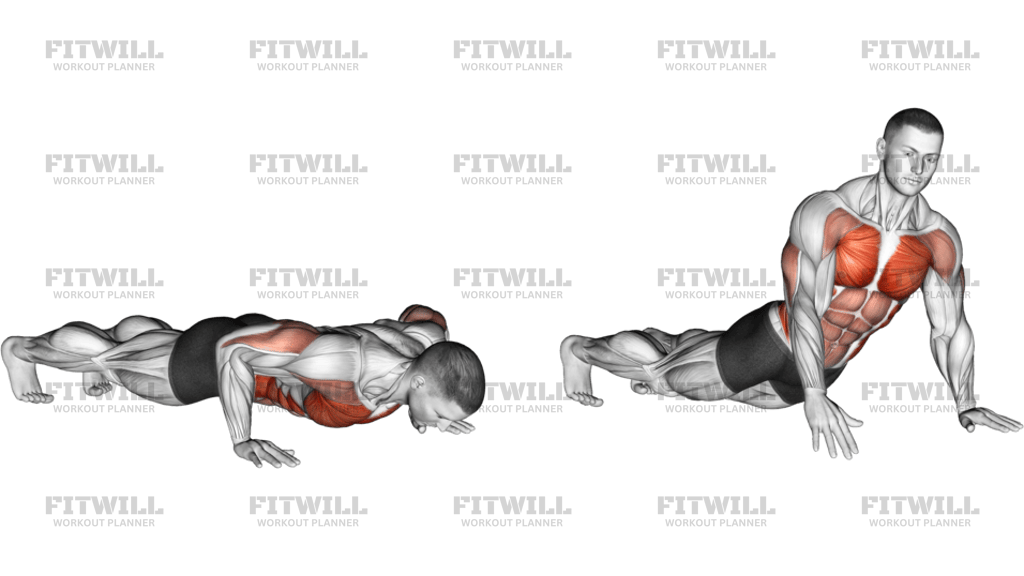
Spider Crawl Push-Up is a bodyweight push-up variation that combines an alternating knee drive with a strict pressing pattern. As one knee travels toward the outside of the same elbow, the torso has to stay braced and the shoulders have to keep working through the press, which makes this a useful drill for chest, triceps, shoulders, core, and hip flexor control.
The setup matters because the crawl changes the balance of the push-up. Start in a high plank with your hands slightly wider than shoulder width, wrists stacked under or just in front of the shoulders, feet set wide enough to keep the hips from rocking, and the neck long. From there, squeeze the glutes, draw the ribs down, and keep the pelvis level before the first rep begins.
Each rep should feel like a controlled push-up with one knee sliding toward the same-side elbow as you lower or shift through the bottom position. Keep the free leg long, the supporting elbow angled back, and the chest moving between the hands rather than dipping forward. Press the floor away to return to plank, then switch sides without letting momentum swing the hips open.
Spider Crawl Push-Up works well as a conditioning drill, a bodyweight strength accessory, or a warm-up for pressing and trunk stability work. It teaches you to keep tension through the midline while the limbs move independently, which is why it can expose weak shoulder control, poor bracing, or limited hip mobility quickly. If the full version is too demanding, raise the hands on a bench or box and shorten the knee drive until the pattern stays clean.
Treat the exercise as a coordination-and-strength test, not a speed drill. The best reps look quiet through the torso, deliberate through the legs, and smooth through the press. Stop the set when the hips start twisting, the lower back sags, or the knee drive turns into a swing.
Fitwill
Log Workouts, Track Progress & Build Strength.
Achieve more with Fitwill: explore over 9600 exercises with images and videos, access built-in and custom workouts, perfect for both gym and home sessions, and see real results.
Start your journey. Download today!




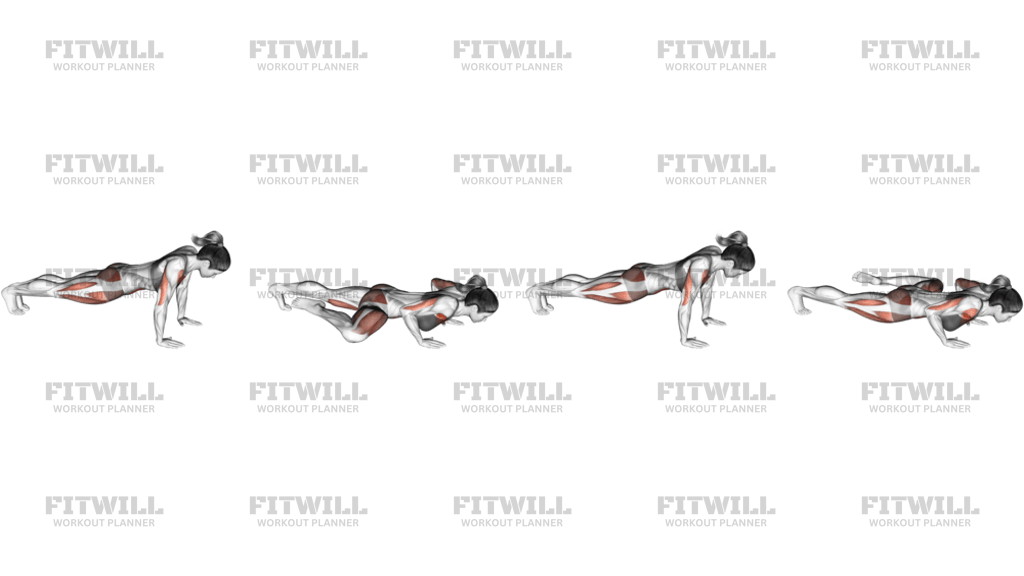
Instructions
- Start in a high plank with your hands slightly wider than shoulder width, wrists under the shoulders, feet set about hip width apart, and toes tucked on the floor.
- Lock in a straight line from head to heels, then squeeze your glutes and draw your ribs down so the lower back stays from sagging.
- Shift a little of your weight into one hand and bring the same-side knee forward toward the outside of that elbow without letting the hips rotate open.
- As the knee travels in, bend the elbows and lower your chest between the hands with the elbows tracking back at about a 45-degree angle.
- Keep the opposite leg long and active so the body stays tense instead of collapsing into the floor.
- Press the floor away to return to a strong plank while extending the knee back behind you.
- Reset the plank position, then repeat on the other side with the same knee-to-elbow path and the same torso control.
- Breathe in as you lower and drive the knee forward, then exhale as you press back to plank.
- Stop the set if the hips start twisting, the shoulders lose their line, or the push-up becomes a fast collapse instead of a controlled rep.
Tips & Tricks
- Keep the feet a little wider if your hips want to wobble when the knee drives forward.
- Think about sliding the knee toward the outside of the elbow, not trying to touch the elbow with a fast swing.
- Let the chest travel between the hands; if the head leads first, the rep usually turns into a shallow neck-driven push-up.
- Do not let the supporting shoulder collapse toward the ear when you shift weight to one side.
- Shorten the range or elevate the hands on a bench if you cannot keep the plank rigid through the crawl.
- Use a smooth tempo so the knee drive and the press feel linked instead of two separate, rushed motions.
- If your wrists feel overloaded, use push-up handles or perform the movement on an incline.
- Keep the glutes tight throughout the rep so the lower back does not take over when one leg leaves the floor.
Frequently Asked Questions
What muscles does Spider Crawl Push-Up train?
It primarily trains the chest, triceps, and shoulders while the core and hip flexors work hard to keep the plank stable during the knee drive.
Is Spider Crawl Push-Up more of a strength drill or a conditioning drill?
It can serve as both. Slower reps make it a strength-and-control drill, while continuous alternating reps create a tougher conditioning effect.
Should the knee actually touch the elbow?
Not necessarily. The goal is to drive the knee toward the outside of the same elbow while keeping the torso square and controlled.
Why do my hips twist during the crawl?
The side-to-side shift is harder than a normal push-up, so the hips often rotate when the feet are too narrow or the core is not braced tightly enough.
How can I make this exercise easier?
Raise your hands on a bench or box, widen your feet, and shorten the knee drive so you can keep the plank and push-up clean.
What is the biggest form mistake to avoid?
Letting the lower back sag or swinging the knee forward so hard that the body loses its straight plank line.
Can I use Spider Crawl Push-Up in a warm-up?
Yes. It works well as a warm-up for pressing sessions because it wakes up the shoulders, core, and hip flexors at the same time.
What should I do if my wrists hurt in the floor position?
Use push-up handles, hold dumbbells as handles, or switch to an incline version so the wrist angle is less aggressive.