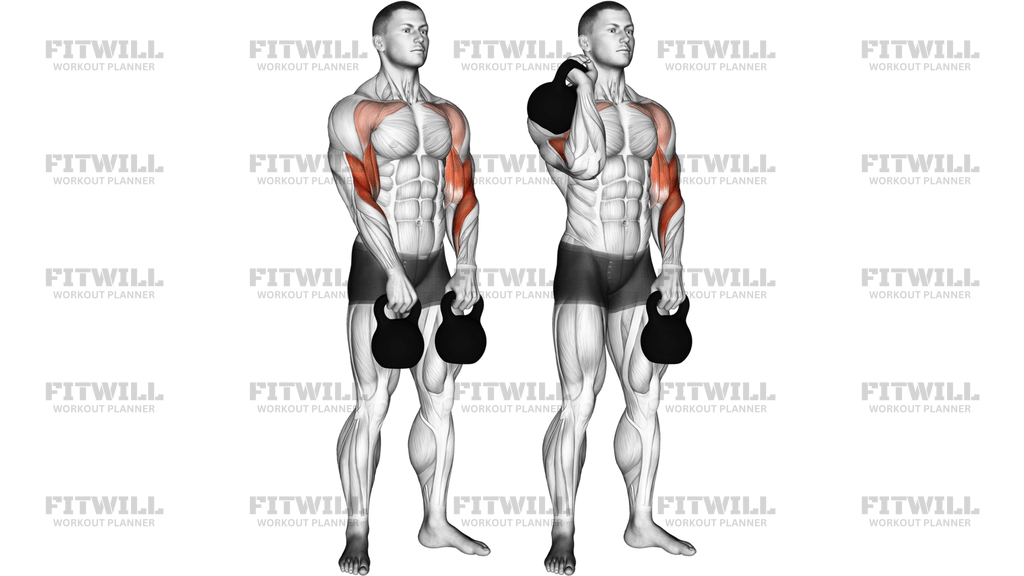
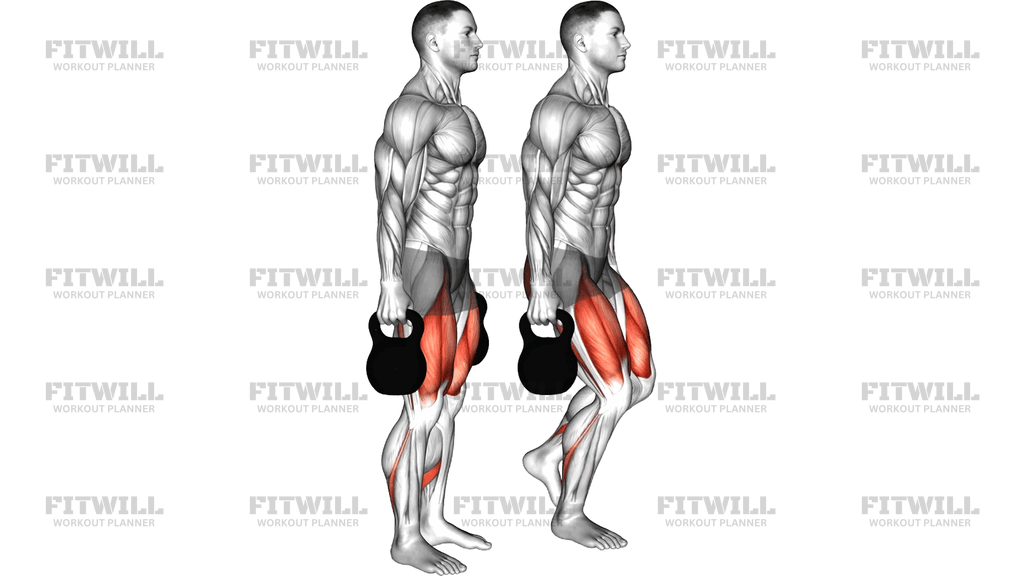
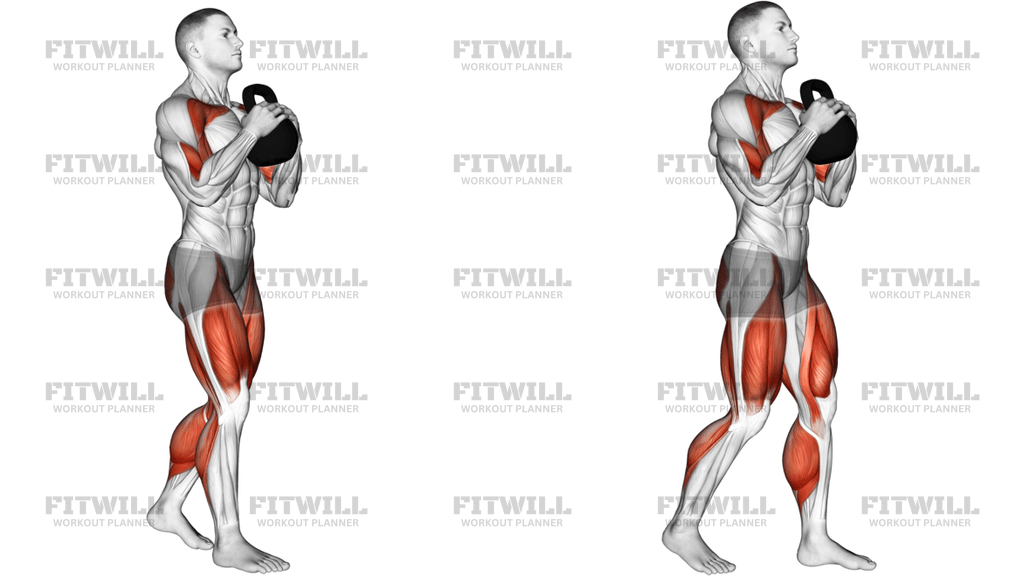
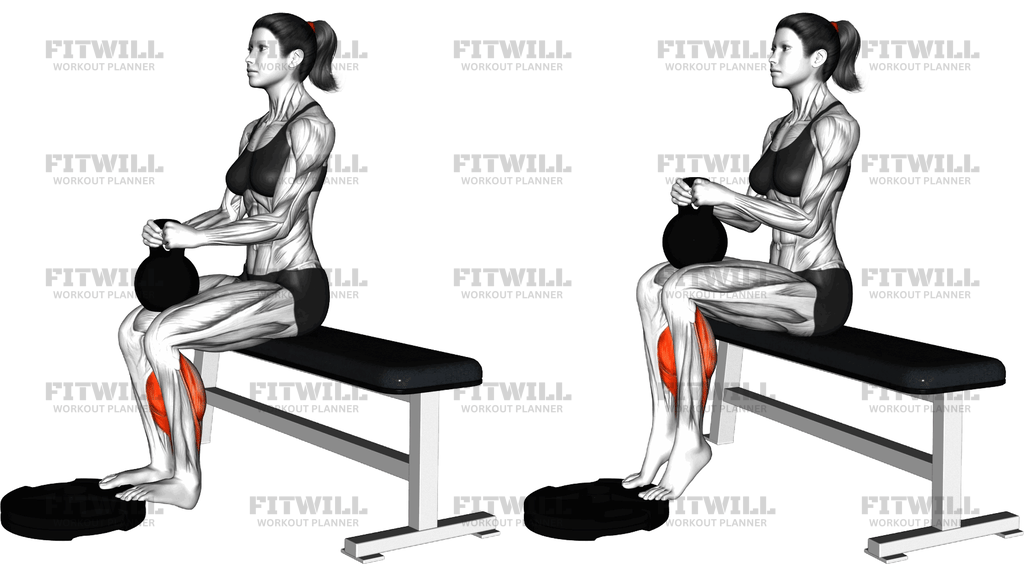
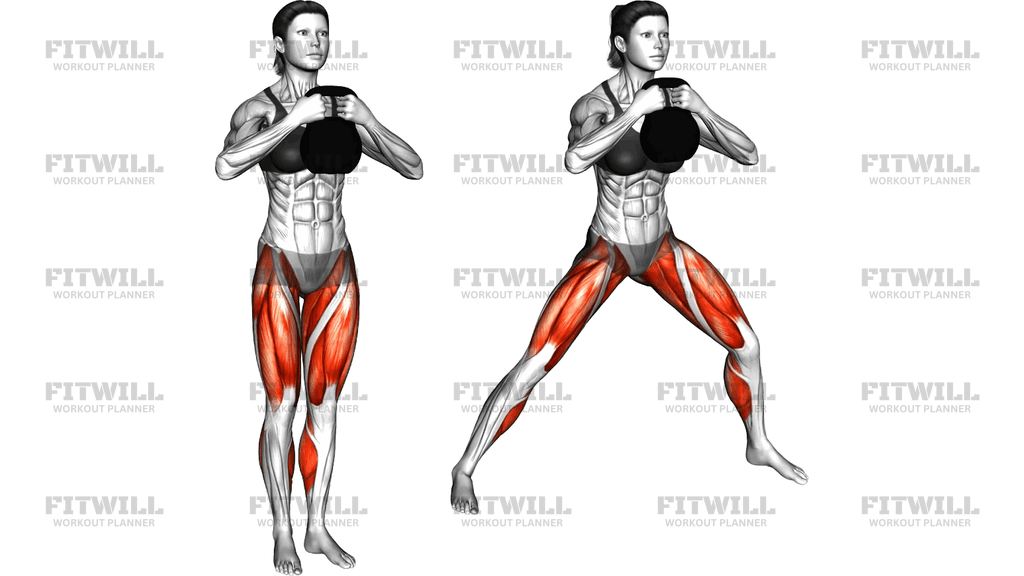
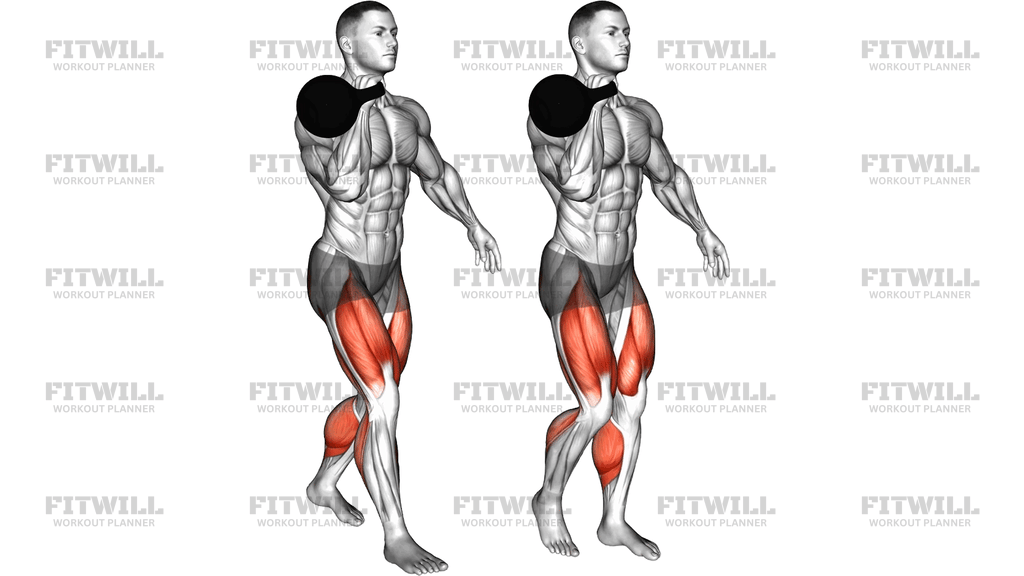
Kettlebell Front Rack Walking Lunge
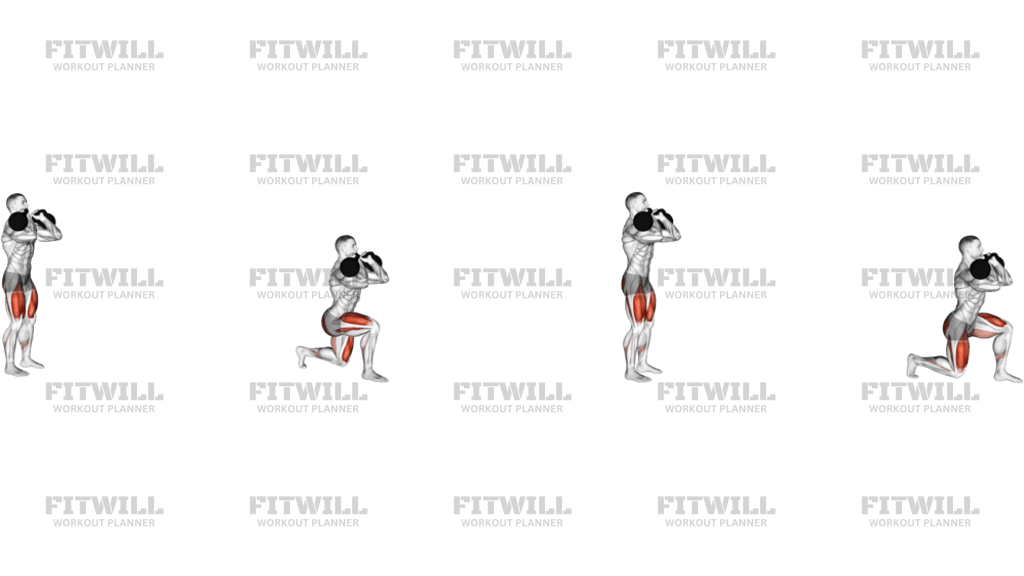
Kettlebell Front Rack Walking Lunge is a loaded lunge pattern that keeps one kettlebell parked high in the front rack while you walk from step to step. The movement asks your legs to create the work while your trunk, shoulders, and upper back keep the bell stacked and your torso upright. It is a strong choice when you want unilateral leg strength, hip control, and a posture challenge in the same drill.
The front rack changes the feel of the lunge immediately. Instead of letting the load hang at your sides, the bell sits close to the shoulder line and asks you to resist rotation, side bend, and forward collapse. That makes the exercise useful for quads, glutes, adductors, calves, and core stability, with extra demand on the upper back and the arm holding the bell. A clean rack position is important because if the bell drifts away from the body, the lunge quickly turns into a balance drill instead of a controlled strength exercise.
Start each rep by standing tall, stacking ribs over pelvis, and taking a step that is long enough to let both knees bend without losing posture. Lower under control until the back knee is close to the floor, then drive through the whole front foot to stand up and continue into the next step. The best reps look smooth and upright, with the front knee tracking over the foot and the pelvis staying level as you move forward.
Because this is a walking variation, rhythm matters as much as depth. You want a steady pace, not a rushed shuffle from one lunge to the next. Keep the kettlebell close, breathe before each descent, and exhale as you stand and step through. If the rack position makes you lean, twist, or shrug, the load is too heavy or the setup is off.
Use this exercise as a strength accessory, conditioning finisher, or movement-quality drill when you want loaded single-leg work with a postural challenge. It works well in home training and gym sessions alike, but the load should stay light enough that every step looks intentional. If the knees cave, the torso pitches forward, or the bell pulls you off center, shorten the set and clean up the setup before adding weight.
Fitwill
Log Workouts, Track Progress & Build Strength.
Achieve more with Fitwill: explore over 9600 exercises with images and videos, access built-in and custom workouts, perfect for both gym and home sessions, and see real results.
Start your journey. Download today!




Instructions
- Stand tall with one kettlebell held in a front rack at shoulder height, feet about hip-width apart, ribs stacked over pelvis, and your elbow tucked under the bell.
- Brace your abdomen, look forward, and keep your free arm relaxed at your side so your torso starts square instead of twisted.
- Step forward with one leg far enough that you can lower without your front heel lifting or your chest collapsing toward the thigh.
- Drop straight down into the lunge until your back knee hovers just above the floor and both knees are bent under control.
- Keep the front knee tracking over the middle toes and the bell close to your shoulder instead of drifting away from your body.
- Drive through the whole front foot to stand up, bringing the rear leg forward as you rise so the movement stays smooth and continuous.
- Take the next forward step and repeat on the other side, keeping your hips level and your stride length consistent from rep to rep.
- Breathe in before you lower, exhale as you stand, and maintain the same rack position until the final rep is complete.
- Lower the kettlebell only after the set is finished, then reset before starting another round.
Tips & Tricks
- Keep the kettlebell pinned close to the shoulder so the rack feels stacked instead of floating in front of you.
- If the bell makes you lean or twist, reduce the load before trying to force more reps.
- Take a long enough step that the back knee can drop under your hips without the front shin shooting vertical or the heel lifting.
- Let the front foot stay heavy through the heel, big toe, and little toe so the knee tracks cleanly instead of caving inward.
- Move at a steady walking rhythm; if the next step gets sloppy, pause at the top and reset your balance.
- Keep your chest tall and your ribs down rather than arching your lower back to protect the rack position.
- Use a lighter kettlebell than you would for a static lunge because the walking version demands more balance and control.
- Exhale smoothly through the standing phase so the brace does not turn into a breath hold for the whole set.
Frequently Asked Questions
What muscles do Kettlebell Front Rack Walking Lunges work?
They mainly train the quads and glutes, with the hamstrings, adductors, calves, core, and upper back helping you stay upright and balanced.
How is the front rack version different from a regular walking lunge?
Holding the kettlebell at shoulder height makes your torso work harder to stay tall and resist twisting, so balance and trunk control matter more than in a bodyweight lunge.
Where should the kettlebell sit in the front rack?
It should stay close to the shoulder line with the elbow under the bell and the wrist neutral, not drifting forward away from your torso.
How long should my step be?
Long enough that your back knee can approach the floor without your front heel lifting or your chest tipping forward to reach depth.
Can beginners do this exercise?
Yes, but they should start light and keep the steps slow. If the rack position or balance feels unstable, use a bodyweight walking lunge first.
What is the most common form mistake?
Most people let the bell pull them forward, rush the step-through, or let the front knee cave inward as they stand up.
What if the front rack bothers my wrist or shoulder?
Use a lighter bell, adjust the elbow position, or switch to a goblet walking lunge if the rack still feels awkward or painful.
How can I make the exercise harder?
Increase the kettlebell load only after you can walk with level hips, clean knee tracking, and a steady rack for every step.