Dumbbell V-Up
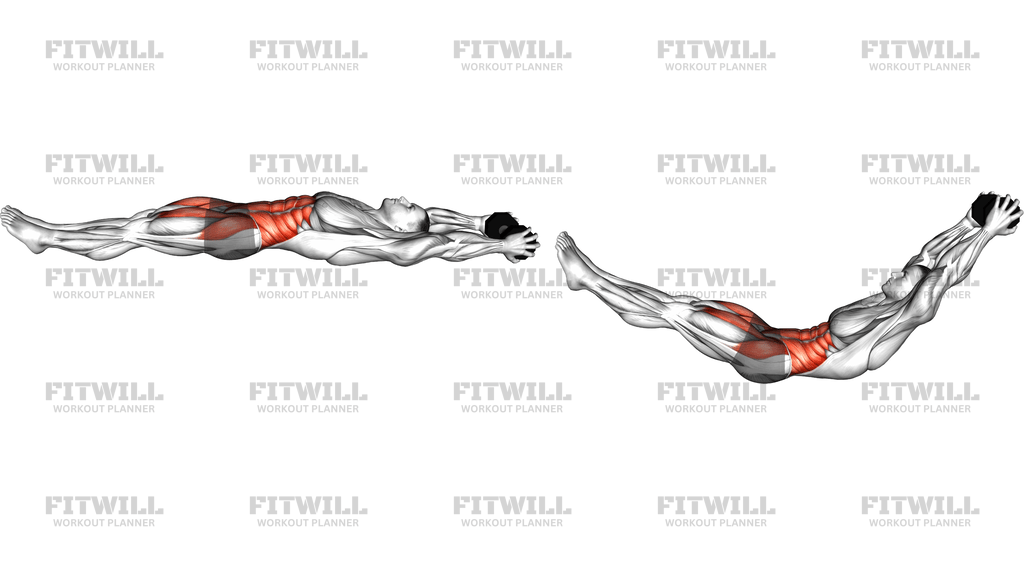
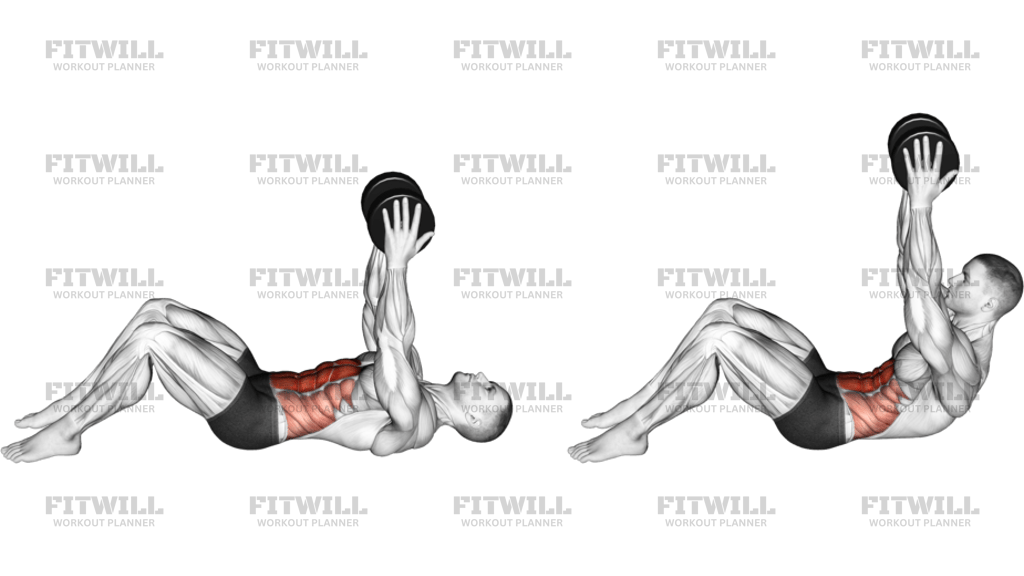
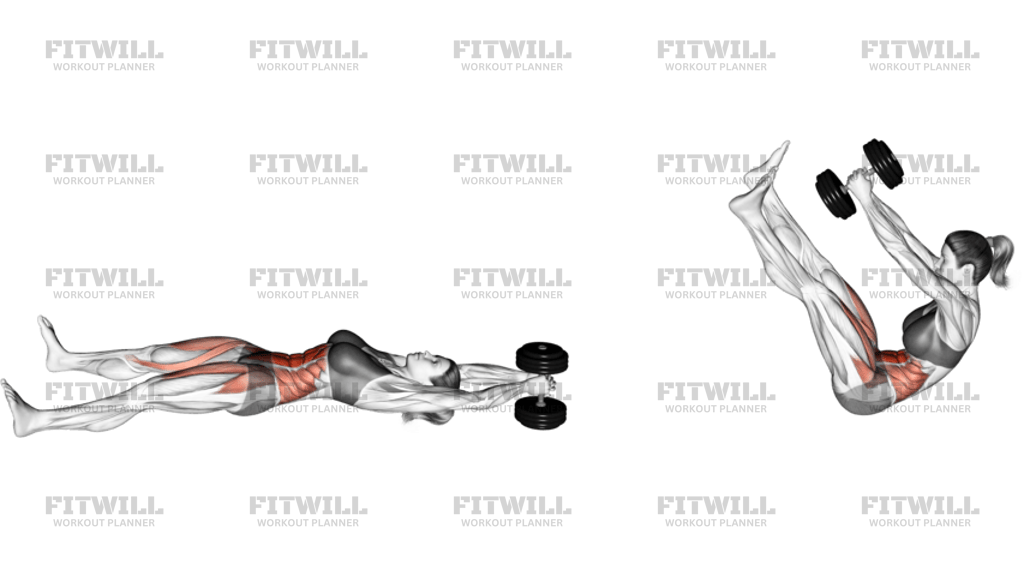
Dumbbell V-Up is a floor core exercise built around a simultaneous trunk fold and leg lift while holding one dumbbell overhead with both hands. The setup matters because the dumbbell acts as a clear reach target and lightly challenges shoulder stability, but the real job of the movement is still to create a strong, controlled V shape through the midsection.
The main training effect lands on the rectus abdominis, with the hip flexors and obliques helping to lift and stabilize the legs and torso. In practice, this is a useful drill when you want a crisp ab-focused rep that teaches the trunk to shorten under control rather than relying on momentum. A light load is usually enough; the quality of the fold matters more than how much weight you hold.
Start from a long, extended position on your back with the legs straight, feet together, and arms reaching overhead. Before each rep, keep the ribs down, brace the abdomen, and press the lower back toward the floor so the first inch of the movement is controlled instead of jerky. That initial tension is what keeps the rep honest and prevents the body from turning it into a swing.
As you lift, bring the chest and straight legs toward each other at the same time, reaching the dumbbell toward the shins or feet. The best reps look compact and balanced, with no wild leg kick, no neck strain, and no collapsing through the low back. Lower under control, reset the tension on the floor, and repeat only as long as you can keep the same clean path from first rep to last.
Dumbbell V-Up fits well in core blocks, accessory work, or conditioning circuits where you want abdominal flexion with a simple piece of equipment. It is approachable for beginners if the range is shortened or the knees are slightly bent, but it becomes much more demanding when the legs stay straight and the lowering phase is slow. If the dumbbell starts to pull the shoulders out of position or the lower back begins to arch, the load is too heavy or the range is too aggressive.
[ Workout Log & Planner ]
Put your next workout in Fitwill
Keep your plan and training log ready when you are.


Instructions
- Lie on your back on a mat and hold one dumbbell with both hands, arms extended overhead behind you.
- Keep your legs straight and together, with the feet hovering just off the floor or resting lightly between reps.
- Set the shoulders down, tuck the chin slightly, and flatten the ribs so the lower back stays controlled against the floor.
- Inhale to prepare, then brace the abs before starting the lift.
- Lift the chest and straight legs at the same time, bringing the body into a V shape.
- Reach the dumbbell toward your shins or feet as the torso comes up, keeping the arms long and steady.
- Pause briefly at the top when the torso and legs meet under control.
- Lower the torso and legs together in a smooth, controlled return until you are fully extended again.
- Reset your brace on the floor before the next repetition.
Tips & Tricks
- Use a light dumbbell; this is usually a control exercise, not a heavy loading exercise.
- Keep the movement symmetrical so both legs rise together instead of one side leading.
- If your hamstrings are tight, bend the knees slightly before you start compensating with momentum.
- Do not throw the dumbbell forward; the reach should stay smooth and connected to the trunk fold.
- Exhale as you come up into the V position so the ribcage can close down.
- Keep the neck relaxed and let the chest lift from the abs, not from craning the head.
- Lower slowly enough that the last third of the descent still looks controlled.
- Stop the set when the lower back starts to arch or the legs begin to swing.
- A small pause at the top makes the rep stricter and reduces bouncing through the midsection.
Frequently Asked Questions
What muscles does Dumbbell V-Up train?
It primarily trains the rectus abdominis, with the obliques and hip flexors helping to lift and stabilize the body.
What is the dumbbell doing in this exercise?
The dumbbell gives you a clear overhead reach target and adds a small stability demand, but the movement is still driven by the abs and hip flexors.
Should I keep my legs straight the whole time?
Yes if you can control it. If the hamstrings or hip flexors take over, a slight knee bend is better than forcing straight legs with momentum.
How high should I lift on each rep?
Lift only as high as you can while keeping the torso and legs moving together and the lower back under control.
What is the most common mistake with the dumbbell?
Most people swing the weight or let the shoulders take over. The dumbbell should stay steady while the trunk folds.
Is this exercise suitable for beginners?
Yes, but beginners should start with no weight or a very light dumbbell and may need to bend the knees slightly.
Should my lower back stay on the floor?
Keep it controlled and avoid letting it arch off the floor during the lowering phase; that is the main place where form usually breaks down.
How can I make Dumbbell V-Up harder?
Use a slower lowering phase, keep the legs straighter, and hold the top position for a brief pause before descending.