Dumbbell Reverse Bench Press
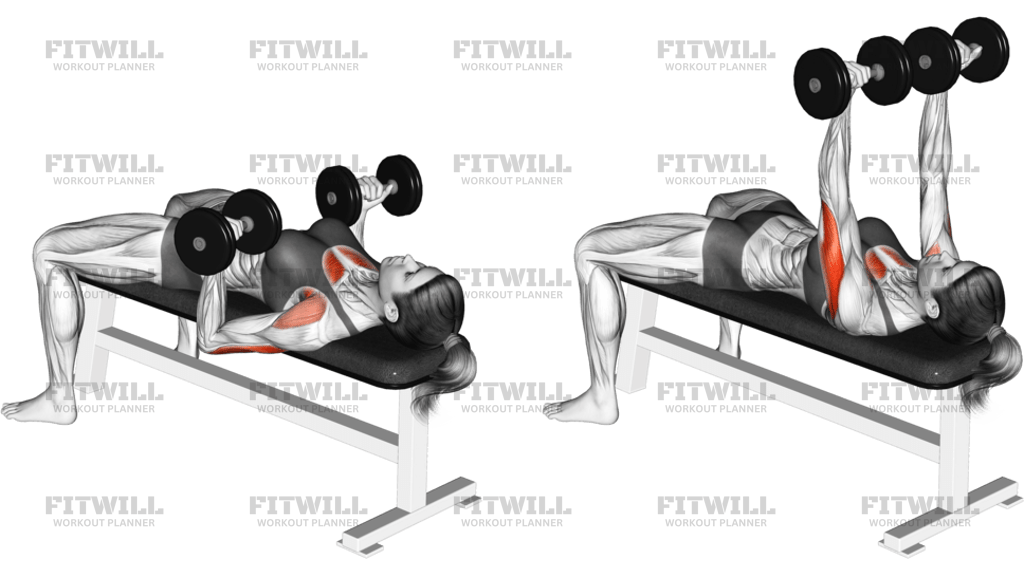
Dumbbell Reverse Bench Press is a flat-bench pressing variation performed on your back with the dumbbells travelling from the lower-chest line to stacked arms over the shoulders. The reverse or underhand grip changes the feel of the press and usually shifts more work toward the triceps and the upper portion of the chest while still demanding stable shoulders, wrists, and a tight torso. It is a useful choice when you want a pressing movement that feels different from a standard dumbbell bench press but still builds strength through a straightforward horizontal press pattern.
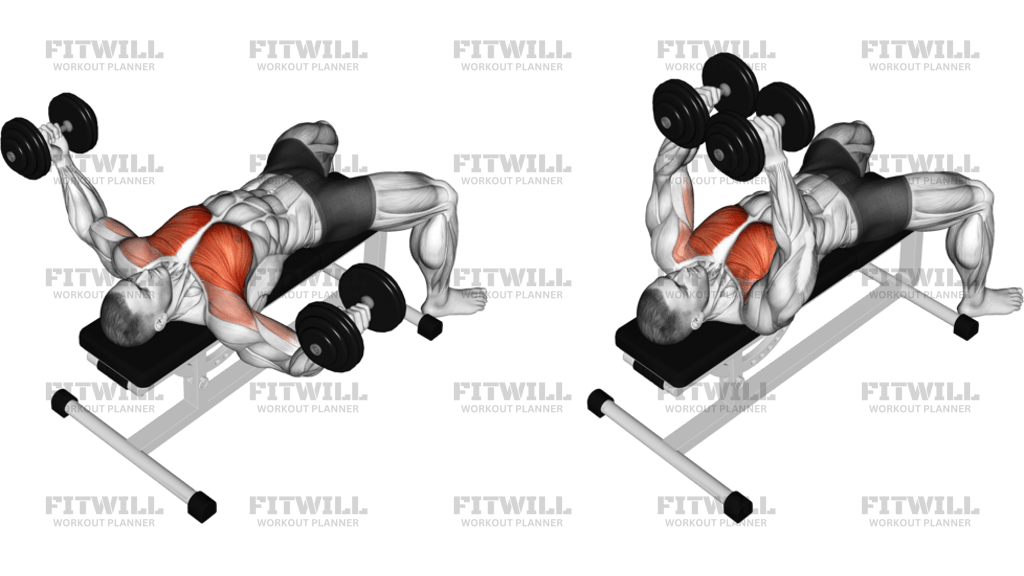
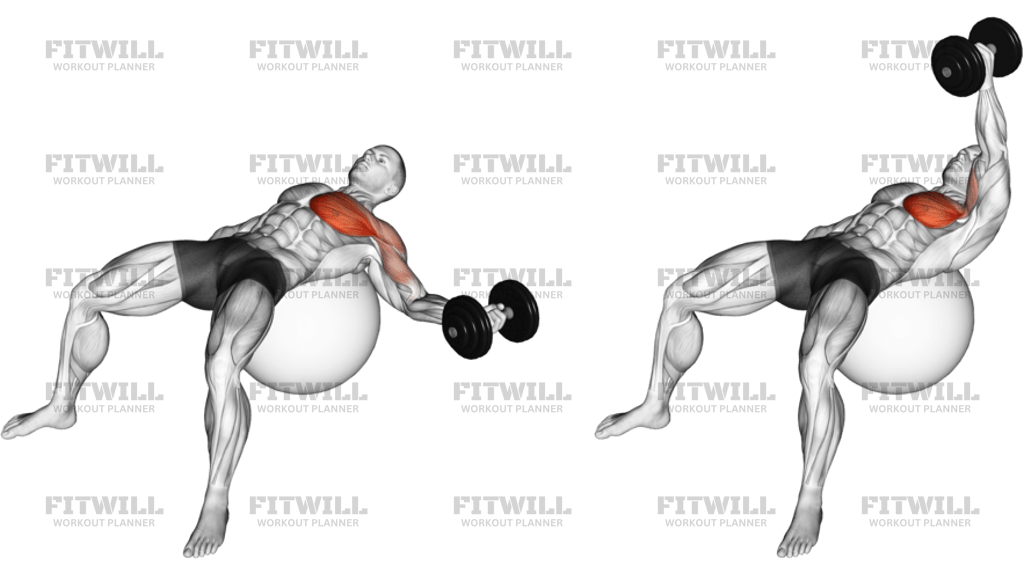
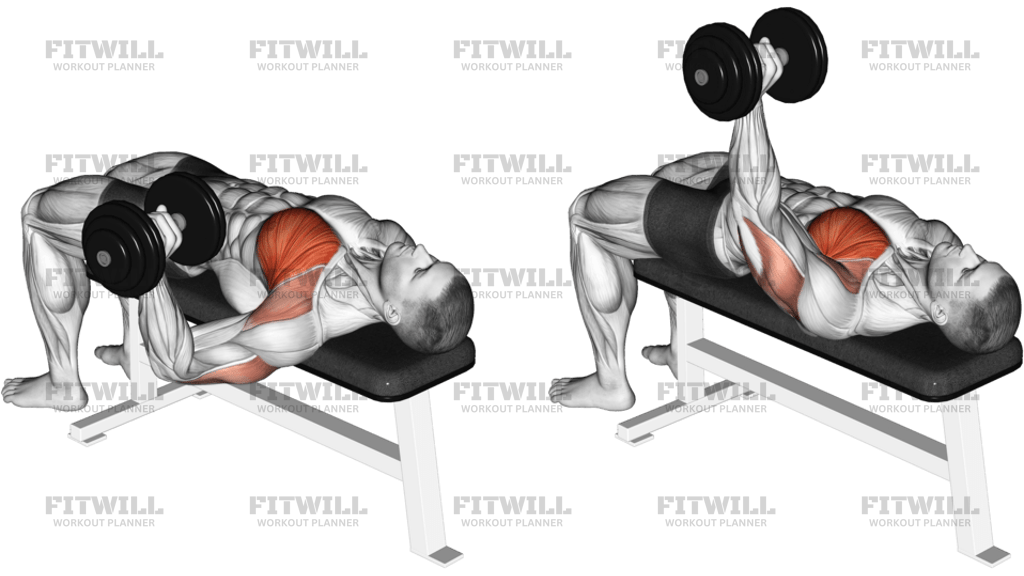
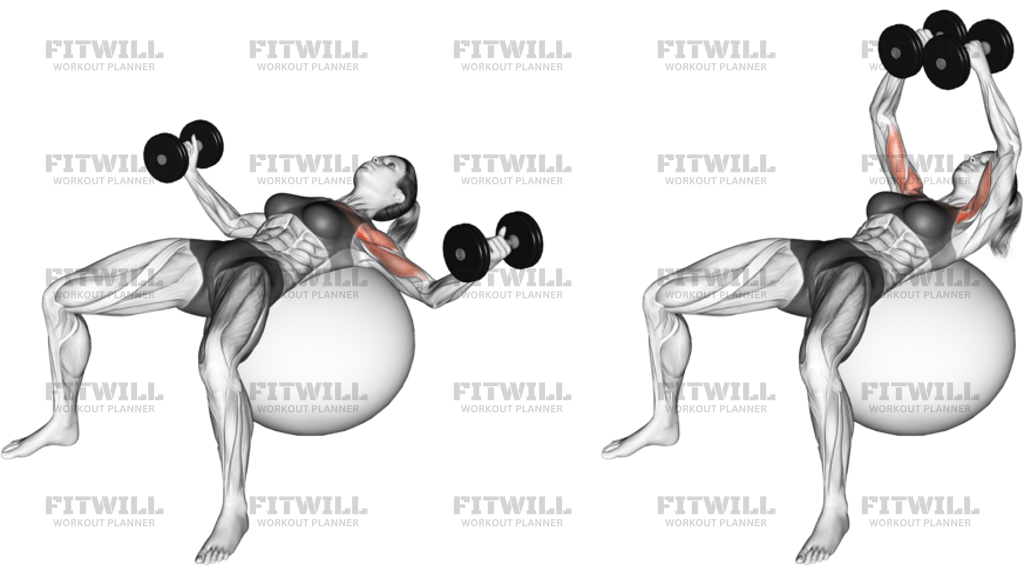
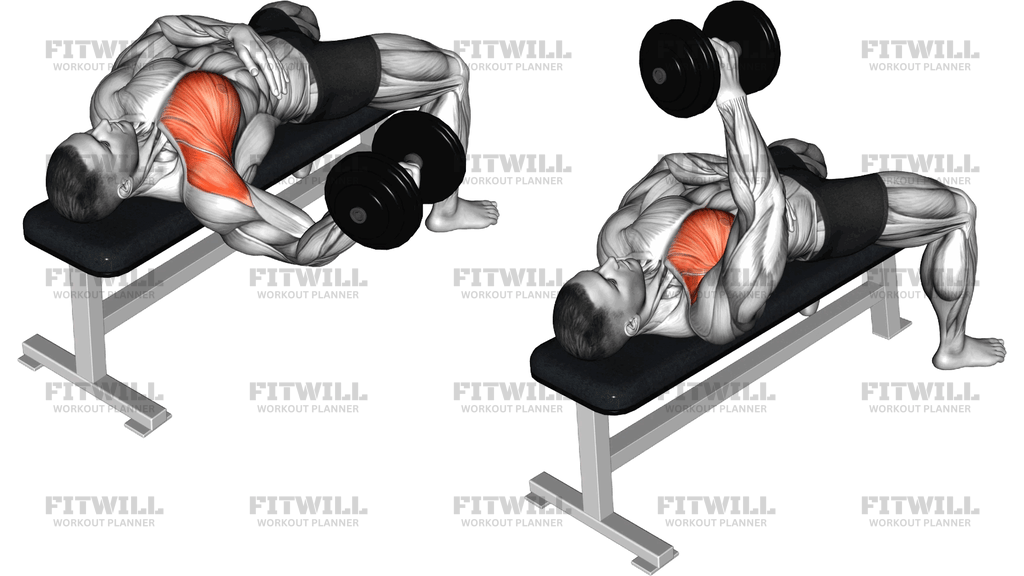
The setup matters because the reverse grip can feel unstable if the wrists are bent back or the elbows flare early. Lie flat on the bench with your feet planted, shoulder blades set, and the dumbbells positioned above the lower chest before each rep begins. The image shows a controlled press from a bent-elbow bottom position to full arm extension, so the exercise should stay crisp and deliberate rather than bouncy. A smooth path and a steady bench position keep the shoulders organized and let the pressing muscles do the work.
Most of the load lands on the pecs and triceps, with the front deltoids helping at the top and the core keeping the rib cage from flaring. In anatomy terms, the main work centers on the Pectoralis major, with help from the Anterior deltoid, Triceps brachii, and Rectus abdominis. Because the grip is less common than a standard press, choose a load that you can control all the way down and back up without wrist collapse or shoulder shrugging.
This exercise fits well in a chest or upper-body session when you want a controlled pressing accessory, or when a lifter needs a triceps-biased press that is still friendly on the bench setup. It can also work as a lighter strength-builder for beginners who are comfortable lying stable on a bench and can keep the dumbbells balanced. If the reverse grip bothers your wrists, shoulders, or elbow position, reduce the load or switch to a more conventional dumbbell press until the mechanics feel solid.
Treat each repetition like a clean press, not a heave. Lower the dumbbells with control, keep the elbows under the hands, and finish with the weights stacked directly over the shoulder line. The best results come from repeatable reps, a tight upper back, and consistent breathing rather than trying to force a bigger load than the reverse grip can support.
Fitwill
Log Workouts, Track Progress & Build Strength.
Achieve more with Fitwill: explore over 9600 exercises with images and videos, access built-in and custom workouts, perfect for both gym and home sessions, and see real results.
Start your journey. Download today!




Instructions
- Lie on a flat bench with your feet planted, shoulder blades gently retracted, and a dumbbell in each hand at chest level.
- Use the reverse or underhand grip shown in the image, keeping your wrists stacked and the handles centered over your palms.
- Start with the dumbbells just above the lower-chest line, elbows bent and tucked slightly below shoulder height.
- Brace your midsection and press the weights straight up in a smooth arc until your arms are fully extended over the shoulders.
- Keep the dumbbells level with each other as they rise, and avoid letting one hand drift behind the other.
- At the top, pause briefly with the elbows straight and the chest still lifted on the bench.
- Lower the dumbbells slowly back toward the lower chest, letting the elbows bend under control without bouncing off the bottom.
- Inhale as the dumbbells descend and exhale as you drive them back to the top.
- Reset the shoulder blades and wrist position before each rep if the grip starts to slip or the elbows flare.
Tips & Tricks
- Keep the wrists straight under the dumbbells; bent wrists make the reverse grip feel much harder to control.
- Let the elbows travel slightly tucked instead of flaring wide, which helps the press stay triceps-focused and shoulder-friendly.
- Stop the descent when the dumbbells reach the lower-chest line; going deeper than you can own usually turns the bottom into a shoulder dump.
- Press both dumbbells together at the same speed so one arm does not dominate the set.
- Keep your rib cage down on the bench instead of arching hard to shorten the range.
- Choose a lighter load than you would use for a standard dumbbell bench press because the underhand position is less stable.
- If the handles roll in your hands, shorten the set and reset the grip rather than forcing more reps.
- A brief pause near the bottom can make the movement more honest and reduce bouncing off the chest line.
Frequently Asked Questions
What muscles does Dumbbell Reverse Bench Press target most?
It mainly trains the chest and triceps, with the front delts helping most near the top of the press.
How is the reverse grip supposed to feel on the bench?
The dumbbells should feel stacked over the palms with straight wrists, not rolled back into the fingers.
Where should the dumbbells touch or lower to?
Lower them toward the lower-chest line, then press back up without bouncing or dropping the elbows too deep.
Is this the same as a standard dumbbell bench press?
No. The reverse grip changes the mechanics and usually makes the press feel more triceps-biased and less stable.
Can beginners use Dumbbell Reverse Bench Press?
Yes, if they start light and can keep the wrists, elbows, and shoulders organized through the full range.
What is the most common form mistake?
Letting the wrists bend back or flaring the elbows so wide that the shoulders take over the press.
Does this exercise need a heavy load to be effective?
No. The reverse grip is usually best with moderate or light loads that stay smooth and controlled.
Where does this fit in a workout?
It works well as a chest or triceps accessory after your main press or as a lighter pressing variation in an upper-body session.