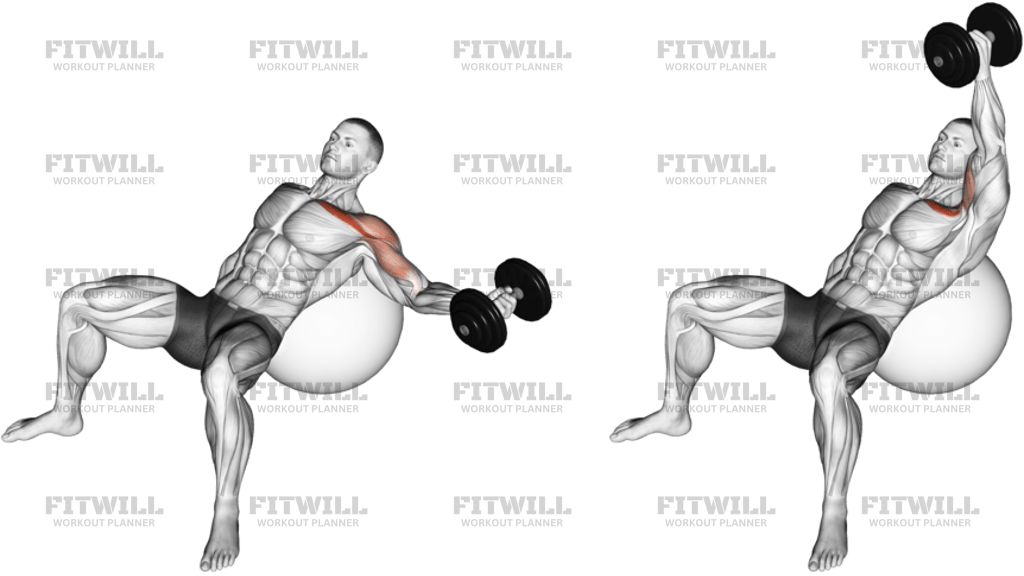
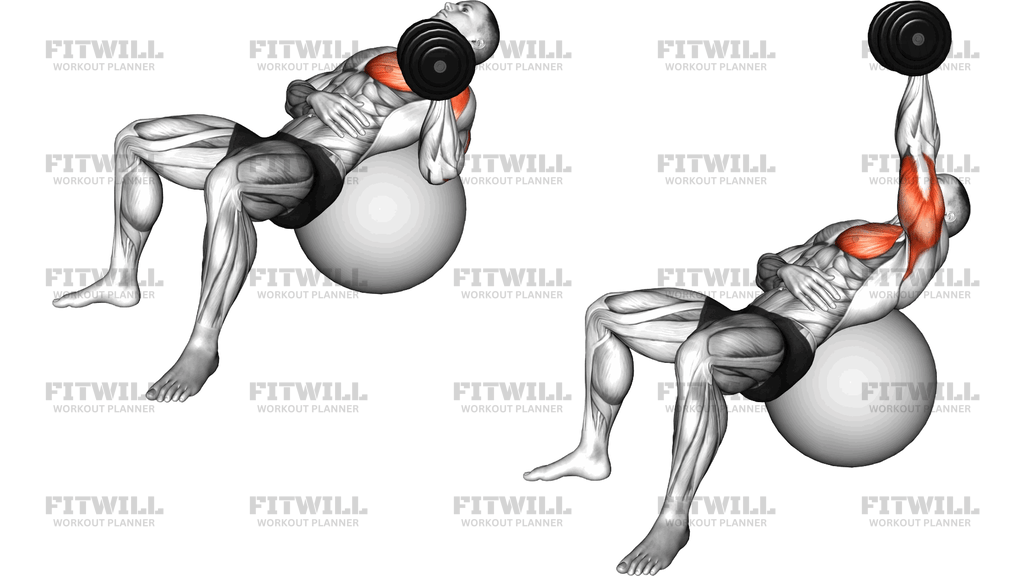
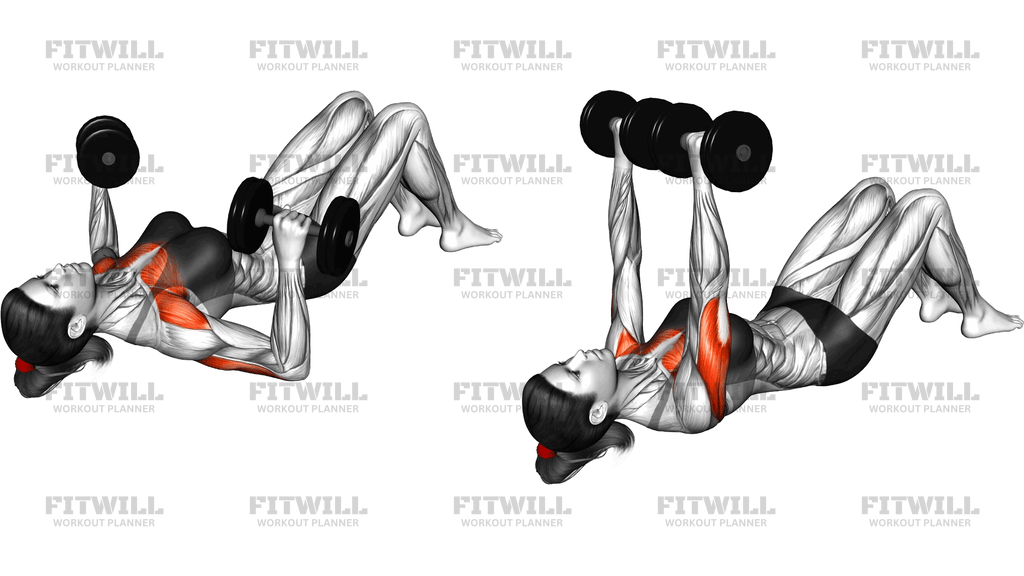
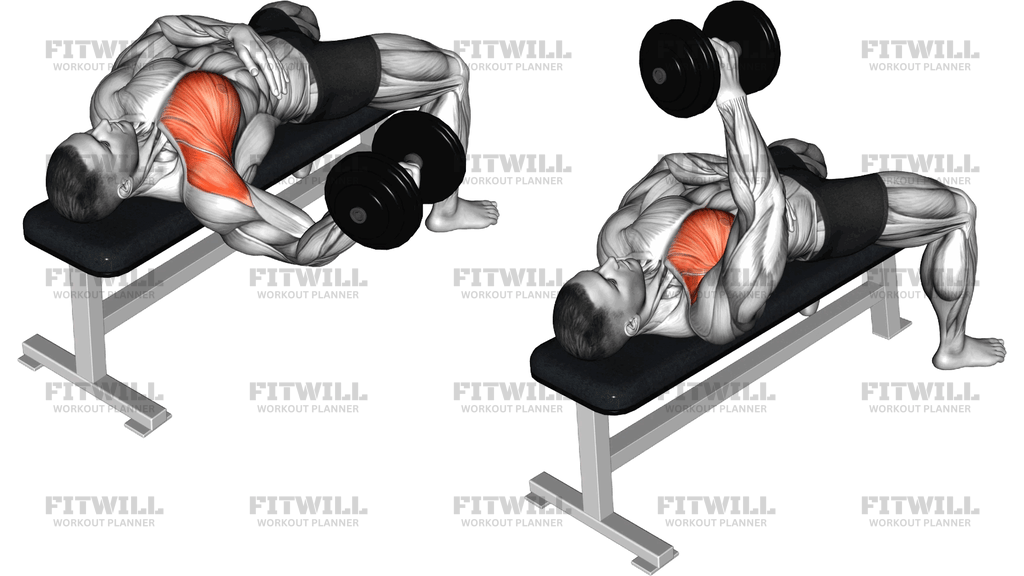
Dumbbell Svend Press
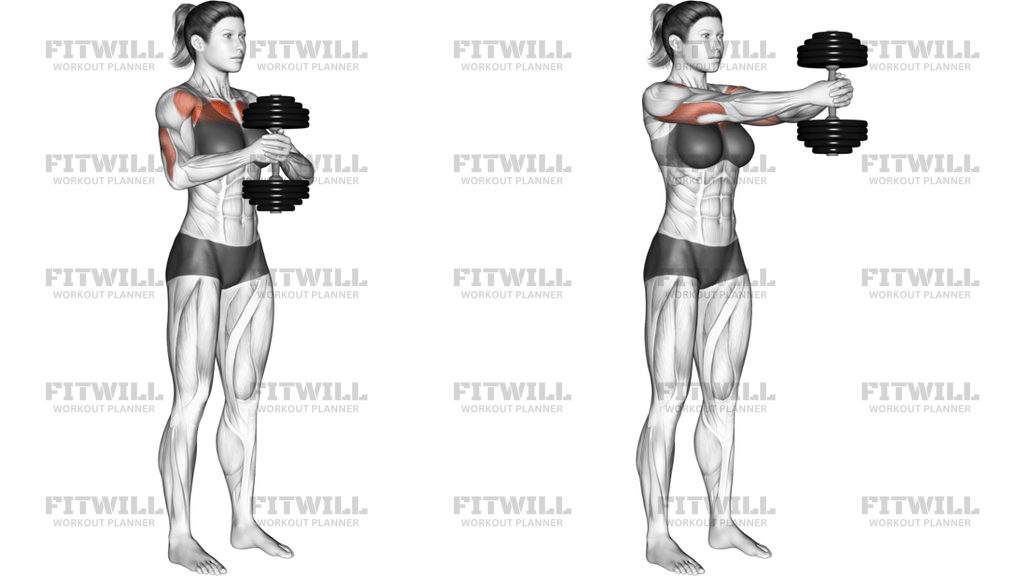
Dumbbell Svend Press is a standing chest-focused press where you squeeze a dumbbell hard between your palms and drive it straight out from the center of your chest. The squeeze is the point of the exercise: it keeps constant tension on the pecs while the arms press forward and the shoulders stay organized. Because the load is held in front of the torso, the movement also asks the core to resist leaning, rib flare, and unwanted sway.
This exercise is most useful when you want chest work that feels different from a standard press. The pectoralis major does the main work, with the anterior deltoids and triceps helping the press and the rectus abdominis bracing to keep the torso tall. In the image, the dumbbell starts close to the sternum and finishes at arm’s length with the weight still pinched tightly between the hands. That forward path matters more than load, because the exercise is about sustained adduction and forward pressing control rather than maximal weight.
The setup should make the squeeze easy to maintain before the first rep. Stand with your feet about hip width apart, grip the dumbbell between both palms, and hold it at chest height with the elbows slightly bent. Keep your shoulders down and back enough to stay open, but not so pinned that you lose the chest squeeze. From there, press the dumbbell forward in a straight line while keeping the palms actively compressing the ends of the weight.
At the finish, the arms should be nearly straight without locking hard, and the shoulders should not roll forward aggressively. Lower the dumbbell back to the chest under control and keep the hands pressing into the weight the whole time. If the torso leans back or the shoulders shrug up, the chest tension drops and the movement turns into a sloppy front raise. A cleaner repetition usually comes from a lighter dumbbell and a slower tempo.
Use Dumbbell Svend Press as accessory chest work, as a warm-up to wake up the pecs before heavier pressing, or as a finisher when you want high-tension reps without a lot of joint stress. It can be a good option for beginners because the path is simple, but it still rewards precise posture, steady breathing, and a deliberate squeeze. If the dumbbell feels awkward or you cannot keep pressure between the palms, reduce the load and shorten the range until the press stays smooth and controlled.
[ Workout Log & Planner ]
Put your next workout in Fitwill
Keep your plan and training log ready when you are.


Instructions
- Stand tall with your feet about hip width apart and hold one dumbbell between both palms at the center of your chest.
- Press the palms firmly into the dumbbell so the weight stays pinched and stable before you start the press.
- Set your shoulders down, keep your ribs stacked over your pelvis, and soften the elbows slightly.
- Brace your midsection and keep your neck long so the torso does not lean backward as you press.
- Drive the dumbbell straight forward from the sternum to shoulder height while maintaining the squeeze between the hands.
- Finish with the arms nearly straight and the chest still active, without locking the elbows hard or shrugging the shoulders.
- Pause briefly at the end range if you can keep tension on the dumbbell and stay balanced.
- Lower the dumbbell back to chest height under control, still pressing the palms together the whole time.
- Reset your breath at the chest and repeat for the planned number of repetitions.
Tips & Tricks
- Choose a dumbbell you can keep pinched firmly with both hands; if the grip slips, the chest work drops off fast.
- Think of squeezing the dumbbell inward and forward at the same time so the pecs stay active through the whole rep.
- Keep the elbows soft, not flared wide, so the press stays centered instead of turning into a shoulder-dominant push.
- Do not lean back to create momentum; the load should move because the arms press, not because the torso throws it forward.
- Exhale as the dumbbell travels away from the chest and inhale as you guide it back in.
- Stop the set if your shoulders start creeping toward your ears or the dumbbell drifts off the midline.
- A slower lowering phase usually improves the chest squeeze and makes the exercise more effective than adding weight.
- If the wrists feel strained, shift the hand pressure so the dumbbell sits evenly between both palms.
- Keep the movement in the front of the body; turning it into a wide arc reduces the specific chest tension this drill is meant to build.
Frequently Asked Questions
What muscle does Dumbbell Svend Press target most?
The pecs are the main target, especially because the palms keep squeezing the dumbbell inward during the press.
Can beginners perform this exercise?
Yes. Beginners usually do best with a light dumbbell and a short, controlled press so they can keep the squeeze and posture clean.
Where should the dumbbell start on each rep?
Start with the dumbbell held against the center of the chest, elbows slightly bent, and both palms actively pressing into the weight.
Should I lock my elbows at the top?
No. Finish with the arms nearly straight, but keep a soft bend so the shoulders and chest stay in control.
Why do my shoulders take over on this movement?
Usually the dumbbell is too heavy or the torso is leaning back. Keep the ribcage stacked and the press straight ahead to keep the chest involved.
What range of motion should I use?
Press until your arms are nearly straight and the dumbbell stays under control, then return to chest height without losing the squeeze.
Is this the same as a regular dumbbell press?
No. A regular press focuses on moving the load, while the Svend press emphasizes the inward squeeze between the palms and the chest contraction.
What is the most common mistake here?
Letting the dumbbell drift forward with momentum or arching the lower back to fake a stronger press.
Can I use this as a finisher?
Yes. It works well as higher-rep chest accessory work when you want constant tension without heavy loading.