Self-Assisted Inverse Leg Curl
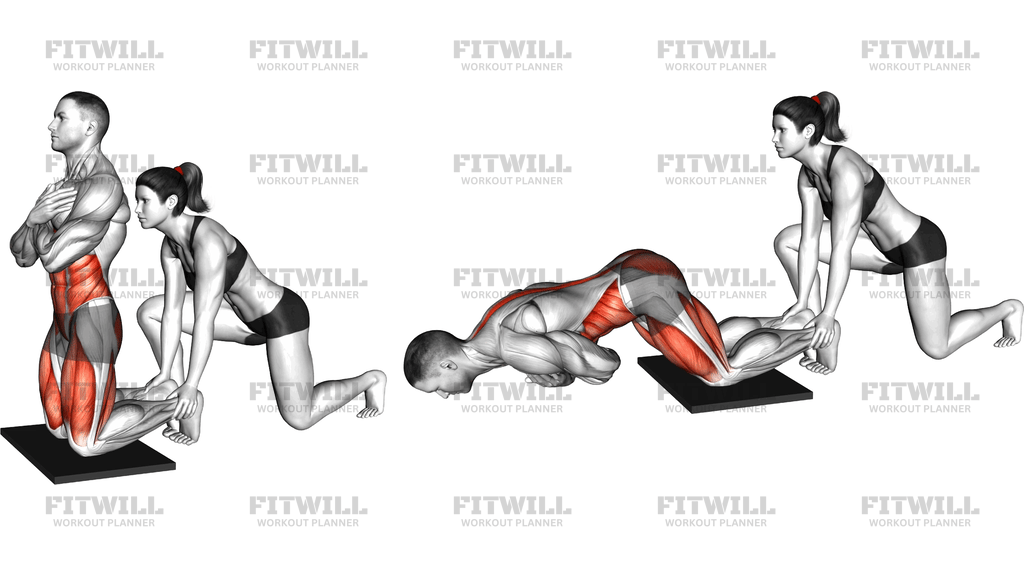
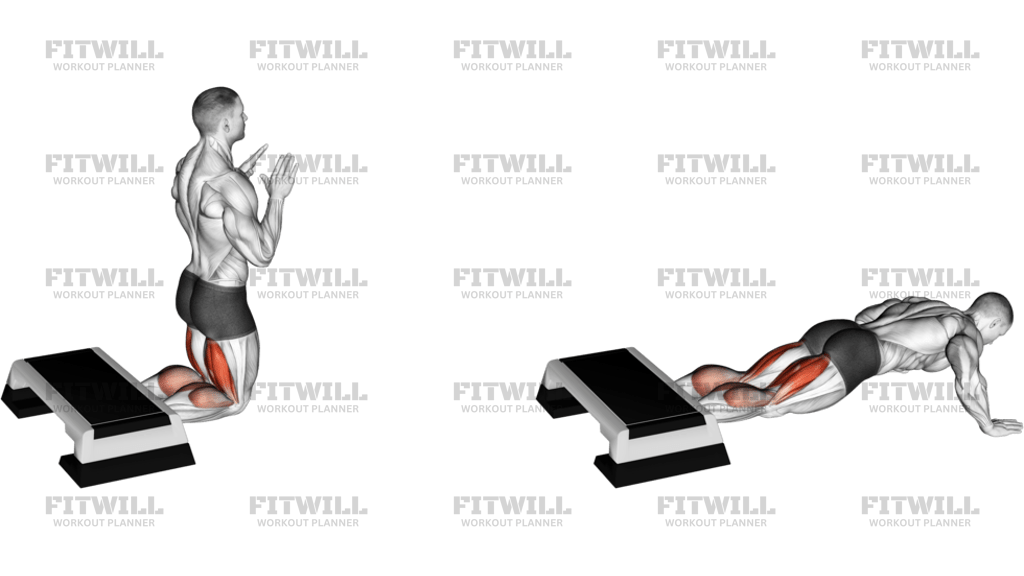
Self-Assisted Inverse Leg Curl is a bodyweight hamstring exercise performed with the ankles anchored under a bench and the knees on the floor. From a tall kneeling position, you lower your torso forward under control and use your hands on the floor to help manage the descent and the return, which makes the movement more approachable than a strict inverse curl.
The main target is the hamstrings, especially the muscles that flex the knee and help control the lower leg while the hips stay extended. Because the feet are fixed under the bench, the exercise also asks the glutes, core, and upper body to coordinate so the trunk stays long instead of collapsing at the hips or arching through the lower back.
The setup matters more here than in many bodyweight drills. If the knees are not padded, the ankles are not firmly tucked under the bench, or the hands are placed too far ahead, the movement turns into a slide or a back-dominant hip hinge. A good setup lets the hamstrings do the work while the hands provide just enough help to keep the rep smooth and controlled.
During each rep, think of lowering the body as a single line from the knees through the shoulders, then pulling yourself back to tall kneeling by curling the hamstrings and lightly pressing into the floor with the hands. The motion should feel deliberate rather than explosive. Keep the neck neutral, the ribs down, and the hips extended so the curl stays honest.
This exercise is useful as a hamstring accessory, a technique drill for posterior-chain strength, or a lower-body finisher when you want knee-flexion work without loading a machine. It is also a practical option for beginners or for lifters who need a self-assisted variation before attempting a stricter inverse leg curl. Stop the set if the ankles start slipping, the hips sag, or you can no longer control the return.
[ Workout Log & Planner ]
Put your next workout in Fitwill
Keep your plan and training log ready when you are.


Instructions
- Place a folded pad or mat on the floor and kneel in front of a flat bench with your ankles tucked securely under the bench edge.
- Set your knees hip-width apart, point your toes back under the bench, and keep your shins and hips lined up so you can hinge as one piece.
- Brace your core, keep your ribs down, and start with your torso tall over your knees before you begin the descent.
- Lean your body forward from the knees, lowering your torso toward the floor while keeping your hips extended and your body long.
- Reach your hands to the floor and use them only as much as needed to control the drop and keep the bench from pulling your legs out of position.
- Lower until your chest and shoulders are close to the floor or until your control starts to fade, whichever comes first.
- Drive your heels back into the bench and pull yourself back up by curling the hamstrings while lightly assisting with your hands.
- Finish in a tall kneeling position with the hips open, glutes tight, and torso stacked over the knees.
- Reset the knees and ankles before the next rep, then repeat for the planned number of repetitions with steady breathing.
Tips & Tricks
- Keep the bench contact at the ankles, not the midfoot, so the feet stay anchored instead of sliding forward.
- Use your hands as assistance, not a push-off; if the arms are doing most of the work, the hamstrings are no longer the limiter.
- Lower under control for 2-4 seconds so the hamstrings stay loaded through the full descent.
- Keep the hips extended as you move; bending at the waist turns the drill into more of a back exercise.
- Place a thick pad under the knees if the floor pressure makes you shift or lose position.
- If your lower back arches, shorten the range and keep the ribs pulled down before trying to go deeper.
- Think about pulling the heels toward your glutes on the way up, even though the feet stay fixed under the bench.
- Stop the set when the ankles start to slip or when you need to jerk with the shoulders to finish the rep.
Frequently Asked Questions
What does Self-Assisted Inverse Leg Curl train most?
It primarily trains the hamstrings, with the core and glutes helping keep the body rigid during the curl.
Why are my ankles placed under the bench?
The bench anchors your lower legs so the hamstrings can curl the body back up instead of the feet sliding away.
Do I need to use my hands on the floor?
Yes, the hands are there to self-assist the descent and return. Use them lightly so the hamstrings still do most of the work.
Can beginners do this version?
Yes. The self-assisted version is a good entry point because the hands help you control the hardest part of the range.
What should I feel if my form is right?
You should feel a strong hamstring curl behind the thighs, not a heavy stretch in the lower back or a slide in the feet.
What is the biggest form mistake on this exercise?
Letting the hips fold or the bench slip the ankles forward. Both reduce hamstring tension and make the rep sloppy.
Is this more of a strength or accessory exercise?
It works well as accessory hamstring work, especially when you want knee-flexion training without a machine.
How can I make it harder?
Use less hand assistance, slow the lowering phase, and increase the range only if you can keep the ankles secure and the torso controlled.