Resistance Band Seated Leg Curl
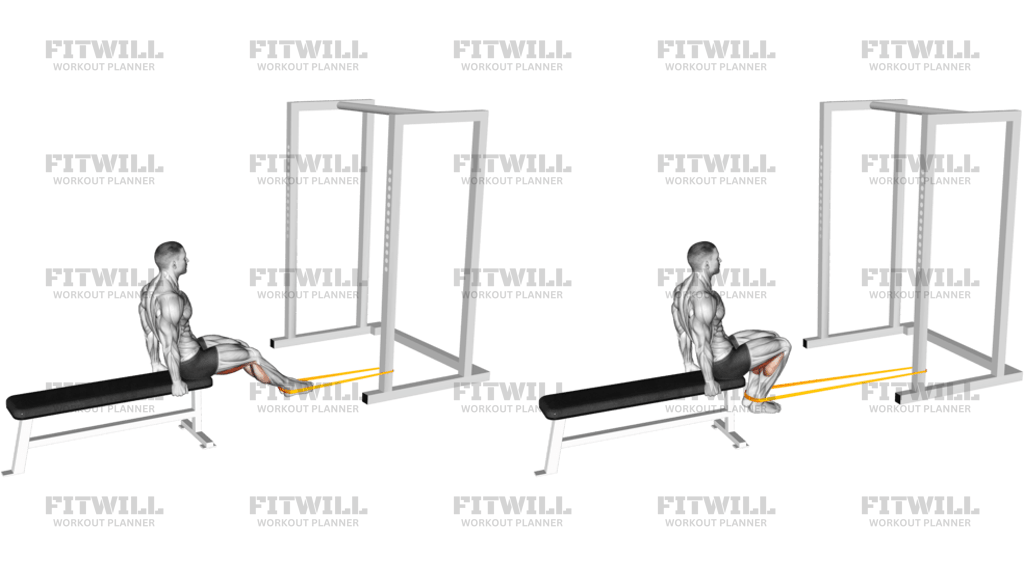
Resistance Band Seated Leg Curl is a seated hamstring isolation exercise that uses an anchored band to pull the lower legs into knee flexion. In the pictured setup, you sit tall on a bench with your legs extended forward, the band anchored low in front of you, and the tension increasing as you curl your heels back under the bench. The movement is simple, but the setup matters a lot: if the band is too high, the bench is too far away, or your torso keeps sliding, the exercise turns into a sloppy pull instead of a clean hamstring curl.
The main job is to bend the knees against band resistance while keeping the thighs mostly still. That makes the hamstrings do the work through a long range, especially when you control the return to the starting position. The seated position also makes it easier to feel the hamstrings lengthen at the start of each rep, which is useful for builders, beginners learning knee-flexion work, and anyone who wants a joint-friendly hamstring accessory without needing a machine.
Set the band so the anchor sits low and directly in front of your feet, then sit on the edge of the bench with enough space to extend your legs without losing tension at the start. Hold the bench or the sides of the seat for support, keep your chest tall, and brace lightly before every rep. As you curl, let the heels travel back and down until the knees bend strongly, then pause and squeeze before returning under control.
The best reps stay quiet through the torso. Your thighs should stay planted, your hips should not rock backward, and your feet should track the same path on every repetition. If the band is too light, the movement becomes jerky; if it is too heavy, you will start yanking with your bodyweight. The goal is a smooth curl, a brief hard squeeze near the bent-knee position, and a slow controlled opening back to the start.
Use Resistance Band Seated Leg Curl as accessory work after bigger lower-body lifts, during a hamstring-focused session, or as a lower-impact option when you want direct hamstring work without a machine. It is especially useful when you want to train knee flexion, reinforce hamstring control, and keep the rep pattern easy to repeat. Stop the set if you can no longer keep the bench contact, band path, and tempo consistent.
[ Workout Log & Planner ]
Put your next workout in Fitwill
Keep your plan and training log ready when you are.


Instructions
- Sit on the edge of a flat bench and anchor a resistance band low in front of you.
- Loop the band around both ankles or the tops of the feet so there is tension with your legs almost straight.
- Plant your hands on the bench beside your hips and sit tall with your chest open.
- Keep your thighs still and brace lightly before you start the first rep.
- Pull your heels back under the bench by bending the knees and driving against the band.
- Squeeze the hamstrings when the knees are fully bent and the band is at its tightest point.
- Lower the feet forward again in a slow, controlled return until the knees are nearly straight.
- Keep the same bench contact, band path, and breathing rhythm for every repetition.
Tips & Tricks
- Place the anchor low enough that the band pulls almost straight ahead, not upward toward your shins.
- Sit close enough to the anchor to keep tension at the start, but far enough away that you can still extend the knees comfortably.
- Press your palms into the bench if your hips want to slide forward when the band tightens.
- Keep your toes relaxed if your calves want to take over; think about dragging the heels back instead.
- Use a one- to two-second squeeze at the bent-knee position rather than bouncing through the curl.
- Lower the legs slowly so the hamstrings stay under tension on the way back to the start.
- If the band pulls your torso backward, reduce resistance before you chase a bigger curl.
- Stop short of any cramping behind the knee and reduce range if the band setup feels too aggressive.
- Match both legs on every rep so one side does not finish the curl earlier than the other.
Frequently Asked Questions
What muscle does Resistance Band Seated Leg Curl target most?
It mainly targets the hamstrings, which bend the knee against the band.
Can beginners perform this exercise?
Yes. It is beginner-friendly if the band is light enough to keep the curl smooth and controlled.
Where should the band be anchored for the seated curl?
Anchor it low and directly in front of the bench so the pull follows the line of your lower legs.
Should my thighs move during the rep?
No. The thighs should stay mostly still while the knees do the bending.
What should I feel at the top of the curl?
You should feel a strong hamstring squeeze as the heels draw back under the bench.
Why am I sliding on the bench when I curl?
The band is probably too heavy or your hands are not anchoring you well enough on the seat.
Can I point my toes while doing it?
You can keep the feet relaxed, but avoid aggressively pointing the toes if it shifts the work away from the hamstrings.
What is the best tempo for this movement?
A smooth curl and a slower return work best, because the band gets harder as the legs move back to the start.