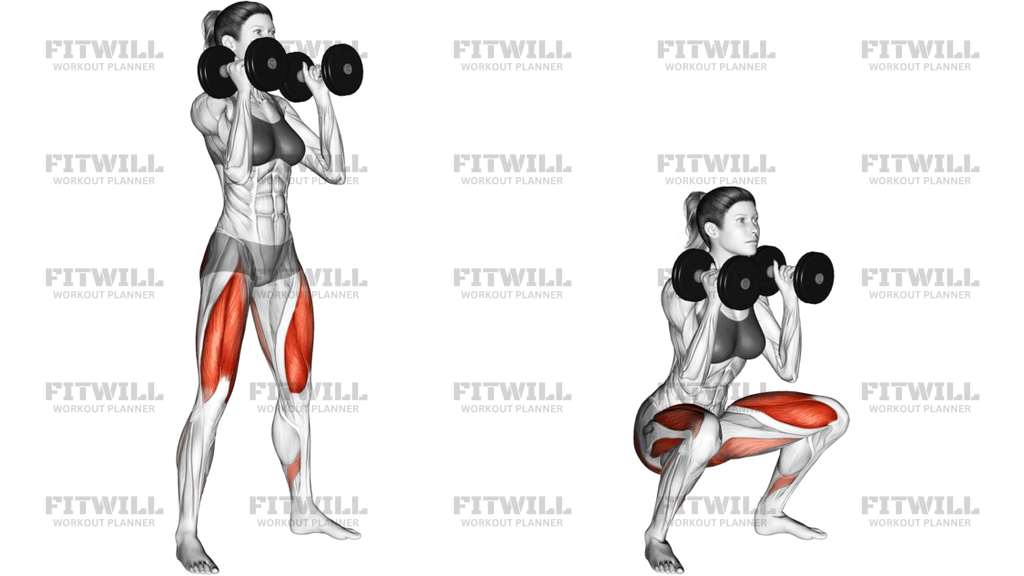
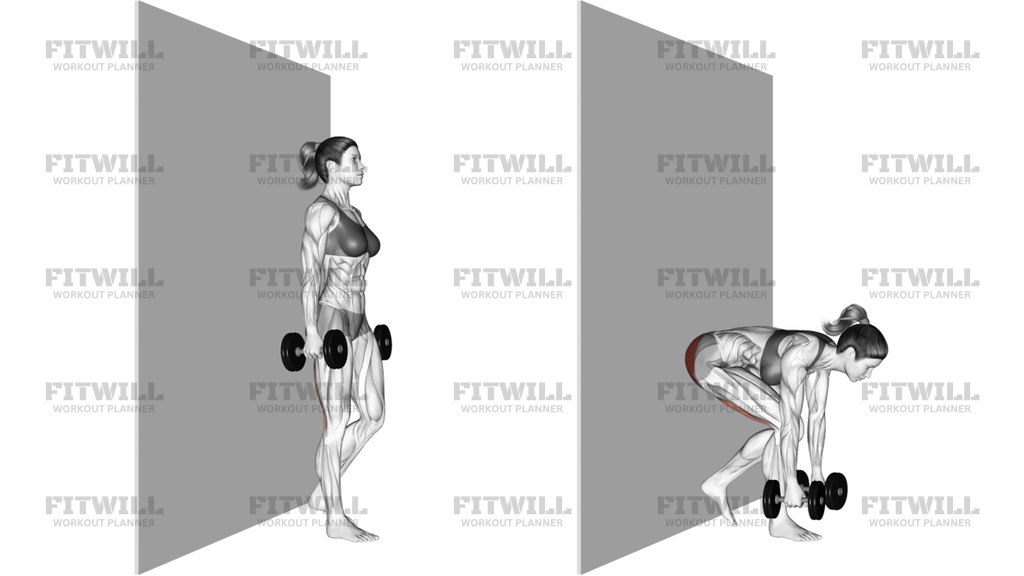
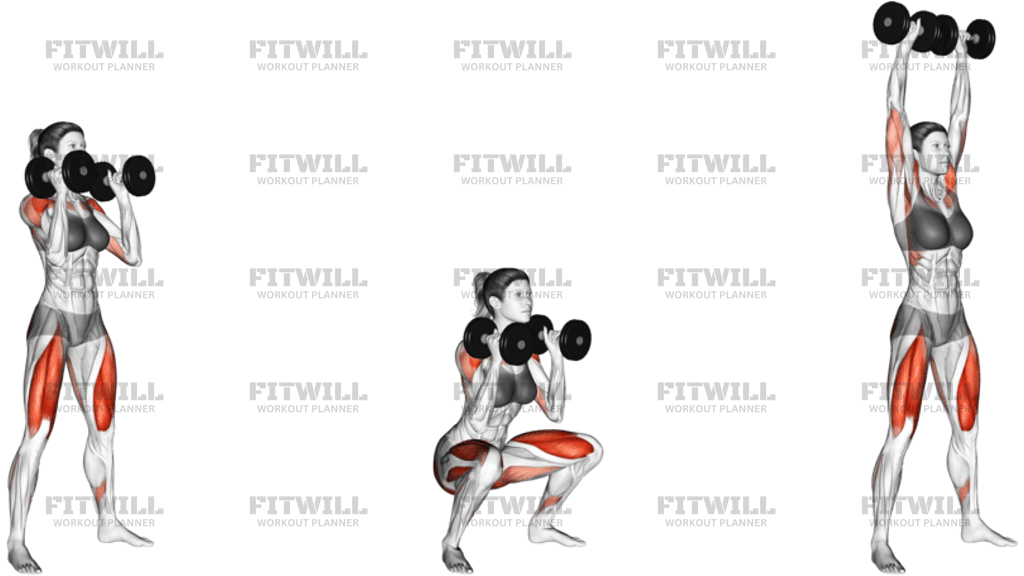
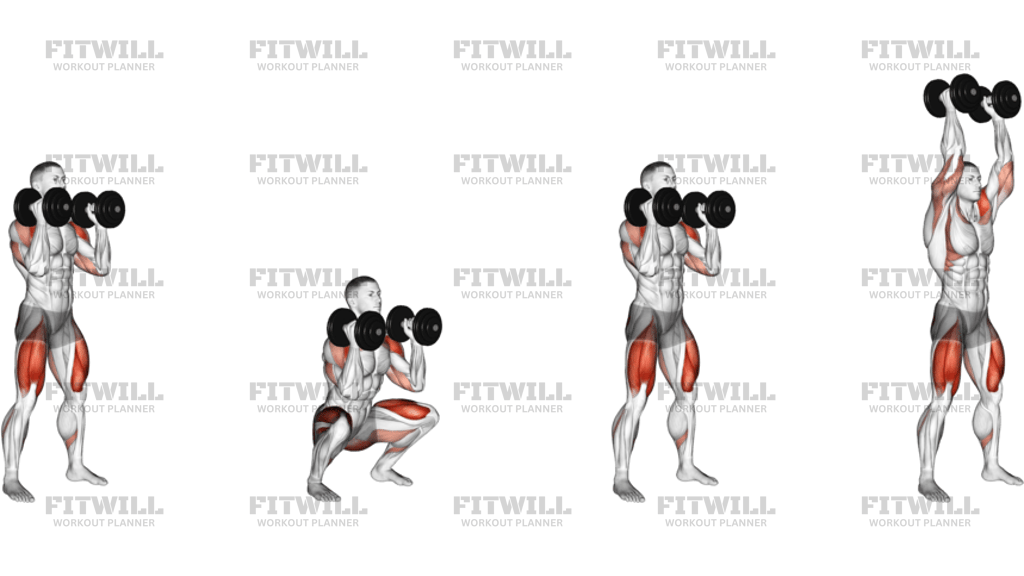
Dumbbell Single Leg Squat
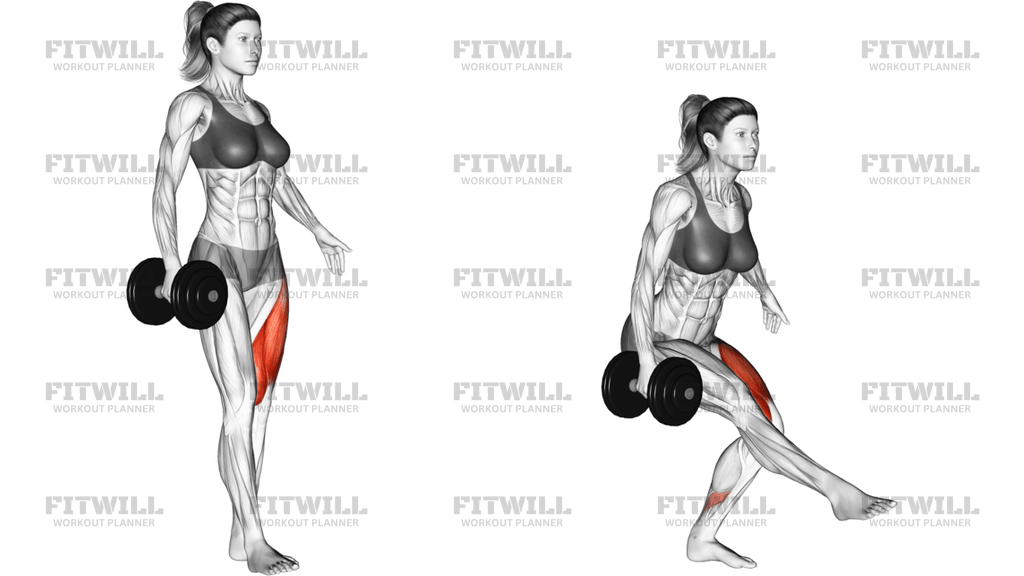
Dumbbell Single Leg Squat is a unilateral lower-body strength exercise that challenges the glutes, quads, hamstrings, and trunk while also testing balance and joint control. Holding a dumbbell in each hand makes the movement more demanding than a bodyweight squat because the load pulls straight down beside the hips, which magnifies any wobble or shift in weight. That makes this a useful exercise for building single-leg strength that carries over to running, jumping, stair climbing, and general lower-body stability.
The main training effect comes from controlling the descent and keeping the working foot planted while the other leg acts as a counterbalance in front of the body. The standing leg does most of the work, especially the gluteus maximus and quadriceps, while the hamstrings, adductors, and core help keep the pelvis level and the torso from twisting. If the knee collapses inward, the heel lifts, or the free leg swings instead of staying organized, the set usually becomes a balance drill rather than a squat.
Setup matters because the start position decides how clean the rest of the repetition will be. Stand tall on one foot with the dumbbells hanging at your sides and the non-working leg lifted slightly in front of you. Keep the chest open, ribs stacked over the pelvis, and your eyes fixed ahead so you can hinge back and lower without losing your line of balance. A slight forward lean is normal and often helps keep the center of mass over the middle of the foot.
During each rep, think of sitting the hips back and down on the working side while the free leg reaches forward to help you stay balanced. Lower under control until you reach your usable depth, then drive the floor away through the heel and midfoot to stand back up. The best reps look smooth and repeatable, with the knee tracking over the toes and the pelvis staying as level as possible from top to bottom.
Dumbbell Single Leg Squat fits well in strength sessions, accessory blocks, or lower-body days where you want more control than load. Beginners can use a small range of motion or a lighter dumbbell load, while advanced lifters can slow the descent, pause at the bottom, or use heavier dumbbells without turning the movement into a jump or a lunge. Keep the set honest: once the standing leg caves, the free leg drops, or you need to hop to finish the rep, the set is done.
[ Workout Log & Planner ]
Put your next workout in Fitwill
Keep your plan and training log ready when you are.


Instructions
- Stand on one foot with a dumbbell in each hand, arms hanging by your sides, and the other leg lifted slightly in front of you for balance.
- Set your standing foot flat on the floor, keep your toes pointed forward, and brace your ribs over your pelvis before you descend.
- Keep your chest tall and your gaze forward as you start sitting your hips back and down on the working side.
- Let the free leg reach forward as a counterbalance instead of letting it swing out to the side.
- Lower until you reach a controlled depth you can own without your heel peeling up or your knee caving inward.
- Pause briefly at the bottom while keeping tension through the standing glute and midfoot.
- Drive through the heel and midfoot of the working leg to stand back up while keeping the dumbbells still beside your hips.
- Reset your balance at the top before starting the next rep, then repeat for the planned set.
Tips & Tricks
- Keep the dumbbells beside your hips, not drifting in front of your knees, so the load stays centered over the standing foot.
- A small forward torso lean is normal; forcing your chest perfectly upright usually makes balance worse.
- If your standing heel starts to lift, shorten the range and sit back slightly more before the next rep.
- Reach the free leg forward with control rather than kicking it out, which helps counterbalance the squat.
- Keep the standing knee tracking over the second or third toe instead of letting it collapse inward.
- Use a slower lowering phase if you keep dropping into the bottom too fast or bouncing off the floor.
- Stop the set when you need to hop, touch the free foot down, or twist the torso to stand up.
- If ankle mobility limits depth, train a smaller range first and build control before adding load.
Frequently Asked Questions
What muscles does Dumbbell Single Leg Squat target most?
The main work comes from the glutes and quads of the standing leg, with the hamstrings and core helping to stabilize the descent and rise.
Is Dumbbell Single Leg Squat the same as a pistol squat?
It is the same basic single-leg squat pattern, but the dumbbells add load at the sides and can make balance and torso control more demanding.
How should I hold the dumbbells during Dumbbell Single Leg Squat?
Hold them at your sides with relaxed shoulders and straight wrists so the weights hang beside the hips instead of pulling you forward.
How low should I go in Dumbbell Single Leg Squat?
Go only as low as you can while keeping the standing heel down, the knee tracking over the toes, and the pelvis under control.
Can beginners do Dumbbell Single Leg Squat?
Yes, but many beginners should start with bodyweight, a partial range, or a box target before adding dumbbells.
Why does my free leg stay in front of me?
Holding the non-working leg forward acts as a counterbalance and helps you stay centered over the standing foot as you squat.
What if I lose balance at the bottom of Dumbbell Single Leg Squat?
Reduce depth, slow the descent, and make sure the dumbbells stay quiet at your sides; if needed, use a lighter load until the bottom position feels stable.
How can I make Dumbbell Single Leg Squat harder without changing the exercise?
Use a slower lowering phase, a brief pause in the bottom position, or heavier dumbbells once you can keep the standing leg and pelvis aligned.