Dumbbell Single-Arm Overhead Carry
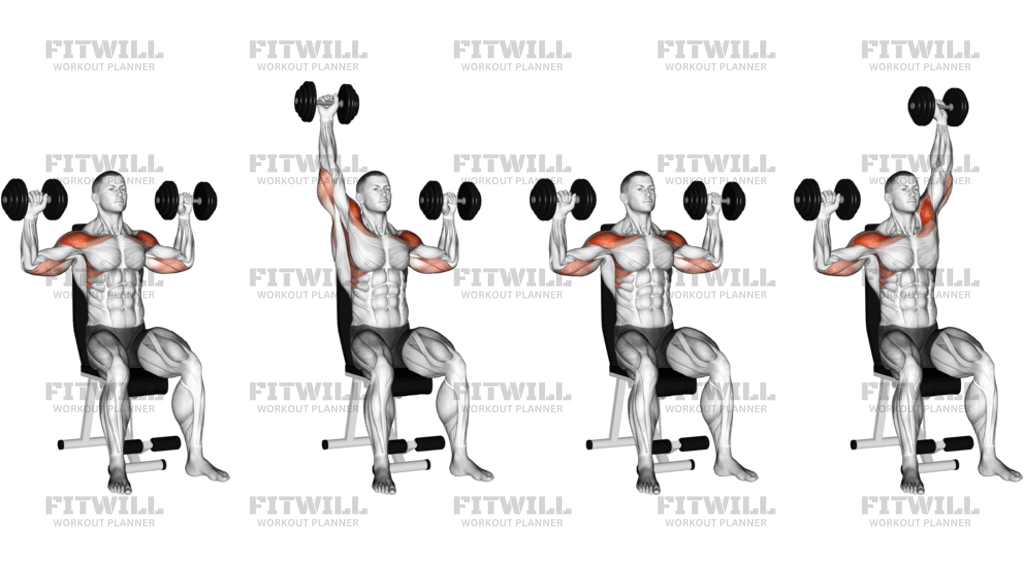
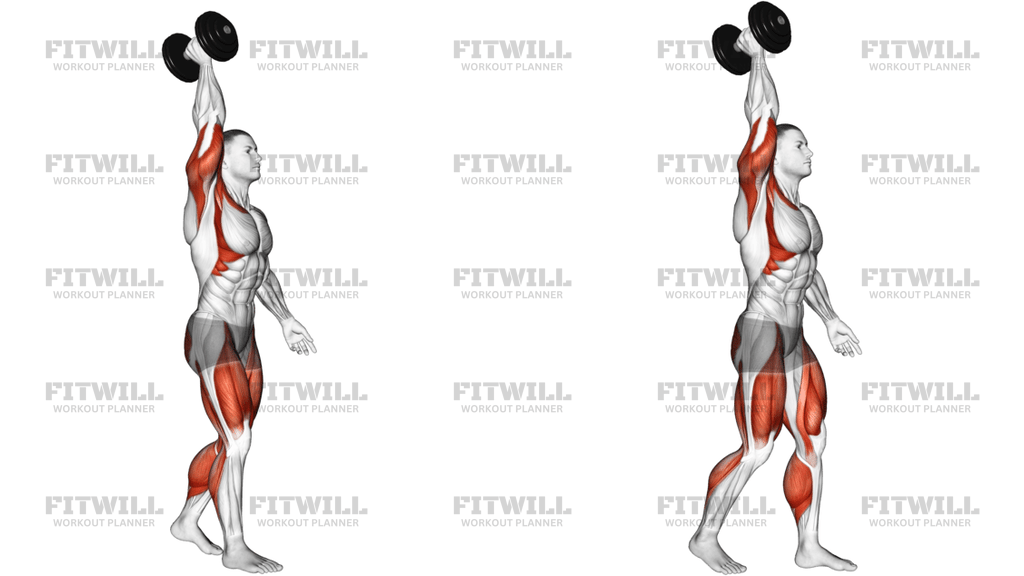
The Dumbbell Single-Arm Overhead Carry is a loaded walking drill that asks one shoulder to keep a dumbbell stacked directly over the body while the rest of you resists tipping, twisting, or rib flare. It is not just an arm or shoulder exercise. The overhead position makes the shoulder complex work hard to keep the weight centered, while the trunk, obliques, glutes, and upper back coordinate every step.
The setup matters because a sloppy lockout shows up immediately once you start walking. Before you move, press the dumbbell to full overhead position, stack the wrist over the shoulder, and keep the elbow straight without hyperextending the low back. The goal is to look tall and organized from the feet to the hand, with the ribs down and the pelvis level so the load stays over the midline instead of drifting sideways.
As you walk, the carrying arm should stay vertical and quiet while the legs do the traveling. Take short, deliberate steps and keep the gaze forward so you do not chase the dumbbell or lean away from it. A good rep feels smooth and controlled: the shoulder stays active, the trunk stays braced, and the body resists any wobble as the weight tries to pull you off balance.
This exercise is useful for building overhead stability, anti-lateral-flexion strength, and shoulder confidence under load. It can fit in a warm-up, accessory block, or conditioning circuit, but it only works well if the load matches your current ability to hold a clean overhead stack. If the elbow bends, the rib cage pops up, or the torso leans, the weight is too heavy or the walk is too long.
Use the dumbbell overhead carry as a technical strength drill, not a race. Quality matters more than distance. Finish each set by lowering the dumbbell under control before switching sides, and stop early if the shoulder loses position or the trunk starts to twist. Done well, it builds practical stability that carries over to pressing, pulling, overhead lifting, and any sport or task that demands one-sided load control.
[ Workout Log & Planner ]
Put your next workout in Fitwill
Keep your plan and training log ready when you are.


Instructions
- Stand tall with a dumbbell in one hand and press it to full overhead lockout, keeping the wrist stacked over the shoulder and the elbow straight.
- Set your feet about hip-width apart, squeeze your glutes lightly, and keep your ribs down so the torso stays stacked before you take a step.
- Hold the free arm relaxed at your side and keep the loaded arm close to the ear without letting the shoulder roll forward.
- Brace your midsection, then start walking with short, controlled steps instead of reaching or bouncing into the stride.
- Keep the dumbbell vertical over your mid-foot and resist leaning away from the load as you move.
- Breathe steadily with small exhalations while maintaining the overhead position and level hips.
- Turn around or stop at the planned distance or time, then slow the dumbbell back to shoulder height before lowering it to the floor or rack.
- Switch sides and repeat with the same posture and walking speed.
Tips & Tricks
- Choose a lighter dumbbell than you would use for a two-hand carry; the overhead position is usually the limiting factor, not leg strength.
- If your wrist drifts behind your shoulder or the elbow softens, the load is too heavy for a clean stack.
- Short steps help keep the dumbbell centered and reduce side-to-side sway through the trunk.
- Keep the ribs from flaring upward as you walk; an arched low back turns the carry into a compensation drill.
- Look straight ahead instead of checking the dumbbell every step, which often causes the torso to twist.
- A slightly active shoulder shrug is fine, but do not jam the shoulder into the ear or let it slide forward.
- Stop the set as soon as the body starts leaning away from the load or the hips stop staying level.
- For longer walks, break the distance into clean segments rather than fighting through a shaky overhead hold.
Frequently Asked Questions
What muscle does Dumbbell Single Arm Overhead Carry target most?
The shoulder complex works hardest, but the obliques, upper back, glutes, and grip also have to stabilize the carry.
Can beginners perform this exercise?
Yes, beginners can do it with a very light dumbbell and short walking distances as long as the overhead arm stays locked out.
Should I keep my arm perfectly straight overhead?
Yes, the elbow should stay locked or nearly locked so the dumbbell stays stacked over the shoulder instead of drifting into a press.
Why does the torso want to lean away from the dumbbell?
The body is trying to shift the load back over the center of mass. Fight that by bracing the trunk, squeezing the glutes, and taking shorter steps.
How far should I walk with one arm overhead?
Use a distance or time you can complete without rib flare, elbow bend, or sideways lean. Clean position matters more than covering ground.
What is the biggest form mistake with this carry?
Letting the ribs pop up and the lower back arch is the most common mistake, because it makes the shoulder and trunk work less efficiently.
Is this different from a farmer's carry?
Yes. A farmer's carry is held at the sides with two hands, while this version challenges overhead stability and anti-side-bending strength with one arm.
Can I use this as a warm-up or finisher?
Both. Light carries work well as an overhead stability warm-up, and heavier but strict carries can finish an upper-body session if form stays clean.