Kneeling Wide Hand Push-Up
Kneeling Wide Hand Push-Up is a floor-based chest exercise performed from the knees with the hands set wider than shoulder width. The wide hand position shifts more emphasis onto the chest while still asking the shoulders, triceps, and trunk to stabilize the body as you lower and press. Because the knees stay on the floor, it is a useful regression for building pressing strength, chest awareness, and push-up control without carrying the full load of a standard push-up.
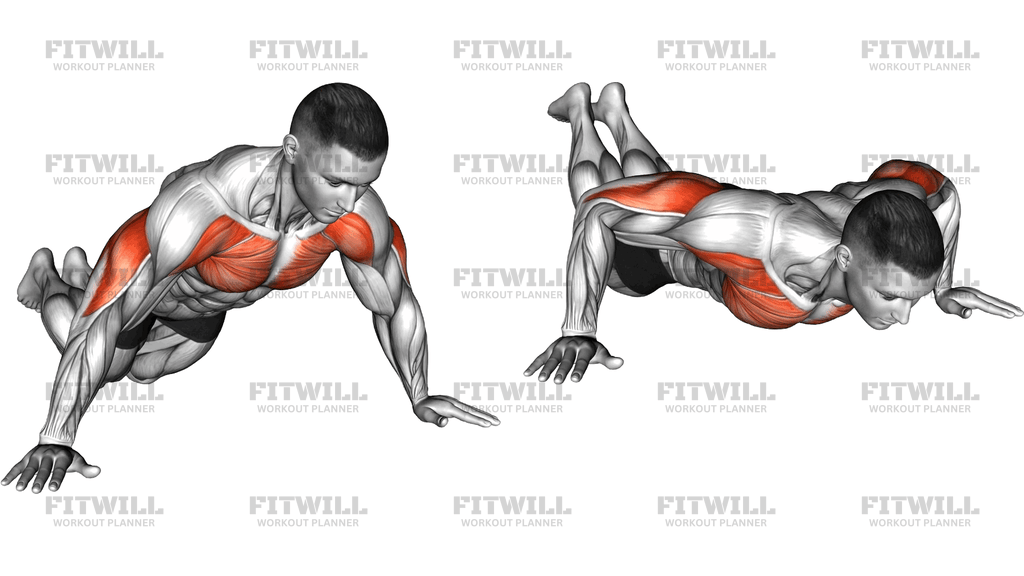
The image shows a straight line from the knees through the torso to the head, with the hands planted wide and the elbows opening out from the body as the chest lowers between the hands. That setup matters: if the hands are too far forward, the shoulders take over; if the hips sag, the rep turns into a low-back compensation pattern. The exercise works best when the torso stays organized and the chest drives the movement instead of the neck, shoulders, or lumbar spine.
Use a firm floor or mat and place the knees slightly behind the hips so the body can stay long from knees to crown. The hands should be wide enough to create a clear chest emphasis, but not so wide that the shoulders feel jammed at the bottom. Lower with control until the chest comes close to the floor, then press the floor away and return to the top without bouncing or shrugging. A smooth descent and a deliberate press give the chest more time under tension and make the rep easier to repeat cleanly.
This variation fits well in warm-ups, accessory blocks, beginner push-up progressions, or chest-focused bodyweight circuits. It is especially useful when you want pressing volume with less total bodyweight than a full push-up, or when you need to practice keeping the ribs down while the arms work. If the shoulders feel irritated or the bottom position is hard to control, shorten the range of motion, bring the hands slightly closer, or elevate the hands until the motion feels stable and pain-free.
Fitwill
Log Workouts, Track Progress & Build Strength.
Achieve more with Fitwill: explore over 9600 exercises with images and videos, access built-in and custom workouts, perfect for both gym and home sessions, and see real results.
Start your journey. Download today!




Instructions
- Kneel on a mat with your knees hip-width apart, tops of the feet relaxed on the floor, and your hands planted wider than shoulder width.
- Stack your shoulders slightly ahead of your wrists, spread your fingers, and press the floor away to create a strong base through the hands.
- Set your body in a straight line from head to knees by lightly tucking the pelvis and bracing your abs and glutes.
- Inhale and lower your chest between your hands while letting the elbows travel out at a controlled angle.
- Keep your neck long and your ribcage from flaring as you descend toward the floor.
- Pause briefly when your chest is just above the ground or when you reach your pain-free bottom position.
- Exhale and press the floor away to return to the top, finishing with the elbows extended but the shoulders not shrugged.
- Reset the torso and hand pressure before the next rep so every repetition starts from a stable position.
Tips & Tricks
- Set the hands only slightly wider than the shoulders at first; an extreme stance can overload the front of the shoulder before the chest gets the work.
- Keep the elbows angled out, but not locked straight sideways, so the shoulder joint stays comfortable as you lower.
- Think about pulling the chest toward the floor on the way down and pushing the floor away on the way up to keep the motion smooth.
- Keep the knees far enough back to maintain a straight line from knees to head; if the hips drift forward, the low back usually starts to arch.
- Squeeze the glutes lightly so the pelvis stays tucked and the ribs do not flare during the press.
- Pause just above the floor instead of bouncing off it, especially when you want more chest tension and better control.
- If the wrists are irritated, use a mat, turn the hands out slightly, or move to push-up handles for a more neutral wrist angle.
- Reduce the range of motion or elevate the hands if the shoulders roll forward at the bottom.
- Keep the descent slow enough that you can feel the chest stretch without losing position through the midsection.
Frequently Asked Questions
What does the wide hand position change in this push-up?
Placing the hands wider than shoulder width shifts more of the effort toward the chest and away from a triceps-dominant press.
Is Kneeling Wide Hand Push-Up easier than a standard push-up?
Yes, the knee support reduces the total bodyweight you press, which makes it a useful progression step before full push-ups.
How wide should my hands be?
Start just wider than the shoulders. If the shoulders feel pinched, bring the hands in a little until the bottom position feels smooth.
Where should my elbows go during the rep?
Let the elbows open out at a controlled angle as you descend, but avoid letting them collapse so far out that the shoulders lose stability.
How low should I go?
Lower until the chest is just above the floor or until you reach a pain-free depth that you can repeat without the torso collapsing.
Why does my low back arch during this exercise?
That usually happens when the core and glutes are not braced enough or when the knees are set too far forward. Reset the body line and shorten the range if needed.
Can I use this as a beginner push-up regression?
Yes. It is a good option for building chest strength and learning how to keep the torso organized before moving to full push-ups.
What can I do if my shoulders feel uncomfortable?
Bring the hands a little closer, reduce the depth, or elevate the hands until you can keep the shoulder position stable and pain-free.