Dumbbell Standing Alternate Hammer Curl And Press
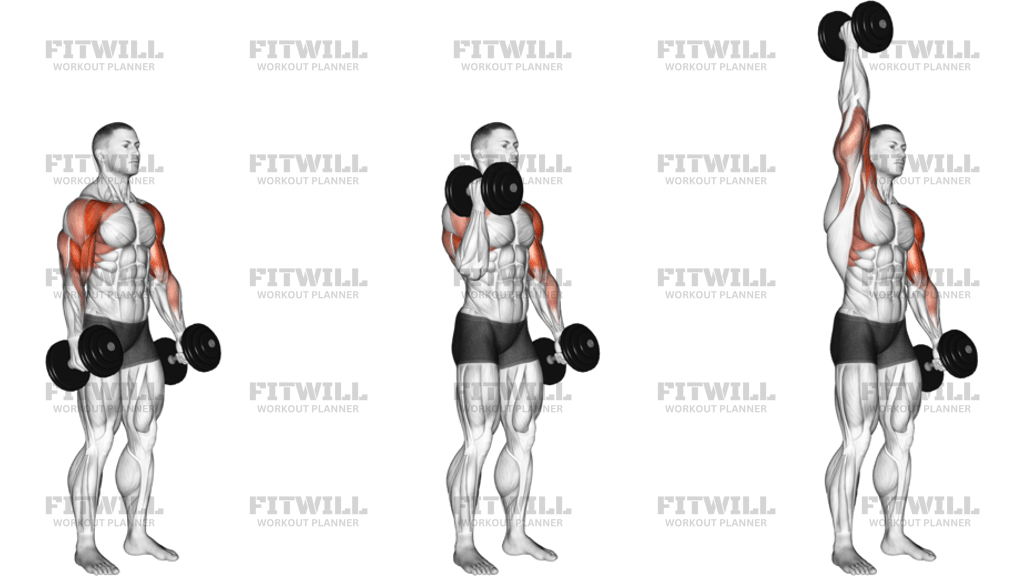
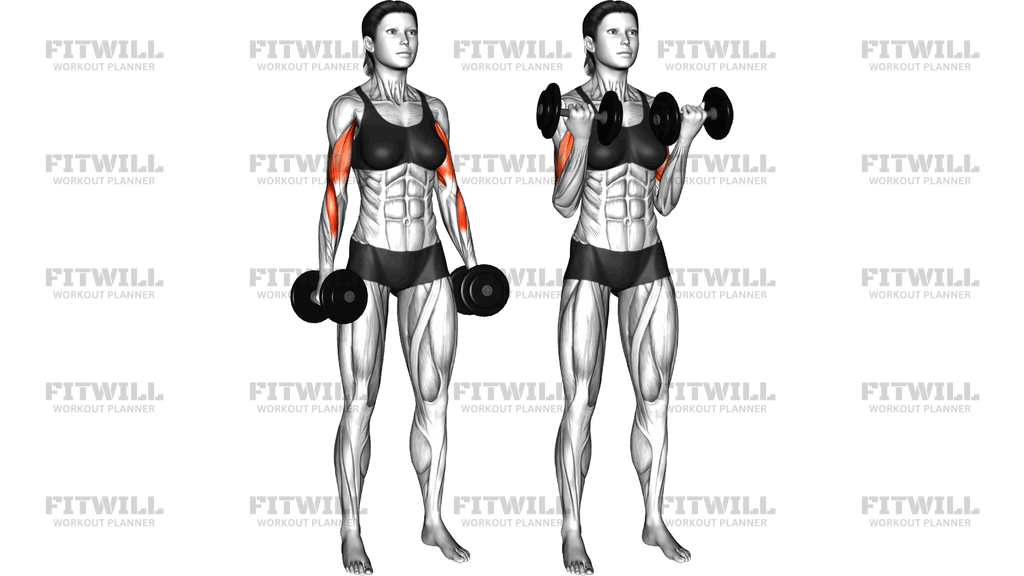
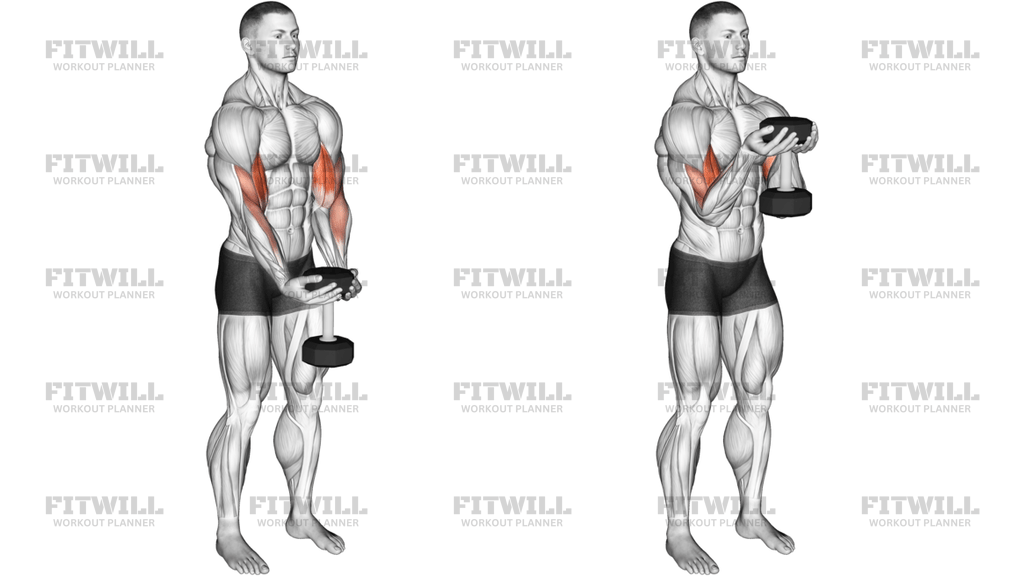
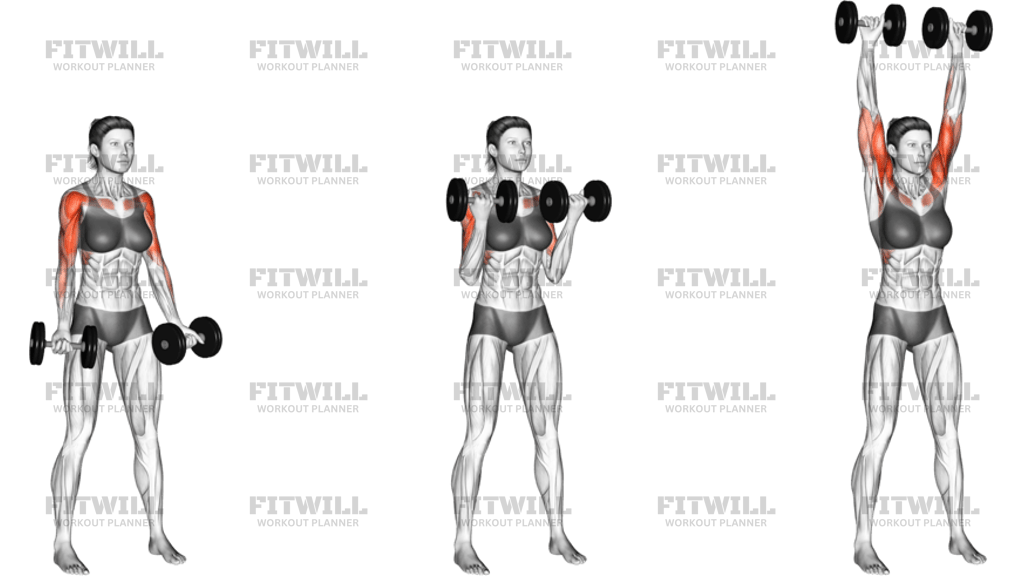
Dumbbell Standing Alternate Hammer Curl And Press is a standing alternating compound exercise that links a neutral-grip curl to a single-arm overhead press. Each repetition asks you to keep the torso tall, the dumbbell path clean, and the shoulder stacked over the midfoot while one arm works and the other stays controlled at your side.
The movement is most obvious in the biceps and forearms during the curl, then shifts toward the shoulders and upper arm during the press. The neutral grip keeps the wrist in a strong line and makes the transition from the curl to the press feel smoother than a fully rotated curl. Because you are standing and alternating sides, the core and upper back also have to resist twisting, leaning, and shrugging.
Setup matters here because the exercise can turn sloppy fast if you start with too much load or a narrow, unstable stance. Stand with your feet about hip to shoulder width apart, hold a dumbbell in each hand with the palms facing in, and let the weights hang beside your thighs. Stack your ribs over your pelvis, soften your knees, and set your shoulders down before the first curl begins. The goal is not to swing the weights into position; it is to move them with enough control that the elbow, shoulder, and torso stay organized.
On each rep, curl one dumbbell toward the shoulder without letting the upper arm drift forward. At the top of the curl, press the same weight overhead in a straight line or slightly in front of the ear so the forearm finishes vertical and the arm is locked out only as far as your shoulder allows comfortably. Lower the dumbbell back to the shoulder, then return it to your side before switching arms. Alternate sides at a steady pace and keep the nonworking side quiet instead of letting it bounce or pull you off balance.
This exercise works best as an accessory movement, a light-to-moderate strength builder, or part of a conditioning circuit where you want upper-body work without setting up a bench or machine. It is also useful for beginners who need a simple standing pattern, provided the load stays light enough to keep the press smooth and the torso still. If the overhead position feels tight or painful, shorten the range or separate the curl and press into two exercises until the shoulder mechanics improve.
Fitwill
Log Workouts, Track Progress & Build Strength.
Achieve more with Fitwill: explore over 9600 exercises with images and videos, access built-in and custom workouts, perfect for both gym and home sessions, and see real results.
Start your journey. Download today!




Instructions
- Stand with your feet hip to shoulder width apart and hold a dumbbell in each hand with your palms facing in.
- Let both dumbbells hang beside your thighs, keep your chest tall, and set your shoulders down away from your ears.
- Brace your midsection so your ribs stay stacked over your pelvis before you start the first rep.
- Curl one dumbbell toward the same-side shoulder while keeping that elbow close to your ribcage.
- Pause briefly at the top of the curl without swinging your torso or letting the wrist bend back.
- Press the same dumbbell overhead until the arm is straight and the biceps finishes near the ear.
- Lower the dumbbell back to shoulder height under control, then return it to your side before switching arms.
- Alternate sides for the planned repetitions while breathing out through the curl and press and breathing in on the lowering phase.
Tips & Tricks
- Choose a lighter pair of dumbbells than you would use for a pure curl or a pure shoulder press.
- Keep the working elbow tucked; if it drifts far forward, the curl turns into a front-delt swing.
- Stack the dumbbell over the shoulder at the top of the press instead of leaning back to chase height.
- Keep the opposite arm quiet at your side so the set stays alternating instead of becoming a two-arm swing.
- Lower the weight slower than you lift it to keep tension on the biceps and shoulder instead of bouncing between reps.
- If your lower back arches, shorten the press and reset your rib position before continuing.
- Keep the wrist neutral through the curl so the dumbbell sits in line with the forearm instead of folding back.
- Stop the set when the press becomes a shrug, because the upper traps are taking over the shoulder work.
Frequently Asked Questions
What muscles work hardest in the hammer curl portion?
The curl emphasizes the biceps, brachialis, and forearms because the palms stay facing in throughout the rep.
What does the overhead press add to this exercise?
The press shifts more of the load to the shoulders and triceps while the core and upper back keep the torso from tipping or twisting.
Do I alternate every rep or complete one side first?
This version is meant to alternate sides, so one arm curls and presses while the other stays down and controlled.
Why use a neutral grip instead of turning the palm up?
The neutral grip keeps the wrist and forearm in a stronger line and makes the curl-to-press transition smoother.
How high should the dumbbell go on the press?
Press until the arm is straight and the weight stacks over the shoulder without forcing the lower back to arch.
What is the most common mistake with this movement?
The biggest mistake is using momentum from the legs or torso to fling the dumbbell through the curl and press.
Can a beginner do Dumbbell Standing Alternate Hammer Curl And Press?
Yes, as long as the dumbbells are light enough to keep the curl smooth, the press controlled, and the body upright.
What should I do if the overhead position bothers my shoulders?
Shorten the press range, reduce the load, or split the movement into a hammer curl and a separate shoulder press until the position feels comfortable.