Dumbbell Seated Biceps Curl To Shoulder Press
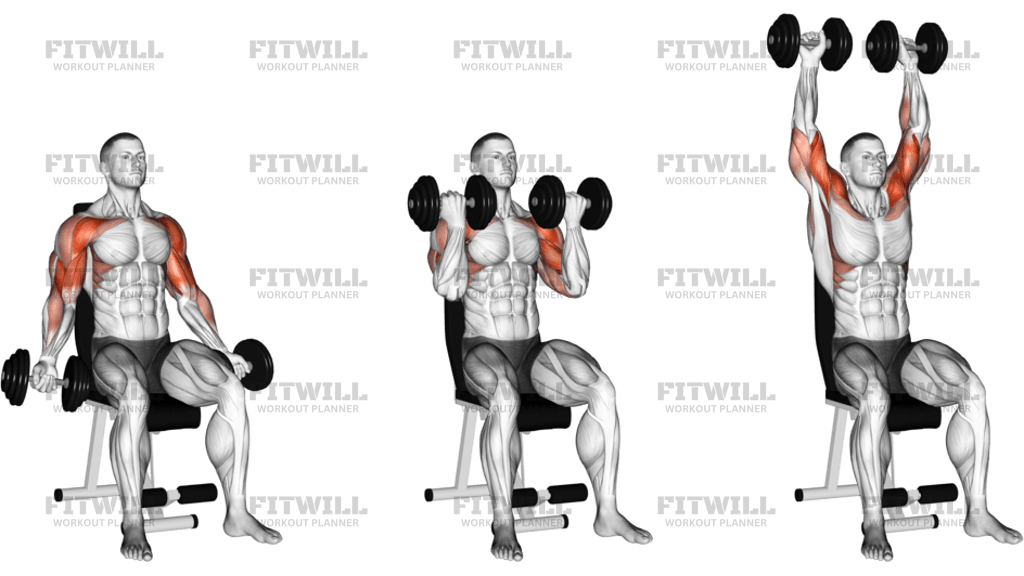
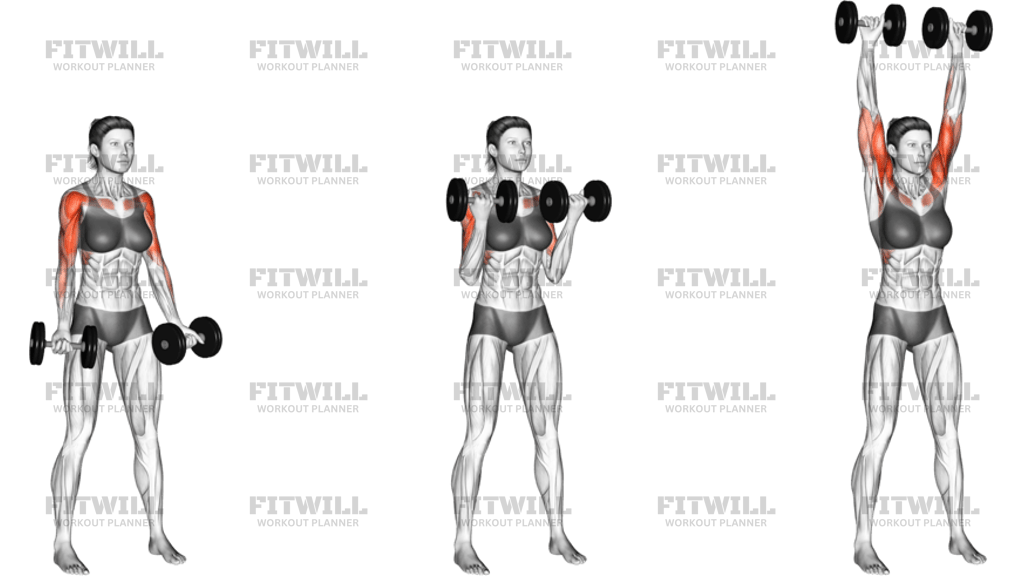
Dumbbell Seated Biceps Curl to Shoulder Press is a compound upper-body exercise that links an elbow-flexion curl into a seated overhead press. Each rep starts with the dumbbells hanging at your sides and ends with the weights stacked over your shoulders, so the movement trains how the arms and shoulders cooperate under control rather than relying on leg drive or a standing swing.
The exercise primarily loads the biceps during the curl and then shifts emphasis to the front delts, triceps, and upper back as you press overhead. The brachialis, brachioradialis, and forearms help stabilize the elbows, wrists, and grip throughout the transition. Because both phases happen in one rep, the movement is useful for building coordination, shoulder control, and upper-body work capacity in a single seated pattern.
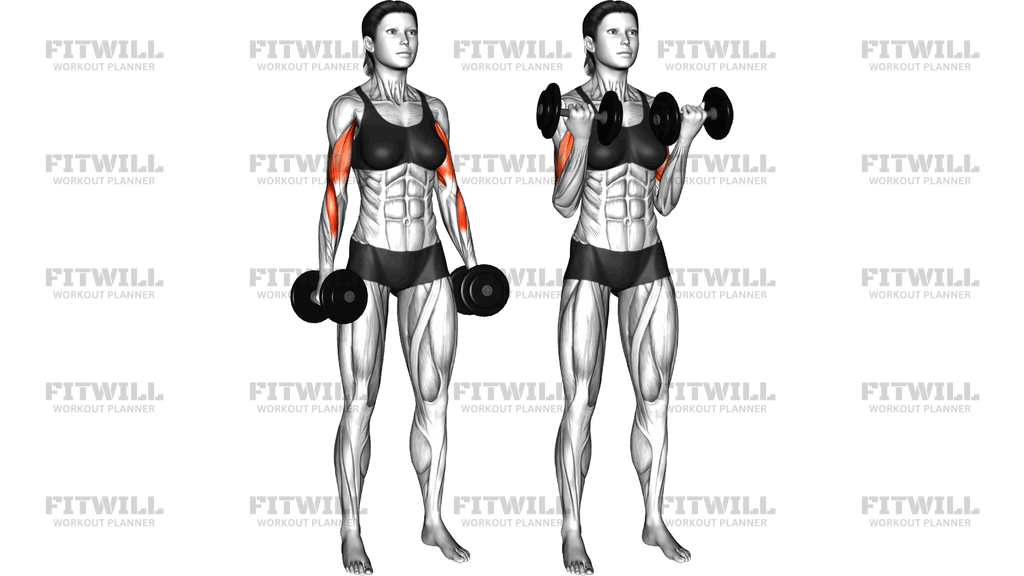
Setup matters more here than it does in a simple curl or press. Sit tall on a bench with both feet planted, torso stacked, and ribs kept down. Hold the dumbbells by your thighs first, then curl them smoothly to shoulder height without swinging the elbows back. At the top of the curl, the wrists should stay stacked over the elbows so the weights are ready for a clean press.
From there, drive the dumbbells up in a smooth arc until the arms are straight overhead, but stop short of shrugging the shoulders or arching the lower back. Lower the weights back to shoulder level under control, then extend the elbows to return the dumbbells to your sides before the next rep. The rep should feel like one continuous chain: curl, press, lower, uncurl.
This is a practical accessory exercise for upper-body strength, pressing coordination, and arm-to-shoulder endurance, especially when you want a seated movement that keeps the torso honest. It works best with moderate or light loads and clean tempo. Beginners can use it, but the combined pattern is usually harder than it looks, so the best version is the one that stays smooth, pain-free, and repeatable from the first rep to the last.
[ Workout Log & Planner ]
Put your next workout in Fitwill
Keep your plan and training log ready when you are.


Instructions
- Sit tall on a bench with both feet flat, torso stacked, and the dumbbells hanging by your sides with palms facing forward.
- Set your shoulders down and back lightly, keep your ribs from flaring, and brace before you start the first rep.
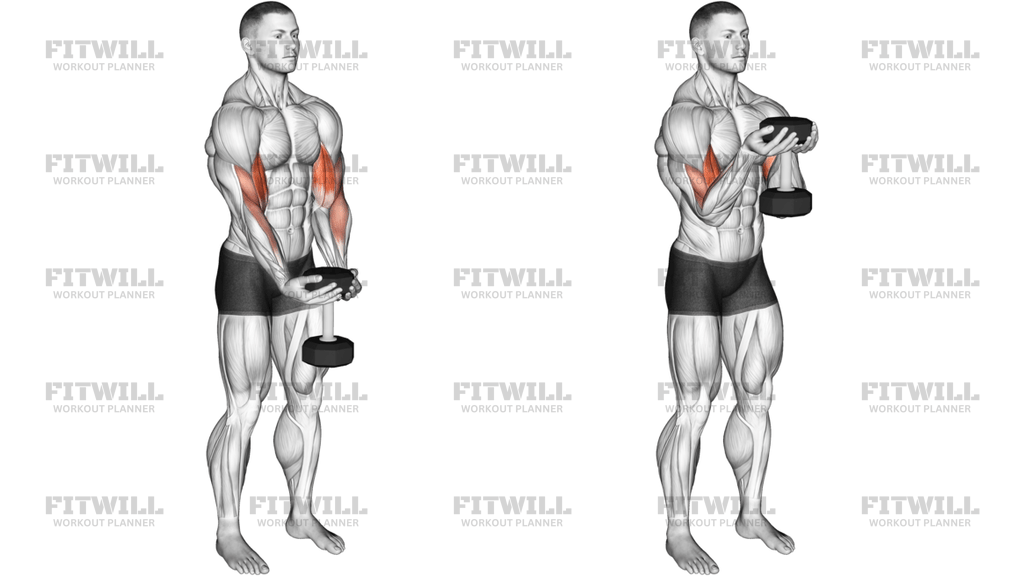
- Curl both dumbbells toward your shoulders without rocking the torso or letting the elbows drift far behind your body.
- Bring the weights to shoulder height with the wrists stacked over the elbows and the forearms vertical.
- Press the dumbbells overhead in one smooth path until the arms are straight and the biceps are clear of the curl position.
- Keep the head neutral and do not lean back or shrug as the weights pass your forehead and top out overhead.
- Lower the dumbbells back to shoulder height under control, keeping the shoulders quiet and the elbows under the wrists.
- Extend the elbows to return the dumbbells to your sides, then repeat for the planned number of reps with the same tempo.
Tips & Tricks
- Use lighter dumbbells than you would for a regular curl or a regular shoulder press, because the combined pattern is more demanding.
- Keep the curl strict: if your elbows swing forward and back, the press will usually turn into a body-English rep too.
- Stack the wrists over the elbows before each press so the dumbbells travel straight up instead of drifting forward.
- Press in the scapular plane, slightly in front of the shoulders, if a straight-out side press feels cramped or pinchy.
- Do not finish by arching your lower back; if the load forces rib flare, the set is too heavy.
- Lower the weights more slowly than you lift them so the shoulders and arms stay under tension through the transition.
- If one shoulder feels tighter, pause the set at shoulder height and restart the press instead of forcing the lockout.
- Keep your feet planted and your seat stable so the rep comes from the arms and shoulders, not from leg drive.
- If your wrists extend backward during the curl, rotate the dumbbells slightly or lighten the load to keep the grip comfortable.
Frequently Asked Questions
What does the Dumbbell Seated Biceps Curl to Shoulder Press train most?
It starts with a biceps-heavy curl and finishes with a shoulder-dominant press, so it trains the arms and delts together.
Why is this exercise done while seated?
Sitting removes leg drive and makes it easier to keep the torso stacked while the curl transitions into the overhead press.
How should the dumbbells move during the rep?
Curl them from your sides to shoulder height, then press them straight overhead before lowering them back through the same path.
Should I lean back while I press the weights overhead?
No. Keep the ribs down and the torso tall; leaning back usually means the load is too heavy or the press path is drifting.
Can I do one arm at a time instead of both together?
Yes. Alternating arms can make the movement easier to control and can expose side-to-side differences in strength or shoulder mobility.
What if the overhead part bothers my shoulders?
Reduce the range by stopping at shoulder height, lower the load, or split the movement into a curl and a separate press.
How heavy should I go on this movement?
Use a weight that lets you curl cleanly and still press without bending backward or losing the wrist-elbow stack.
Is this more of an arm exercise or a shoulder exercise?
It is both. The curl emphasizes the biceps first, then the press shifts the work toward the shoulders and triceps.