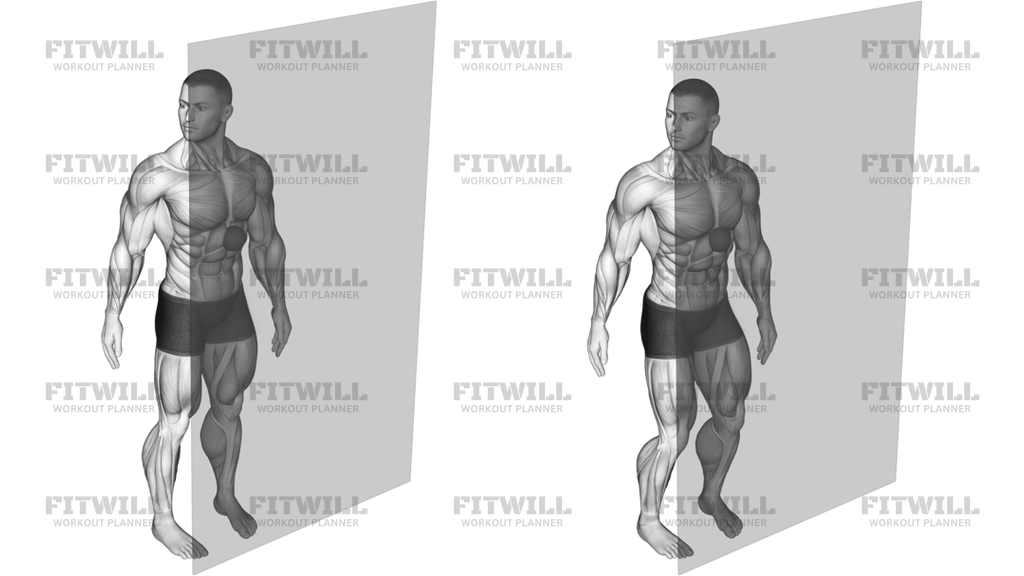
Roll Ball Pectorial Release
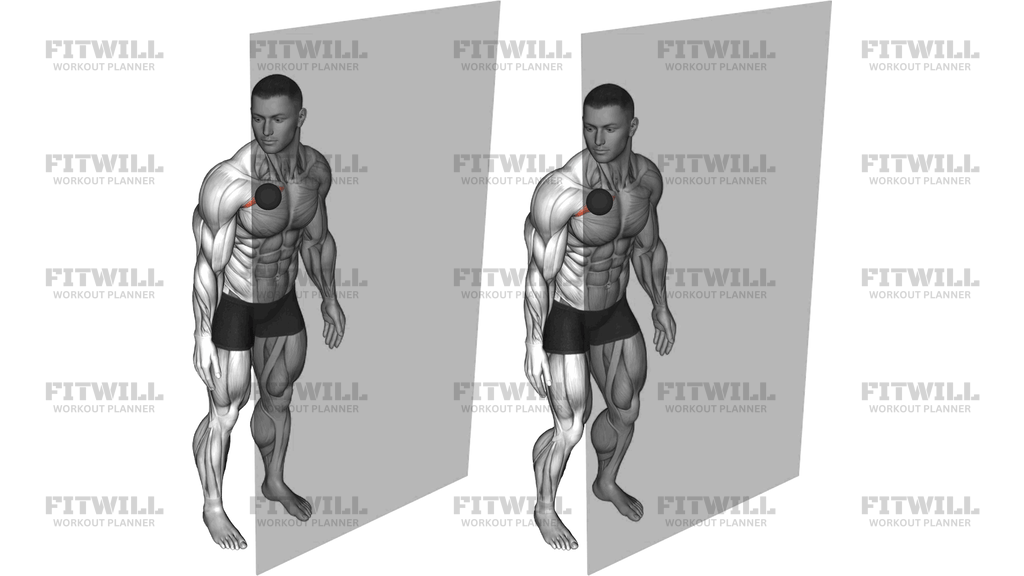
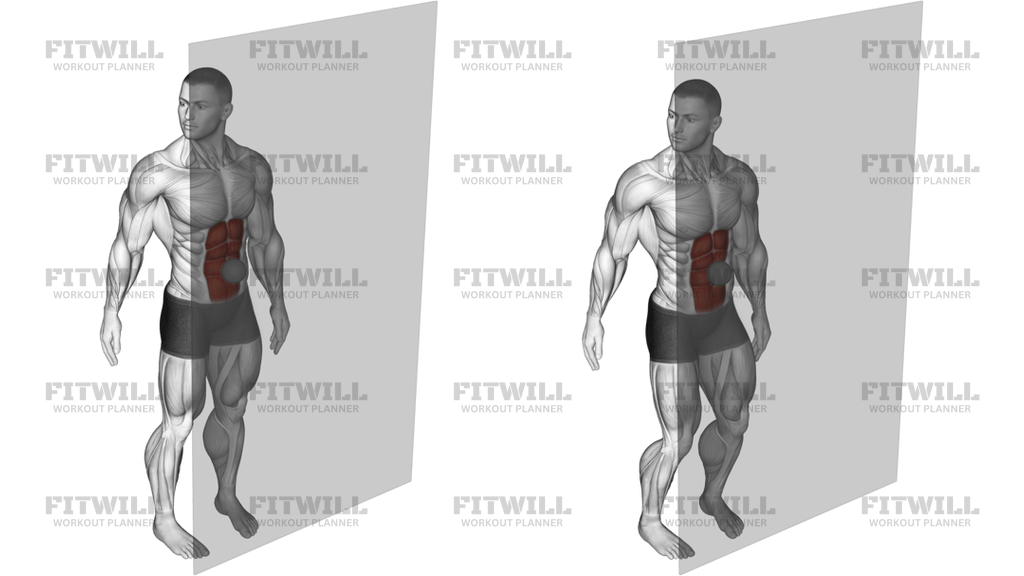
Roll Ball Pectorial Release is a wall-supported soft-tissue release for the upper chest and front shoulder. The ball is placed against the pectoral muscles, then you lean your body into the wall to create steady pressure while making small rolls and pauses over tight spots. It is less about lifting or pressing and more about helping the chest tissues relax so the shoulder can sit and move more comfortably.
The exercise is most useful when the chest feels shortened from pressing work, desk posture, or repeated overhead training. The ball should stay on the soft muscle tissue just inside the front of the shoulder, not on the collarbone, sternum, or shoulder joint itself. A good setup matters because too much pressure or the wrong placement can turn a useful release into an irritated front-shoulder pinch.
To perform it well, keep the ribs stacked, the neck long, and the pressure moderate. Short, deliberate rolls around the upper chest and outer pec usually work better than large sweeps. If you find a tender spot, settle there and breathe until the muscle softens, then move on a few centimeters at a time. The goal is to make the tissue easier to open, not to force through pain.
This drill fits well in a warm-up before pressing, as a recovery tool after upper-body sessions, or during mobility work on days when the front of the shoulder feels tight. Beginners can use it easily because the load is controlled by body position rather than external resistance. Keep the sensation strong enough to be useful but never sharp, numb, or bruising, and switch sides so both pectorals get equal attention.
[ Workout Log & Planner ]
Put your next workout in Fitwill
Keep your plan and training log ready when you are.


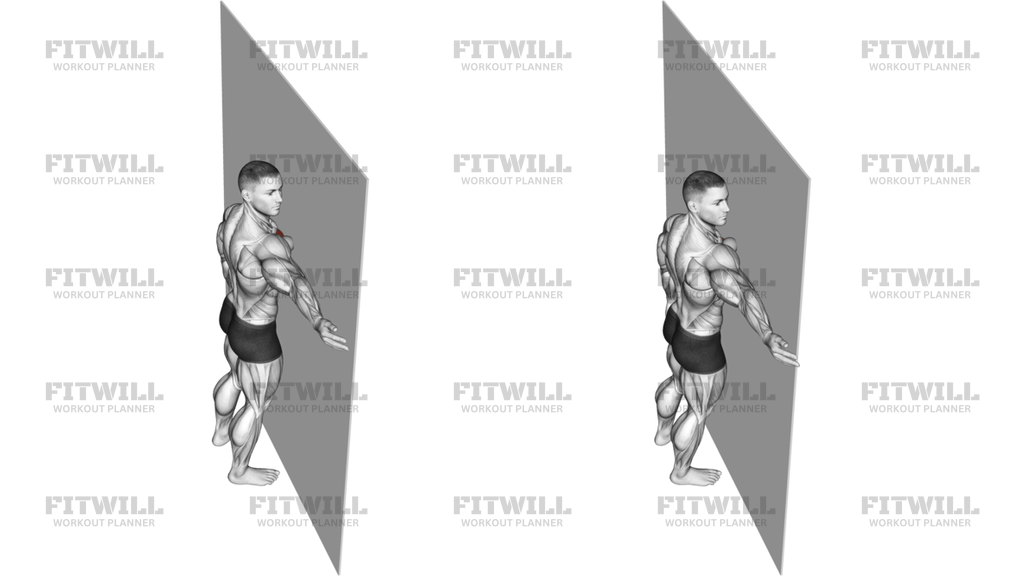
Instructions
- Stand sideways to the wall and place the roll ball on the upper chest, just inside the front of the shoulder on the working side.
- Position the ball on the soft pectoral tissue, not on the collarbone, sternum, or shoulder joint.
- Extend the same-side arm slightly forward or rest the hand on the wall so the chest stays open.
- Step or lean into the wall until the ball has firm but tolerable pressure against the pec.
- Keep your ribs stacked over your pelvis and your neck relaxed as you set the pressure.
- Make small slow rolls, circles, or short up-and-down passes across the tight part of the chest.
- Pause on tender spots for a few breaths without grinding or forcing through sharp pain.
- Adjust the shoulder angle slightly to treat different lines of the upper and outer pec.
- Release the pressure, reset the ball to another area, and repeat on the other side.
Tips & Tricks
- Keep the ball on muscle tissue close to the shoulder, but off the bony edge of the collarbone and off the armpit.
- Small movements usually work better than big ones when the pec is already tight.
- If the pressure feels too sharp, move your feet away from the wall instead of digging harder with the shoulder.
- Let the exhale soften the ribs and upper chest so the tissue can release around the ball.
- A slight turn of the torso can expose more of the pec major and minor without changing the ball position much.
- Use enough bodyweight to feel the contact, but not so much that you tense the neck and traps.
- Work slow enough to notice tender spots, then stay there for a few breaths before moving on.
- Stop if you feel tingling, numbness, or a pinching sensation in the front of the shoulder.
- This is best used after pressing or posture-heavy work, when the chest is warm and reactive.
Frequently Asked Questions
What area does Roll Ball Pectorial Release target most?
It targets the pectoral muscles, especially the upper and outer chest near the front of the shoulder.
Where should the roll ball sit on the chest?
Place it on soft pec tissue just inside the front of the shoulder, not on the collarbone, sternum, or shoulder joint.
How much pressure should I use against the wall?
Use enough pressure to feel the tissue release, but keep it tolerable and never sharp or bruising.
Should I roll quickly or slowly?
Slowly. Small, deliberate rolls and short pauses are usually more effective than aggressive movement.
Can beginners use this release?
Yes. The load is controlled by body position, so beginners can start with light pressure and short holds.
What is the most common mistake with this exercise?
People often place the ball too high on the collarbone or too far into the shoulder joint instead of on the pec.
When is this exercise most useful?
It works well before pressing, after upper-body training, or anytime the chest feels tight from posture or workload.
What should I do if I feel tingling or a pinching sensation?
Back off the pressure or stop the drill. Tingling or pinching usually means the ball is too aggressive or too close to the joint.