Roll Ball Diaphragm
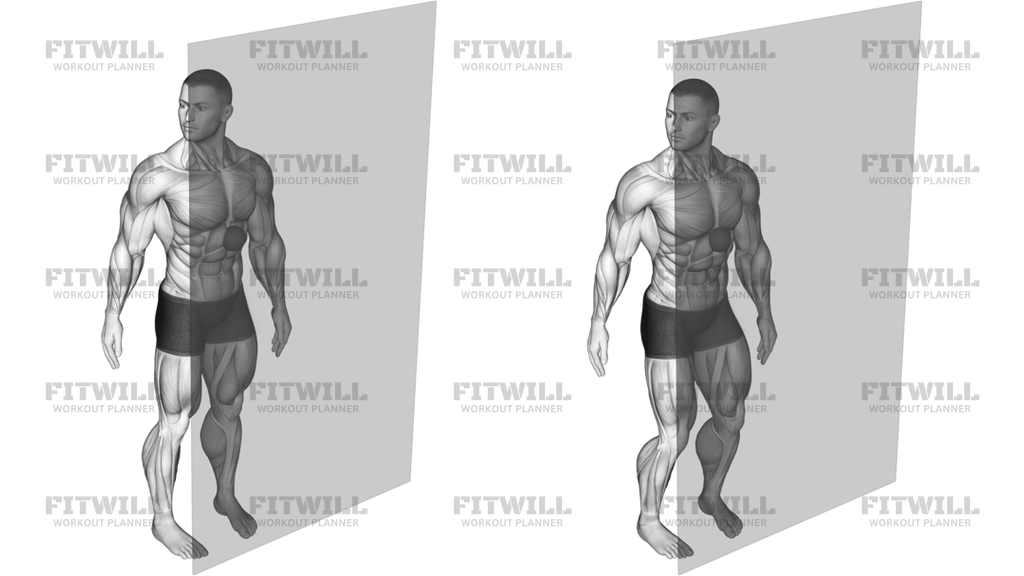
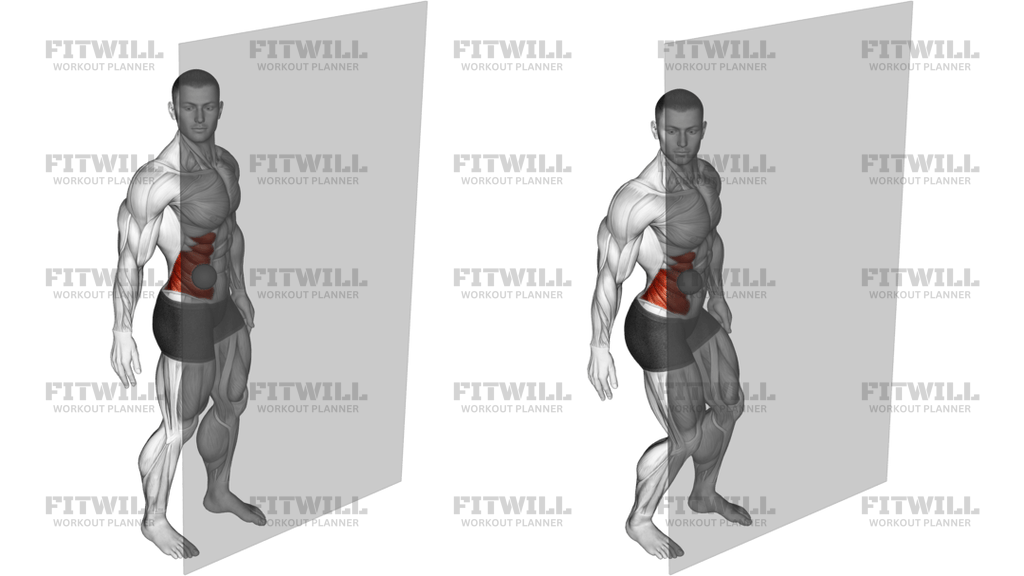
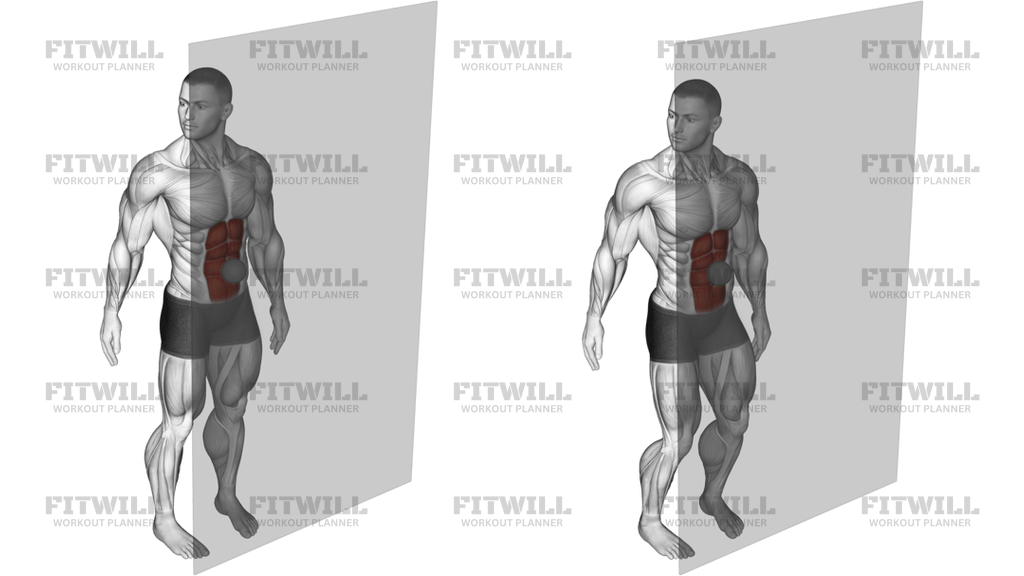
Roll Ball Diaphragm is a standing breathing-and-control drill that uses a rollball and a wall to create light pressure under the lower rib cage. It is less about brute force and more about learning how the ribs, abdomen, and diaphragm work together when you inhale and exhale under gentle load. The movement is useful when you want to improve rib position, breathing awareness, and trunk control without turning the set into a hard strength effort.
The setup matters because the ball only works if it sits at the right height: just below the sternum and above the upper abs, where you can feel the lower ribs expand and settle. A staggered stance gives you a stable base so you can focus on breathing instead of fighting your balance. Keep the pelvis stacked, the neck long, and the shoulders quiet so the pressure stays in the trunk rather than creeping into the neck or low back.
During each rep, inhale slowly through the nose and let the lower ribs widen into the ball and toward the sides of the torso. On the exhale, keep the ball lightly pinned while the ribs soften down and the deep abdominal wall narrows to guide the pressure. If the drill includes tiny rolls or shifts, keep them smooth and small; the goal is to massage and organize the diaphragm area, not to slide around the wall.
Roll Ball Diaphragm works well as a warm-up, reset, or recovery drill before pressing, squatting, overhead work, or any session where better rib control helps your bracing. It can also be useful for people who breathe into the chest, flare the ribs, or feel their midsection lose position under stress. Because the movement is low load, quality comes from calm breathing, accurate placement, and steady control rather than speed or volume.
Keep the pressure gentle enough that you can still inhale smoothly. If you feel the neck, shoulders, or low back taking over, adjust the ball lower, soften the stance, or reduce how far you lean into the wall. The best reps feel controlled, quiet, and specific to the space under the rib cage, with no pinching and no need to force a big range. Start with short sets of a few slow breaths if the pattern is new, then progress by improving placement, control, and exhale length instead of chasing more motion. Stop the set if the ball slides too high onto the chest or if the movement turns into a crunch through the abdomen.
[ Workout Log & Planner ]
Put your next workout in Fitwill
Keep your plan and training log ready when you are.


Instructions
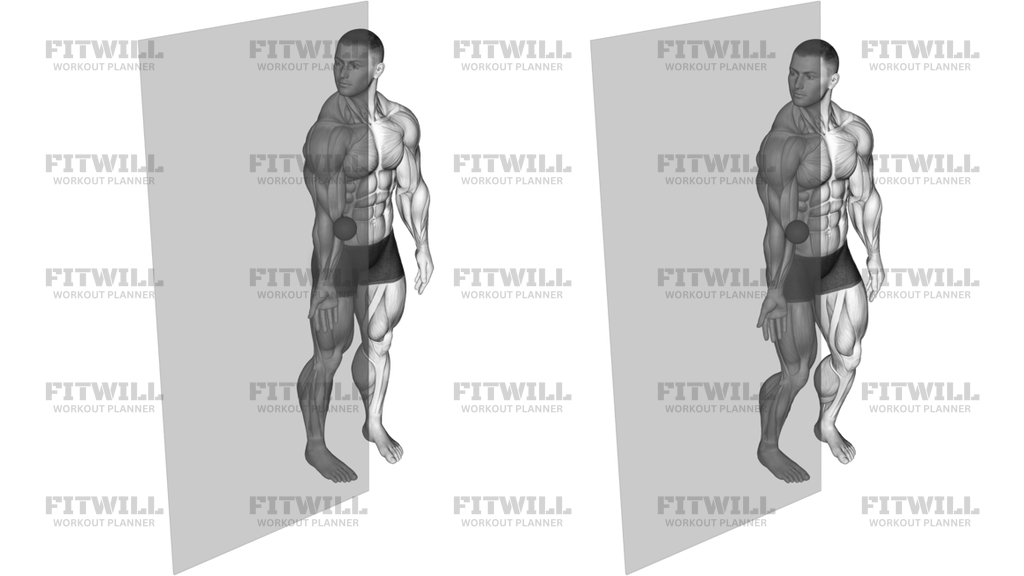
- Stand facing a wall with the rollball at lower sternum height and one foot slightly in front of the other for balance.
- Place the ball between your upper abdomen and the wall so it sits just below the rib cage with light, steady pressure.
- Soften both knees, stack your ribs over your pelvis, and let your shoulders stay relaxed and down.
- Inhale through your nose and let the lower ribs expand into the ball and outward into the sides of your torso.
- Exhale slowly through your mouth and let the ribs settle down while the deep abdominals gently draw inward.
- If your version includes rolling, make tiny forward, backward, or side-to-side shifts without letting the low back arch.
- Keep your neck long and your chin relaxed so the breathing effort stays in the rib cage instead of the shoulders.
- Repeat for the planned breaths, then step away from the wall and release the ball before switching sides or ending the set.
Tips & Tricks
- Place the ball under the lower rib cage, not on the sternum or high on the chest, so the breath has space to spread into the ribs.
- Use only enough wall pressure to feel feedback; crushing the ball makes the movement turn into a hard brace instead of a breathing drill.
- If your low back arches, step a little farther from the wall and shorten the lean until the ribs can stack over the pelvis again.
- The exhale should feel longer and quieter than the inhale; short, choppy breaths usually make the movement superficial.
- Keep the shoulders heavy and the neck soft so the upper traps do not take over the inhale.
- Small rolls are better than big slides; the goal is controlled rib movement, not a dramatic shift across the wall.
- If the ball feels like it is creeping too high, lower the contact point and re-center it under the lower ribs.
- This drill should feel calm and organized, not like an ab crunch or a max-effort core exercise.
Frequently Asked Questions
What does Roll Ball Diaphragm train?
It trains breathing control, rib mobility, and deep core coordination around the diaphragm and lower ribs.
Where should the rollball sit in Roll Ball Diaphragm?
Place it just below the sternum at the lower rib cage so you can breathe into it without turning the drill into a chest press.
Is Roll Ball Diaphragm a core exercise or a breathing drill?
It is both, but the breathing pattern comes first and the core helps keep the ribs and pelvis organized.
Should my belly push out during Roll Ball Diaphragm?
The lower ribs should expand, but do not force a big belly pop or arch the low back to fake the breath.
Why do I feel Roll Ball Diaphragm in my neck?
Usually the ball is too high or the shoulders are lifting on the inhale; lower the contact point and relax the upper body.
Can beginners do Roll Ball Diaphragm?
Yes, because the load is light and the motion is small. Start with a few slow breaths and gentle pressure before adding longer sets.
Can I use a towel instead of a rollball?
A folded towel can work as a temporary substitute, but a rollball gives clearer feedback under the ribs.
When should I use Roll Ball Diaphragm in a workout?
It works well in a warm-up, between heavy lifts, or on recovery days when you want better rib position and calmer breathing.
What if the ball slides too much against the wall?
Widen your stance slightly, reduce the lean, and make the pressure smaller so you can keep the contact point stable.