Kettlebell Strict Press
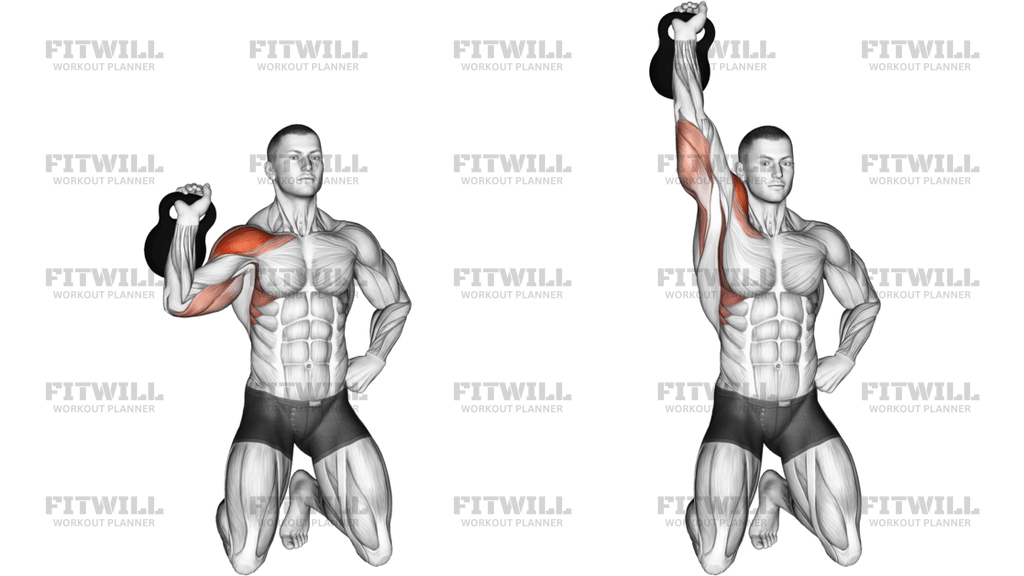
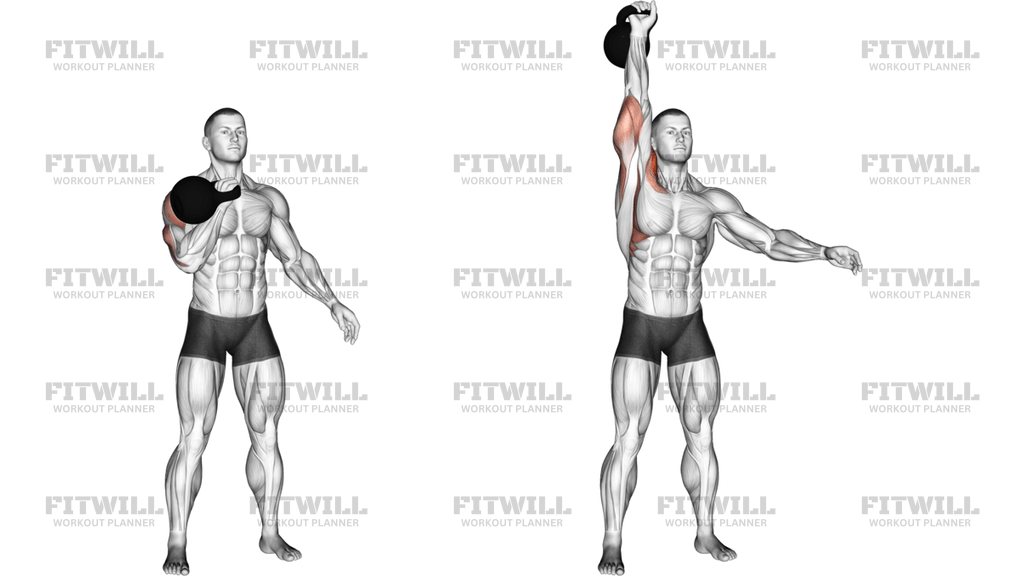
Kettlebell Strict Press is a standing shoulder-strength exercise that asks you to press one kettlebell from the front-rack position to a locked-out overhead position without using leg drive. It is a straightforward test of shoulder strength, trunk stability, and clean pressing mechanics. Because the body stays tall and the bell starts close to the shoulder, the movement rewards control more than brute force.
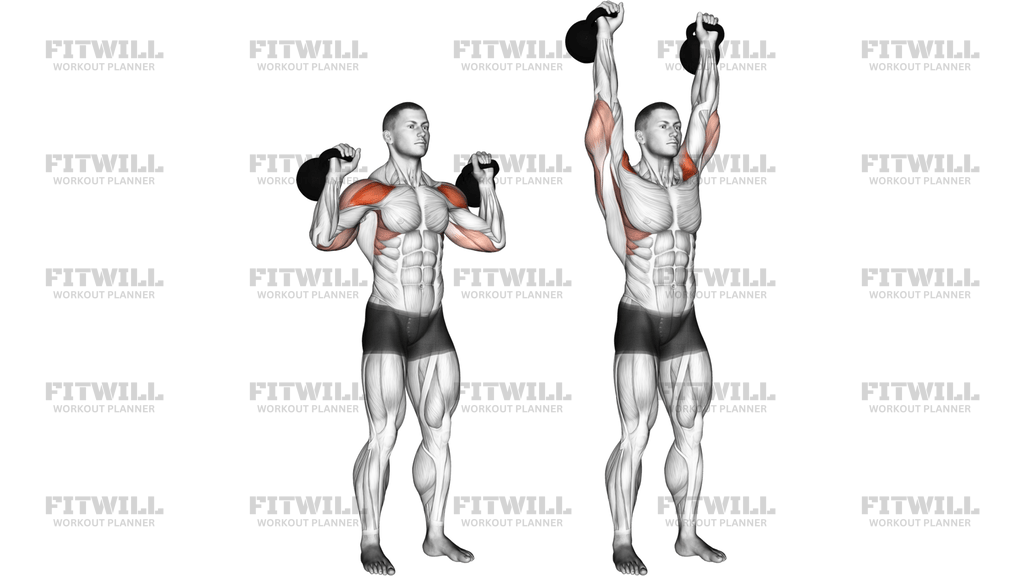
The exercise places the main workload on the delts, with the triceps finishing the elbow extension and the upper back helping keep the shoulder packed and the torso steady. In anatomy terms, the deltoids do most of the work, while the triceps brachii, trapezius, and rhomboids support the lift. That makes Kettlebell Strict Press useful when you want a press that trains the shoulders hard without relying on a dip, bounce, or leg drive.
The rack position matters because it sets the line of force for the whole rep. Hold the kettlebell against the forearm and upper arm, keep the wrist stacked, and keep the elbow slightly forward of the ribs so the bell sits in a stable path before you press. From there, brace the torso, squeeze the glutes, and press the kettlebell straight up until the arm is fully extended and the bell finishes over the shoulder and midfoot rather than drifting forward.
A clean press should feel smooth, not jerky. As the kettlebell moves overhead, keep the ribs from flaring and avoid leaning back to steal range from the lower back. The arm should travel in a controlled line, and the shoulder should stay active at the top instead of collapsing into the joint. Lower the bell the same way you pressed it, guiding it back to the rack under control so each rep starts from a repeatable position.
Kettlebell Strict Press fits well in upper-body strength work, shoulder-focused sessions, or unilateral training where you want each side to work independently. It is especially useful when one side presses better than the other, because the single-arm setup exposes compensation quickly. Beginners can use it with a light bell and a shorter set range, but the goal should still be a vertical press, stable torso, and a quiet lower body from start to finish.
[ Workout Log & Planner ]
Put your next workout in Fitwill
Keep your plan and training log ready when you are.


Instructions
- Stand tall with your feet about hip-width apart and rack one kettlebell against one shoulder, with the handle resting diagonally across the palm and the forearm vertical.
- Keep the elbow slightly forward of the torso, stack the wrist over the elbow, and let the bell sit close to the chest instead of drifting away from the body.
- Squeeze your glutes, brace your midsection, and keep your ribs down before you start the press.
- Press the kettlebell straight up by driving the elbow toward the ceiling and letting the forearm finish under the bell.
- As the bell clears your head, bring the arm into line with the ear and finish with the biceps beside the ear and the shoulder fully active.
- Hold the top briefly without leaning back or shrugging hard into the neck.
- Lower the kettlebell slowly along the same path, keeping the wrist stacked and the elbow under control.
- Return the bell to the rack position on the same shoulder, reset your breath, and repeat for the planned reps before switching sides.
Tips & Tricks
- If the bell bangs forward away from your face, start each rep with the forearm more vertical and the elbow slightly in front of the ribs.
- A small lean-back at the top usually means the bell is too heavy or the ribs are flaring to finish the rep.
- Keep the wrist neutral instead of letting it bend back; the kettlebell should sit over the forearm, not hang behind it.
- Pressing on a slight diagonal is fine, but the bell should still finish stacked over the shoulder and midfoot, not in front of you.
- Exhale as the bell passes eye level to help keep the torso from arching.
- Use a lighter kettlebell if the lowering phase becomes noisy or the rack position collapses on the way down.
- Keep the free hand quiet at your side so you do not rotate through the torso while the pressing arm works.
- If your shoulder shrugs hard at the top, think about reaching tall through the elbow instead of jamming the trap upward.
Frequently Asked Questions
What does Kettlebell Strict Press train most?
It mainly trains the delts, with the triceps, upper back, and core helping keep the press controlled.
Should Kettlebell Strict Press use leg drive?
No. This version is strict, so the legs stay straight and the press comes from the shoulder and arm, not a dip or push from the lower body.
Where should the kettlebell sit before each rep?
It should rest in the front-rack position against the shoulder, with the forearm vertical and the elbow slightly in front of the torso.
Why do I keep leaning back when I press?
Usually the kettlebell is too heavy or the ribs are flaring to create fake range. Keep the glutes tight and think about pressing upward, not backward.
Can I do Kettlebell Strict Press one arm at a time?
Yes, and that is the most common setup. Training one arm at a time helps expose side-to-side strength differences and keeps the torso honest.
What is a good sign that my lockout is correct?
At the top, the arm should be straight with the biceps close to the ear and the bell stacked over the shoulder, not drifting forward.
Is Kettlebell Strict Press beginner-friendly?
Yes, if you start light and keep the bell path clean. Beginners should prioritize a stable rack position and controlled lowering over chasing load.
What is the biggest mistake with the lowering phase?
Dropping the kettlebell too fast into the rack. Lower it under control so your shoulder stays organized and the next rep starts from the same position.