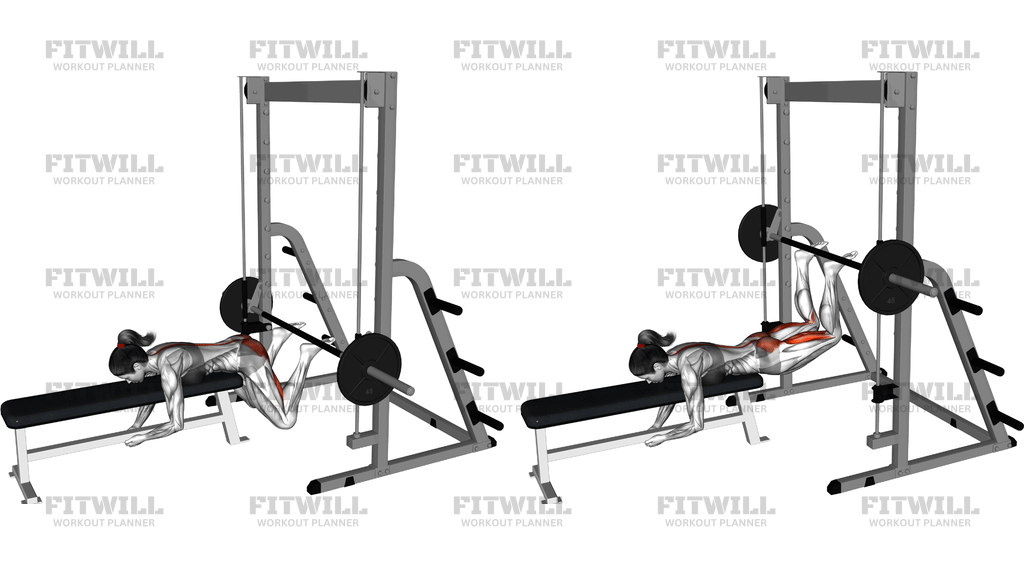
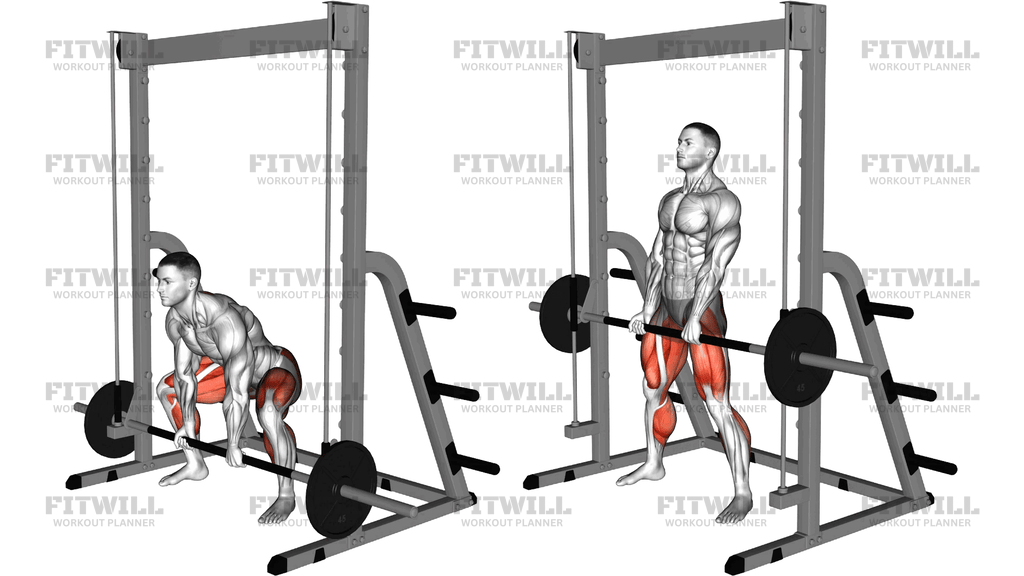
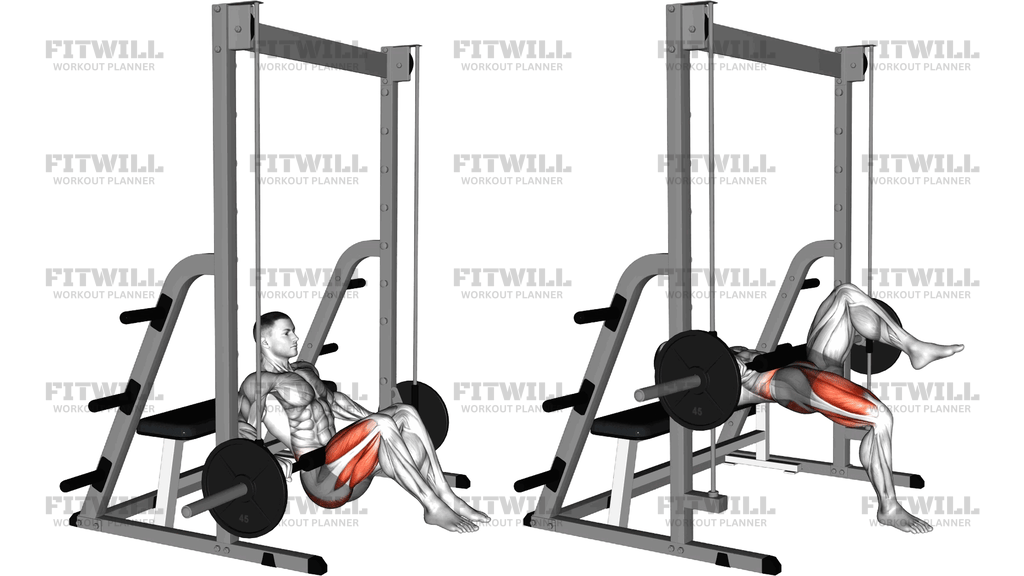
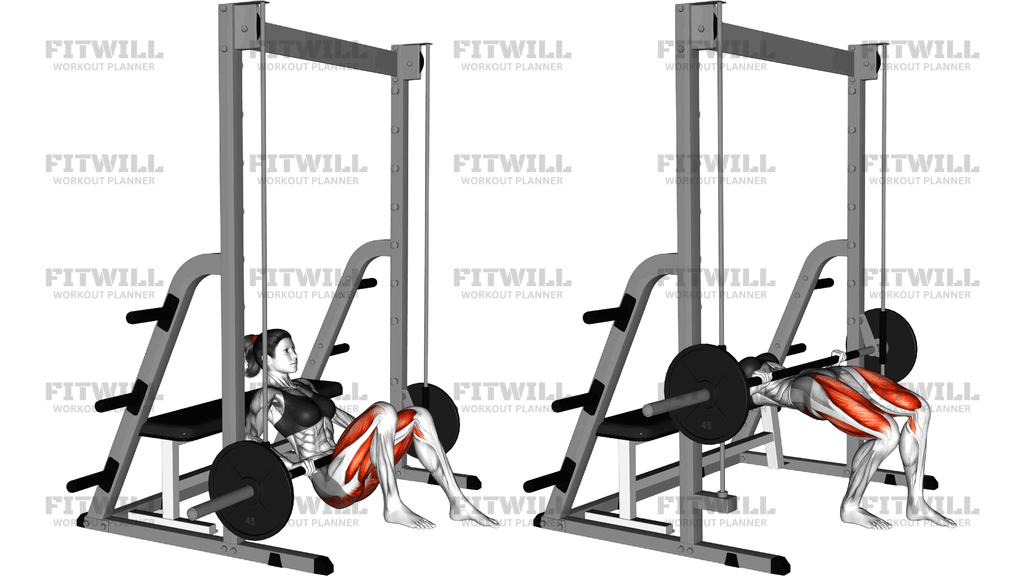
Smith Leg Press
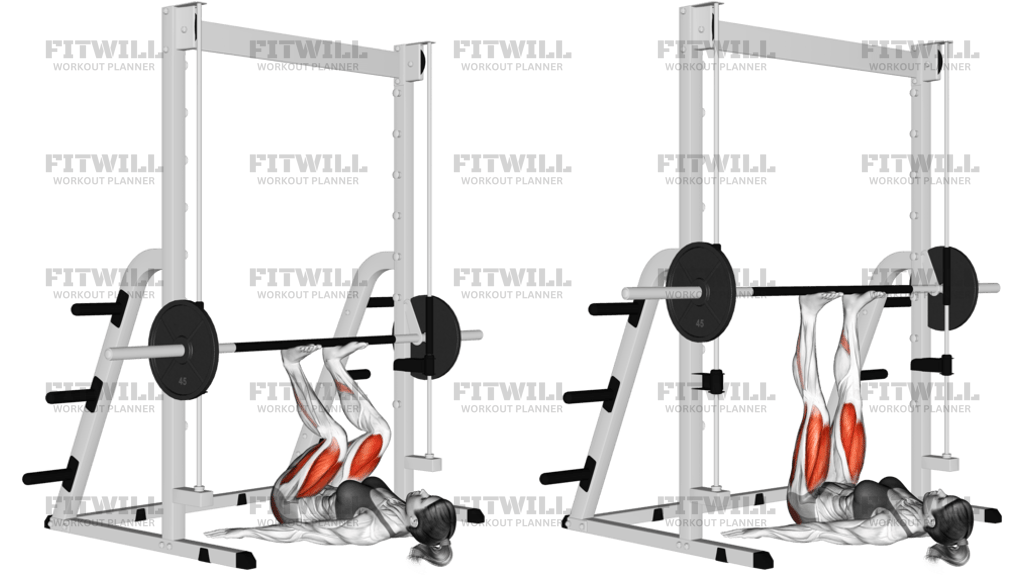
Smith Leg Press is a floor-based lower-body press where you lie under a Smith machine and drive the bar away with your feet. It is a controlled way to train the glutes first, with the hamstrings, quads, and core helping stabilize the pelvis and finish each rep. Because the bar travels on fixed rails, the exercise is easy to learn and useful when you want a repeatable leg drive without having to balance a free bar.
The setup matters more here than it does in many leg movements. Lie flat on the floor with your head clear of the uprights, place your feet on the bar about hip-width apart, and bend your knees until your shins are close to vertical. Put the pressure through your heels and mid-foot so the bar tracks evenly through both legs. A slightly higher foot position will usually shift more work into the glutes and hamstrings, while a lower stance tends to feel more quad-dominant.
Press the bar up by extending your knees and hips together, then stop just short of a hard lockout so tension stays on the working muscles. On the way down, let the bar come back slowly until your knees are deeply bent but your lower back stays in contact with the floor. Keep your ribs down, brace your midsection, and breathe out through the press while inhaling as you lower. If the bar starts drifting or your hips lift off the floor, shorten the range and reset your foot pressure.
Smith Leg Press works well as an accessory movement in lower-body sessions, especially when you want a stable pattern for higher reps or focused glute work. It is also useful for beginners who are still learning how to control leg drive because the Smith rails reduce the balance demand. You can load it more aggressively than bodyweight floor work, but it still rewards smooth reps and a deliberate pause in the bottom if you want clean tension rather than momentum.
Use the exercise with respect for the limited setup space around the Smith machine. Make sure the bar is secure in the hooks before you slide out from under it, and never let the bar crash into the stops at the bottom. If your shoulders, hips, or lower back lose contact with the floor, the range is too deep for that load. The cleanest reps feel like a strong press through the feet, not a bounce off the rails.
Fitwill
Log Workouts, Track Progress & Build Strength.
Achieve more with Fitwill: explore over 9600 exercises with images and videos, access built-in and custom workouts, perfect for both gym and home sessions, and see real results.
Start your journey. Download today!




Instructions
- Set the Smith bar at a low starting height and place the safety stops just below the bottom of your comfortable knee bend.
- Lie on your back under the bar with your head and shoulders flat on the floor, knees bent, and feet hip-width apart on the bar.
- Center your feet so the pressure sits through the heels and mid-foot, then keep your shins nearly vertical before you unrack.
- Lift the bar slightly to clear the hooks, brace your ribs down, and keep your lower back lightly pressed into the floor.
- Press the bar away by extending your knees and hips together, keeping both feet driving evenly into the bar.
- Stop just short of locking your knees hard so the glutes and hamstrings stay loaded at the top.
- Lower the bar slowly until your knees bend deeply again, but stop before your hips curl off the floor.
- Re-rack the bar under control, settle it fully into the hooks, and reset your feet before the next rep or set.
Tips & Tricks
- A slightly higher foot placement usually shifts more of the work toward the glutes and hamstrings.
- Keep the bar centered over the middle of each foot; uneven pressure makes the Smith bar wobble from side to side.
- If your hips start to tuck or your lower back pops off the floor, shorten the range before adding more load.
- Lower for two to three seconds so the bar does not drop into the bottom position and bounce back up.
- Drive through the heels and mid-foot, not the toes, if you want the press to feel more glute-dominant.
- Keep your knees tracking in the same line as your toes so the fixed Smith path does not twist them inward.
- Start lighter than you think you need; the fixed bar path makes the exercise feel stronger than it looks.
- Re-rack only after the bar is fully controlled, because rushing the hooks is the easiest way to lose your position.
Frequently Asked Questions
What muscles does Smith Leg Press work most?
The main emphasis is on the glutes, with the hamstrings, quads, and core helping drive and stabilize each rep.
Is Smith Leg Press good for beginners?
Yes, because the Smith rails give you a fixed path to learn. Start light and practice a smooth press before adding load.
Where should my feet go on the Smith bar?
Place them about hip-width apart and centered on the bar so both legs share the load evenly. A slightly higher foot position usually feels more glute-focused.
How deep should I lower the bar in Smith Leg Press?
Lower until your knees are deeply bent, but stop before your hips curl off the floor or your lower back loses contact. That usually means the range has gone too far.
Should I feel Smith Leg Press more in my glutes or quads?
Higher feet and a longer hip bend usually shift the work toward the glutes and hamstrings. Lower feet tend to make it feel more quad-dominant.
What is the biggest mistake on Smith Leg Press?
Letting the knees cave inward or bouncing off the bottom are the most common problems. Both reduce tension on the target muscles and make the rep less controlled.
Can Smith Leg Press replace a regular leg press?
It can be a useful substitute for controlled leg work, especially if you want a fixed bar path and more glute emphasis. It is not identical to a seated sled press, but it covers a similar training role.
Do I need safety stops for Smith Leg Press?
Yes, set them before you start so the bar cannot drop lower than you can control. That makes the setup safer if you miss a rep or lose position.