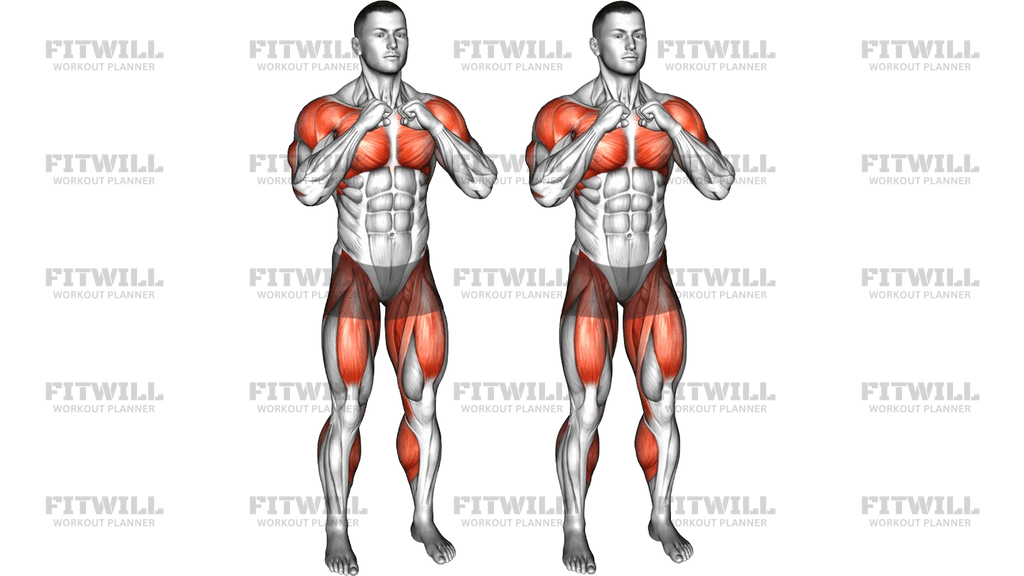
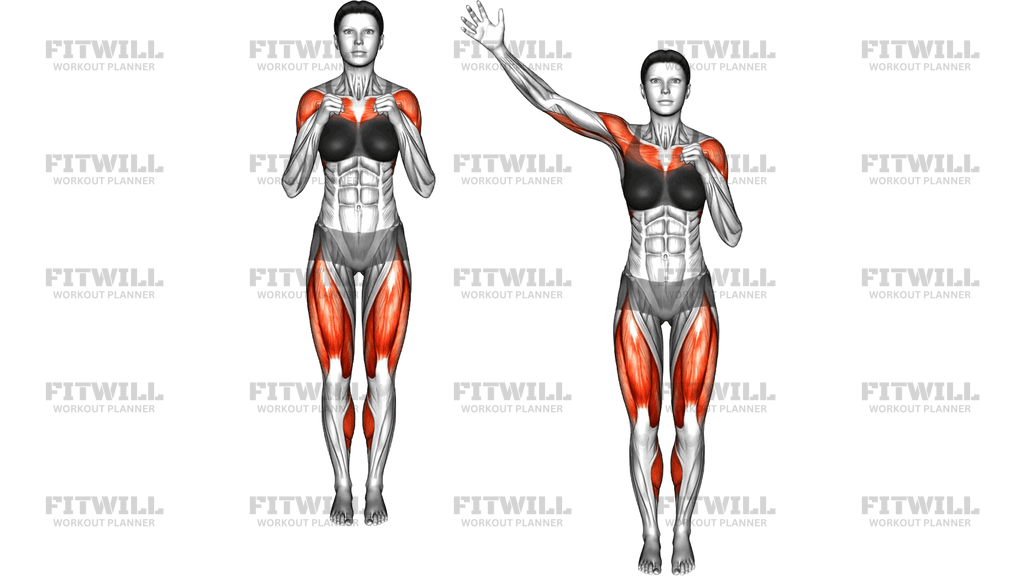
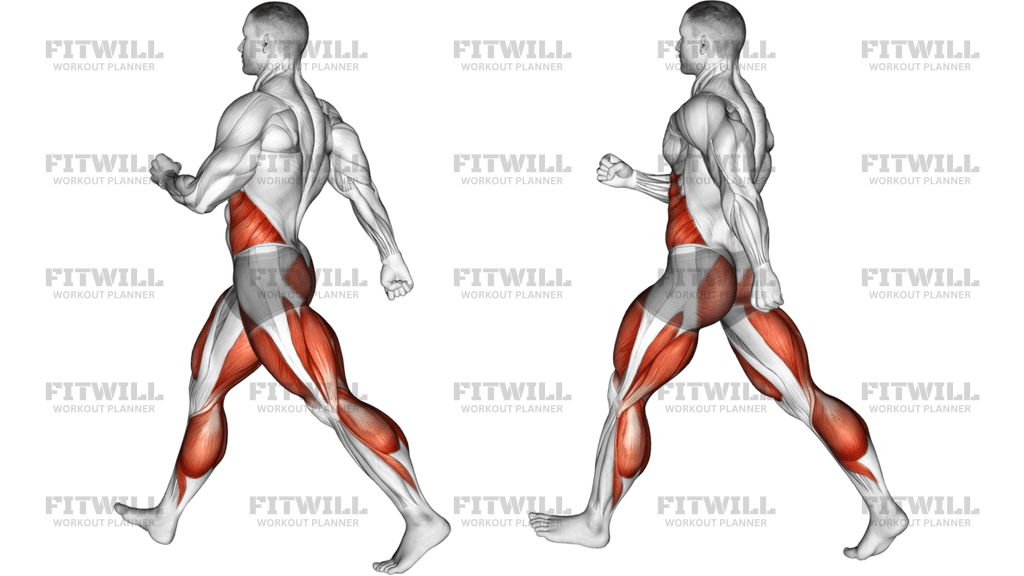
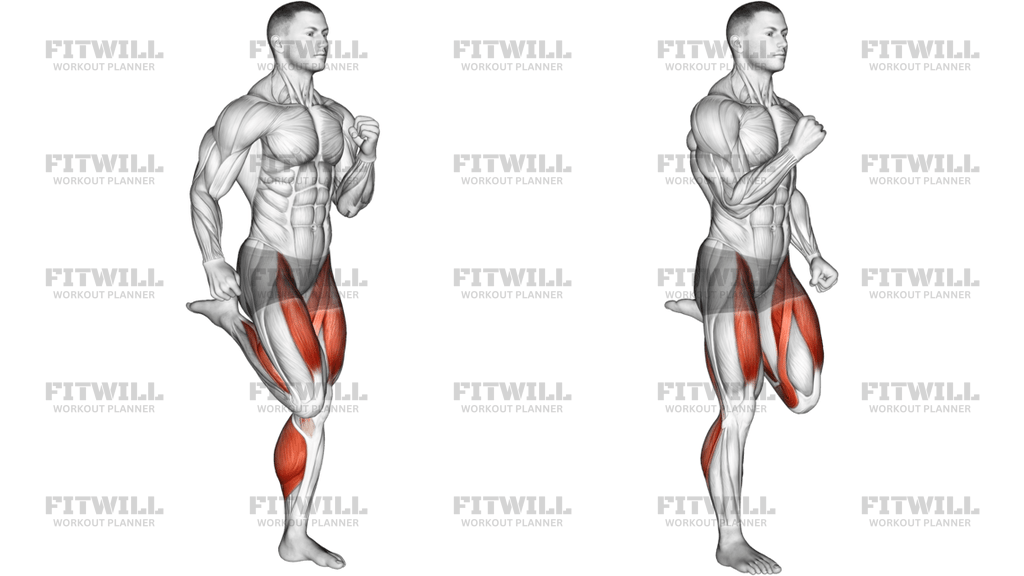
Wheel Run
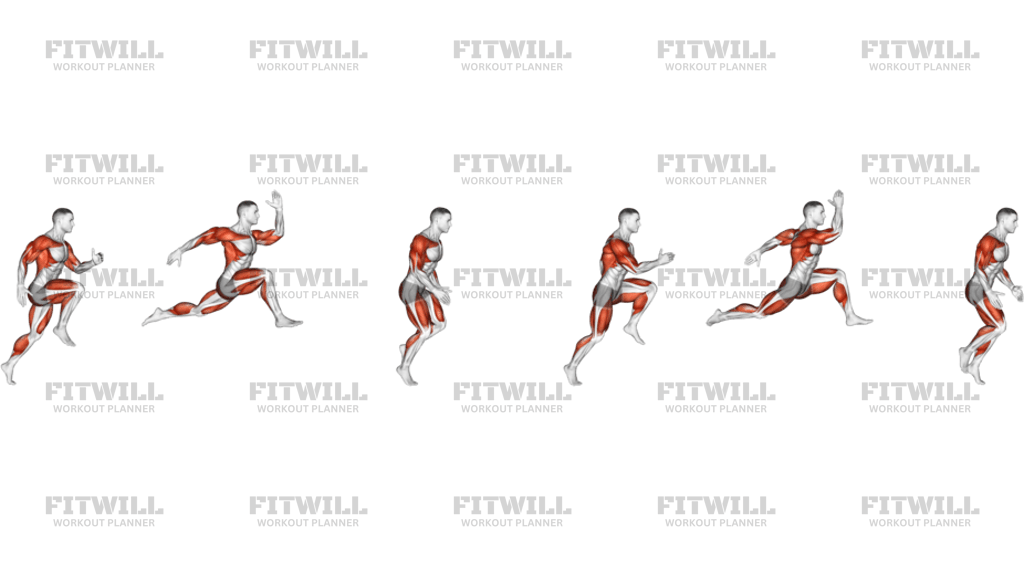
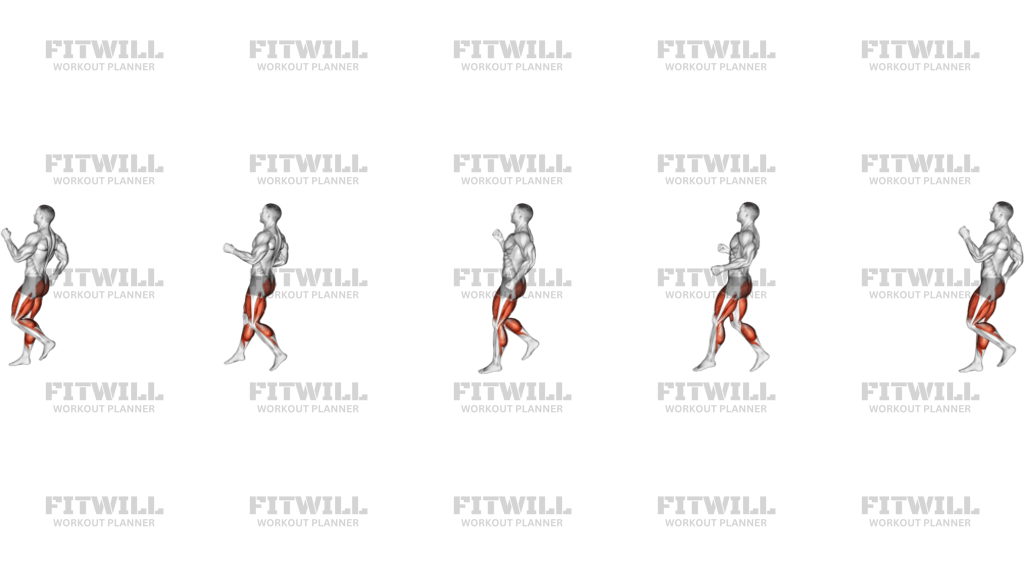
Wheel Run is a bodyweight cardio drill built around a fast, rhythmic running pattern. The motion is meant to look and feel like quick acceleration work rather than a relaxed jog: one knee drives forward, the opposite arm punches through, and the feet keep switching under the hips with very little wasted motion. It is useful when you want a higher heart rate, sharper coordination, and a running pattern you can repeat without equipment.
Because this movement is mostly about speed, rhythm, and posture, the setup matters more than people expect. Start tall with a slight forward lean from the ankles, not from rounding the lower back. Keep the chest lifted, the ribs stacked over the pelvis, and the hands ready to swing naturally. The body should feel springy and organized before the first stride so each rep starts from a stable position instead of a collapsed one.
A good Wheel Run rep is short, crisp, and efficient. Drive one thigh forward, land softly, and immediately switch to the other side while the arms counterbalance the legs. The feet should stay active beneath you, and the torso should remain quiet enough that the legs do the work. If the movement turns into a bounce, a stomp, or a big lean, the exercise stops training running mechanics and becomes sloppy conditioning.
This drill fits well in warm-ups, athletic prep blocks, and conditioning circuits where you want quick ground contact and a faster breathing pattern. It can also be used as a low-skill cardio option when space is limited, since it does not require a machine or load. The main goal is not to cover distance but to keep the cadence clean, the turns smooth, and the effort evenly distributed through the set.
Treat the exercise as a repeatable sprinting pattern and scale it to your current coordination. Shorter intervals usually work better than long, ragged sets, especially if your hips start dropping or your arms stop matching the legs. When done well, Wheel Run should feel spring-loaded, athletic, and controlled, with enough intensity to challenge the lungs while still keeping the running form organized.
[ Workout Log & Planner ]
Put your next workout in Fitwill
Keep your plan and training log ready when you are.


Instructions
- Stand tall with your feet under your hips and your arms bent as if you are about to sprint.
- Lean very slightly forward from the ankles while keeping your chest up and your lower back neutral.
- Brace your midsection so your ribs stay stacked over your pelvis before you start moving.
- Drive one knee forward and up while the opposite arm swings naturally in front of your body.
- Land softly under your center of mass and switch legs without pausing between strides.
- Keep your steps quick and light so the feet spend as little time on the floor as possible.
- Maintain a steady running rhythm through the full set instead of reaching or bounding.
- Keep breathing in a quick, even pattern while you stay relaxed through the shoulders and jaw.
- Slow the cadence gradually at the end of the set and return to a tall standing position.
Tips & Tricks
- Keep the forward lean small; the drill should look quick and athletic, not like you are folding at the waist.
- Let the arms drive opposite the legs so your torso stays balanced instead of twisting side to side.
- Aim for short ground contact times. Heavy, flat-footed steps usually mean the pace is too aggressive.
- If your knees are slamming high but your feet are loud, reduce the speed and make the landing quieter.
- Stay on the balls of the feet or midfoot rather than sitting back on the heels.
- Keep the shoulders loose so the neck does not tense up as the cadence increases.
- Use shorter sets if your stride gets messy; quality falls off fast once fatigue changes the running pattern.
- If you want less impact, keep the steps fast but smaller instead of turning the drill into a jump.
- Treat the movement like a sprint mechanic drill, not a march, and keep the rhythm snappy from the first rep.
Frequently Asked Questions
What does Wheel Run train most?
It mainly trains cardio capacity, running coordination, and quick lower-body turnover with bodyweight only.
Is Wheel Run basically running in place?
It is very close to a sprinting-in-place drill, but the goal is a quick, athletic running rhythm rather than a casual jog.
What should my arms do during the run?
Keep the elbows bent and let the opposite arm drive forward with each knee so the upper body helps balance the stride.
What is the biggest form mistake?
The most common problem is turning the drill into a big bouncing jump or hinging too far forward at the waist.
Can beginners do Wheel Run?
Yes, as long as they keep the steps small, the cadence controlled, and the set short enough to maintain good posture.
How can I make it lower impact?
Keep the same arm action and fast rhythm, but reduce how high the knees drive and keep the footfalls lighter.
When should I use this exercise?
Wheel Run works well in warm-ups, athletic conditioning blocks, or short cardio intervals where you want a faster running pattern.
How do I know I am moving fast enough?
The steps should feel quick and springy, with little pause between contacts and a breathing rate that rises without losing form.