Bottle Weighted Lateral Raise
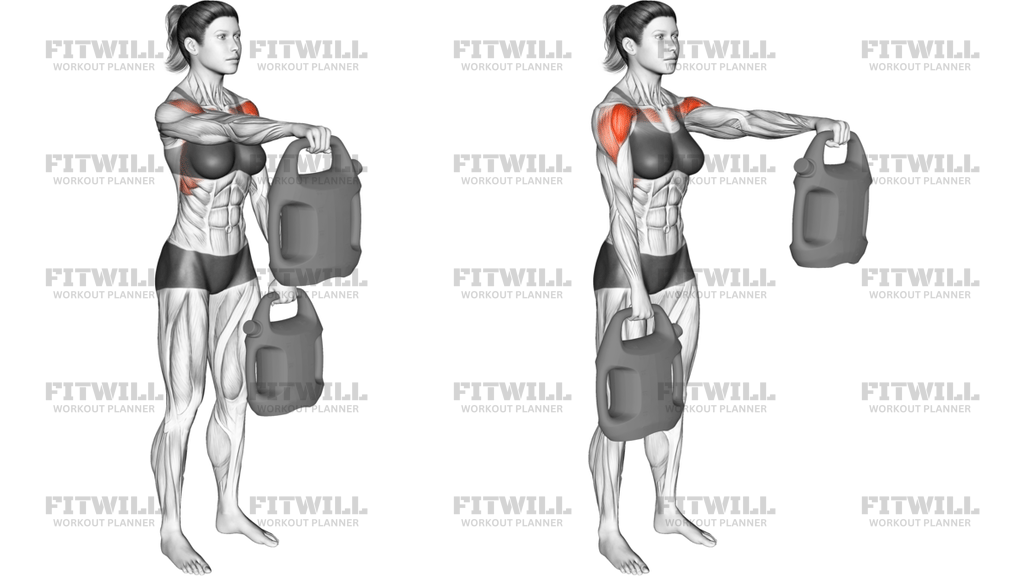
Bottle Weighted Lateral Raise is a standing shoulder isolation movement built around lifting a weighted bottle or jug out to the sides with strict control. It is useful when you want to train the side of the shoulders without relying on heavy loads or big body english. The exercise looks simple, but the quality of the repetition depends on how still you keep the torso and how cleanly the arms travel through the arc.
The main work comes from the shoulder muscles, especially the side delts, while the upper traps, upper back, and core help keep the body organized. Because the load is held away from the body, even a light bottle can become challenging quickly if you shrug, lean, or swing. That makes Bottle Weighted Lateral Raise a good accessory movement for shoulder development, posture awareness, and controlled upper-body training.
Set the feet about hip-width apart, keep a soft bend in the knees, and let the bottles hang at the sides with the palms facing in. From that starting position, the arms should travel in a wide arc slightly in front of the body until they reach shoulder height or just below. The elbows stay softly bent, the wrists stay straight, and the shoulders stay down instead of creeping toward the ears.
The return phase matters just as much as the lift. Lower the bottles slowly until they settle beside the thighs, pause long enough to reset your posture, and start the next rep without bouncing. If the torso starts to rock or the neck starts to tense, the load is too heavy or the set is too long. Clean reps with a smaller range are more useful here than forcing the bottles higher than your shoulders.
Bottle Weighted Lateral Raise fits well in a shoulder-focused session, a higher-rep accessory block, or a home workout where simple equipment is all you have. It can also be scaled easily: use lighter bottles for technique, or switch to a seated variation if standing balance becomes the limiting factor. The goal is smooth lateral motion, not momentum, so the shoulders do the work while the rest of the body stays quiet.
[ Workout Log & Planner ]
Put your next workout in Fitwill
Keep your plan and training log ready when you are.


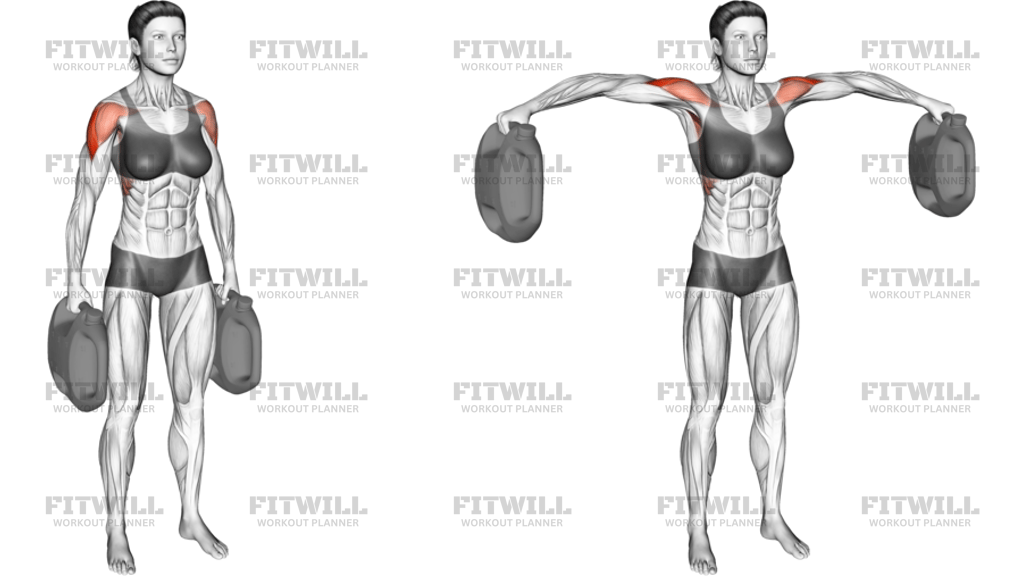
Instructions
- Stand tall with a weighted bottle in each hand, feet about hip-width apart, and the bottles resting beside your thighs.
- Keep your palms facing in, soften the elbows, and let the arms hang slightly in front of your body instead of pinning them behind you.
- Set your shoulders down, brace your midsection, and keep your chest quiet before the first rep starts.
- Raise both arms out and slightly forward in a wide arc, leading with the elbows rather than the hands.
- Stop when your upper arms reach shoulder height or just below it, with the wrists still straight and the shoulders not shrugged.
- Pause for a beat at the top so the side delts finish the rep instead of momentum carrying the bottles higher.
- Lower the bottles slowly back to your sides over two to three seconds, keeping the same soft elbow bend on the way down.
- Reset fully at the bottom, breathe in before the next lift, and stop the set if you need to lean, swing, or shrug to keep going.
Tips & Tricks
- Use very light bottles first; if the first few inches feel jerky, the load is too heavy for a strict lateral raise.
- Keep the arms slightly in front of your torso, not directly out to the sides, so the shoulder joint stays in a cleaner path.
- Think about moving the elbows up and out, not the hands up, to keep tension on the side delts instead of the traps.
- Do not chase a higher top position; stopping at shoulder height keeps the rep honest and reduces shrugging.
- If your wrists bend back, switch to a bottle with a better handle or lighter fill so the forearms can stay stacked under the load.
- A slow lowering phase is the hardest part of this lift, so resist the drop and keep the bottles under control all the way down.
- If your torso rocks, stand a little wider and shorten the set before momentum takes over.
- A small pause at the bottom removes swinging and makes each rep start from a dead stop.
Frequently Asked Questions
What does Bottle Weighted Lateral Raise train most?
It mainly targets the side delts, with the upper traps and upper back helping stabilize the motion. A light core brace keeps the torso from drifting as the arms rise.
How high should the bottles go in Bottle Weighted Lateral Raise?
Stop around shoulder height or slightly below. Going much higher usually turns the rep into a shrug and shifts the work away from the shoulders.
Can beginners do Bottle Weighted Lateral Raise?
Yes, if the bottles are light enough to lift without swaying. Beginners often do better with a shorter range and a slow lower until the shoulder path feels stable.
Why should my elbows stay softly bent?
A small bend keeps the shoulder joint in a friendlier position and prevents the bottles from feeling like long levers at the top. Locking the elbows tends to make the movement feel heavier and less controlled.
Why do my traps take over during Bottle Weighted Lateral Raise?
Usually the load is too heavy or the arms are being lifted too high. Keep the shoulders down, lead with the elbows, and lower the weight if you catch yourself shrugging.
Should I use palms facing down or neutral grip?
A neutral grip with the palms facing in is a good starting point because it is easy to control with bottles or jugs. You can rotate slightly only if it feels better on the shoulders and does not change the motion into a front raise.
What is the most common mistake in Bottle Weighted Lateral Raise?
Swinging the torso to get the bottles up. If your body rocks, shorten the set, slow the lowering phase, and use a lighter load so the shoulders do the work.
Can I do Bottle Weighted Lateral Raise seated instead of standing?
Yes. A seated version can help if you keep leaning back or using momentum, because it removes a lot of the body sway that can creep into the standing lift.