Weighted Standing Shoulder Press
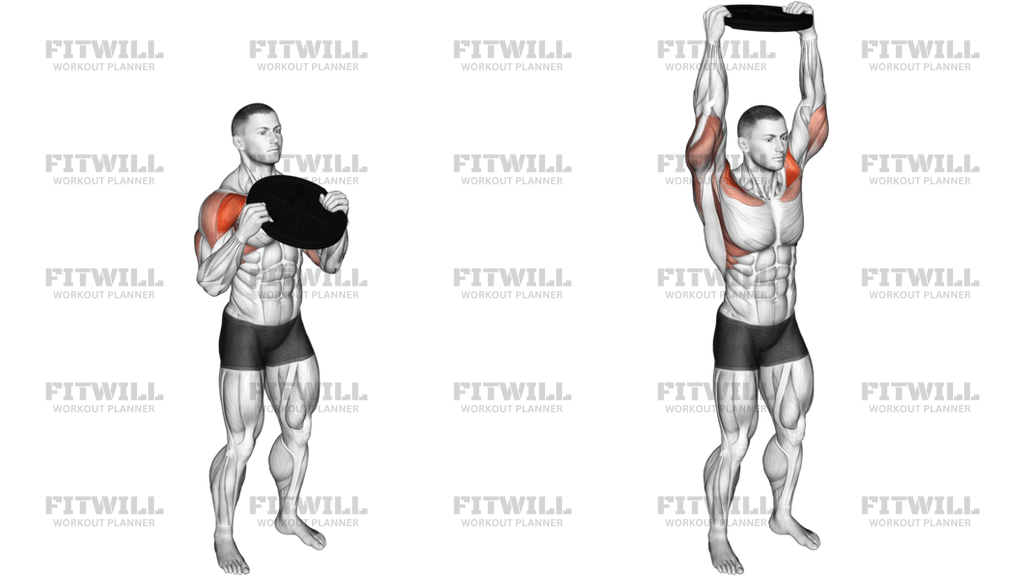
Weighted Standing Shoulder Press is a standing overhead press performed with a weight plate held in both hands at chest height. It trains the shoulders first, with the triceps, upper chest, upper back, and core helping to keep the rep smooth and upright. Because the load sits in front of the body, this version also asks you to control rib flare and torso sway more than a seated press would.
This exercise is useful when you want a simple bilateral pressing pattern that does not require dumbbells, a barbell, or a machine. The plate position makes the range easy to see, but it also punishes sloppy setup quickly: if the elbows drift back or the ribs pop up, the press turns into a back lean instead of a clean shoulder-driven rep. The goal is to press the plate overhead while keeping the body stacked and the neck relaxed.
Start with the plate resting at the upper chest or collarbone line, hands on opposite sides of the rim, and elbows slightly in front of the torso. From there, the press should travel up and a little back so the plate finishes over the middle of the feet. The top position should look tall and organized, with the arms straight, the shoulders active, and the head back under control rather than jutting forward.
Lowering matters just as much as the press. Bring the plate back down under control to the same upper-chest position, then reset your breath and trunk before the next repetition. If the movement feels unstable, lighten the plate and shorten the set before your lower back starts taking over. The best reps are the ones that stay smooth from the first lift to the final descent.
Weighted Standing Shoulder Press fits well in shoulder-focused strength work, upper-body accessories, or home workouts where the plate is the available load. It can also be a useful regression from heavier barbell pressing because the centered grip and compact setup make the movement easy to organize. Keep the motion strict, avoid turning it into a standing incline press, and stop the set if you cannot keep the plate path clean.
Fitwill
Log Workouts, Track Progress & Build Strength.
Achieve more with Fitwill: explore over 9600 exercises with images and videos, access built-in and custom workouts, perfect for both gym and home sessions, and see real results.
Start your journey. Download today!




Instructions
- Stand tall with your feet about hip-width apart and hold the plate against your upper chest at collarbone level, with both hands on the rim.
- Set your elbows slightly in front of your ribs and keep your wrists stacked under the plate instead of letting the hands drift behind the body.
- Take a breath, brace your midsection, and lightly squeeze your glutes so your ribs stay stacked over your pelvis.
- Press the plate upward in a smooth line, letting your head shift back just enough for the plate to pass your face.
- Drive the plate until your arms are straight overhead and the load finishes above the middle of your feet.
- Keep the shoulders active at the top without leaning back or turning the press into a shrug.
- Lower the plate under control to the upper chest, bringing the elbows back to the same slightly-forward position.
- Reset your breath and posture before the next repetition or before racking the plate.
Tips & Tricks
- Keep the plate close to your face on the way up so the press stays vertical instead of drifting forward.
- If your lower back arches, lower the plate a little sooner and re-brace before the next rep.
- Hold the rim firmly with your palms centered on the plate so the load does not tilt or wobble.
- Do not let the elbows flare wide at the bottom; keeping them slightly forward helps the shoulders press more cleanly.
- Use a slower lowering phase to keep tension on the shoulders instead of dropping the plate back to your chest.
- Finish with the biceps near the ears, not with the ribs pushed forward to fake a bigger range.
- A smaller or lighter plate is usually better if you cannot keep the same path for every rep.
- If one shoulder rises sooner than the other, cut the set short and clean up the press path before adding load.
Frequently Asked Questions
What muscles does Weighted Standing Shoulder Press work most?
It primarily hits the shoulders, especially the front and outer delts, with the triceps helping finish the press.
How should I hold the weight plate?
Hold the plate with both hands on the rim and keep the hands evenly spaced so the plate stays level as it moves.
How high should the plate go?
Press until your arms are straight overhead and the plate finishes over your midfoot, not drifting out in front of your head.
Why does my lower back arch during Weighted Standing Shoulder Press?
That usually means the ribs are flaring as the plate gets heavy. Tighten your glutes, stack your ribs over your pelvis, and use a lighter plate if you still cannot stay tall.
Is Weighted Standing Shoulder Press a good beginner exercise?
Yes, if the plate is light enough to keep the path strict. Beginners should start with a smaller load and focus on smooth overhead travel before adding weight.
What is the biggest mistake to avoid?
The most common mistake is pressing forward and turning the movement into a standing front raise. Keep the plate close and finish stacked overhead.
Can I use dumbbells or a barbell instead?
Yes. Dumbbells allow each arm to move more freely, while a barbell usually lets you load heavier once your shoulder mechanics are solid.
What should I do if my shoulders feel pinchy overhead?
Shorten the range, lighten the plate, and stop before the painful range. If the pinch keeps showing up, swap to a different press variation that lets your shoulders move more comfortably.