Pike-to-Cobra Push-Up
Pike-To-Cobra Push-Up is a bodyweight flow that moves from a high pike into a low, wave-like press into cobra and then back to the start. It blends shoulder strength, chest opening, spinal extension, and core control in one continuous repetition. The exercise is useful when you want a controlled warm-up or accessory drill that wakes up the upper body without the heavier loading of a traditional press.
The movement asks a lot from the shoulders, chest, triceps, upper back, and core, with the lats and serratus helping the shoulders move smoothly as you travel forward and open up. Because the range changes from an inverted-V shape to a long, open front-body position, setup matters more than speed. Stable hands, active feet, and a deliberate forward glide keep the rep smooth instead of turning it into a rushed push-up.
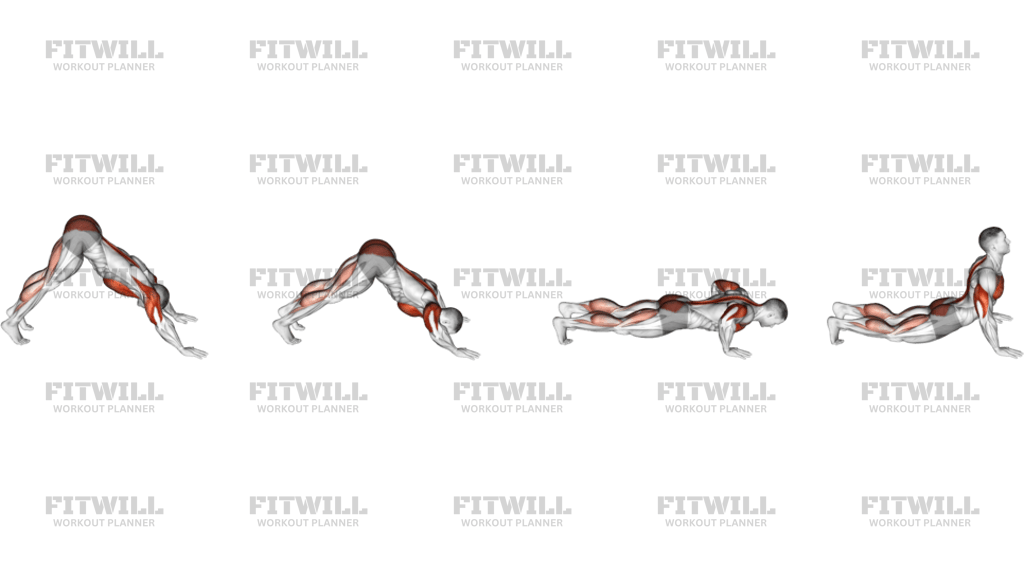
A clean Pike-To-Cobra Push-Up starts with the hips high, the hands planted firmly, and the body long from wrists to hips. From there, the chest sweeps forward between the hands, the elbows bend, and the torso travels low before the chest presses up into cobra with the legs long behind you. The best repetitions feel like one connected wave rather than separate positions, and the shoulders stay organized instead of collapsing toward the ears.
This exercise is often useful in warm-ups, shoulder prep, mobility work, and bodyweight conditioning circuits because it combines strength and range of motion in the same pattern. Beginners can shorten the travel, keep the knees slightly bent, or pause briefly in the middle positions until the shoulder line and lower back feel comfortable. More advanced lifters can slow the lowering phase and keep the transition crisp without dumping tension into the lumbar spine.
Done well, Pike-To-Cobra Push-Up should feel like a controlled transition through the shoulders, chest, and torso, not a race to the floor. If the lower back feels pinched, reduce how far you open into cobra and keep the ribs from flaring hard. The goal is to move cleanly, breathe evenly, and finish each repetition with the same control you started with.
[ Workout Log & Planner ]
Put your next workout in Fitwill
Keep your plan and training log ready when you are.


Instructions
- Place your hands slightly wider than shoulder width on the floor and start in a high pike with your hips lifted, feet about hip-width apart, heels reaching back, and your head between your arms.
- Spread your fingers, press the floor away, and keep your shoulders active before you begin the first rep.
- Shift your chest forward between your hands and bend your elbows, letting your head travel low without dumping weight into your neck.
- Continue the wave as your torso moves forward and down, keeping your core engaged so your lower back does not collapse.
- Press your chest through and up into cobra, straighten your arms, and let the legs stay long behind you as the front of the body opens.
- Keep your shoulders down away from your ears and your gaze slightly forward rather than cranking your neck back.
- Press through your palms, tuck your toes if needed, and lift your hips back up until you return to the high pike shape.
- Take a breath at the top, reset your shoulder position, and repeat only when the hands, feet, and torso are stable again.
Tips & Tricks
- Keep your hands fixed on the floor; the body should travel through the wave, not the hands.
- If your shoulders shrug toward your ears, shorten the forward glide and push the floor away harder.
- Use a small knee bend in the pike if tight hamstrings stop you from getting the hips high enough.
- Let the elbows track at a comfortable angle instead of flaring wide like a fast push-up.
- In cobra, think chest forward and up rather than simply arching harder through the low back.
- If the lower back feels pinched, stop the opening earlier and do a smaller cobra position.
- Move slowly enough that the chest sweep, press, and return all feel connected in one controlled wave.
- Exhale as you press into cobra and inhale as you shift back toward the pike position.
Frequently Asked Questions
What does Pike-To-Cobra Push-Up work most?
It mainly works the shoulders, chest, triceps, and core, with the lats, serratus, and upper back helping the shoulder blades move smoothly.
Is Pike-To-Cobra Push-Up more of a strength move or a mobility drill?
It is both. The pike-to-cobra path builds pressing control while also opening the shoulders and front of the body.
Should my hips stay high the whole time?
No. The hips start high in pike, then travel forward and down as you open into cobra before returning to the pike shape.
Why do I feel Pike-To-Cobra Push-Up in my lower back?
That usually means the cobra position is coming from the spine instead of the shoulders and chest. Shorten the opening and keep the ribs from flaring hard.
Can beginners do Pike-To-Cobra Push-Up?
Yes. Beginners usually do better with a smaller range, bent knees in the pike, and a slower tempo until the transition feels smooth.
How is Pike-To-Cobra Push-Up different from a regular push-up?
A regular push-up stays in a straight plank pattern, while Pike-To-Cobra Push-Up flows from an inverted-V shape into a long cobra position.
Should my elbows flare out on the floor?
No. Keep them at a comfortable angle and let the shoulders lead the wave instead of forcing a wide, cranky press.
When should I use Pike-To-Cobra Push-Up in a workout?
It fits well in a warm-up, shoulder prep block, or bodyweight accessory circuit where you want controlled movement and front-body opening.