Dumbbell Squeeze Bench Press
Dumbbell Squeeze Bench Press is a flat-bench pressing variation that keeps the dumbbells pressed tightly together while you move them over the chest. That constant inward pressure changes the feel of the lift: the chest has to produce the pressing force while also resisting the tendency for the weights to drift apart. The result is a chest-focused dumbbell press that rewards control, stable shoulder position, and deliberate tempo more than maximal load.
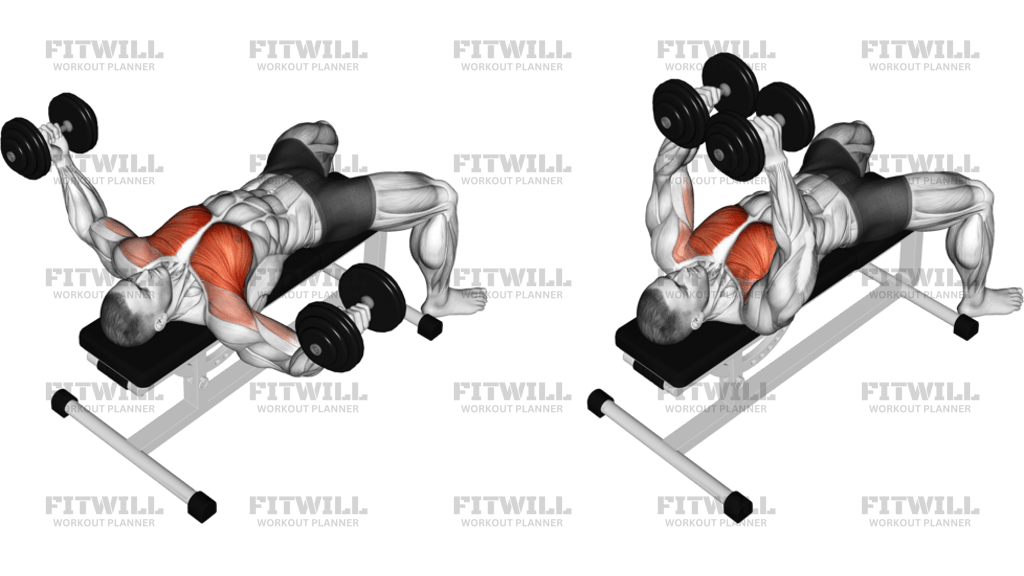
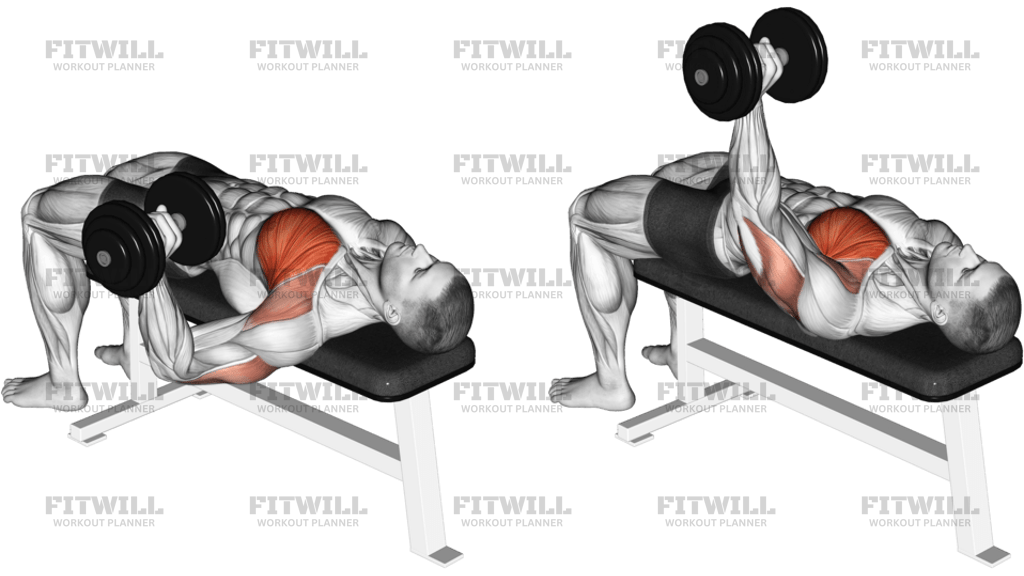
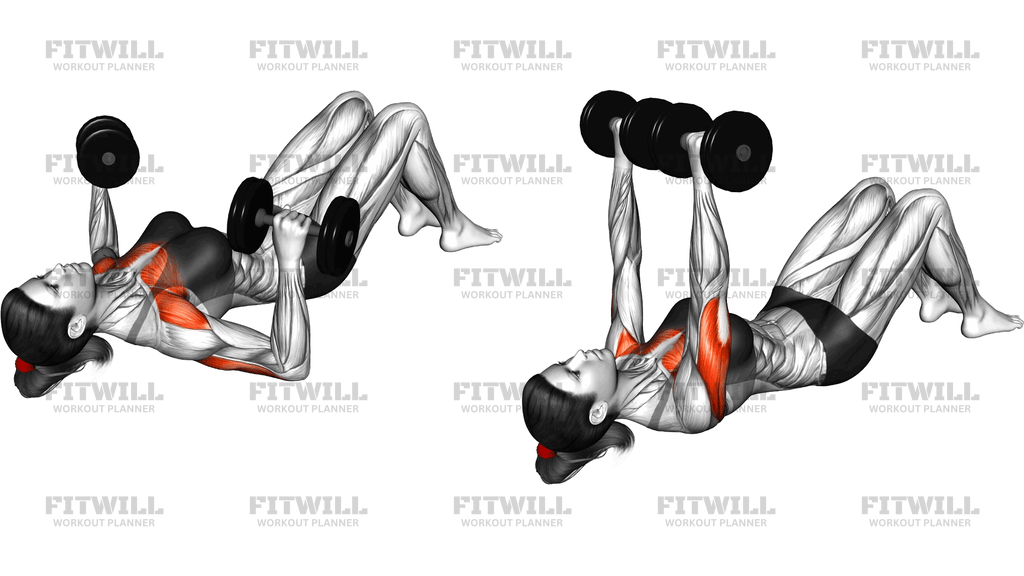
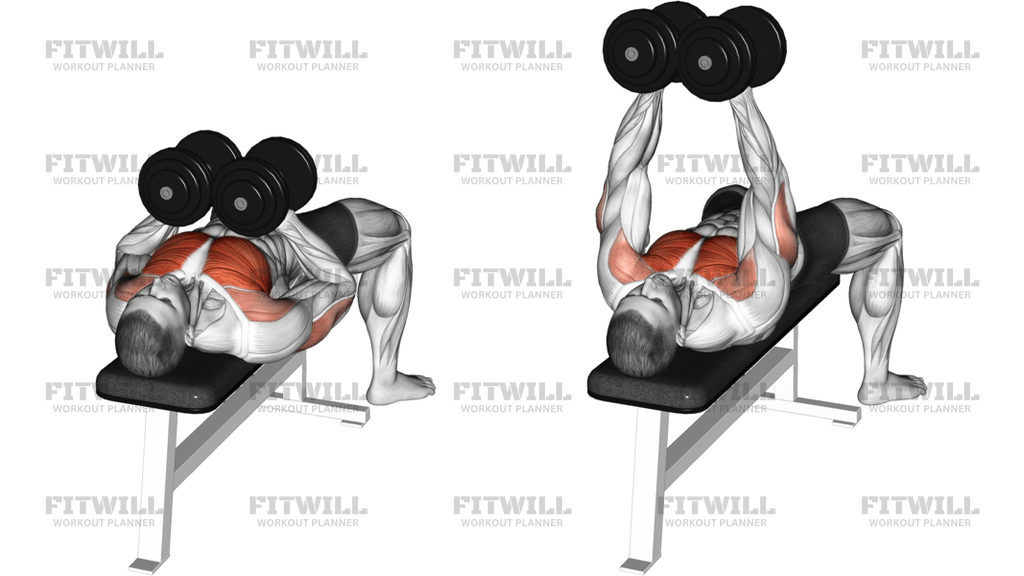
The image shows the lifter lying on a flat bench with the feet planted and the dumbbells stacked above the mid-chest. The palms face each other, the elbows stay slightly tucked, and the dumbbells stay in contact through most or all of the rep. That setup matters because if the weights separate or the elbows flare hard, the exercise turns into a more ordinary dumbbell bench press and the squeeze emphasis disappears.
This variation primarily trains the pectoralis major, with the anterior deltoids and triceps assisting through the press. The chest also works hard to keep the dumbbells pinned together, so you get both horizontal pressing and adduction demands in the same rep. That makes it a useful accessory movement when you want extra chest tension without relying on very heavy loads or a very wide pressing path.
Use a controlled lowering phase, pause briefly if you can keep the bells touching, then drive the dumbbells straight up until the elbows are extended without losing the squeeze. The wrists should stay stacked over the elbows, the shoulder blades should stay set on the bench, and the ribcage should not flare aggressively to manufacture extra range. Inhale on the descent, exhale as you press, and keep the dumbbells traveling over the same line each rep.
Dumbbell Squeeze Bench Press works well in hypertrophy blocks, upper-body accessory work, or as a joint-friendlier chest option when a lifter wants more pec involvement from moderate loads. It is also a good coaching tool for beginners who need to learn stable dumbbell pressing, because the squeeze encourages symmetry and cleaner path control. Stop the set if the bells drift apart, the shoulders roll forward, or the lower back starts taking over the movement.
[ Workout Log & Planner ]
Put your next workout in Fitwill
Keep your plan and training log ready when you are.


Instructions
- Lie on a flat bench with your feet planted firmly on the floor and your head, upper back, and glutes settled on the bench.
- Hold a dumbbell in each hand above the mid-chest with your palms facing each other and the inside faces of the dumbbells pressed together.
- Set your shoulder blades down and back against the bench, then keep your ribs stacked instead of arching hard through the lower back.
- Lower the dumbbells together toward the lower half of the chest with your elbows slightly tucked and your wrists stacked over your elbows.
- Keep steady inward pressure between the dumbbells as you descend so the bells do not separate.
- Press the dumbbells straight up over the chest until the elbows are nearly straight while maintaining the squeeze.
- Exhale through the press and keep the weights moving on the same path instead of drifting toward your face or hips.
- Lower under control for the next rep, or rack the dumbbells safely when the set is complete.
Tips & Tricks
- Choose a load that lets you keep the dumbbells touching without shaking them apart.
- Think about pressing the bells together first and pressing upward second; the squeeze is part of the exercise, not an afterthought.
- Keep the elbows slightly tucked so the shoulders do not take over the top of the press.
- If the dumbbells separate at the bottom, reduce the load or shorten the range until you can keep contact.
- Let the dumbbells track over the middle to lower chest instead of angling high toward the neck.
- Do not bounce the weights off the chest; the lowering phase should stay slow and controlled.
- Keep the wrists neutral so the bells stay stacked over the forearms instead of folding back.
- Stop the set when the squeeze disappears, because losing that inward pressure changes the exercise completely.
Frequently Asked Questions
What makes Dumbbell Squeeze Bench Press different from a regular dumbbell bench press?
The dumbbells stay pressed together, so the chest has to press and also hold the weights inward instead of letting them drift apart.
Which muscles work hardest in this movement?
The pectoralis major is the main driver, with the front delts and triceps assisting through the press.
Where should the dumbbells travel?
On a flat bench, they should move from over the mid-chest down toward the lower chest and back up on the same line.
Do the dumbbells need to stay touching the whole time?
Yes, that is the point of the squeeze press. If they drift apart, the chest-adduction emphasis is reduced.
Is this a good exercise for beginners?
Yes, if the load is light enough to keep the bells together and the shoulders pinned to the bench.
What is the most common form mistake?
Letting the elbows flare wide or letting the dumbbells separate, which turns the set into a looser press with less chest squeeze.
Can I use this instead of a barbell bench press?
It can be used as a chest accessory or a lighter pressing option, but it is not a direct replacement for a heavy barbell bench press.
How heavy should I go on the squeeze press?
Use a weight you can control for the full lowering phase while keeping the dumbbells firmly pressed together.