Dumbbell Drag Bicep Curl
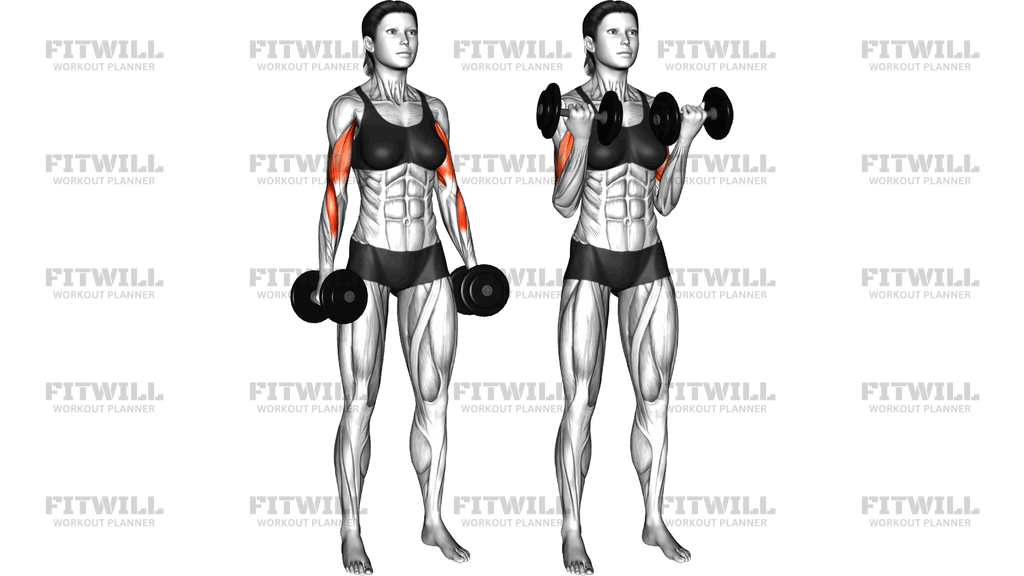
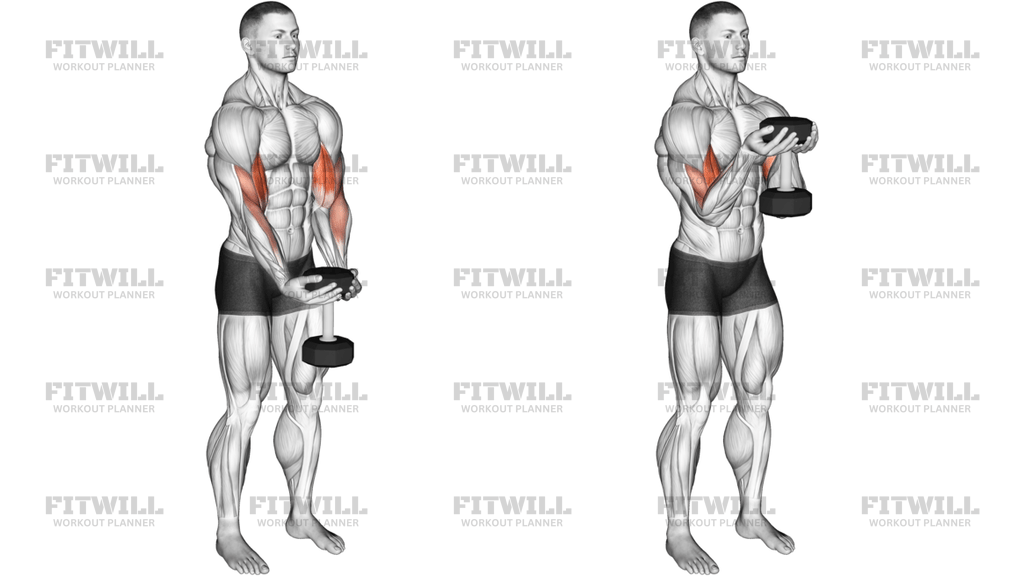
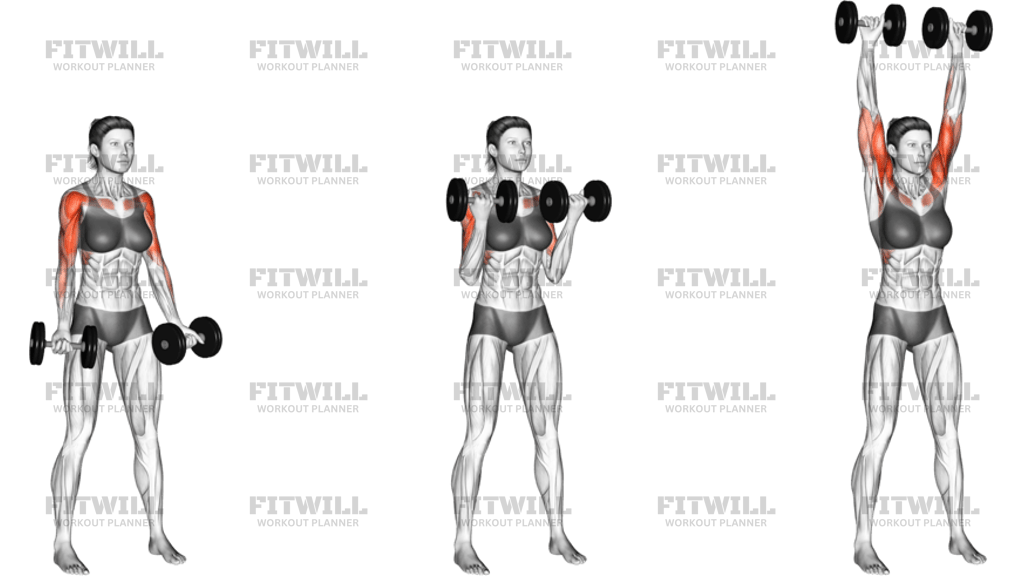
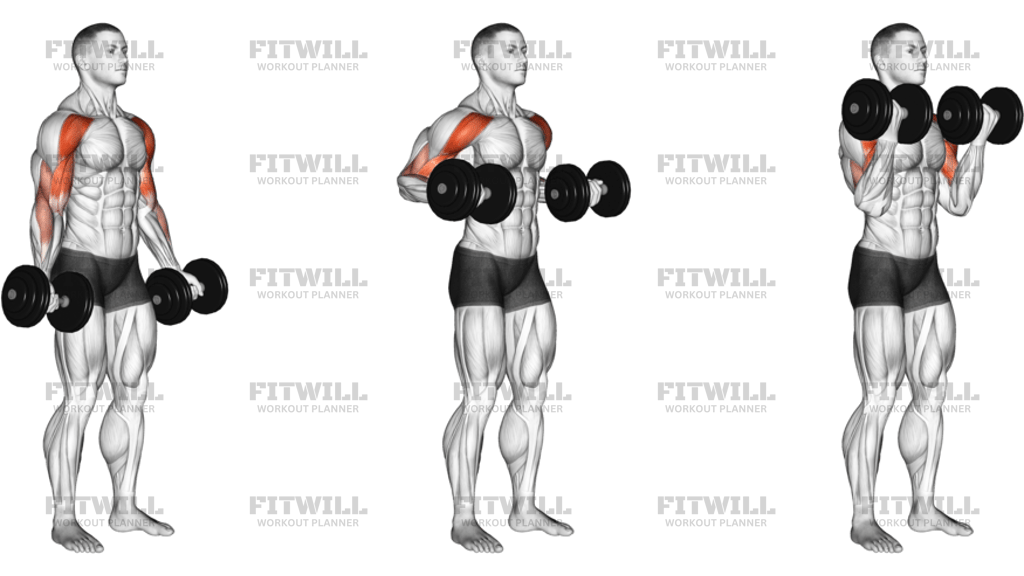
Dumbbell Drag Bicep Curl is a standing dumbbell curl variation where the elbows stay slightly behind the torso and the dumbbells travel close to the shirt line instead of swinging forward. That path changes the feel of the repetition: the shoulders stay packed back, the upper arm stays more fixed, and the biceps have to do the lifting without help from hip drive or a drifting elbow position.
This movement is usually used to train the biceps with a very strict line of pull, while the brachialis, brachioradialis, and forearms help stabilize the forearm and wrist. In anatomy terms, the biceps brachii is the main mover, with support from the brachialis, brachioradialis, and forearm flexors. The shoulder girdle also works hard to keep the upper arm pinned in place, which is why the exercise often feels strong through the front of the shoulder and the upper arm at the same time.
The setup matters more here than in a loose standing curl. Stand tall with the dumbbells at your sides, chest lifted, ribs stacked over the pelvis, and the elbows set a little behind the body before the first rep starts. If the shoulders roll forward or the elbows drift in front of the torso, the drag path disappears and the movement turns into a regular curl. The rep should start from a quiet lower body and a still torso so the dumbbells can be dragged upward under control.
On each rep, think about sliding the dumbbells up close to the body while the elbows travel back rather than flaring out. The weights should finish near the upper abdomen or lower chest without the torso leaning back to chase the top position. Lower the dumbbells along the same tight path, keeping the wrists neutral and the upper arms controlled. The eccentric phase should look just as deliberate as the lift, because letting the bells drift forward removes tension from the target muscles.
Use this exercise when you want a strict biceps-builder that rewards clean mechanics more than heavy loading. It fits well in arm-focused sessions, upper-body accessory work, or any program that benefits from controlled elbow flexion with minimal cheating. Choose a load that lets you keep the bells close to the body, the elbows slightly behind the ribs, and the neck relaxed for every repetition. If the shoulders start to shrug or the lower back starts to arch, the set is too heavy for the drag pattern you are trying to train.
[ Workout Log & Planner ]
Put your next workout in Fitwill
Keep your plan and training log ready when you are.


Instructions
- Stand tall with a dumbbell in each hand, palms facing forward, feet about hip-width apart, and the dumbbells hanging beside your thighs.
- Set your shoulders down and back, then place your elbows slightly behind your torso before the first rep starts.
- Keep your chest lifted and your ribs stacked over your pelvis so your torso stays quiet throughout the set.
- Begin the curl by dragging the dumbbells upward close to your sides instead of swinging them away from your body.
- Keep your elbows traveling back and the upper arms pinned in that slightly behind-the-body position as the bells rise.
- Continue the pull until the dumbbells reach about lower chest or shoulder height, depending on your mobility and arm length.
- Squeeze briefly at the top without letting the shoulders roll forward or the elbows drift in front of your torso.
- Lower the dumbbells along the same tight path with control, keeping tension on the biceps and forearms.
- Exhale as you curl up, inhale on the way down, and reset your stance before the next repetition.
Tips & Tricks
- The drag curl works best when the bells skim close to your shirt; if they swing forward, you have turned it into a standard curl.
- A slightly lighter weight usually produces a stronger biceps contraction here because the elbow position is more demanding than in a loose curl.
- Keep your elbows just behind the seam of your shirt, not pinned hard back to the point that your shoulders shrug or pinch.
- If your wrists bend back at the top, reduce the load and keep the knuckles stacked over the forearms.
- Do not lean away from the weights to finish the rep; the upper body should stay upright and the motion should come from elbow flexion.
- A narrow stance can make it easier to keep the torso still, but your feet should still feel planted and balanced.
- Use a controlled lowering phase so the dumbbells do not drift forward and unload the biceps at the bottom.
- Stop the set when the elbows start moving ahead of the torso, because that is usually the first sign the drag pattern has been lost.
- If you feel the front of the shoulders taking over, lower the load and focus on keeping the upper arms locked into the drag line.
Frequently Asked Questions
What muscles does Dumbbell Drag Bicep Curl target most?
The biceps are the main target, with the brachialis, brachioradialis, and forearms helping control the curl.
Why are the elbows kept behind the torso in a drag curl?
That elbow position reduces swinging and keeps the dumbbells traveling in a strict line close to the body.
How far should the dumbbells travel on each rep?
Bring them up close to the upper abdomen or lower chest without letting the shoulders roll forward.
Is this the same as a regular standing dumbbell curl?
No. A drag curl keeps the elbows slightly behind the torso and the bells traveling tighter to the body.
Can beginners use this exercise?
Yes, but the load should be light enough to keep the torso still and the dumbbells close to the shirt line.
What is the most common mistake with the dumbbells?
Letting them drift forward away from the body, which removes the drag path and turns the rep into a swing.
Should my shoulders move during the lift?
They should stay packed down and back; avoid shrugging or rolling forward as the bells rise.
How do I make the exercise harder without cheating?
Use a slightly slower lowering phase or a modest increase in load while keeping the elbows behind the torso.