Dumbbell Incline Alternate Reverse Fly
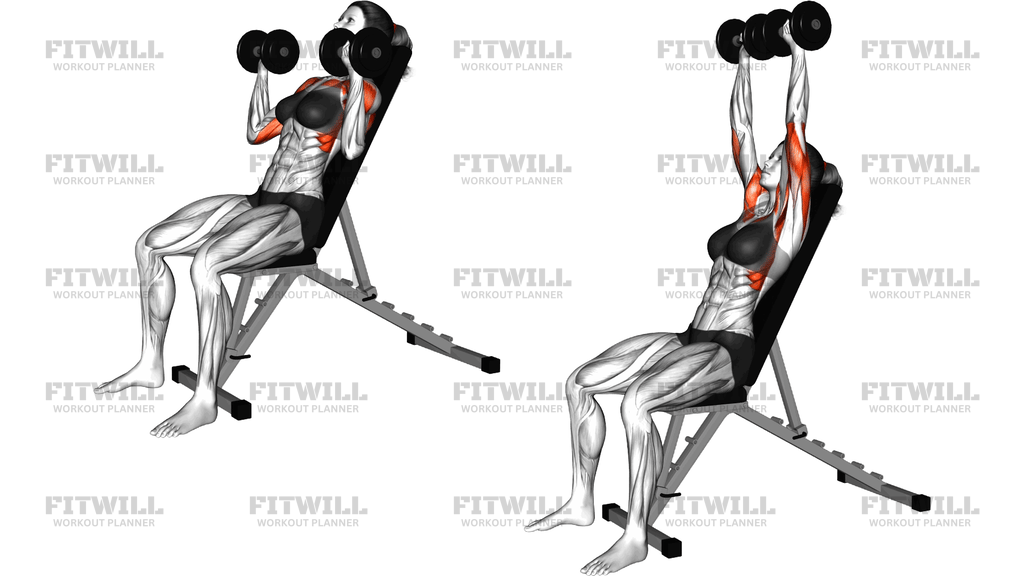
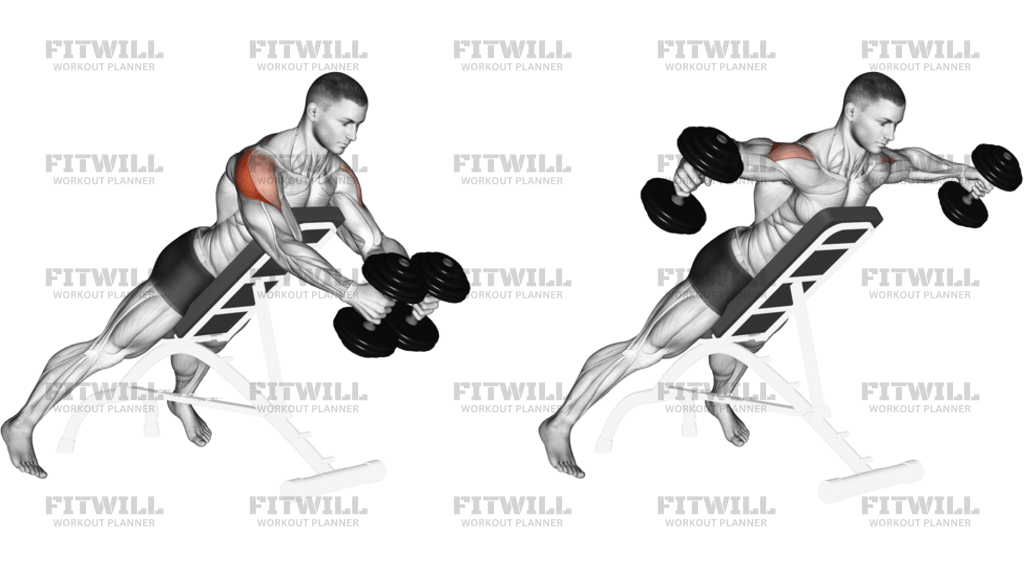
Dumbbell Incline Alternate Reverse Fly is a chest-supported rear-delt movement performed on an incline bench with one dumbbell lifting at a time. The incline support takes most of the body sway out of the lift, which makes it a useful choice when you want to train the back of the shoulders with less cheating and less lower-back involvement than a bent-over variation.
The main job of the exercise is to open the arms in a wide arc while keeping the chest anchored to the bench. That makes the Deltoids do most of the work, with the upper back helping control the shoulder blades and keep the motion smooth. Because the reps alternate side to side, each arm has to work without relying on the other side to create momentum.
Bench angle matters. A moderate incline usually lets the chest stay supported while the arms hang freely under the shoulders, and that gives the rear delts a clean line of pull. If the bench is too steep, the movement starts to feel like a shrug or upright raise; if it is too low, the shoulders and neck can lose position and the torso may want to twist.
The best reps are small, deliberate, and controlled. Raise one dumbbell in a wide arc until the upper arm is close to shoulder level or slightly below it, pause briefly, then lower it under tension before switching sides. The goal is not to heave the weight high, but to keep the shoulder joint moving cleanly while the chest stays planted on the bench.
This exercise fits well in upper-back, rear-delt, or shoulder accessory work, especially after pressing or rowing. It is also a good option for lifters who want a strict isolation movement that still feels stable because of the bench support. Use a light to moderate load, keep the neck long, and stop the set if the motion turns into a shrug, a twist, or a swing.
[ Workout Log & Planner ]
Put your next workout in Fitwill
Keep your plan and training log ready when you are.


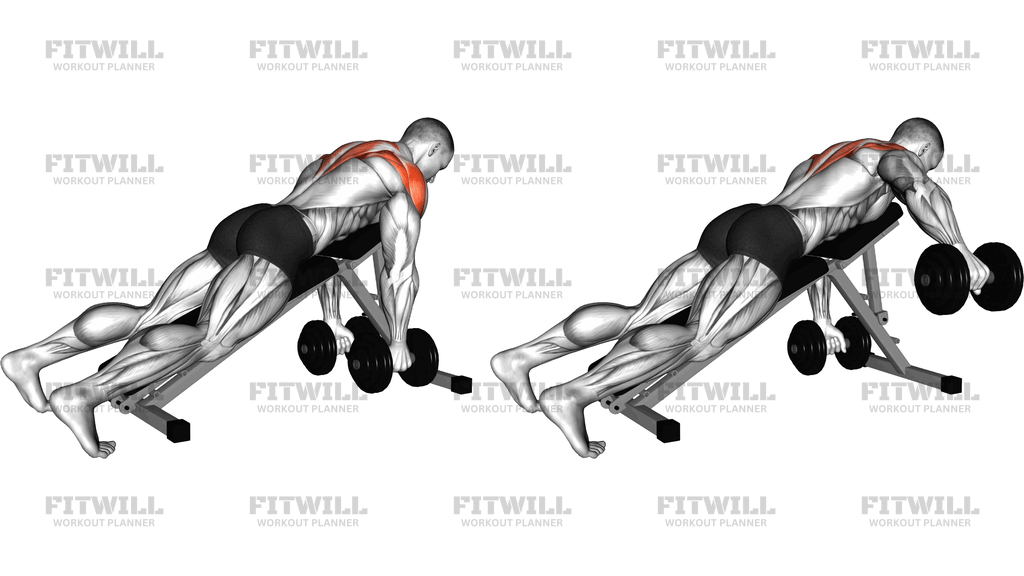
Instructions
- Set an incline bench to a moderate angle, lie chest-down with your upper chest supported, and plant your feet firmly on the floor for balance.
- Hold a dumbbell in each hand with your arms hanging straight toward the floor, palms facing in, and a slight bend in both elbows.
- Press your chest gently into the pad, keep your neck long, and let your shoulder blades settle without shrugging up.
- Lift one dumbbell out to the side in a wide arc until your upper arm reaches roughly shoulder height or slightly below it.
- Keep the opposite arm hanging still while you raise the working side; do not rotate your torso or lift your chest off the bench.
- Pause for a beat at the top and feel the rear delt and upper back finish the rep instead of the upper traps.
- Lower the dumbbell slowly back to the hanging position, keeping tension on the shoulder the whole way down.
- Switch sides and repeat the same arc on the other arm, alternating reps until the set is complete.
- Place both dumbbells down safely, then come off the bench only after the weights are fully under control.
Tips & Tricks
- Use lighter dumbbells than you would for a two-arm reverse fly; the alternating pattern makes it easy to overestimate the load.
- Think about lifting the elbow out and away, not squeezing the hand upward. That cue keeps the rear delt working instead of turning the rep into a shrug.
- Keep your chest pinned to the bench. If the torso rocks or twists, the weight is too heavy or the bench angle is too steep.
- Stop the raise when the upper arm is near shoulder level. Going higher usually trades rear-delt tension for upper-trap compensation.
- Hold the elbow bend almost fixed from start to finish so the movement stays in the shoulder joint, not the elbow.
- Let the non-working arm stay quiet on the way up. If both shoulders move together, you are losing the alternating pattern and borrowing momentum.
- Lower the dumbbell more slowly than you lift it. The controlled eccentric is where this exercise stays honest and effective.
- Keep your chin slightly tucked and your neck neutral so you do not crane forward as fatigue builds.
- If your lower back feels pinched, lower the bench angle a little and widen your stance for more support.
- Exhale as the dumbbell rises and inhale as it returns to the hang; that rhythm helps keep the torso steady against the bench.
Frequently Asked Questions
What muscles does Dumbbell Incline Alternate Reverse Fly work most?
It mainly targets the rear delts, with the rhomboids, mid traps, and other upper-back muscles helping stabilize the shoulder blades.
Why use an incline bench for Dumbbell Incline Alternate Reverse Fly?
The incline bench supports your chest and limits torso swing, so the rear delts do more of the work and the lower back does less.
Should I alternate arms one at a time or lift both dumbbells together?
Alternate one arm at a time. That keeps each side honest, reduces cheating, and makes it easier to feel the working shoulder without momentum from the other side.
How high should I lift the dumbbell on this reverse fly?
Raise it until the upper arm is about in line with the shoulder or slightly below it. If you keep going higher, the shoulders usually shrug and the neck takes over.
Is Dumbbell Incline Alternate Reverse Fly good for beginners?
Yes, if you start light and keep the chest glued to the bench. The support makes it easier to learn than a bent-over reverse fly, but the load still needs to stay modest.
What are the most common mistakes on this movement?
Shrugging the shoulders, twisting the torso to help the lift, and using too much weight are the big ones. All three turn the exercise into a sloppy swing instead of a strict rear-delt raise.
Can I substitute this for a cable rear-delt fly?
Yes. The dumbbell version is a solid free-weight substitute, especially when you want chest support and a simple setup without a cable station.
How many reps should I do on Dumbbell Incline Alternate Reverse Fly?
Most lifters do best with moderate to higher reps, usually 10-20 alternating reps per side, because the movement is more about control and shoulder position than heavy loading.
Where should I feel the exercise?
You should feel it in the back of the shoulder and the upper back, not in the neck. If the neck is taking over, lower the weight and keep the chest pressed into the bench.