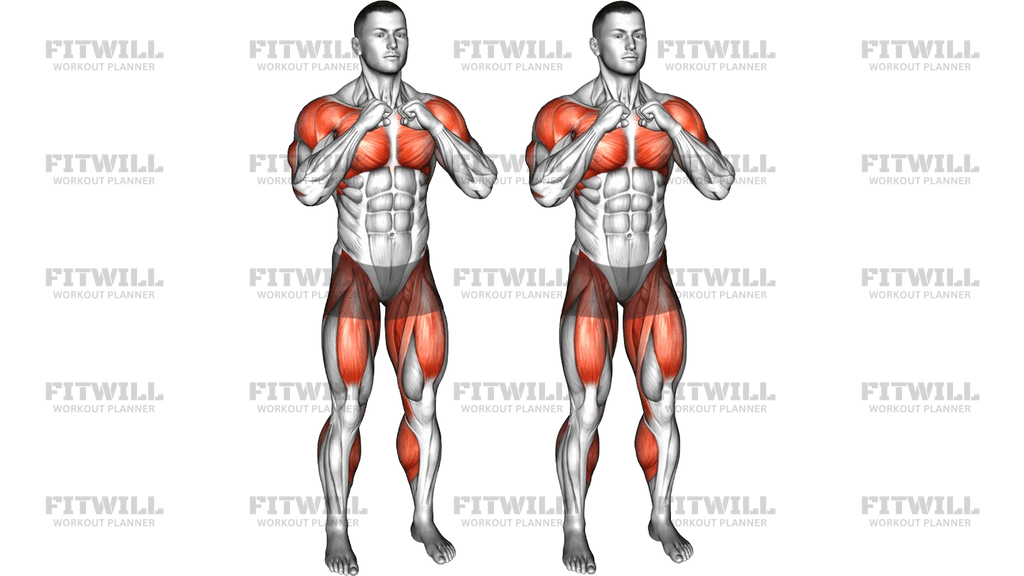
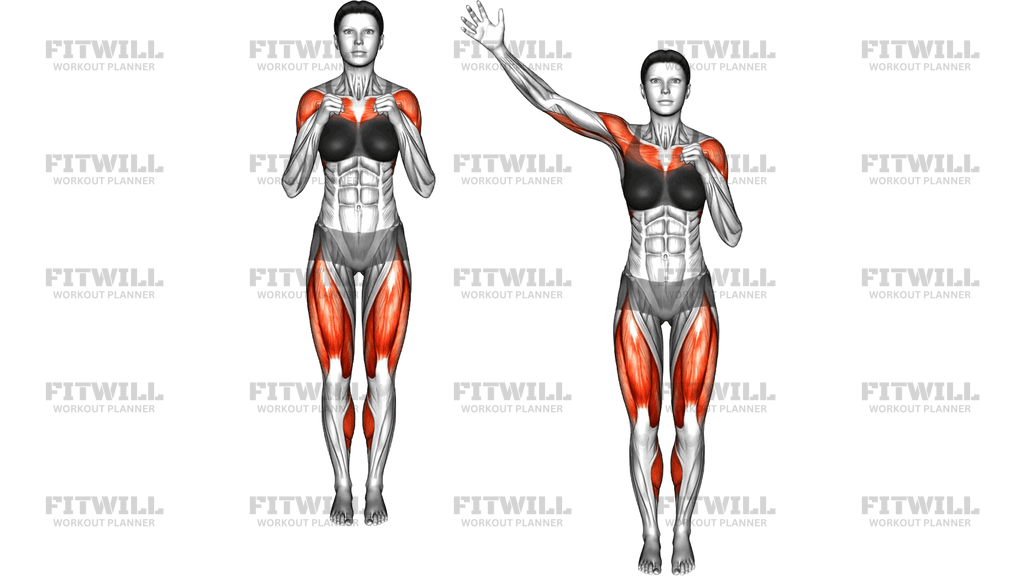
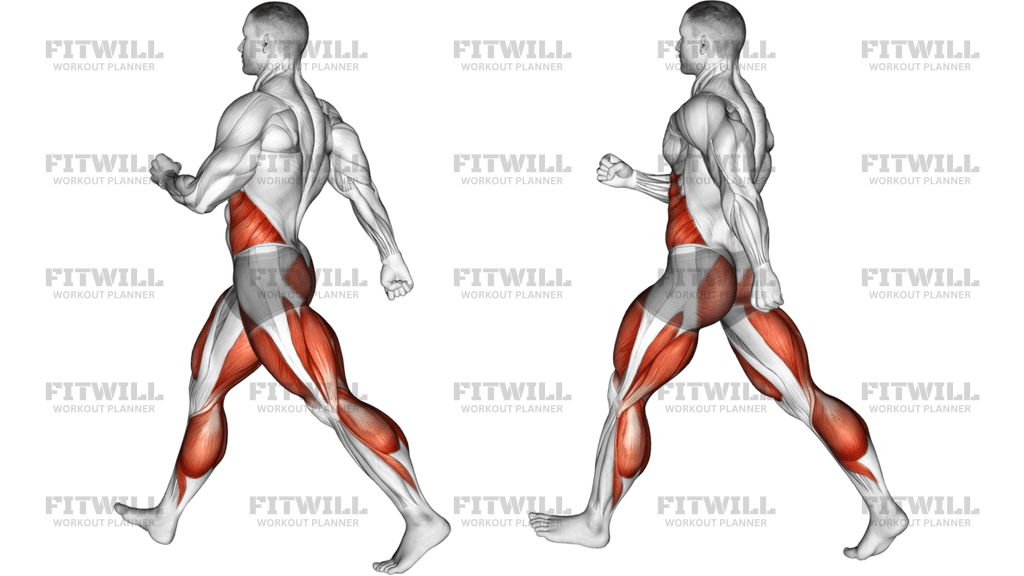
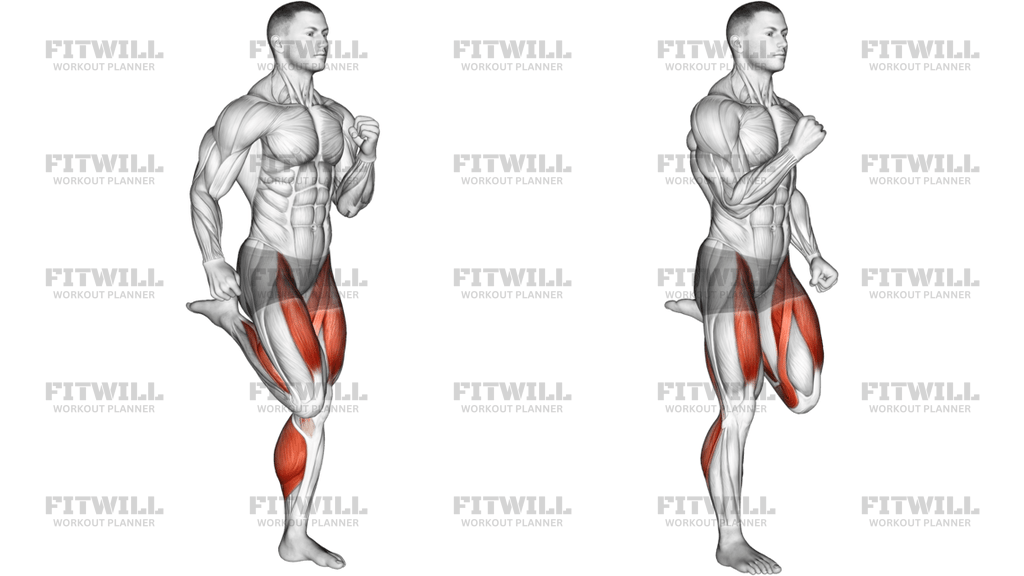
High Knee Sprints
High Knee Sprints is a bodyweight running drill built for conditioning, warm-ups, and athletic footwork. It trains a fast knee drive, quick ground contact, and a coordinated arm swing while asking your trunk and hips to stay organized as the pace rises. Because the movement is repeated for time, the quality of each stride matters more than how high the knees look.
The drill is especially useful when you want to raise heart rate without needing equipment or a lot of space. It can be used before sprint work, as part of a conditioning circuit, or on its own when you want a short, intense cardio interval that still reinforces running mechanics. The main challenge is not just speed; it is keeping the pelvis steady, landing softly, and switching legs without losing rhythm.
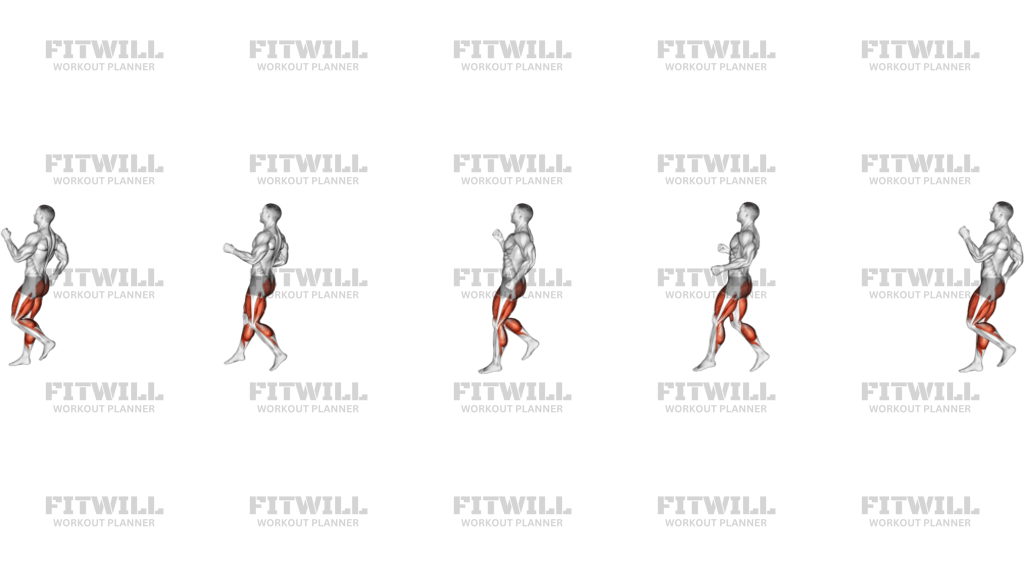
A good High Knee Sprints set starts with a tall stance on the balls of the feet, a slight forward lean from the ankles, and the ribs stacked over the hips. From there, each knee should drive up quickly while the opposite arm punches forward, just like an aggressive running pattern. The torso should stay upright and the shoulders should remain relaxed so the legs can cycle fast without turning the drill into a bounce or a reach.
The most common breakdown is letting the body lean back, overstriding in front of the hips, or stomping the ground with every contact. Those errors reduce speed and add unnecessary impact to the knees and shins. Keep the steps quick, the contacts light, and the foot strike under your center of mass so the movement stays springy instead of noisy.
High Knee Sprints works well for beginners if the pace and range are scaled down, and it is also useful for more advanced lifters who want an efficient conditioning finisher. You can run it in place if space is limited, or travel slightly forward if the floor and room allow it. Treat it as an athletic drill first and a cardio exercise second, and the movement will feel sharper, cleaner, and easier to repeat.
[ Workout Log & Planner ]
Put your next workout in Fitwill
Keep your plan and training log ready when you are.


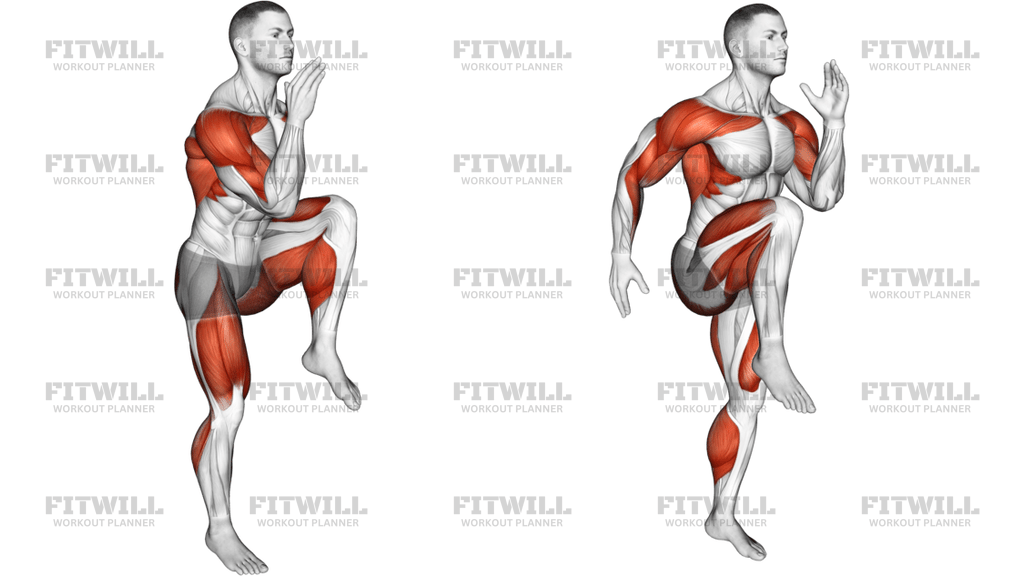
Instructions
- Stand tall with your feet about hip-width apart, arms bent at your sides, and your weight balanced over the balls of your feet.
- Brace lightly through your midsection, keep your chest up, and lean just slightly forward from the ankles rather than folding at the waist.
- Drive your right knee up toward hip height while your left arm swings forward in a running motion.
- Land softly on the right forefoot under your hip, then immediately switch and drive the left knee up.
- Keep alternating legs quickly so the knees rise and the feet cycle like an in-place sprint.
- Keep your hips level, shoulders relaxed, and eyes forward as the cadence increases.
- Breathe rhythmically through the drill instead of holding your breath on each knee drive.
- Slow the cadence before finishing, lower both feet to the floor, and reset your stance.
Tips & Tricks
- Think of this as quick running mechanics, not a jump drill. The feet should skim the floor instead of popping straight up and down.
- Drive the knee and opposite arm together. If your arms stay still, the cadence usually slows and the legs feel heavier.
- Keep the landing under your hips. Reaching the foot too far in front of you turns the drill into a braking step.
- If your torso leans back, shorten the knee height and keep the ribs stacked over the pelvis.
- Stay tall through the crown of the head. Looking down usually rounds the upper back and drops the pace.
- Use a smaller range if your shins or hip flexors start to tighten up, then build the height back gradually.
- Keep the contacts quiet. Loud foot strikes usually mean you are stomping instead of sprinting.
- Stop the set when the knee drive becomes uneven or the feet start crossing in front of each other.
Frequently Asked Questions
What muscles do High Knee Sprints work?
High Knee Sprints are mainly a cardio and hip-flexion drill, with the hip flexors, quads, calves, glutes, and core all contributing to the movement.
Can beginners do High Knee Sprints?
Yes. Start with a slower marching version, then build to a quicker alternating knee drive once you can keep the torso stable and the foot contacts light.
How high should my knees go in High Knee Sprints?
Aim for about hip height if you can keep the pelvis steady. If the torso starts rocking or the steps get loud, shorten the range and keep the rhythm fast.
Should High Knee Sprints be done in place or moving forward?
Either works. In place is easier in a small space, while a slight forward travel makes the drill feel closer to a sprinting pattern.
What is the biggest form mistake in High Knee Sprints?
Overstriding in front of the hips is the most common problem. Keep the feet landing under your center of mass so each contact stays quick and controlled.
Are High Knee Sprints good for a warm-up?
Yes. They raise body temperature quickly and rehearse fast knee lift and arm drive before sprinting, field work, or conditioning.
How can I make High Knee Sprints easier on my joints?
Reduce the knee height, slow the cadence slightly, and keep the landing soft on the forefoot instead of forcing a hard rebound.
How do I breathe during High Knee Sprints?
Use short, steady exhales as the knees switch. Holding your breath makes the drill feel tighter and usually slows the cadence.