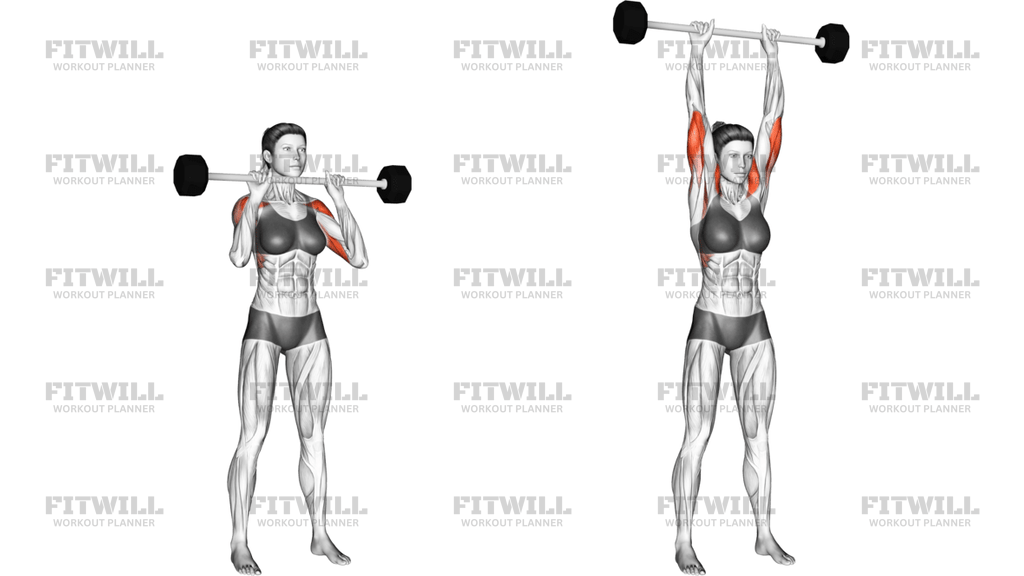
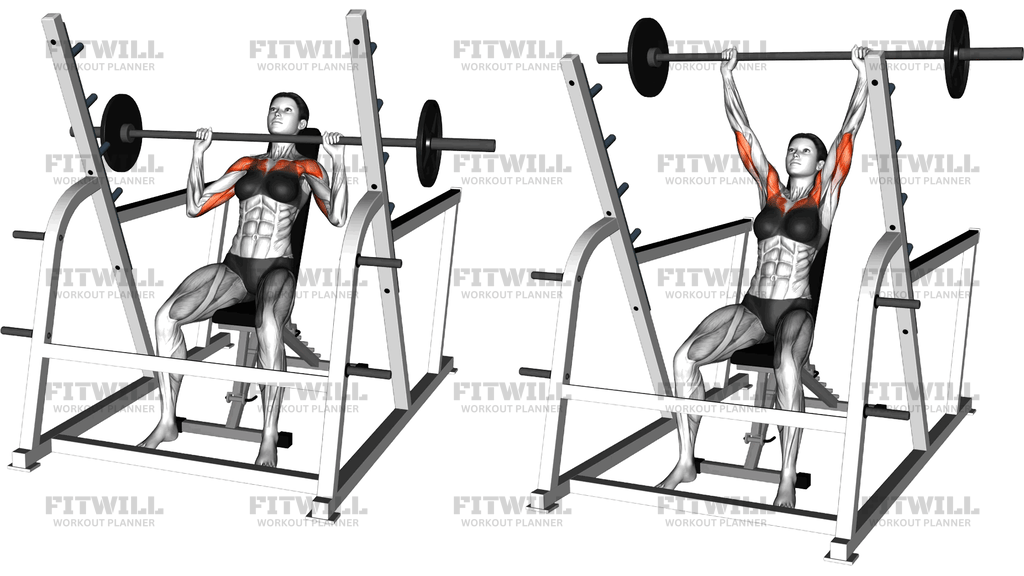
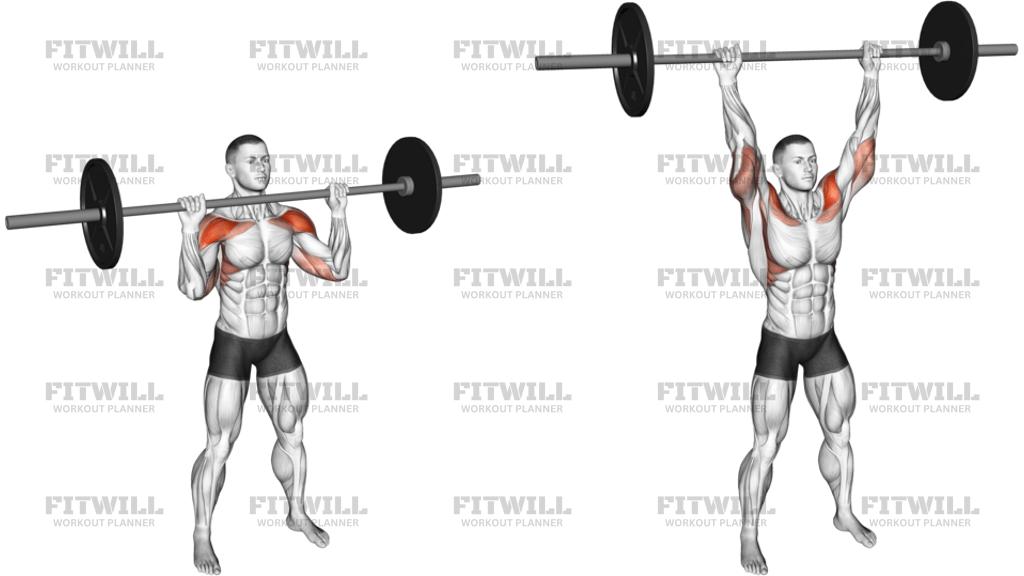
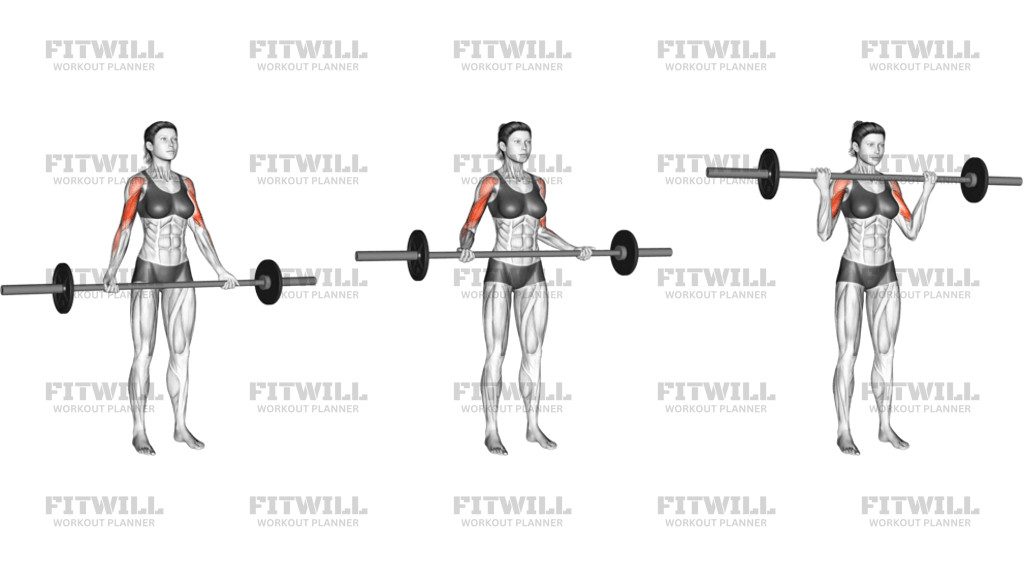
Barbell Seated Front Raise
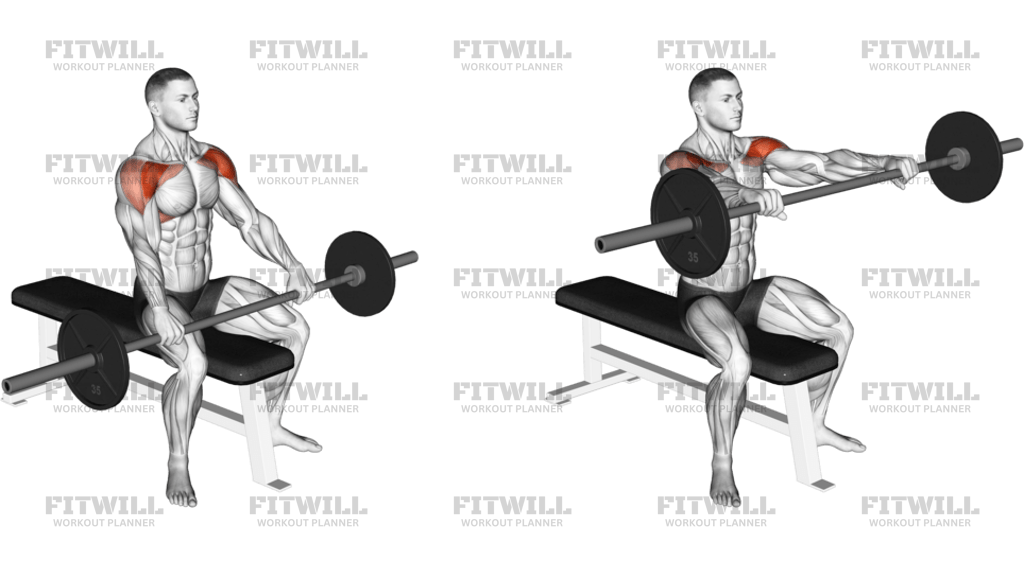
Barbell Seated Front Raise is a strict shoulder isolation exercise that trains the front of the deltoids while the seated position removes help from the hips and legs. With the torso fixed on a bench, the bar has to be lifted by the shoulder joint instead of by a dip, swing, or leg drive. That makes the movement useful when you want clean anterior-delt work and a clear feel for where the load is coming from.
The seated setup matters because it changes the whole rep. Planting the feet, sitting tall, and keeping the ribs stacked over the pelvis limits back extension and keeps the bar path honest. A pronated grip on the barbell also keeps both arms moving together, which can make side-to-side control easier to monitor than a free-swinging standing variation.
At the top of each rep, the bar should come up only as far as you can control without shrugging hard or tipping the torso back. For most lifters that means shoulder height or slightly below, with soft elbows and wrists stacked over the bar. The lower phase should be deliberate all the way back to the thighs so the shoulders stay under tension instead of bouncing off momentum.
This is usually best used as accessory work, warm-up volume, or part of a shoulder-focused session where you want precision more than load. It is beginner-friendly if the weight stays light and the bench position stays disciplined, but it can irritate the front of the shoulder if you chase range, shrug the bar, or let the lower back take over. Clean reps, modest load, and a controlled return matter more here than forcing a bigger number on the plate.
[ Workout Log & Planner ]
Put your next workout in Fitwill
Keep your plan and training log ready when you are.


Instructions
- Sit on a flat bench with your feet flat, chest tall, and the barbell resting against the front of your thighs.
- Take a shoulder-width overhand grip and keep your wrists straight and elbows softly bent.
- Brace your torso before the first rep so your ribs stay stacked over your pelvis.
- Lift the bar in a smooth arc straight in front of you until it reaches shoulder height or slightly below.
- Keep your shoulders down as the bar rises and avoid leaning back to finish the rep.
- Pause briefly at the top while the bar stays under control in front of your shoulders.
- Lower the bar slowly back to your thighs without letting it drop or bounce.
- Reset your posture, breathe, and repeat for the planned number of reps.
Tips & Tricks
- Keep the bench seat far enough back that the bar clears your thighs without you having to tip your torso.
- A narrower grip can feel smoother on the wrists and keep the bar path more stable.
- Stop the rep before your traps take over; hard shrugging usually means the load is too heavy.
- If the front of the shoulders pinch, shorten the range and keep the bar slightly below shoulder height.
- Lift with straight, not locked, elbows so the delts do the work instead of turning it into an elbow raise.
- Lower the bar for a full second or two so the negative phase stays under tension.
- Keep your chin neutral and avoid jutting your head forward as the bar rises.
- Choose a light to moderate load that lets every rep start from the thighs without a bounce.
Frequently Asked Questions
What does Barbell Seated Front Raise work most?
It mainly targets the front delts, with the upper chest, traps, and arm muscles helping stabilize the bar.
Can beginners perform this exercise?
Yes. Beginners usually do best with a very light barbell and a strict seated setup so the shoulders learn the path without momentum.
How wide should my grip be on the bar?
A shoulder-width overhand grip is the safest starting point. If your wrists feel cramped or the bar drifts, adjust slightly wider or narrower without changing the torso position.
How high should I raise the bar?
Raise it to shoulder height or a touch below. Going higher usually adds shrugging and lower-back compensation instead of better shoulder work.
Why do it seated instead of standing?
The seated position removes help from the legs and makes it harder to swing the bar, so the front delts have to produce more of the movement.
What is the most common mistake?
Leaning back and shrugging the shoulders to force the bar higher. That usually means the load is too heavy or the range is too big.
What should I do if the bar hits my thighs on the way up?
Sit a little farther back on the bench or start with the bar just clear of the thighs before each rep.
Can I swap this for dumbbells or a plate?
Yes. Dumbbells or a single plate can be easier on the wrists and may let you find a more comfortable shoulder path if the barbell feels awkward.