Kettlebell Banded Swing
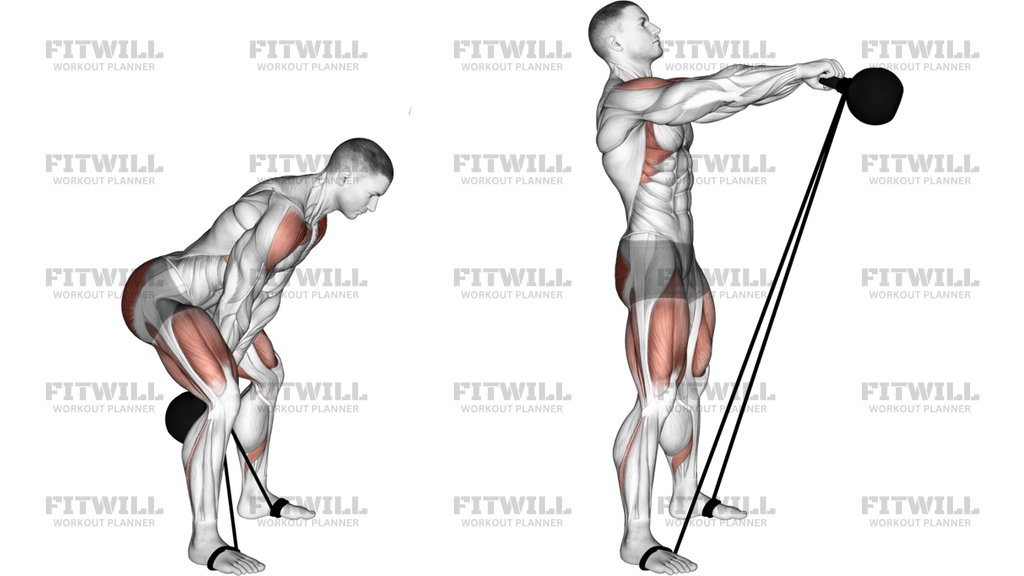
Kettlebell Banded Swing is a band-resisted hip-hinge drill that pairs a kettlebell swing with increasing tension as the bell moves away from the floor. The band is anchored under the feet and attached to the kettlebell, so the top of each rep becomes harder than the bottom. That makes the exercise a useful way to train explosive hip extension, trunk stiffness, and a clean swing path without letting the arms do the work.
This variation loads the posterior chain and grip while forcing the shoulders and lats to keep the bell close to the body. The band changes the timing of the rep: the bell is easy to start, then becomes more demanding as the hips drive through and the bell floats up. If the stance is narrow, the band is too tight, or the bell drifts forward, the swing will feel unstable and the lower back will take over. A clean setup is what keeps the resistance useful instead of messy.
Begin with the feet planted and the band centered so it pulls straight through the swing path. Hinge the hips back, keep the shins mostly vertical, and let the kettlebell hike high between the thighs before snapping the hips forward. At the top, stand tall with the glutes hard, ribs stacked over the pelvis, and the bell floating to about chest height. The band should add tension without forcing you to lean back, shrug, or bend the elbows.
Use Kettlebell Banded Swing when you want a swing pattern that is more demanding at lockout, such as in power work, conditioning circuits, or hinge accessory training. It works best with crisp repetitions and enough rest to keep every rep identical. Stop the set if the band twists, the bell starts looping away from the body, or you can no longer hinge cleanly on the return.
[ Workout Log & Planner ]
Put your next workout in Fitwill
Keep your plan and training log ready when you are.


Instructions
- Step onto the band so it is centered under both feet, then attach the other end securely to the kettlebell handle or horn so the band tracks straight in front of you.
- Stand with your feet about hip- to shoulder-width apart, knees soft, and the kettlebell a short reach in front of your toes.
- Hinge your hips back, keep your chest long and your shins nearly vertical, and grip the bell with both hands using straight arms.
- Hike the kettlebell back between your thighs while keeping your shoulders packed down and your neck neutral.
- Drive your hips forward forcefully to stand tall and let the bell float up from the hip snap, not from an arm raise.
- Finish each rep with the glutes tight, ribs stacked over the pelvis, and the band stretched without leaning back or shrugging.
- Let the bell fall naturally, then guide it back between your thighs by hinging again and loading the hips for the next rep.
- Breathe out sharply through the hip drive, inhale as the bell drops, and reset the stance if the band twists or drifts off line.
Tips & Tricks
- Use only enough band tension to make the top of the swing harder; if the bell gets yanked forward, the band is too aggressive.
- Keep your arms long like straps. If you feel yourself pulling with the elbows, the bell is too heavy or the bell path is too far from the hips.
- The backswing should stay close to the groin line. A wide loop usually means the bell is drifting and the band is pulling you off balance.
- Stand tall at the top, but do not lean back to fight the band. The finish should feel like a hard glute lockout, not a lower-back arch.
- Think about snapping the hips through the bell, not lifting the bell. The band should change the load, not the basic swing pattern.
- Keep the lats engaged so the bell does not swing away from the body on the way up or out in front on the descent.
- If the band slides under the feet, reduce the range, slow the set, or change the anchor before the next rep.
- End the set when the hinge gets shallow or the swing turns into a front raise; that usually means the posterior chain is done.
Frequently Asked Questions
What does the band change in a kettlebell swing?
The band increases tension as the bell rises, so the top of the swing becomes harder and demands a stronger hip lockout.
Which muscles work hardest in Kettlebell Banded Swing?
The glutes, hamstrings, lats, grip, and core do most of the work, especially when the hips finish the rep cleanly.
Is this exercise supposed to feel like a squat?
No. It is a hip hinge, so the hips go back and the shins stay fairly vertical while the bell travels between the thighs.
How high should the kettlebell rise?
Usually to about chest height, only as high as you can reach without leaning back, shrugging, or bending the elbows.
Where should the band be anchored?
It should sit centered under the feet and connect to the bell so the tension tracks straight instead of pulling from one side.
Can a beginner use the banded version?
Yes, if the basic kettlebell swing is already familiar and the band tension is light enough to keep the path clean.
What is the biggest technique mistake?
The most common errors are squatting down, overextending at the top, and letting the bell drift away from the body.
How do I make it harder without ruining the swing?
Increase the band tension slightly or use a heavier kettlebell, but only if the hinge, lockout, and bell path stay identical.