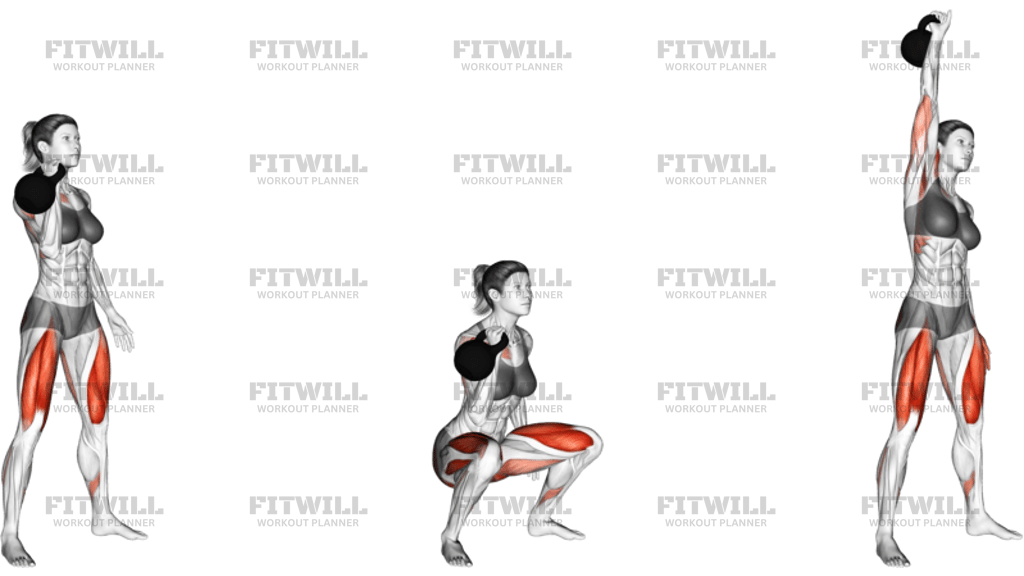
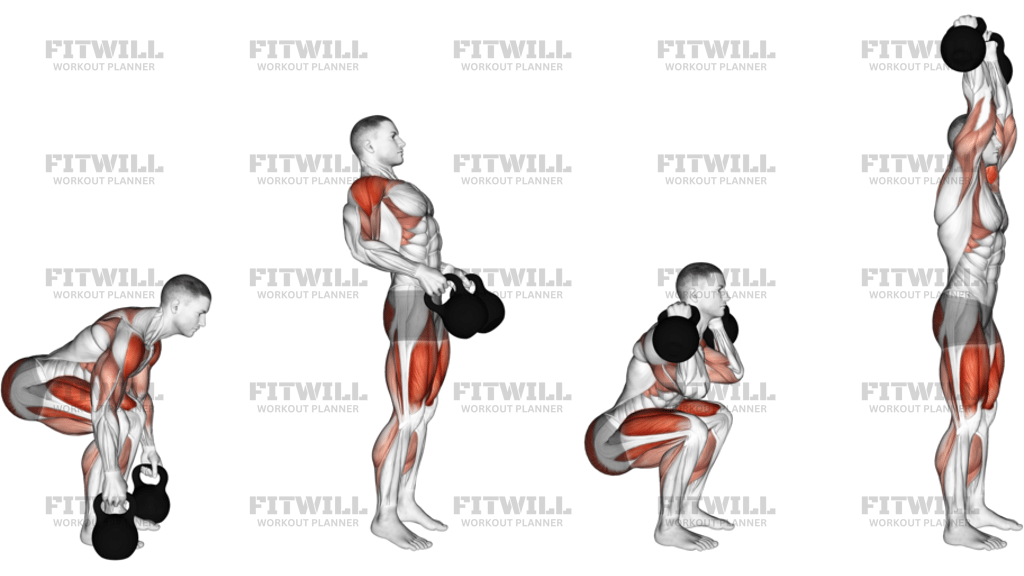
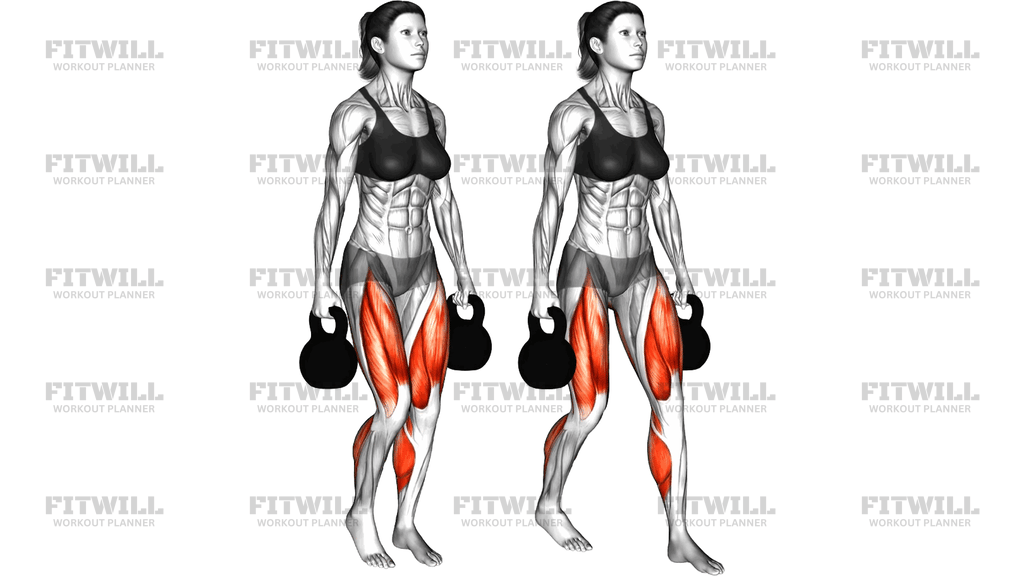
Kettlebell Single-Arm Swing
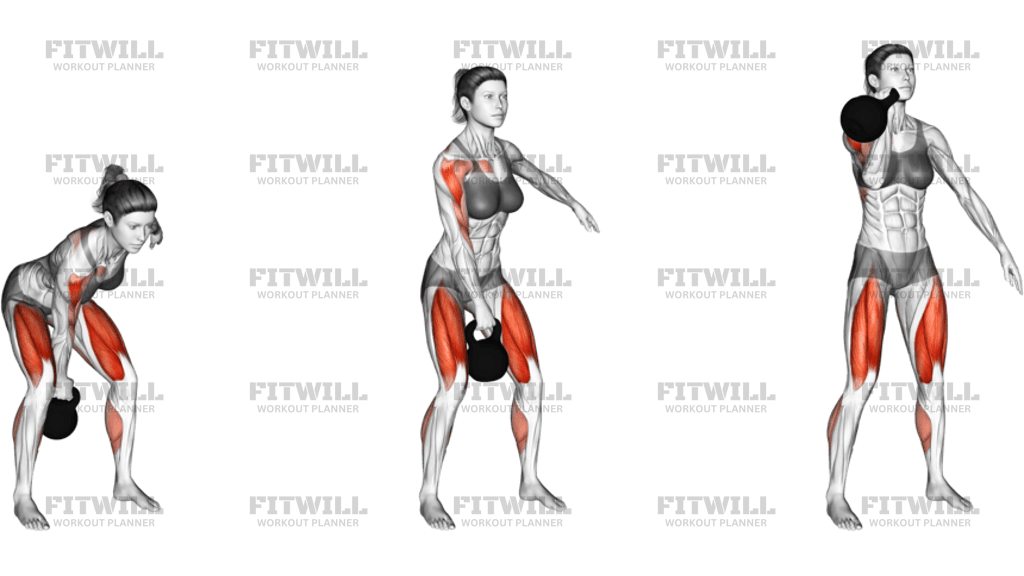
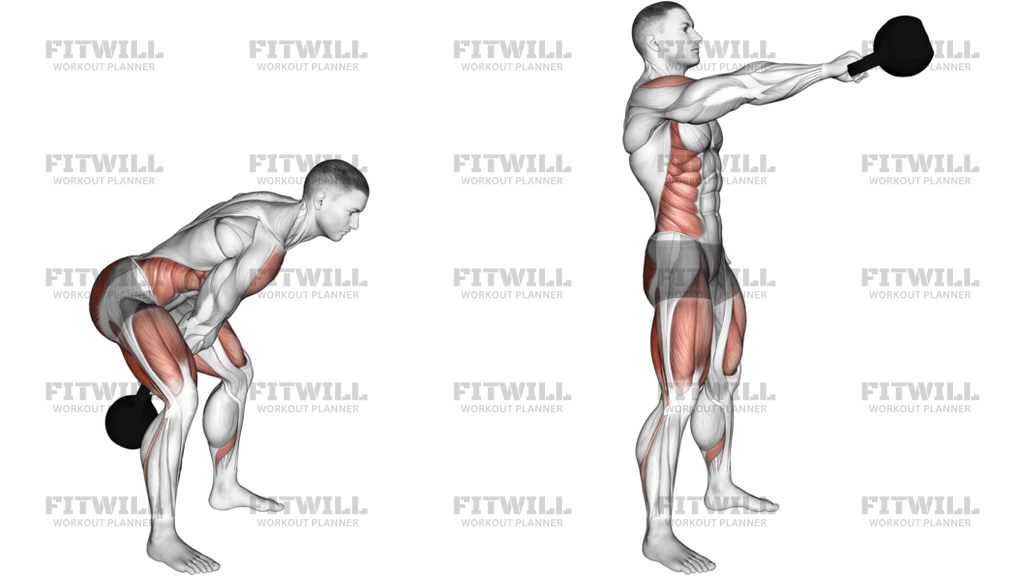
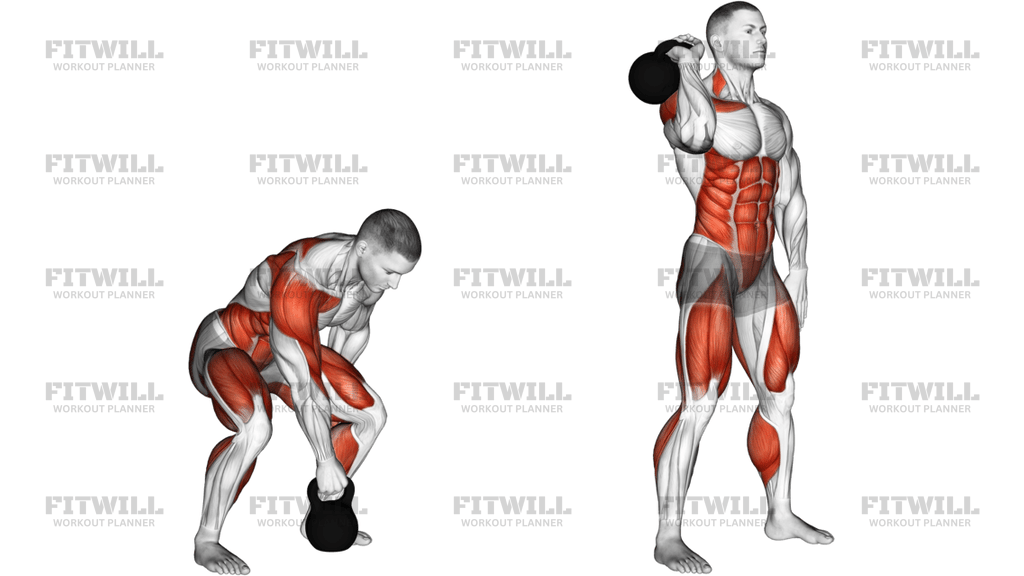
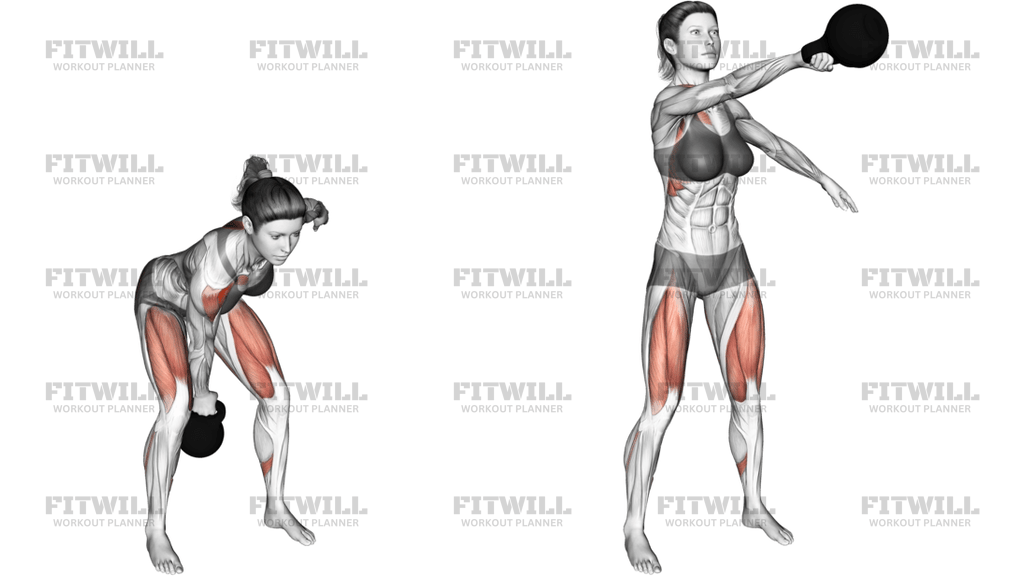
Kettlebell Single-Arm Swing is a hinge-based power exercise built around a fast hip drive, not a front raise or a squat. One hand holds the bell while the other arm stays free for balance, and the kettlebell should float up from the force of the hips rather than being lifted by the shoulder. The image shows the bell traveling to about chest or shoulder height, which is the usual target for a clean swing.
This movement trains the posterior chain hard, especially the glutes and hamstrings, while the core, lats, grip, and shoulder stabilizers help keep the torso organized. That combination makes it useful for athletes and lifters who want more explosive hip extension, better hinge mechanics, and a conditioning option that still rewards precision. It also teaches you to produce force quickly without losing a stacked rib cage or neutral spine.
The setup matters because the swing starts from a loaded hinge. A stable stance, soft knees, and a flat back let you hike the kettlebell back between the legs, then reverse it with a crisp hip snap. If the bell starts drifting away from the body or the torso starts twisting toward the working side, the set usually turns into a shoulder lift instead of a true swing.
Good reps feel rhythmic: hinge, hike, snap, float, and then let the bell fall back under control. The free arm should not fight the motion, and the working arm should stay long and relaxed at the top. The bell should rise because the hips extend powerfully, not because you shrug or curl it up.
Use Kettlebell Single-Arm Swing when you want a powerful lower-body drill, an athletic conditioning tool, or a hinge pattern that carries over to deadlifts, cleans, and other posterior-chain work. Start with a light bell if the timing is new, and earn speed with clean mechanics before adding load. If your lower back feels like it is doing the work, reduce the weight and tighten the hinge pattern before you continue.
[ Workout Log & Planner ]
Put your next workout in Fitwill
Keep your plan and training log ready when you are.


Instructions
- Stand with your feet slightly wider than hip width and place the kettlebell about a foot in front of you, centered between your shoes.
- Hinge at the hips, send your butt back, and reach one hand down to the handle while your free arm hangs slightly out to the side for balance.
- Set your shoulders down and back, keep your spine long, and load your hamstrings before the bell leaves the floor.
- Hike the kettlebell back high between your thighs like a football snap, keeping the bell close to your groin and your shins mostly vertical.
- Drive your hips forward forcefully, stand tall, and let the bell float out in front of you to about chest or shoulder height with a straight arm.
- Keep your glutes tight and your ribs stacked over your pelvis at the top instead of leaning back or shrugging the working shoulder.
- Let the bell fall on its own as you hinge again, keeping the arm relaxed like a strap and guiding the weight back between the legs.
- Repeat the hinge and hip snap for the planned reps, then guide the bell down in front of you and set it on the floor under control before standing up.
Tips & Tricks
- Think of the motion as a hard hip snap, not a shoulder raise; if the bell climbs above shoulder height, the arm is doing too much.
- Keep the bell close to your body on the backswing so the load stays connected to the hips instead of pulling your low back forward.
- The free hand should help you balance, but if your torso twists toward the working side, narrow the stance slightly and reset the hinge.
- A kettlebell that feels too light often gets lifted with the arm, while a bell that is too heavy usually drags the shoulders forward; choose a load that still lets the bell float.
- Keep your wrist straight and your knuckles pointed forward so the handle does not flop in your hand at the top.
- Exhale sharply as the hips drive through and let the bell rise, then inhale on the backswing as it loads the hamstrings.
- If the lower back starts taking over, shorten the swing and practice a stronger hike pass before increasing speed or load.
- Do not squat the swing down; the knees bend, but the hinge should stay dominant and the shins should remain fairly upright.
Frequently Asked Questions
What muscles does Kettlebell Single-Arm Swing work?
It mainly trains the glutes and hamstrings, with the core, lats, grip, and shoulder stabilizers helping control the bell.
How high should the kettlebell go in Kettlebell Single-Arm Swing?
A clean swing usually finishes around chest or shoulder height. If you have to lift the bell higher than that, the hips are not driving the rep.
Is Kettlebell Single-Arm Swing a squat?
No. It is a hip hinge, so the hips move back and then snap forward while the knees stay softly bent.
Can beginners do Kettlebell Single-Arm Swing?
Yes, but start with a light bell and perfect the hinge and hike pass first. If the single-arm version feels unstable, practice two-handed swings before loading one side.
Why does my arm get tired during Kettlebell Single-Arm Swing?
That usually means you are lifting the bell with the shoulder instead of letting the hips create the float. Keep the arm long and let the kettlebell travel from the snap.
What is the biggest mistake in Kettlebell Single-Arm Swing?
The most common mistake is turning it into a squat or front raise. Keep the hips back on the backswing and drive forward aggressively to finish each rep.
Should I alternate sides every rep or do all reps on one side?
Most programs have you finish a set on one side, then switch. Alternating every rep changes the rhythm and should only be used if your program calls for it.
Can Kettlebell Single-Arm Swing be used for conditioning?
Yes. It works well in intervals as long as the bell keeps floating from the hips and your trunk does not start rotating or collapsing forward.