Resistance Band Deadlift With Single-Arm Row
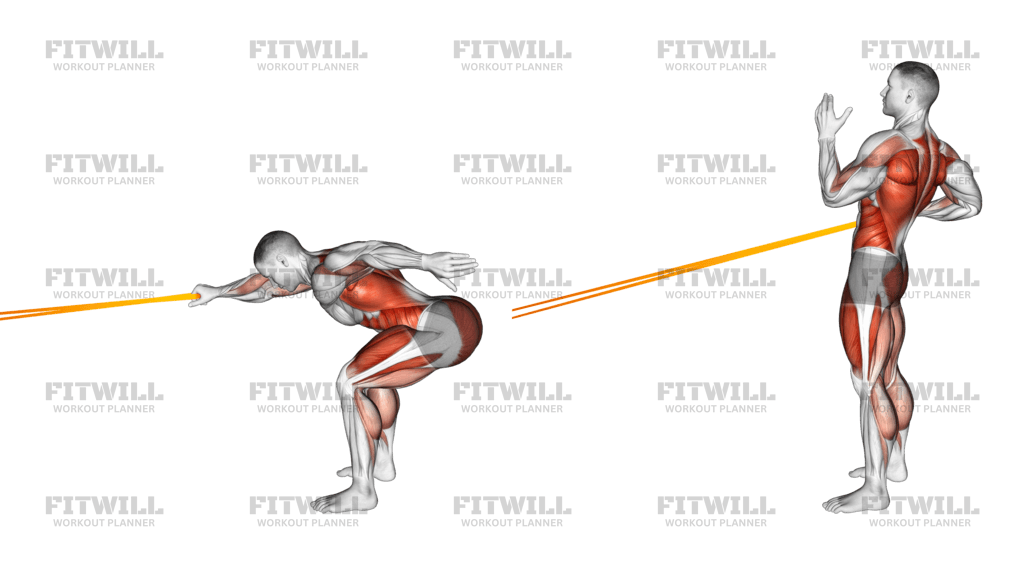
Resistance Band Deadlift With Single-Arm Row combines a hip hinge with a one-arm pull so you can train the glutes, hamstrings, upper back, lats, and core in one controlled rep. The band adds a distinct feel to the movement because tension usually increases as you stand taller, which means the top of the rep is often the hardest part. That makes setup and posture more important than brute force: if the stance is sloppy, the band will twist your torso and turn the exercise into a balance fight instead of a clean strength drill.
The exercise is built around a strict hinge first, then a row. In the lower position, the torso is angled forward with a long spine, the knees are softly bent, and the working arm hangs under tension while the other arm stays free for balance. As you drive up, the hips extend, the ribcage stays stacked over the pelvis, and the elbow pulls back toward the lower ribs without shrugging. That combination trains posterior-chain power while also forcing the trunk to resist rotation.
Because this is a banded movement, your range should be smooth rather than exaggerated. The deadlift portion should feel like pushing the floor away and standing tall, not yanking the shoulders upward. The row should finish with the shoulder blade moving back and down, not with the neck tightening or the upper trap taking over. If you lose the hinge and start leaning back to get the row, the load is too heavy or the band is too tight.
This variation works well as accessory strength work, a circuit station, or a warm-up for athletes who need hip extension and single-arm pulling control. It is especially useful when you want to challenge the core without loading the spine heavily, since the band creates force that wants to pull you forward and rotate you. Use it for moderate reps, crisp transitions, and steady breathing, and stop the set when the deadlift and row stop feeling connected.
Beginners can use it if they can hold a basic hip hinge and keep the torso quiet while one arm works. A lighter band, a wider stance, and a shorter range make the movement easier to learn. Advanced lifters can increase tension, slow the lowering phase, or hold the top position briefly to make the row and hinge work harder without turning the exercise into a jerk or twist.
[ Workout Log & Planner ]
Put your next workout in Fitwill
Keep your plan and training log ready when you are.


Instructions
- Stand on the center of the resistance band with your feet about hip-width apart, and hold one handle or end in one hand while letting the other arm stay free for balance.
- Hinge at the hips until your torso is angled forward, keep a soft bend in both knees, and let the band pull your working arm down without rounding your lower back.
- Set your shoulders away from your ears, keep your chest long, and brace your midsection before you start the rep.
- Drive through your heels and midfoot to stand up from the hinge, letting the hips and knees extend together.
- As you approach tall standing, pull the working elbow back toward your lower ribs while keeping the shoulder down and the torso square.
- Pause briefly at the top with the band fully under control and your ribs stacked over your pelvis.
- Lower the hand with control, then hinge back to the start position as the band tension eases.
- Reset your stance and breathing, then complete the next rep or switch sides if you are training one arm at a time.
Tips & Tricks
- Put the band under the full foot or on a secure low anchor so the tension rises as you stand and row.
- Think hips first, row second; if the elbow starts yanking before the stand-up is finished, the band is too heavy.
- Keep the free hand out to the side for balance instead of letting it drag your torso open.
- Finish tall without leaning back or flaring the ribs to fake extra range at the top.
- Keep the working shoulder away from the ear so the row comes from the back, not a shrug.
- Use a band tension that lets you keep the same hinge depth on every rep.
- Slow the return so the band does not snap you out of position on the way down.
- If your lower back feels like the prime mover, shorten the hinge, widen the stance, or reduce band tension.
Frequently Asked Questions
What muscles does Resistance Band Deadlift With Single-Arm Row work?
It emphasizes the glutes and hamstrings through the deadlift, then adds lats, upper back, and core demand through the one-arm row.
Should I think of this as a deadlift or a row?
Start with the deadlift pattern and let the row finish the rep. If the row takes over too early, the hinge usually gets sloppy.
Where should the band be anchored?
Use a secure low anchor or stand on the band so the line of pull stays low and gives you meaningful tension through the hinge and row.
What is the most common mistake with the single-arm row?
Shrugging the shoulder or twisting the torso to finish the pull. Keep the shoulder down and row by driving the elbow back.
Can beginners do this exercise safely?
Yes, if they can hold a basic hip hinge. Start with a light band and a short range until the deadlift and row feel coordinated.
Should my lower back feel this exercise?
The lower back should stabilize, not dominate. If it feels like the main driver, reduce tension and keep the torso more upright.
Do I row while bent over or after I stand up?
Row as you finish the stand-up so the rep stays connected. Stay hinged enough to keep tension, but do not use a jerking upright pull.
How do I progress this movement?
Increase band tension, slow the lowering phase, pause at the top, or train one arm at a time without losing hip position.