Bodyweight Pulse Squat
Bodyweight Pulse Squat is a lower-body bodyweight exercise built around short, repeated squats in a controlled partial range. Instead of dropping into a full stand-to-squat-to-stand cycle, you stay in the lower half of the movement and pulse up and down through a small, steady range. That keeps constant tension on the thighs and makes the exercise useful when you want a simple no-equipment burner for quads, glutes, and adductors.
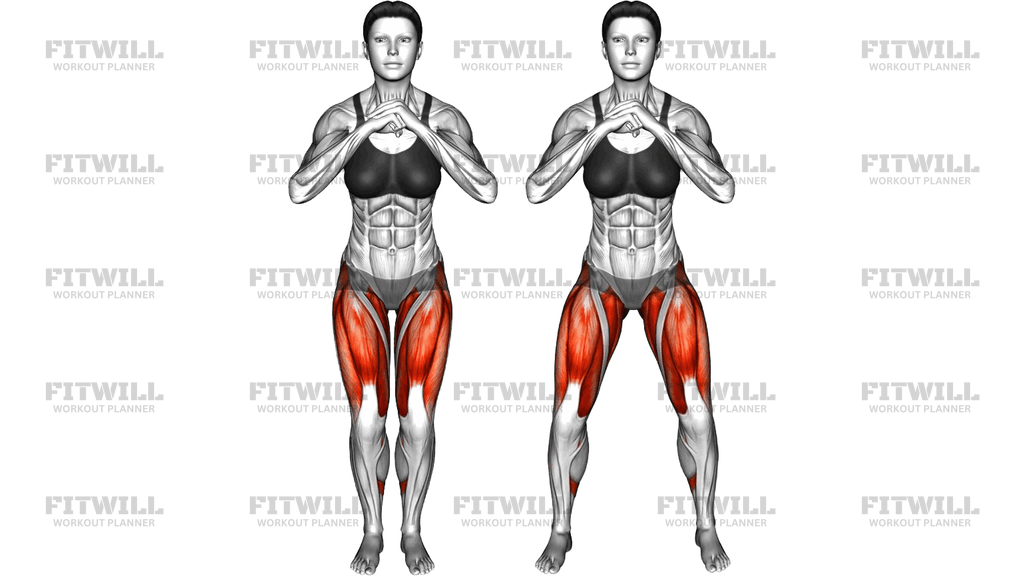
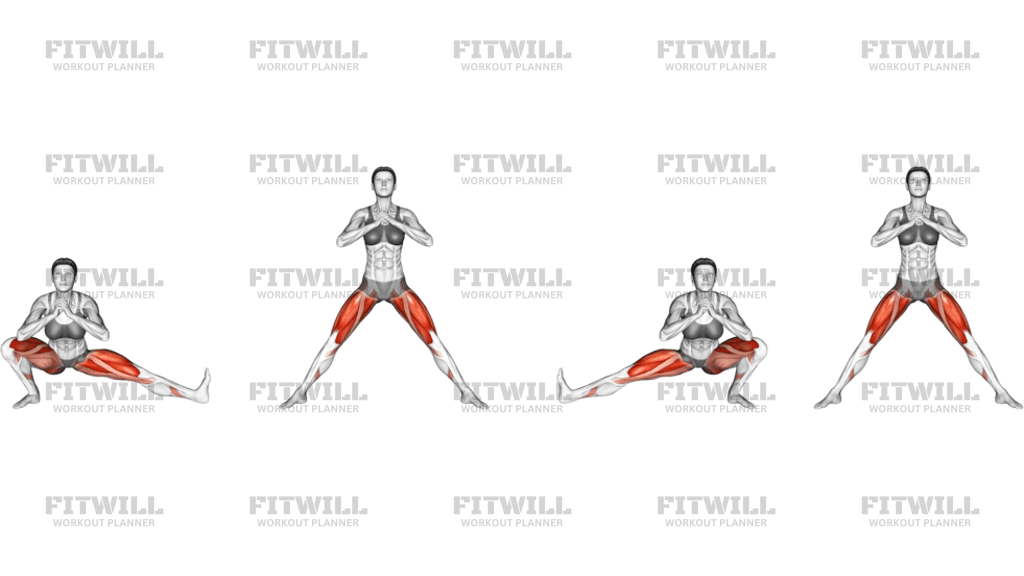
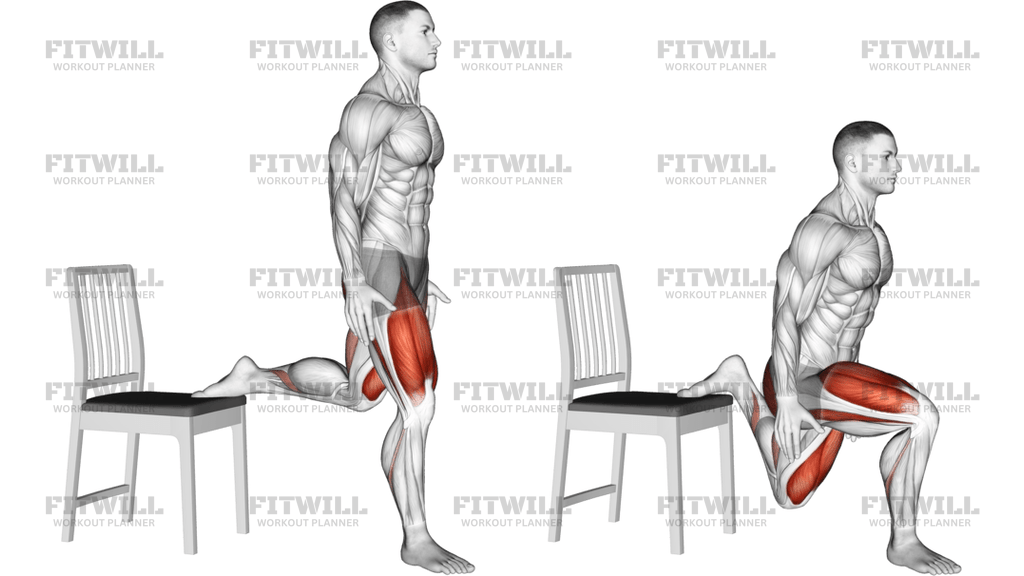
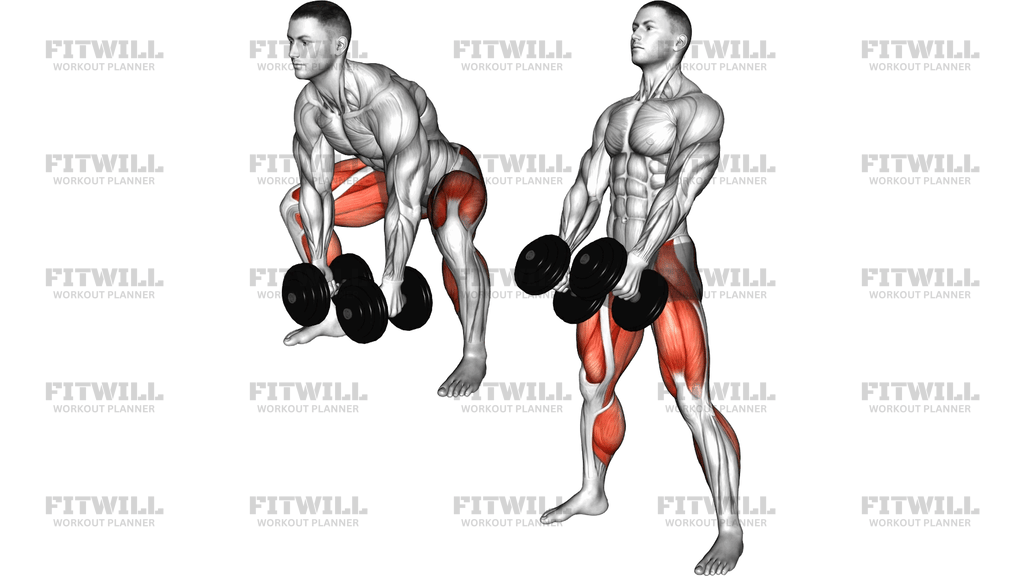
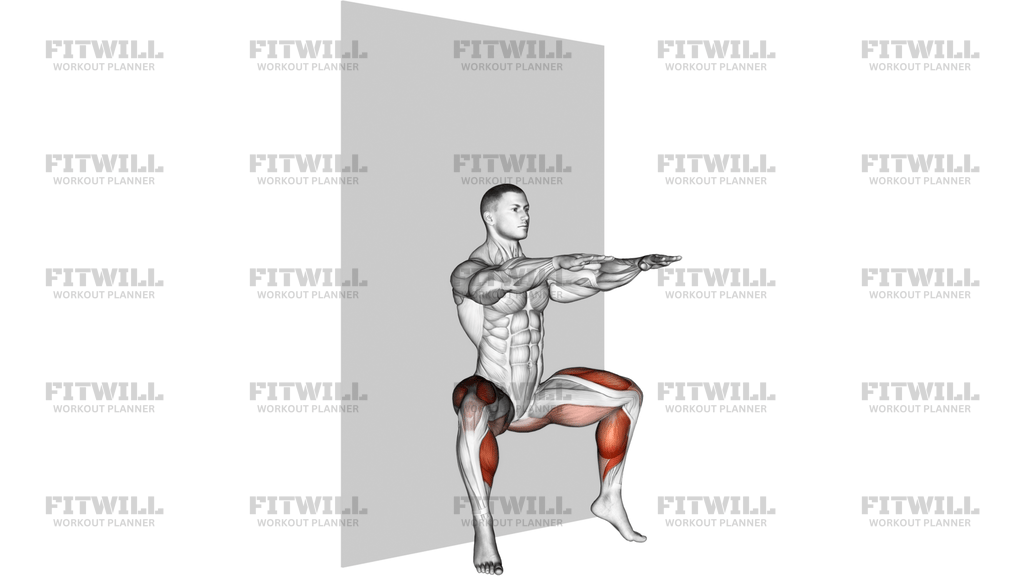
The image shows an upright stance with the arms extended forward for balance, then a deeper squat position, then repeated pulses around that bottom position. That setup matters: the torso should stay long, the knees should track in line with the toes, and the heels should stay grounded so the work stays in the legs instead of becoming a balance drill. The forward arm reach is there to counterbalance the hips, not to create momentum.
Because the range is small, the quality of the position matters more than the speed of the reps. Keep the chest lifted, brace lightly through the trunk, and move with a rhythm you can repeat without bobbing or bouncing. The knees should travel smoothly over the feet, and the hips should stay controlled rather than shifting side to side. Each pulse should look like a deliberate change in squat depth, not a series of rushed half-reps.
This exercise is often used as a warm-up, a finisher, or an accessory drill for leg endurance and squat patterning. It can also help build comfort in the bottom half of a squat without loading the spine. To get the most from it, treat the exercise as continuous tension work: stay smooth, breathe steadily, and stop the set when you can no longer keep the same squat shape. If your heels lift, your knees cave, or your torso folds forward, shorten the range and slow the pace before adding more reps.
[ Workout Log & Planner ]
Put your next workout in Fitwill
Keep your plan and training log ready when you are.


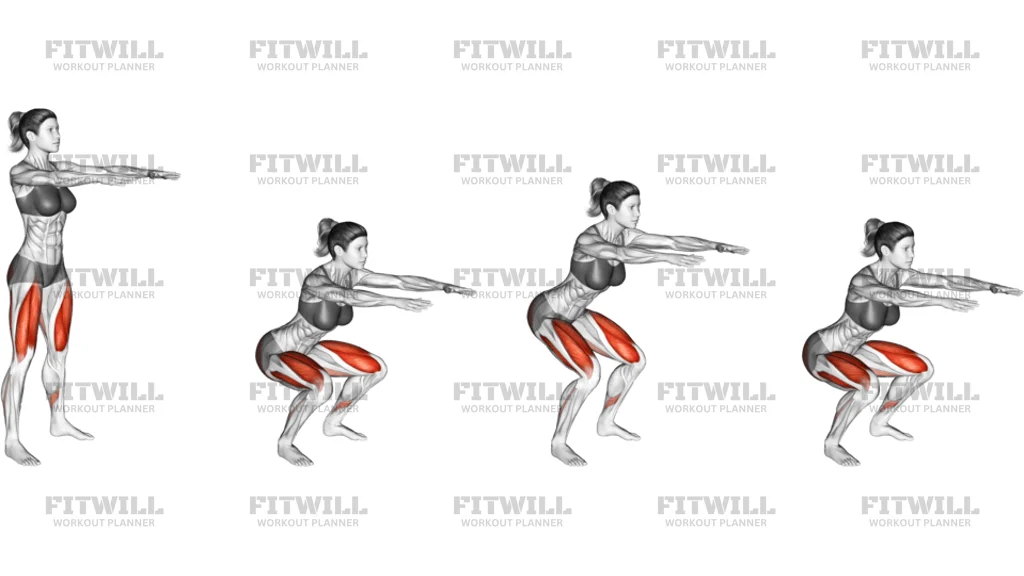
Instructions
- Stand with your feet about shoulder-width apart, toes slightly turned out, and extend your arms straight forward at chest height for balance.
- Brace your trunk, keep your chest lifted, and sit back into a squat until your thighs reach about parallel or slightly below if you can hold your heels down.
- Keep your knees tracking over your toes as you lower, and let the hips move back and down instead of letting the knees shoot forward first.
- From the bottom position, pulse up only a few inches, then sink back into the lower squat without fully standing up.
- Keep each pulse smooth and controlled so the tension stays on the thighs rather than turning into a bounce.
- Maintain pressure through the whole foot, especially the heels and midfoot, while keeping the torso tall and the neck relaxed.
- Breathe continuously through the set, using short controlled exhales on the upward part of each pulse if needed.
- Finish the set by standing up under control once the squat shape starts to break down.
Tips & Tricks
- Treat this as constant-tension leg work, not a speed drill; the burn should come from staying in the lowered range, not from bouncing.
- If your heels lift, narrow the range or turn the toes slightly out more so you can keep the feet flat.
- Keep the knees moving in the same direction as the toes; collapsing inward usually means the stance is too narrow or the set is too fatigued.
- A slightly forward arm reach helps counterbalance the hips, but shrugging the shoulders will make the posture look and feel heavy.
- Use a squat depth you can repeat for every pulse; going too deep on the first rep usually shortens the rest of the set.
- Stay on the midfoot and heel rather than rocking onto the toes during the upward part of the pulse.
- If the lower back rounds, reduce the depth and keep the ribs stacked over the pelvis before continuing.
- For more quad emphasis, stay a little more upright; for more glute contribution, send the hips back a bit more while keeping the chest open.
Frequently Asked Questions
What muscles does the Bodyweight Pulse Squat work most?
It mainly targets the quads, with strong involvement from the glutes, adductors, and core as stabilizers.
Do I need to stand all the way up between pulses?
No. The exercise is meant to stay in the lower half of the squat, with only a few inches of movement between each pulse.
How wide should my stance be for the pulse squat?
A shoulder-width stance usually works best. If your hips feel cramped or your knees cave, adjust the stance slightly wider or turn the toes out a little more.
Why are the arms held straight out in front?
The forward reach helps counterbalance the hips while you stay in the squat, making it easier to keep the chest lifted and the torso controlled.
Is Bodyweight Pulse Squat good for beginners?
Yes, if you keep the range small and controlled. Beginners should focus on a stable stance and flat feet before trying higher-rep sets.
What should I do if my heels come off the floor?
Shorten the squat depth and make sure your weight stays over the midfoot and heels. If needed, widen the stance slightly.
Where does this exercise fit in a workout?
It works well as a warm-up, a leg endurance finisher, or an accessory drill after heavier squat work.
What is the biggest form mistake with pulse squats?
The most common mistake is bouncing through the bottom instead of using a controlled, repeatable pulse with the knees tracking cleanly.