Handboard Half Crimp
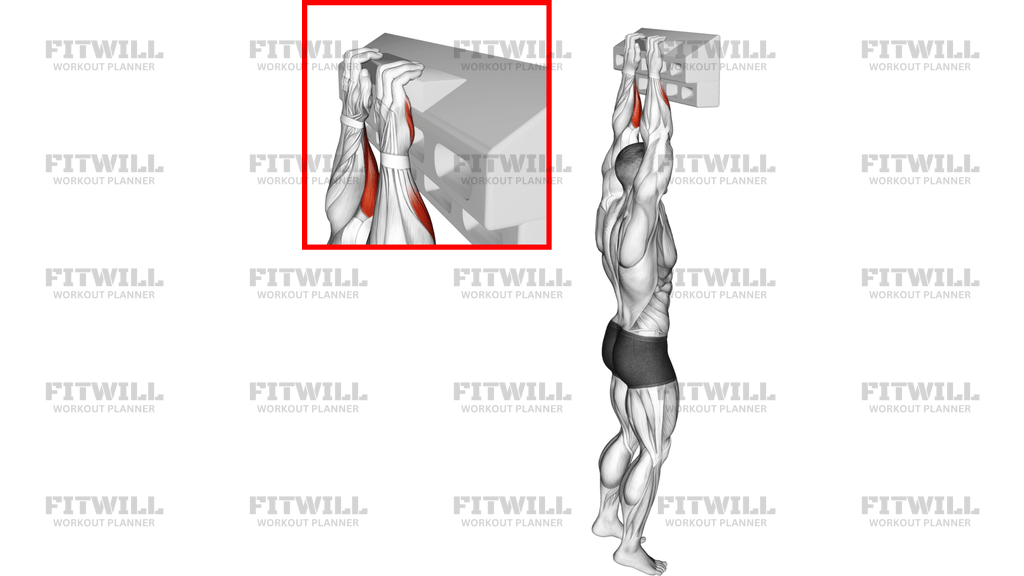
Handboard Half Crimp is a climbing strength drill built around a static bodyweight hang on a handboard or hangboard using the half-crimp finger position. The goal is not to swing or chase range of motion, but to create a clean, repeatable isometric hold that loads the finger flexors, forearms, and the small stabilizers around the wrists and elbows.
Because the grip is the limiter, setup matters more here than in most upper-body movements. The fingers should sit on a usable edge with the middle joints flexed and the hands organized into a half crimp rather than an open-hand drag or a full crimp. That finger position shifts more work onto the forearm flexors and brachioradialis while the shoulders, biceps, and wrist extensors help keep the hang controlled and aligned.
A good Handboard Half Crimp also depends on body position. The torso should stay quiet under the board, with the shoulders engaged instead of shrugged into the ears and the ribs controlled so the hang does not turn into a swing. Climbing athletes often use this exercise for max-strength hangs, repeat hangs, or technique work when they need more finger specificity than they would get from a pull-up or row variation.
This movement is effective, but it is also one of the easiest places to overdo intensity. Small changes in edge size, bodyweight support, hang time, or added weight can change the stress on the fingers a lot, so progression should be conservative and deliberate. If the fingers, pulley area, or front of the elbow feel sharp or unstable, reduce the load immediately and keep the hang short and controlled.
Handboard Half Crimp is best used when the warm-up is complete and the hands are ready for loaded finger work. It suits climbers and other grip-focused trainees who want better crimp strength, board performance, or forearm resilience, provided the repetitions stay strict and the hanging position stays clean from start to finish.
[ Workout Log & Planner ]
Put your next workout in Fitwill
Keep your plan and training log ready when you are.


Instructions
- Stand under the handboard with both hands on a matched edge, then place your fingers in a half-crimp position with the middle joints bent and the wrists straight.
- Set your shoulders down and slightly back so you are hanging from an active upper body instead of collapsing into the board.
- Lift your feet off the floor or place only light support on a box or foothold if you need assistance to keep the hang controlled.
- Brace your midsection and keep your ribs from flaring as you take your first breath before loading the fingers fully.
- Hang still for the programmed time or rep count without kicking, twisting, or shifting your hips side to side.
- Keep the elbows softly extended and let the forearms do the work while the shoulders stay engaged and quiet.
- If the set calls for a release, lower your feet back to the floor or foothold slowly instead of dropping off the board.
- Rest long enough for the grip to recover before repeating the next hang or the next side if you are alternating grips.
Tips & Tricks
- Use a larger edge or add foot assistance if the half-crimp position collapses into a full crimp.
- Keep the thumb relaxed unless your coach or plan specifically asks for a thumb-catch crimp style.
- If your shoulders creep toward your ears, reset before the next hang; shrugging usually means the fingers are taking more stress than intended.
- Short, high-quality hangs usually beat long sloppy holds on this exercise.
- A very slight elbow bend is acceptable if it helps you stay active, but do not turn the hang into a pull-up.
- If the inside of the elbow or the base of the fingers feels sharp, cut the set and reduce intensity next round.
- Keep chalk use modest so the edge stays secure without making the grip artificially easy to overcrank.
- Progress load by making the edge smaller, removing foot support, or adding weight only after every rep looks identical.
Frequently Asked Questions
What muscles does Handboard Half Crimp work most?
It mainly targets the finger and wrist flexors in the forearms, with support from the brachioradialis, biceps, and shoulder stabilizers.
Is Handboard Half Crimp only for climbers?
No, but it is most useful for climbers and grip-focused athletes who need stronger finger loading on a small edge.
What is the difference between a half crimp and a full crimp on the handboard?
A half crimp keeps the fingers flexed without locking the thumb over the index finger the way a full crimp does. It is usually the safer first step for loaded fingerboard work.
Should I hang with straight arms on Handboard Half Crimp?
A mostly straight, active hang is the usual goal, but the shoulders should stay engaged so you do not sink passively into the joints.
How do I make Handboard Half Crimp easier as a beginner?
Use a bigger edge, keep one or both feet lightly supported, or shorten the hang time until you can hold the position without losing the finger shape.
What is the most common mistake on Handboard Half Crimp?
The most common mistake is turning the half crimp into a forced full crimp or hanging with shrugged shoulders and swinging hips.
Can I do Handboard Half Crimp if my fingers feel tender?
Not if the tenderness is sharp or localized around a pulley or joint. Reduce intensity, use more support, or skip the session until the hand feels stable.
How should I progress Handboard Half Crimp over time?
Progress one variable at a time: smaller edge, less foot support, longer hang, or a small amount of added weight, while keeping the same half-crimp shape.