Sphinx Pose Look Up
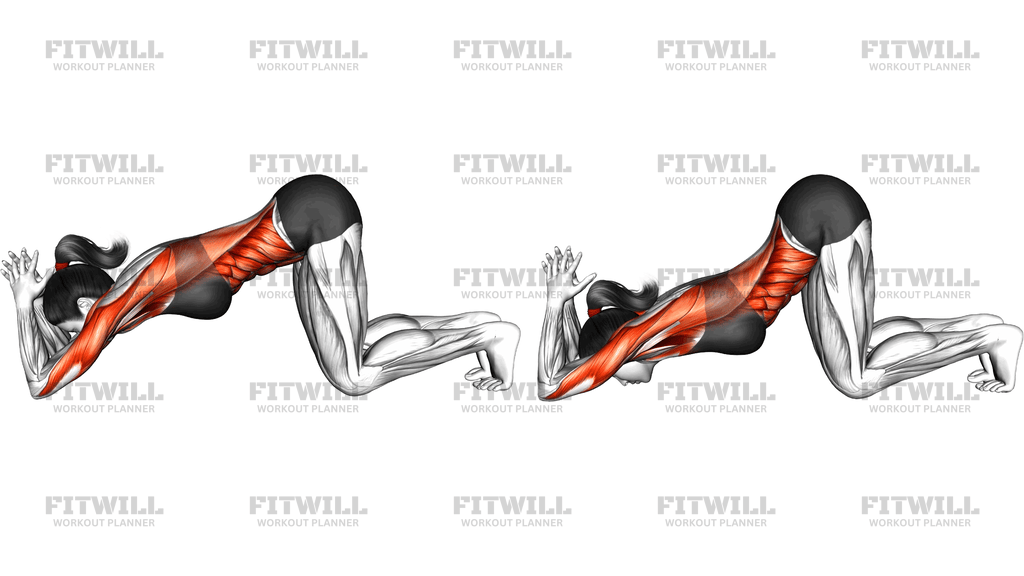
Sphinx Pose Look Up is a gentle prone backbend performed from the forearms, with the added element of lifting the gaze toward the ceiling to extend through the upper spine and neck. You lie face down with your elbows stacked under your shoulders, press your forearms into the floor, and let your chest rise while your hips and legs stay heavy on the mat. The look-up component tilts the head back, lengthening the front of the neck and deepening the extension through the entire spine.
This position is a staple for anyone who spends long hours sitting, since it places the lumbar and thoracic spine into the opposite of a rounded, forward-folded posture. It is commonly used in yoga sequences such as the sun salutation, in warm-ups before back or pulling days, and as a cooldown movement after core work. People with stiff lower backs or tight hip flexors tend to feel it quickly, especially along the spine itself and across the front of the hips and abdomen.
The main area being stretched is the erector spinae running along the spine, along with the abdominal wall and hip flexors, which all lengthen as the torso extends. At the same time, the position is not passive: your forearms, shoulders, and upper back support the torso, and your glutes and legs stay engaged enough to keep the pelvis settled. That light tension is what keeps the backbend distributed through the spine instead of dumping all of it into the lower back.
Setup matters more than most people expect. Elbow placement directly under the shoulders determines how much extension you get and how much load travels into the lumbar spine. Keeping the hips in contact with the floor and the legs relaxed but long anchors the pose, while the neck extension should feel like a continuation of the spinal curve rather than a separate, forced head tilt.
To execute it well, settle into the forearm support first, then grow tall through the chest before adding the look-up. Breathe steadily and let each exhale soften the stretch slightly deeper rather than pushing hard into the range. Hold for twenty to thirty seconds at a time, and lower down slowly instead of collapsing.
From a safety standpoint, this pose should feel like a comfortable opening, never a pinching sensation in the lower back or compression at the back of the neck. If full head extension bothers your neck, keep your gaze forward and let the chest do the work. Anyone recovering from a back injury should introduce this movement gradually and within a pain-free range.
[ Workout Log & Planner ]
Put your next workout in Fitwill
Keep your plan and training log ready when you are.


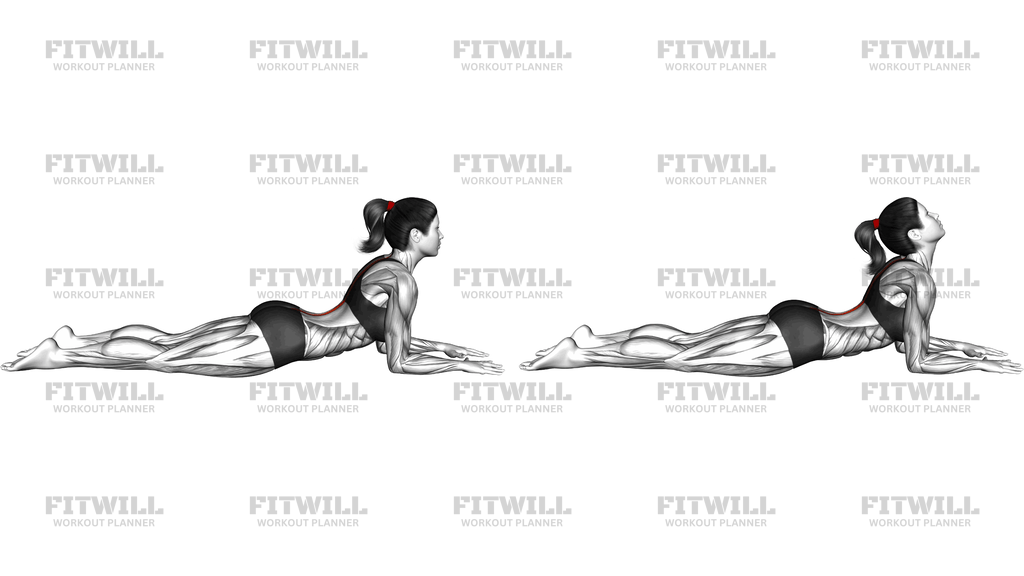
Instructions
- Lie face down on an exercise mat with your legs extended straight behind you and the tops of your feet resting on the floor.
- Prop yourself up onto your forearms so your elbows sit directly under your shoulders and your forearms point forward, parallel to each other.
- Let your hips, thighs, and the tops of your feet stay heavy on the mat while your chest lifts away from the floor.
- Draw your shoulder blades gently down and together so your chest stays open and your shoulders stay away from your ears.
- Keeping the curve of your spine long, slowly tilt your head back and look up toward the ceiling, letting the extension travel up through your neck.
- Hold the position and breathe steadily, letting your ribs soften down slightly on each exhale so the backbend stays smooth rather than hinged at one spot.
- Keep light engagement in your glutes and legs so your pelvis stays settled and does not lift off the mat.
- To release, first bring your gaze back to a neutral position, then lower your chest toward the mat with control.
- Rest briefly on your belly or press back to a comfortable resting position before repeating.
- Hold each repetition for about 20 to 30 seconds, breathing calmly throughout the hold.
Tips & Tricks
- If you feel a pinch low in the spine, walk your elbows slightly forward so your chest is lower; a smaller angle usually removes the pinch immediately.
- A common mistake is scrunching the shoulders up around the ears during the look-up. Drop the shoulders first, then tilt the head back.
- Avoid leading with the head alone. Lift the chest with your arms and upper back, then let the neck follow the line of the spine.
- Keep your hips glued to the mat. If the pelvis lifts, the backbend is coming from momentum rather than spinal extension.
- Relax your glutes and legs almost completely. Squeezing them hard fights the stretch through the front of the hips.
- If your elbows slide forward or outward, place a folded towel under your forearms for feedback and keep them stacked under the shoulders.
- Neck-sensitive people should stop the look-up at a comfortable angle or keep the gaze forward; the chest lift alone still stretches the spine well.
- Think of lengthening the spine before bending it. Reaching the crown of the head up first creates a smoother, safer backbend.
- Do not hold your breath at the top of the pose. Slow nasal breathing helps the abdominals and hip flexors release into the stretch.
Frequently Asked Questions
What muscles does the Sphinx Pose Look Up stretch?
It primarily lengthens the erector spinae along the lower and mid back, with the abdominals and hip flexors also stretching as the torso extends. The forearms, shoulders, and upper back work lightly to hold the position.
Why does the Sphinx Pose Look Up include tilting the head back?
Looking up extends the cervical spine, so the backbend travels through the neck as well as the chest and lower back. It also stretches the front of the neck, which stays shortened when you spend time looking down at screens.
Is the Sphinx Pose Look Up suitable for beginners?
Yes, it is one of the most accessible prone backbends because the forearms keep the extension modest and controllable. Beginners can reduce the range by walking the elbows slightly forward.
How is this different from an upward-facing Cobra position?
In the Sphinx position you rest on your forearms with elbows under the shoulders, so the backbend is gentler than Cobra, where the arms are straight. The look-up stays the same idea, but the total spinal extension is smaller and easier to manage.
My lower back pinches when I look up in the Sphinx Pose. What should I change?
Move your elbows a few inches forward so your chest sits lower, and make sure your hips stay on the mat. Build the extension gradually through the chest before adding any neck tilt.
When is the best time to use the Sphinx Pose Look Up?
It works well as a warm-up before back training, as a counter-pose after long sitting or heavy core work, and within yoga sequences as a preparation for deeper backbends.
How long should I hold the Sphinx Pose Look Up?
Twenty to thirty seconds per hold works well for most people, repeated two to three times. For a gentler mobility approach, move in and out of the position slowly with your breath instead of holding statically.
Can I do the Sphinx Pose Look Up with a neck issue?
If tilting the head back causes discomfort, keep your gaze forward or slightly down and rely on the chest lift alone. Skip the neck extension entirely if it produces any sharp or radiating sensation, and consult a professional if symptoms persist.
What equipment do I need for the Sphinx Pose Look Up?
Just an exercise mat or a soft floor surface. The pose is entirely body weight driven, with your forearms providing all the support.