Resistance Band Anti Rotation Dead Bug
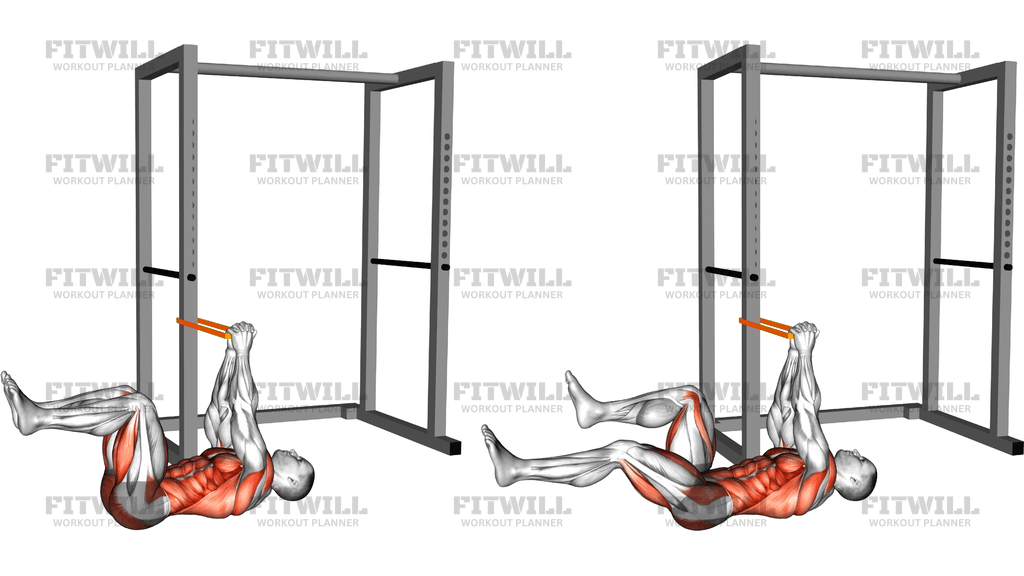
Resistance Band Anti Rotation Dead Bug is a floor-based core drill that combines a dead bug leg pattern with a side pull from a resistance band. The band tries to twist your torso while your hips and ribs stay stacked over the floor, so the exercise trains anti-rotation control, pelvic stability, and coordinated bracing rather than brute force. It is especially useful when you want core work that carries over to running, lifting, and any movement where the trunk has to resist twisting.
The setup is what makes the drill work. Lie on your back with your knees and hips bent, hold the band straight over your chest, and anchor your shoulders and rib cage before the first rep. The band should pull from one side, which creates the rotational challenge. If your lower back arches or your chest turns toward the anchor, the resistance is too high or the position is out of control.
Each rep should look smooth and deliberate. Keep the arms locked in place, press the low back gently into the floor, and move one leg away from you while the other stays bent. As the leg extends, keep the pelvis square and the band hand position steady so the torso does not follow the pull. Return the leg with control, reset the brace, and repeat on the other side if the program calls for alternating reps.
This is not a range-of-motion exercise in the usual sense. The goal is to keep the dead bug shape while the band creates a sideways tug that wants to rotate you. That makes it a strong choice for warm-ups, trunk-accessory work, and low-back-friendly core training. It also works well for beginners when the band tension is light enough that the hips, ribs, and neck can stay relaxed.
Use clean repetitions and stop as soon as the band starts to pull your shoulders off line or your lower back loses contact with the floor. A slightly easier band and a slower leg extension are usually better than forcing bigger movement. When performed well, the exercise teaches you how to breathe, brace, and move the legs while the torso stays quiet.
Fitwill
Log Workouts, Track Progress & Build Strength.
Achieve more with Fitwill: explore over 9600 exercises with images and videos, access built-in and custom workouts, perfect for both gym and home sessions, and see real results.
Start your journey. Download today!




Instructions
- Attach the resistance band to a side anchor at about chest height and lie on your back with the anchor to one side of your body.
- Bend both hips and knees to about 90 degrees, then hold the band with both hands straight above the middle of your chest.
- Press your lower back gently into the floor and keep your ribs down before you start the first rep.
- Keep your arms vertical and resist the band trying to pull them across your body.
- Slowly extend one leg away from you until it is straight or nearly straight without letting the pelvis rotate.
- Keep the opposite knee bent and the torso square while the extended leg hovers above the floor.
- Exhale as the leg reaches out, then inhale and return it with control to the tabletop position.
- Reset the brace after each rep and repeat on the same side or alternate sides according to the program.
Tips & Tricks
- Choose a band that lets you keep both hands stacked over the sternum without drifting toward the anchor.
- If the lower back lifts, shorten the leg reach before you try to make the movement harder.
- Think about pulling the front ribs down toward the pelvis before each rep so the trunk stays quiet.
- Keep the elbows straight and the shoulders packed; bending the arms turns the drill into an upper-body compensation pattern.
- Move the leg slowly enough that you can feel the hip flexors and abs working instead of using momentum.
- A short hover at the bottom makes the anti-rotation demand clearer than bouncing the leg back up.
- If the band yanks your hands sideways, step farther from the anchor or use less tension.
- Stop the set when your pelvis starts to roll or your neck starts reaching forward to fight the band.
Frequently Asked Questions
What does the band add to this dead bug variation?
The side pull makes your trunk resist rotation while your legs move, so the core has to stay square instead of just moving the limbs.
Should my hands stay directly above my chest the whole time?
Yes. The hands should stay stacked over the chest so the band challenge comes from resisting twist, not from pressing or rowing the band.
How far should I extend the leg in the dead bug position?
Extend it only as far as you can keep the low back on the floor and the pelvis from turning toward the band.
What is the biggest form mistake with this exercise?
Letting the ribs flare and the hips twist toward the anchor is the main error. That usually means the band is too heavy or the leg reach is too aggressive.
Is this exercise good for beginners?
Yes, if the band is light and the leg extension stays short. It is a good way to learn bracing without loading the spine heavily.
Can I alternate legs each rep?
Yes. Alternating legs is a common way to program it, as long as the torso stays level and each side starts from a controlled reset.
Where should I feel the working effort?
You should feel the abs and deep trunk muscles working hard to stop the band from rotating you, with the hip flexors helping during the leg move.
What should I do if the band pulls me off line?
Use less tension, move closer to the anchor, or shorten the leg extension until the shoulders and pelvis stay square.