Resistance Band Walking Lunge
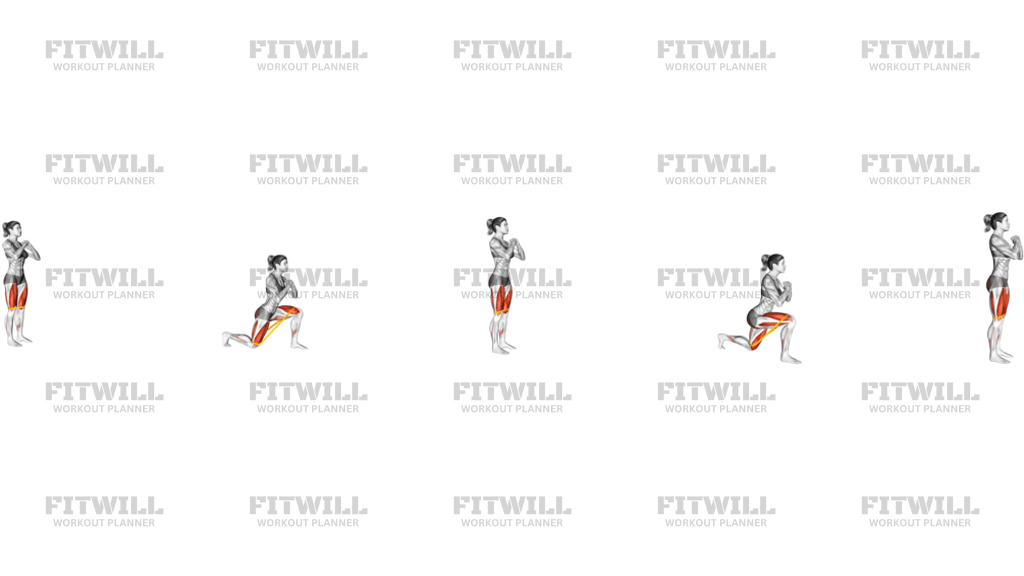
Resistance Band Walking Lunge is a band-loaded single-leg leg exercise that builds strength, control, and coordination through a traveling lunge pattern. The band adds resistance from the floor and rewards a clean step, a steady torso, and a controlled rise, so each rep trains the thighs and hips without losing posture. It is a practical way to make a familiar walking lunge feel more demanding without needing a machine or dumbbells.
The exercise is especially useful when you want one leg to do the work while the other leg moves you into the next step. That makes setup important: the band should be centered under your feet, the handles or ends should stay racked at shoulder height, and your ribs should stay stacked over your pelvis. If the stance is too narrow or the torso leans forward too much, the band will pull you out of position and the lunge will turn into a balance drill instead of a strong leg pattern.
A good repetition starts with a long, deliberate step forward. Lower until the front thigh is close to parallel and the back knee hovers just above the floor, then drive through the front foot to stand and move into the next step. The front knee should track over the middle toes, the back leg should help you travel forward without pushing off too early, and the trunk should stay tall enough that the band tension stays even through the rep.
This movement fits well in lower-body accessory work, athletic warm-ups, or conditioning sessions where you want single-leg strength plus a little added challenge to the shoulders and core. It is also easy to scale: use a lighter band for crisp mechanics, or a stronger band only if you can keep the same stride length and knee alignment. Stop the set when your steps shorten, your knees cave inward, or the band starts forcing you to shrug or fold at the waist.
Fitwill
Log Workouts, Track Progress & Build Strength.
Achieve more with Fitwill: explore over 9600 exercises with images and videos, access built-in and custom workouts, perfect for both gym and home sessions, and see real results.
Start your journey. Download today!




Instructions
- Stand on the middle of the resistance band with feet about hip-width apart and bring the handles or ends to shoulder height.
- Set your chest tall, ribs stacked over your pelvis, and keep your elbows slightly in front of your torso.
- Step one foot forward far enough that you can lower into a real lunge without the front knee shooting past the toes.
- Lower under control until the back knee hovers just above the floor and both legs are doing work.
- Keep the front foot flat and let the front knee track over the middle toes as you descend.
- Drive through the whole front foot and stand up without leaning forward or letting the band pull your shoulders down.
- As soon as you finish the rise, step the trailing leg through into the next lunge and keep walking.
- Breathe out as you stand, then reset your brace before the next step so each rep stays smooth and even.
Tips & Tricks
- Choose a band tension that lets you stay upright; if you feel forced to hunch or shrug, the resistance is too high.
- A longer step usually shifts more work to the glutes and helps keep the front knee happier, while a shorter step loads the thighs more aggressively.
- Keep your feet on separate tracks instead of crossing them, which helps the hips stay level as you walk.
- Let the back knee travel down and slightly back so you can lunge deeply without collapsing straight forward.
- Press through the heel and midfoot of the front leg rather than bouncing off the toes on the way up.
- Keep the handles or ends at the same shoulder height on both sides so the band does not twist your torso.
- If your stride gets shorter from rep to rep, stop the set before the walking pattern turns into a shuffle.
- Use a slow, controlled lowering phase; the band should feel smooth, not jerky, through the bottom of the lunge.
Frequently Asked Questions
What muscles does the Resistance Band Walking Lunge work most?
It mainly trains the quadriceps and glutes, with the hamstrings, adductors, and core helping stabilize each step.
Where should I hold the band during the lunge?
Keep the handles or ends racked at shoulder height so the band stays loaded and your torso does not fold forward.
How low should I go on each step?
Lower until the back knee is just above the floor and the front leg is bent deeply without losing balance or knee alignment.
Can beginners do this exercise?
Yes, as long as they use a light band, take shorter sets, and focus on a stable step rather than speed.
What is the most common mistake with this movement?
The most common issue is taking a rushed, short step that makes the front knee travel too far forward and the torso tip over.
Should my front heel stay down?
Yes. Keep the front heel rooted so you can drive through the whole foot instead of bouncing off the toes.
Can I use this instead of dumbbell walking lunges?
Yes, it is a good option when you want a lighter external load, more band tension, or a shoulder-height rack position.
How can I make the exercise easier?
Use a lighter band, shorten the walking distance, or switch to a stationary split squat until your balance and step pattern improve.