Barbell Hip Thrust With Resistance Band
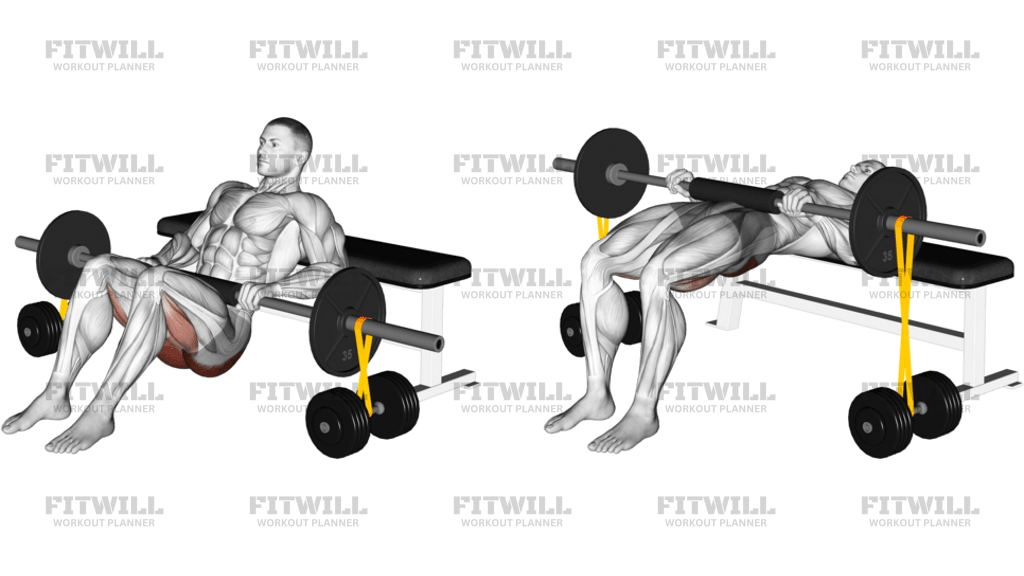
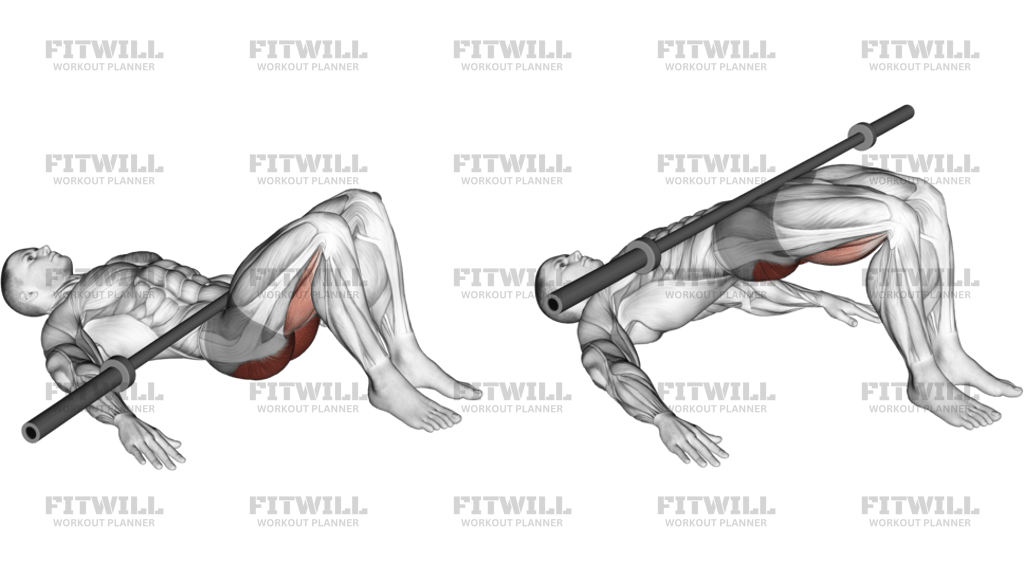
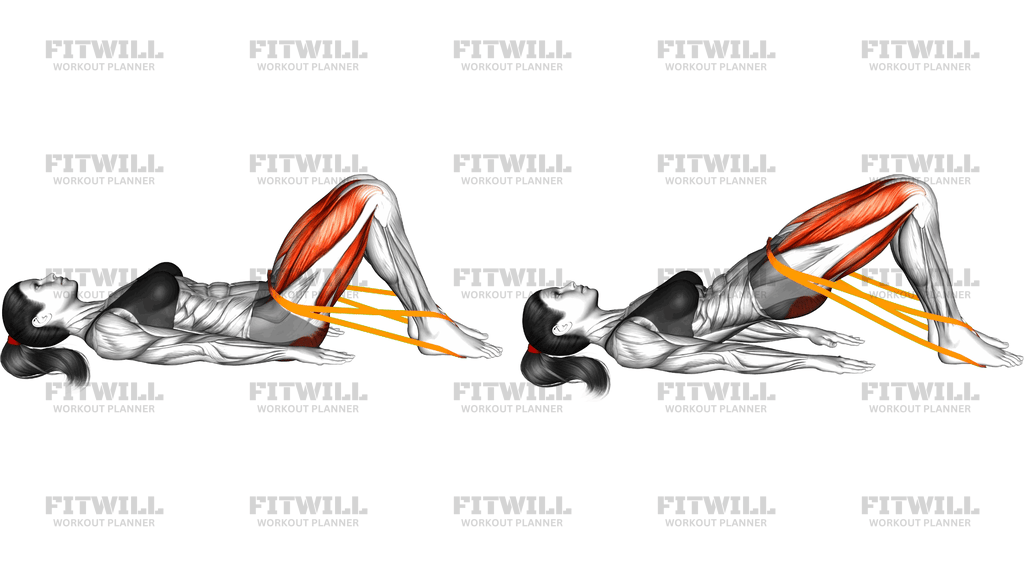
Barbell Hip Thrust With Resistance Band is a bench-supported glute exercise that combines a loaded barbell with band tension to make the top of each rep harder than the bottom. The setup in the image shows the upper back resting on a flat bench, the barbell sitting across the hip crease, and the band adding extra resistance as the hips drive upward. That combination makes the movement especially useful for training hip extension strength, glute lockout power, and control through the full thrust.
The barbell provides the main external load, while the band changes the resistance curve so the rep gets more demanding as you reach full hip extension. That is the key feature of this variation: the bottom position is still controlled and stable, but the top requires a stronger squeeze to finish the rep cleanly. When the feet, bench height, and bar path are set correctly, the hips can move vertically instead of sliding forward or back, and the glutes can do the bulk of the work without excessive lower-back extension.
Good execution starts with a secure bench position and a bar that is centered over the hips before the first rep begins. The shoulders should stay anchored on the bench, the chin should stay tucked enough to keep the neck long, and the feet should be planted so the shins are close to vertical when the hips are lifted. From there, each rep should drive the bar straight up, pause briefly at full hip extension, and return with control until the glutes are loaded again. The band should stay taut and symmetrical so it does not pull the bar off line.
This exercise fits well in lower-body strength work, glute-focused accessory blocks, or hypertrophy sessions where you want a strong peak contraction without needing a deep squat or lunge pattern. It is also a practical choice for lifters who want to build hip thrust strength with more challenge at the top end of the range. The movement is effective when the torso stays stable, the ribs do not flare, and the lift finishes from the glutes rather than from an overarched lower back.
Because the band increases the difficulty near lockout, the safest way to progress is by improving bar control, setup consistency, and top-position tension before adding more load. If the bench position shifts, the feet drift too far forward, or the pelvis tilts excessively at the top, the rep stops being a pure hip thrust and turns into a lower-back compensation pattern. Kept tight and deliberate, this variation gives you a strong glute stimulus with clear feedback from the bar and band on every repetition.
Fitwill
Log Workouts, Track Progress & Build Strength.
Achieve more with Fitwill: explore over 9600 exercises with images and videos, access built-in and custom workouts, perfect for both gym and home sessions, and see real results.
Start your journey. Download today!




Instructions
- Sit on the floor with your upper back against the edge of a flat bench and the barbell centered across your hip crease, with the resistance band anchored so it stays taut through the lift.
- Roll the bar into position, then place your feet flat about shoulder-width apart so that, at the top, your shins are close to vertical and your knees track over your mid-foot.
- Tuck your chin slightly, brace your trunk, and grip the bar to keep it from shifting as you begin the first rep.
- Drive through your heels and lift your hips until your torso and thighs form a straight line from shoulders to knees.
- Squeeze your glutes hard at the top without overextending your lower back or flaring your ribs.
- Pause briefly at full hip extension while keeping the band under tension and the bar level.
- Lower your hips under control until the bar returns to the start and the glutes are stretched, keeping your shoulders anchored on the bench.
- Reset your brace before the next rep and repeat for the planned number of repetitions.
Tips & Tricks
- Set the bench height so your shoulder blades can rest on it while the bar clears the floor without forcing your neck into a strained position.
- Keep the bar centered in the hip crease; if it drifts, one side of the band often tightens sooner and the rep feels uneven.
- Use a foot position that lets you push mostly straight down through the heels at the top instead of sliding the feet away from the bench.
- Finish each rep with the pelvis level and the ribs down; the goal is hip extension, not a big lumbar arch.
- If the band is pulling the bar too aggressively at the top, reduce load or shorten the band stretch so you can still control lockout.
- Pause long enough at the top to feel the glutes do the work, but do not relax onto the bench between reps.
- Lower the bar slowly enough to keep tension on the glutes and hamstrings, especially on the last third of the descent.
- Choose a load that lets every rep start from the same bench position; repeated setup errors usually show up as hip shifting or uneven knee tracking.
- Stop the set if the bar starts bouncing off the hips or the neck begins to crane upward.
Frequently Asked Questions
What muscles does the barbell hip thrust with resistance band work most?
It primarily targets the glutes, with the hamstrings and core helping stabilize the hips and torso.
Why add a resistance band to the barbell hip thrust?
The band increases resistance as you approach lockout, so the top of the rep demands more glute tension and control.
Where should the barbell sit during this movement?
It should sit across the hip crease, not on the stomach or thighs, so the load stays centered during the thrust.
How do I know my foot position is right?
At the top, your shins should be close to vertical and your knees should stay stacked over your mid-foot.
Should I arch my lower back at the top?
No. The top position should come from hip extension and glute squeeze, with the ribs down and the pelvis level.
Is this variation beginner-friendly?
Yes, if the bench setup is stable and you start with a manageable load and light band tension.
What are the most common mistakes with the banded version?
The usual issues are an unstable bench setup, the bar drifting off center, and overextending the back instead of finishing with the glutes.
How can I make the exercise harder without changing the movement?
You can add bar weight, use a stronger band, or add a longer pause at the top while keeping the same setup.