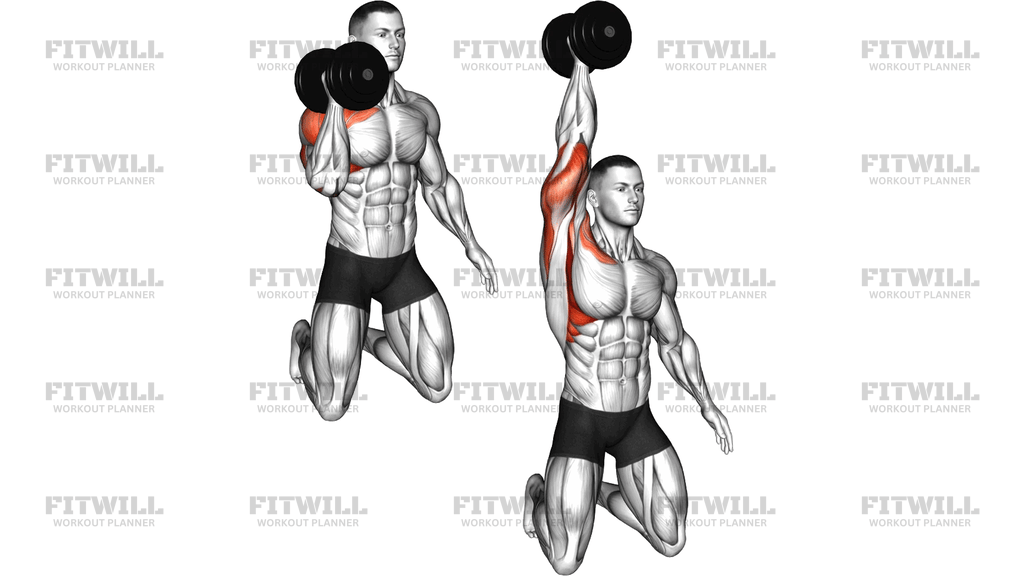
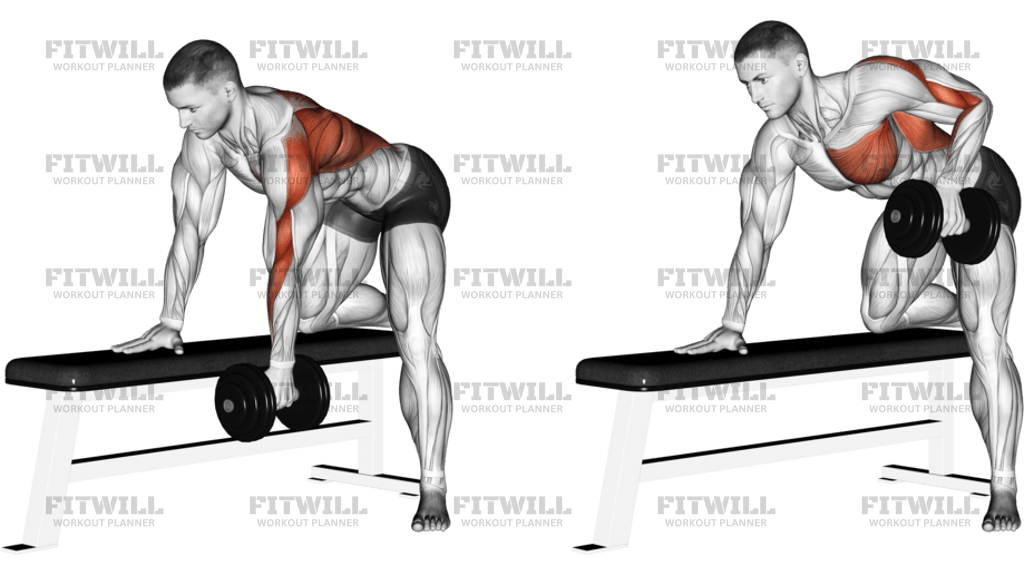
Dumbbell One-Arm Snatch
Dumbbell One-Arm Snatch is a fast, full-body lift that sends a single dumbbell from the floor to a locked-out overhead position in one continuous rep. It trains power, coordination, and timing while demanding that the shoulders, upper back, grip, and core stay organized around a very quick change of direction. Because the load is moving on one side only, the torso has to resist rotation and side-bending as the bell travels upward.
The setup matters because this lift starts from a dead stop on the floor. Hinge down with the dumbbell between your feet, keep the shoulder slightly in front of the handle, and set your back in a strong neutral position before you break the weight off the ground. The free arm should be available for balance, not for helping to yank the dumbbell upward. If the start is too upright, the rep usually turns into a curl or a swing instead of a snatch.
The cleanest reps happen when the lower body creates the speed and the arm simply guides the dumbbell. Drive through the floor, extend the hips and knees aggressively, and keep the bell close to your body as it rises. Once it reaches chest height, shrug and punch the hand straight up so you can get under the bell and catch it overhead with a stacked wrist, elbow, shoulder, hip, and foot. The finish should look tall and stable, not leaned back or shrugged into the ear.
This is a useful drill when you want strength, speed, and conditioning in the same movement. It fits well in power-focused warmups, athletic sessions, or metabolic circuits, but only if the load stays light enough to keep the turnover crisp. If you start muscling the bell with the arm, letting it drift away from the body, or catching with a soft elbow, the movement becomes less explosive and more stressful. Treat each side as its own rep, reset between reps when needed, and stop the set as soon as the overhead catch loses speed or control.
[ Workout Log & Planner ]
Put your next workout in Fitwill
Keep your plan and training log ready when you are.


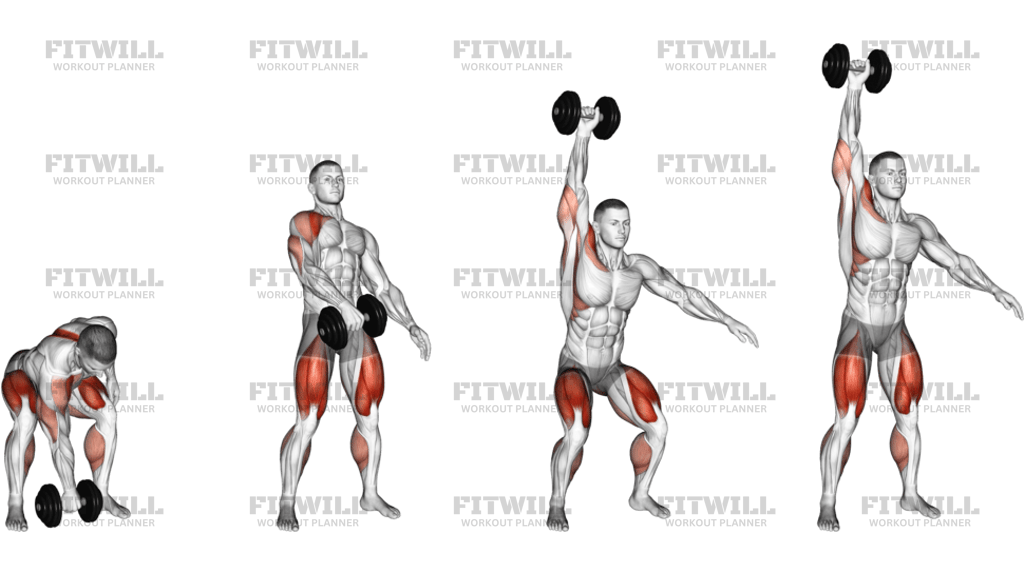
Instructions
- Place one dumbbell on the floor between your feet and stand with a hip- to shoulder-width stance.
- Hinge down, bend your knees, and grip the handle with one hand while keeping your chest up and your back flat.
- Set your shoulder slightly in front of the dumbbell, keep the free arm out for balance, and load your hips before the pull.
- Drive through the floor and extend your hips, knees, and ankles explosively to break the dumbbell off the ground.
- Keep the dumbbell close to your body as it rises, with the elbow staying long and the bell traveling in a tight line.
- As the dumbbell reaches chest height, shrug and pull it upward, then punch your hand straight to the ceiling.
- Rotate under the bell and catch it overhead with a locked elbow, stacked shoulder, and ribs down.
- Stand tall to finish the rep, then lower the dumbbell with control back to the floor or reset for the next rep.
- Complete all reps on one side before switching, unless the program asks you to alternate arms.
Tips & Tricks
- Choose a dumbbell you can accelerate from the floor without turning the pull into an arm curl.
- Keep the bell close to your shins and thighs; if it swings forward, the catch usually gets loose.
- Think "jump, then punch" so the hips create speed before the arm turns the load over.
- Keep your free hand quiet and slightly out to the side instead of twisting your torso to chase the dumbbell.
- Lock the overhead catch with the biceps near your ear and the wrist stacked over the shoulder.
- If the bell bangs into your forearm or shoulder, reduce the load and clean up the turnover.
- Reset your hinge before each floor rep so every pull starts from the same position.
- Exhale as you drive and catch, then take another breath before the next rep if you need a reset.
- Stop the set when the dumbbell starts drifting away from your body or the finish position leans back.
Frequently Asked Questions
What muscles do the one-arm dumbbell snatch work?
The lift is driven mainly by the hips, glutes, quads, shoulders, traps, and core. The arm guides the dumbbell, but the lower body creates most of the speed.
Should the dumbbell start on the floor or from the hang?
This version starts from the floor, with the bell between your feet. A hang variation starts higher and is usually easier to learn first.
How do I keep from curling the dumbbell?
Keep the arm long during the first pull and let the hips drive the bell upward. Your hand should stay close to your body until you punch under it at the top.
Where should I catch the dumbbell overhead?
Catch it with a locked elbow, wrist stacked over the shoulder, and the biceps close to your ear. The dumbbell should sit over your midfoot, not drift in front of you.
Can beginners do this exercise safely?
Yes, but only with a light dumbbell and very clean mechanics. Many beginners should learn the hinge, high pull, and overhead lockout separately before going full speed.
What if the dumbbell crashes onto my wrist or shoulder?
That usually means the turnover is late or the load is too heavy. Reduce the weight and practice punching under the bell sooner.
How many reps should I use on each side?
Power work is usually done for low reps per side so every repetition stays sharp. Stop before the speed drops or the overhead catch gets sloppy.
Can I alternate arms rep by rep?
You can, if the program calls for it, but many lifters do all reps on one side before switching. That makes it easier to stay organized and avoid rushing the setup.