Kneeling Decline Push-Up
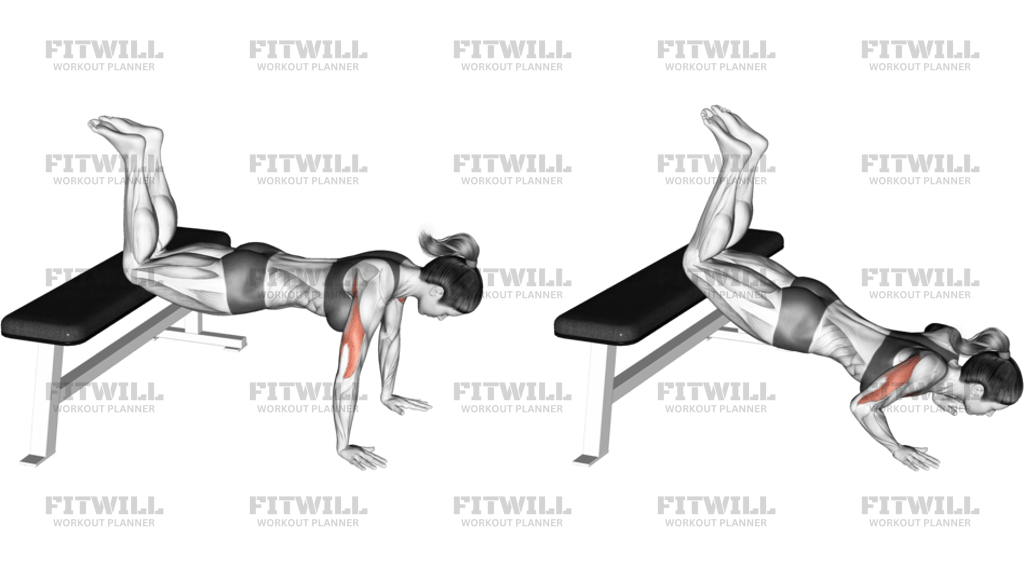
Kneeling Decline Push-Up is a bench-supported pressing exercise that shifts more work to the triceps while still asking the shoulders and core to keep the trunk rigid. In the pictured setup, the knees and shins rest on the bench while the hands press from the floor, creating a shortened lever compared with a full decline push-up. That smaller lever makes the exercise useful when you want a triceps-dominant push-up pattern without the full bodyweight demand of a standard floor variation.
The setup matters because the bench, knee contact, and hand position determine how much load you actually press. Keep the bench steady, place the knees and lower legs high enough on the pad that the hips do not sag, and set the hands so the shoulders stack comfortably over the wrists. From there, the body should feel like one connected line from the knees through the hips to the head, with the ribs controlled instead of flared. If the low back arches, the press becomes less about the triceps and more about hanging on to the position.
Each rep should look and feel like a controlled floor press with a push-up pattern. Lower the chest between the hands, keep the elbows angled back rather than flared hard to the sides, and stop when you still own the bottom position. Press the floor away until the elbows are straight without locking the shoulders forward. Breathe in on the way down and exhale through the press so the trunk stays braced and the movement stays smooth.
Use this exercise as a triceps-focused accessory, a push-up regression, or a technique drill when you want pressing volume without the same fatigue cost as a full push-up. It works well in upper-body days, warmups, and higher-rep strength circuits. The main safety points are simple: keep the bench stable, keep the neck long, and keep the wrists and shoulders in a range you can repeat cleanly. If the shoulders or wrists start to complain, shorten the range or adjust the hand position before adding more reps.
[ Workout Log & Planner ]
Put your next workout in Fitwill
Keep your plan and training log ready when you are.


Instructions
- Place a stable bench behind you and kneel so your shins and lower legs rest on the pad, with your hands on the floor slightly wider than shoulder width.
- Walk your hands forward until your shoulders are comfortably over or just ahead of your wrists and your body forms a firm line from knees through hips to head.
- Brace your abs and squeeze your glutes so your ribs stay down and your lower back does not arch.
- Lower your chest toward the floor by bending the elbows back at about a 30 to 45 degree angle from your torso.
- Keep the knees and shins planted on the bench as you descend; do not let your hips shift sideways or drift off the pad.
- Pause briefly near the bottom when your chest is close to the floor and you still have control of the shoulder position.
- Press the floor away and straighten the elbows until you return to the top without shrugging hard or losing the trunk brace.
- Exhale through the press, reset your body at the top, and repeat for the planned reps.
Tips & Tricks
- If the set feels too easy, move the hands slightly farther from the bench so the lever gets longer and the triceps have to work harder.
- Keep the elbows tracking back instead of flaring wide; that usually keeps the shoulders happier and puts more of the effort into the press.
- Let the chest lead the descent rather than dropping the head first, which helps keep the neck neutral and the torso aligned.
- If your lower back starts to dip, shorten the range and re-brace before the next rep instead of forcing extra depth.
- Use a bench height that keeps the knees and shins secure; sliding contact usually means the pad position is off or the body is too far back.
- Choose a hand position that keeps the wrists stacked and tolerable; a slightly wider stance often feels better than a very narrow one.
- Control the bottom for a brief pause instead of bouncing off the floor, especially when the triceps start to fatigue.
- Stop the set when you can no longer keep the knee contact, trunk angle, and elbow path consistent from rep to rep.
Frequently Asked Questions
What does the Kneeling Decline Push-Up train most?
It emphasizes the triceps most, with the chest, front shoulders, and core helping to stabilize and press.
Why are the knees and shins on the bench in this version?
The bench support shortens the lever and reduces the total load, which makes the push-up pattern more triceps-focused and easier to control.
Where should my hands be on the floor?
Place them slightly wider than shoulder width with the wrists under a comfortable pressing line, not way out in front of you.
How low should I go on each rep?
Lower until your chest is close to the floor and your shoulders stay organized; stop before the low back arches or the shoulders dump forward.
Is this a beginner-friendly push-up variation?
Yes. The bench support makes it a good regression for people who are not ready for full bodyweight floor push-ups yet.
What is the most common mistake with the bench setup?
Letting the knees slide or the hips sag. Both usually mean the body is too far back or the trunk is not braced enough.
Should my elbows flare out to the sides?
No. A moderate tuck usually works better than a wide flare because it keeps the press cleaner and reduces shoulder strain.
How can I make this exercise harder without changing the exercise?
Move the hands a little farther from the bench, slow the lowering phase, or add a pause at the bottom while keeping the same body line.