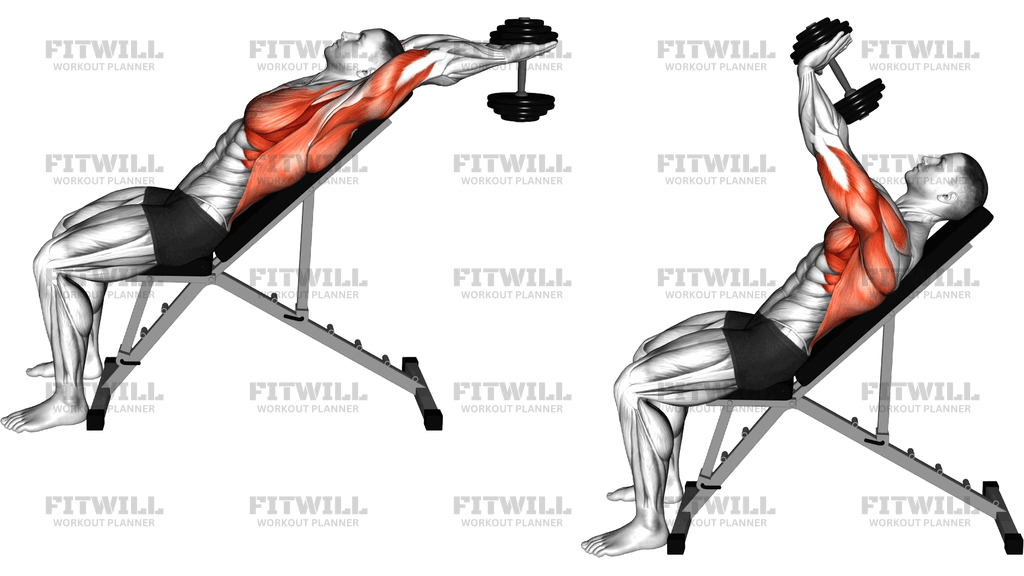
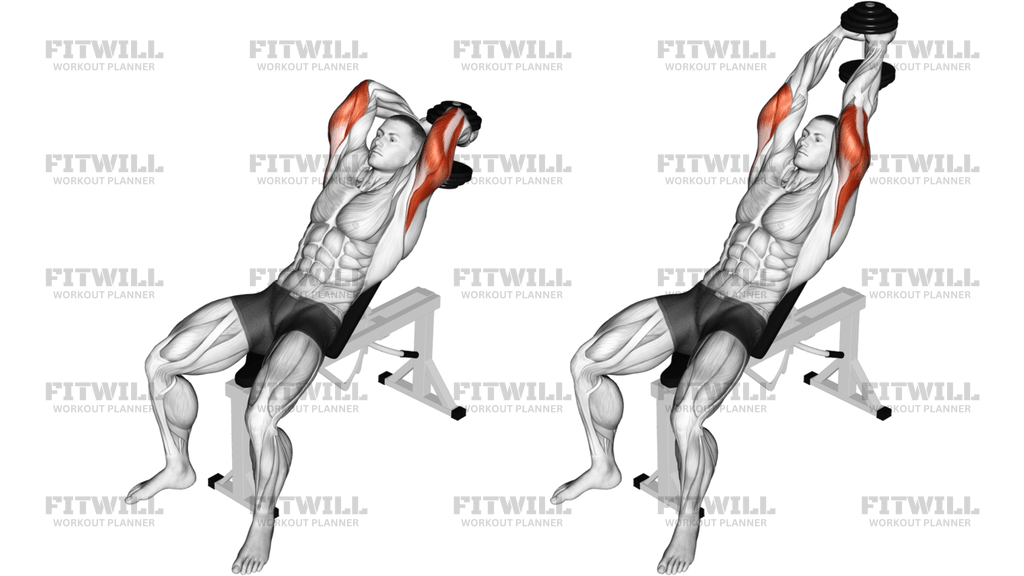
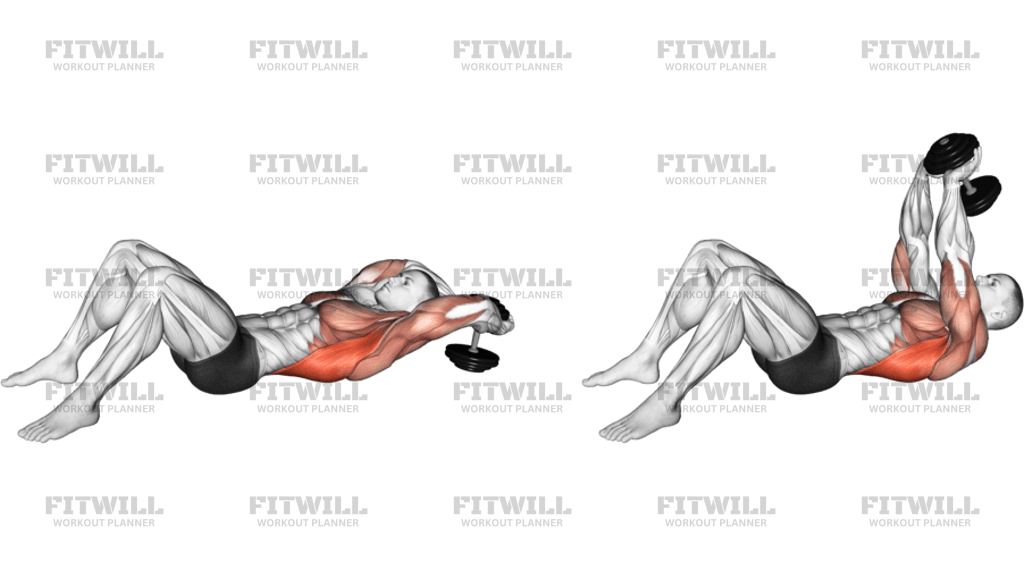
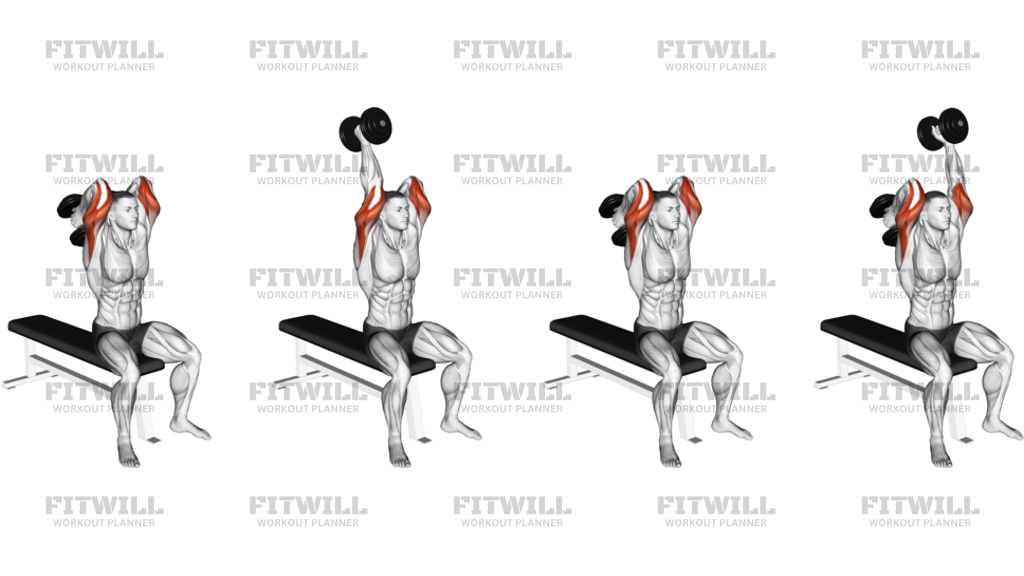
Dumbbell Lying Triceps Extension
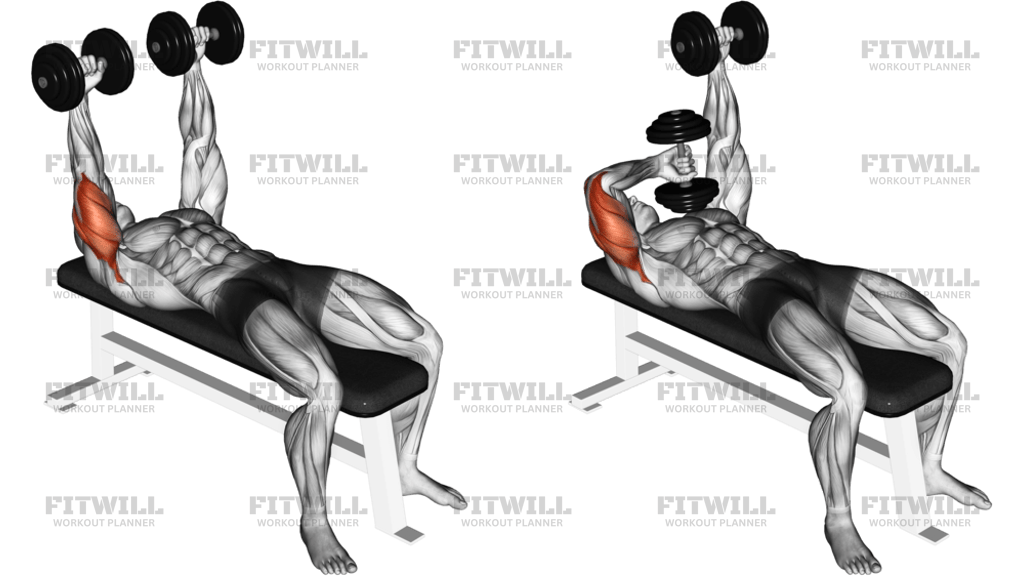
Dumbbell Lying Triceps Extension is a flat-bench triceps isolation exercise that puts the upper arms in a fixed overhead position while the elbows do the moving. It is especially useful when you want direct triceps work without relying on chest-driven pressing, because the bench supports the body and lets you focus on elbow extension.
The exercise emphasizes the triceps brachii, with the forearms helping to stabilize the dumbbells and the shoulders working isometrically to keep the upper arms in place. Done well, Dumbbell Lying Triceps Extension creates a strong stretch in the triceps on the way down and a clean finish when the elbows lock out over the shoulders. The setup matters because even small changes in elbow angle, wrist position, or bench position can shift the load away from the triceps and into the shoulders.
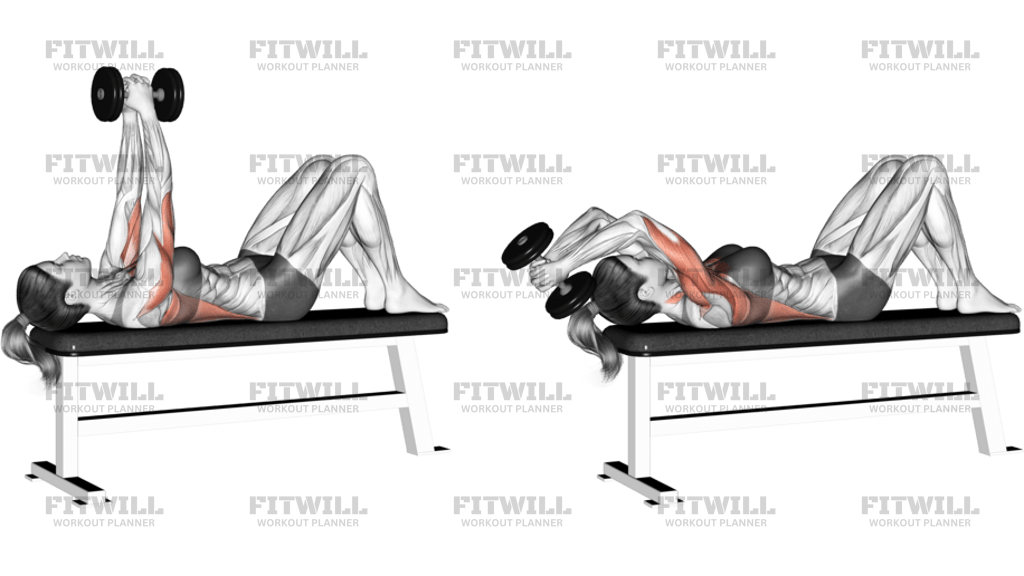
A good repetition starts on a flat bench with the feet planted, the head supported, and the dumbbells stacked over the chest or shoulders. From there, the elbows bend while the upper arms stay mostly still, so the weights travel beside the head instead of drifting all the way back or swinging wide. That fixed upper-arm position is what makes the movement feel like a triceps extension rather than a press.
The lowering phase should be controlled and deliberate, with the forearms moving through a smooth arc until you feel the triceps lengthen without losing shoulder position. Press the dumbbells back up by straightening the elbows, then finish by squeezing the triceps hard without bouncing the weights together or arching off the bench. Breathing usually works best with an inhale on the descent and a forceful exhale as you extend the elbows.
Dumbbell Lying Triceps Extension fits well in arm-focused sessions, upper-body accessory work, or higher-rep hypertrophy blocks after heavier compound presses. Because the elbows and wrists take more of the stress here than in a standard pressing movement, the exercise rewards conservative loading, clean repetitions, and a range of motion you can repeat without pain. If the weights start to drift behind the head, the elbows flare, or the shoulders take over, the set is usually too heavy or the path is getting too loose.
[ Workout Log & Planner ]
Put your next workout in Fitwill
Keep your plan and training log ready when you are.


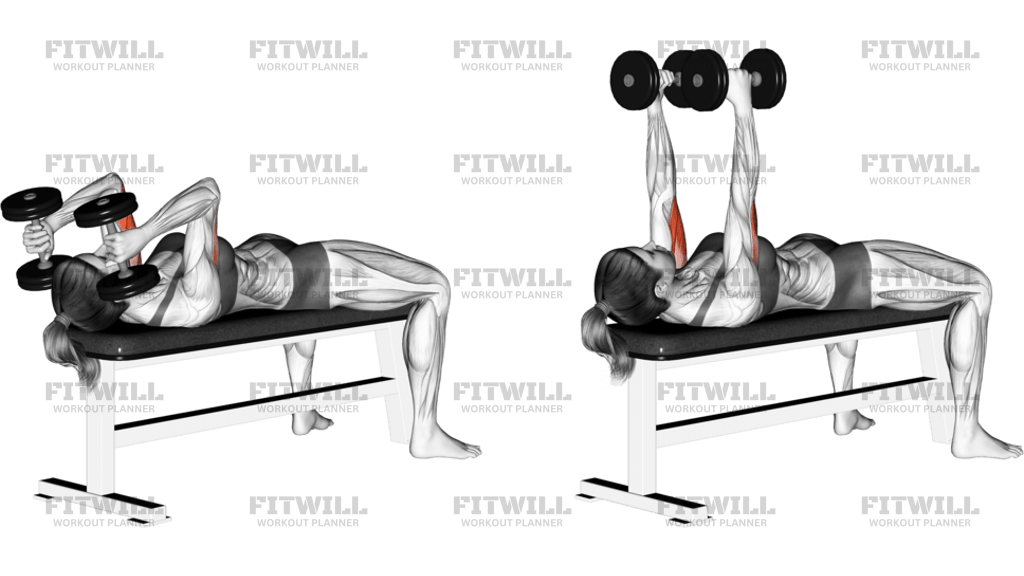
Instructions
- Lie on a flat bench with your head supported, feet flat on the floor, and a dumbbell in each hand held above your chest with palms facing in.
- Keep your wrists stacked over your elbows, lightly brace your ribs down, and set your upper arms so they point mostly toward the ceiling with only a small angle back.
- Lower the dumbbells by bending your elbows, letting the weights travel beside your temples or just behind your head while your upper arms stay quiet.
- Stop when your forearms are close to your biceps and you feel a solid triceps stretch without your shoulders rolling forward.
- Press the dumbbells back up by straightening your elbows until the weights return over your shoulders.
- Finish the rep by squeezing the triceps, not by throwing the dumbbells together or arching your lower back off the bench.
- Breathe in as you lower the weights and exhale as you extend the elbows to lift them back up.
- After the last rep, bring the dumbbells to your chest, bend your knees for balance, and sit up under control.
Tips & Tricks
- Keep the upper arms nearly fixed; if they drift toward your face, the set turns into a different movement and the triceps lose tension.
- A neutral or slightly inward palm position usually feels friendlier on the wrists than letting the dumbbells twist open.
- Lower the dumbbells beside the head instead of all the way back toward the floor so the elbows stay under control.
- Use a slower lowering phase than pressing phase to keep the triceps working through the stretch.
- If the dumbbells touch the forehead path awkwardly, angle them slightly behind the head and shorten the range a little.
- Keep the elbows from flaring wide; that usually shifts work into the shoulders and makes the lockout less clean.
- Do not turn the bench arch into a bridge. A small natural arch is fine, but the hips should stay planted.
- Choose a load that lets you repeat the same elbow path on every rep; this exercise gets sloppy quickly when it is too heavy.
- If your elbows ache, reduce range and tempo before increasing load or reps.
Frequently Asked Questions
What does Dumbbell Lying Triceps Extension train most?
It mainly targets the triceps brachii, especially when you keep the upper arms still and let the elbows do the work.
Is Dumbbell Lying Triceps Extension the same as a skull crusher?
Yes, it is the dumbbell version of a skull crusher, usually performed on a flat bench with the dumbbells lowering beside the head.
How far should I lower the dumbbells in Dumbbell Lying Triceps Extension?
Lower until the dumbbells are beside your temples or just behind your head, but stop before the shoulders roll forward or the elbows drift open.
Should my upper arms move during the rep?
Only a little. They should stay mostly in place so the movement comes from elbow extension, not from the shoulders swinging the weight.
What grip works best for Dumbbell Lying Triceps Extension?
A neutral grip with the palms facing each other is the most common and usually easiest on the wrists.
Can beginners do Dumbbell Lying Triceps Extension?
Yes, but beginners should start light and keep the dumbbells close to the same path on every rep instead of chasing a big range.
Why do my elbows flare out on this exercise?
That usually happens when the weight is too heavy or the dumbbells are lowered too far back. Shorten the range and keep the elbows pointed up.
What is a good substitute if Dumbbell Lying Triceps Extension bothers my elbows?
A cable pressdown or a lighter overhead triceps extension often gives the triceps work with less elbow stress.