Dumbbell Push-Up Front Raise
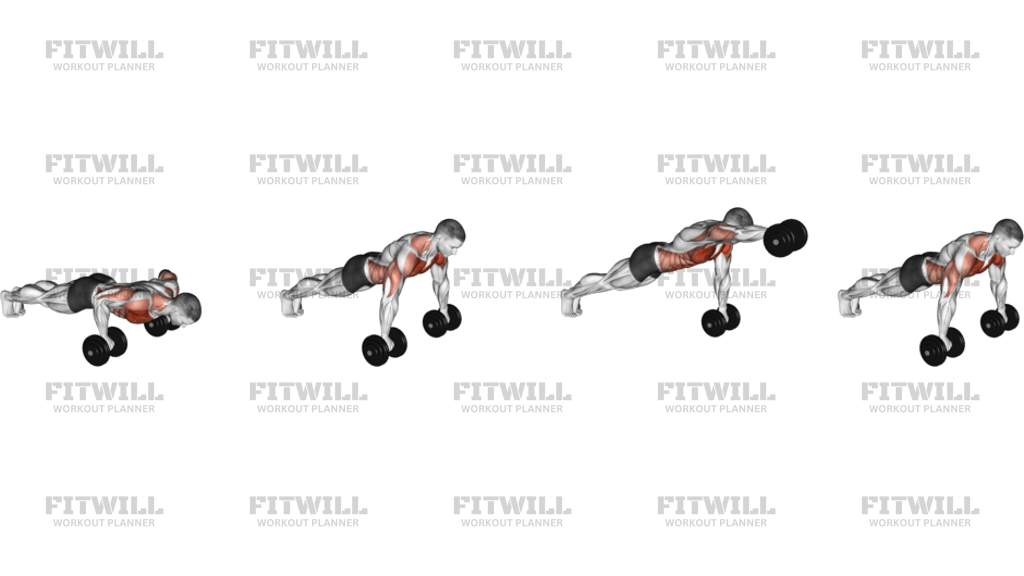
Dumbbell Push-Up Front Raise is a plank-based compound exercise that combines a strict push-up with a single-arm front raise on the dumbbells. The image shows the body staying long and rigid on the handles while one arm presses the floor, then the free arm lifts a dumbbell forward to shoulder height. That combination makes the drill much more demanding than a normal push-up because the shoulders, chest, triceps, and trunk all have to stay organized while one arm moves independently.
The dumbbells matter because they give your wrists a more neutral angle and create enough space to lower the chest between the handles. From that setup, the pressing phase is still a push-up, but the front raise changes the rhythm and shifts extra work to the front of the shoulder and the anti-rotation muscles. The torso has to resist twisting as the working arm lifts, so the exercise trains stability, not just pressing strength.
A good rep starts with a tight plank, feet set wide enough to keep the hips from rolling, and both hands gripping the dumbbells directly under the shoulders. Lower under control until the chest comes close to the floor, press back to a stable plank, then shift weight through the supporting arm and raise the free dumbbell straight in front of the body without swinging it outward. The lifted arm should stop around shoulder height, then return slowly before you repeat on the other side or complete the next rep as programmed.
Because the movement links two demanding patterns, it works best with light dumbbells and deliberate tempo. If the load is too heavy, the body will twist, the lower back will sag, and the front raise will turn into a momentum swing. Use it as a strength-and-control accessory when you want to challenge the chest and shoulders while forcing the core to hold alignment through every rep. It is most useful for advanced beginners and intermediate lifters who can keep a clean plank, a smooth push-up, and a controlled alternating raise without losing shoulder position.
When it is done well, the exercise should feel crisp and athletic rather than rushed. You should be able to pause briefly in the plank between the push-up and the raise, breathe without losing brace, and lower each dumbbell with the same control you used to lift it. That quality of movement is what makes this pattern worth using: it teaches the upper body to produce force while the trunk stays still.
[ Workout Log & Planner ]
Put your next workout in Fitwill
Keep your plan and training log ready when you are.


Instructions
- Place two dumbbells on the floor shoulder-width apart and grip them in a high plank with your shoulders stacked over the handles.
- Set your feet a little wider than a standard push-up stance so you can resist rotation when one arm leaves the floor.
- Brace your abs, squeeze your glutes, and keep your head in line with your spine before the first rep starts.
- Lower into a controlled push-up until your chest is just above the floor and your elbows track about 30 to 45 degrees from your sides.
- Press back up to a rigid plank without letting your hips pike or sag.
- Shift your weight into one dumbbell, then lift the opposite dumbbell straight forward in a front raise until it reaches about shoulder height.
- Pause briefly at the top without turning your torso or shrugging the working shoulder toward your ear.
- Lower the raised dumbbell with control, reset both hands on the floor, and repeat the push-up plus front raise on the other side or for the programmed side sequence.
- Breathe in on the way down and exhale as you press and raise, then stop the set if you can no longer keep the plank square.
Tips & Tricks
- Use a light pair of dumbbells first; this movement fails from rotation and lost posture long before it fails from raw pressing strength.
- Set your feet wider than shoulder width if your hips twist when the arm lifts.
- Keep the front raise path straight in front of the body, not out to the side like a lateral raise.
- Think about driving the floor away with the supporting hand while the free arm lifts so your torso stays level.
- Do not lock out your elbows aggressively at the top of the push-up; finish with a strong plank instead.
- Keep the raised dumbbell only as high as you can control without leaning back or rotating open.
- If your wrists feel unstable, choose hex dumbbells with a flat base so the handles do not roll.
- A slow lowering phase makes the exercise much harder and keeps the shoulders honest.
- Stop the set when the dumbbell lift turns into a swing or when your lower back starts to arch.
Frequently Asked Questions
What does Dumbbell Push-Up Front Raise work?
It combines chest, triceps, front delts, and deep core work. The push-up drives the pressing demand, while the front raise adds a shoulder lift that forces the trunk to stay square.
Is this just a push-up with extra weight?
No. The dumbbells change the wrist position and the exercise adds an alternating front raise, so you are training pressing strength and anti-rotation control at the same time.
How do I keep my hips from twisting during the front raise?
Set your feet slightly wider, squeeze your glutes, and keep both hip points facing the floor. Raise the dumbbell only as high as you can without letting the torso roll open.
Should I raise the dumbbell before or after the push-up?
Complete the push-up first, then lift one dumbbell from a stable plank. The image shows the push-up and the front raise as separate parts of the same rep, not at the same time.
Why use dumbbells instead of doing the push-up on the floor?
The handles give your wrists a more neutral angle and create room for a deeper, cleaner chest position between the dumbbells.
What is the most common mistake with this exercise?
People usually rush the raise and let the body rotate, which turns the drill into a swing instead of a controlled strength movement.
Can beginners do Dumbbell Push-Up Front Raise?
Only if they already own a solid push-up plank. Beginners should start with very light dumbbells and a wide, stable base, or build up with regular push-ups first.
How heavy should the dumbbells be?
Choose a load you can press smoothly and raise without shifting the hips. If you have to heave the dumbbell forward, it is too heavy.
What if my shoulders feel pinchy on the raise?
Lower the front raise height, lighten the dumbbells, and keep the arm slightly in front of the shoulder instead of forcing it higher.
Where does this fit in a workout?
Use it as an accessory or conditioning strength drill after your main lift work, when you want a demanding chest-and-shoulder pattern with extra core control.