Straight Leg Sit-Up
Straight Leg Sit-Up is a floor core exercise that asks you to rise from a fully extended position with both legs kept long. Compared with a bent-knee sit-up, the straight-leg position gives the torso a longer lever, so the abs have to work harder to curl the ribs toward the pelvis and bring the trunk upright without help from a big hip snap.
The main job is trunk flexion through the rectus abdominis, with the obliques and deep abdominal wall helping to keep the torso organized as you sit up and lower back down. The hip flexors contribute too, especially if the legs start to lift or the rep gets rushed, which is why this movement rewards tight control and a clean line from the heels to the fingertips.
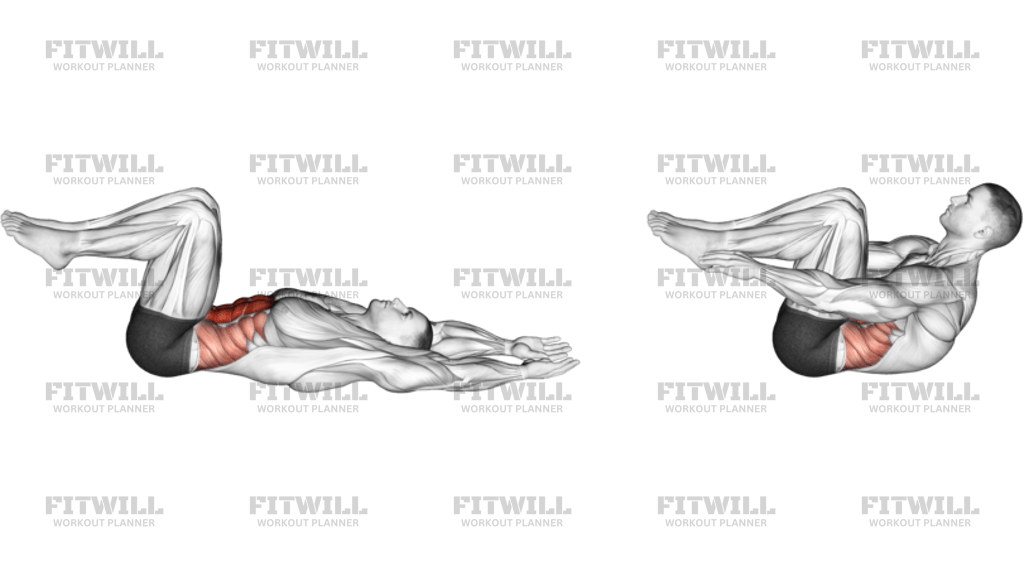
Start by lying on your back on a mat with your legs straight, feet together or nearly together, and your arms reaching overhead. Press your low back gently toward the floor before each rep so you begin from a strong, braced position instead of a loose arch. That setup matters because the straight-leg position makes every small loss of position more obvious and easier to cheat.
As you lift, curl the head and shoulders first, then keep coming up until the ribs and torso finish the sit-up in one smooth line. Reach toward the feet without yanking the neck or throwing the arms to create momentum, and lower with the same control so the abs stay loaded on the way down. If the lower back starts to pull away from the floor too early or the feet pop up, reduce the range before the set turns into a hip-flexor-driven swing.
Straight Leg Sit-Up is useful for core training blocks, warmups, and accessory work when you want a simple bodyweight pattern that still demands discipline. It is most productive when reps are crisp, the descent is slow, and the finish position is the result of abdominal control rather than speed. Beginners can use a shorter range or a slight knee bend to learn the pattern, while stronger lifters can make it stricter by keeping the arms long overhead and lowering under more tension.
Fitwill
Log Workouts, Track Progress & Build Strength.
Achieve more with Fitwill: explore over 9600 exercises with images and videos, access built-in and custom workouts, perfect for both gym and home sessions, and see real results.
Start your journey. Download today!




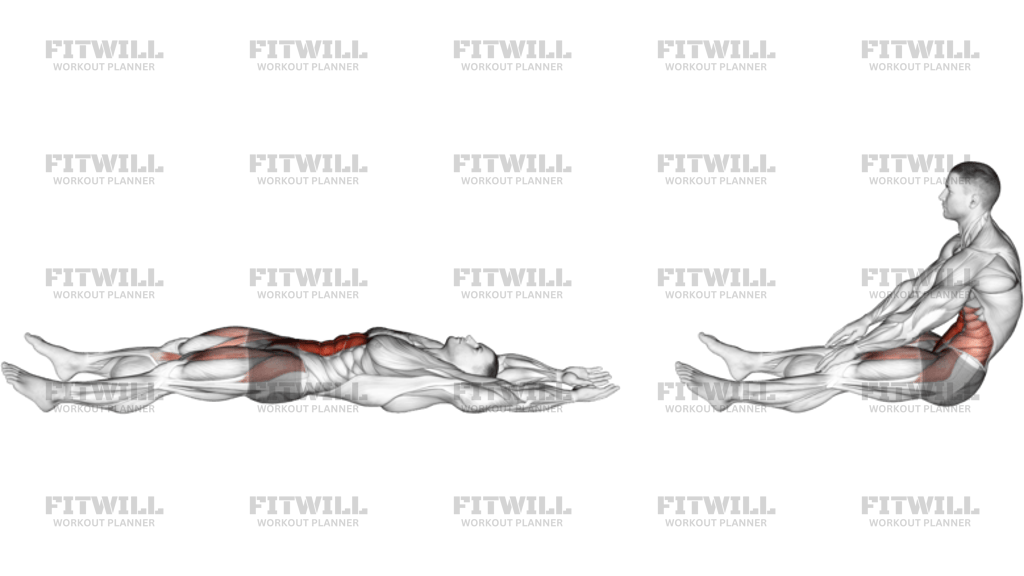
Instructions
- Lie on your back on a mat with your legs straight, feet together, and arms reaching overhead.
- Press your low back gently toward the floor and keep your ribs down before you start each rep.
- Set your chin slightly tucked so your neck stays long and relaxed.
- Exhale and curl your head and shoulders off the floor to begin the sit-up.
- Keep your legs long as you roll your torso upward and reach your hands toward your feet.
- Sit up as far as you can without letting the legs jerk or the feet lift off the floor.
- Lower your torso back down in a slow, controlled arc while inhaling.
- Return your shoulders, back, and head to the mat, then reset with the arms overhead before the next rep.
Tips & Tricks
- Keep a slight posterior pelvic tilt at the start so the low back does not arch off the mat before the rep begins.
- If your feet pop up, shorten the range before the movement turns into a hip-flexor swing.
- Reach your arms overhead on the floor between reps; that longer lever makes the straight-leg sit-up strict and repeatable.
- Think about curling the ribs toward the pelvis instead of throwing the chest forward.
- Move the top half of the body first, then keep the sit-up smooth rather than snapping upright in one jerk.
- Lower slowly, because the descent is where this exercise builds most of its control and trunk tension.
- If hamstrings limit the setup, allow a tiny knee softness rather than forcing a rounded lower back.
- Use a mat under your spine so repeated reps do not dig the tailbone and lumbar area into the floor.
Frequently Asked Questions
What muscle does Straight Leg Sit Up target most?
Straight Leg Sit-Up mainly trains the rectus abdominis, with the obliques and deep core muscles helping you curl and control the trunk.
Why is Straight Leg Sit-Up harder than a regular sit-up?
Keeping the legs straight lengthens the lever, so the abs have to work harder to lift the torso and keep the movement from turning into a swing.
Should my feet stay on the floor during Straight Leg Sit-Up?
Yes, for the standard version the legs stay long and the heels stay grounded. If the feet keep popping up, the rep is usually too fast or the range is too big.
How high should I sit up on each rep?
Sit up as high as you can while keeping the legs long and the movement smooth. If you need to jerk the torso to reach upright, stop a little earlier.
Can beginners do Straight Leg Sit-Up safely?
Yes, but many beginners do better with a shorter range or a slight knee bend first. That helps them learn the curl without yanking on the hips or lower back.
What is the most common mistake with Straight Leg Sit-Up?
The biggest mistake is using momentum to snap upright. If the torso shoots up and the legs lift with it, the abs are losing tension.
How can I make Straight Leg Sit-Up easier or harder?
Make it easier by shortening the range or allowing a small knee bend. Make it harder by slowing the lowering phase and keeping your arms fully overhead between reps.
What should I do if I feel it mostly in my hip flexors?
Keep the low back pressed down longer, reduce the range, and stop before the legs start to lift. That usually shifts the effort back toward the abs.