Dumbbell Standing Single Spider Curl
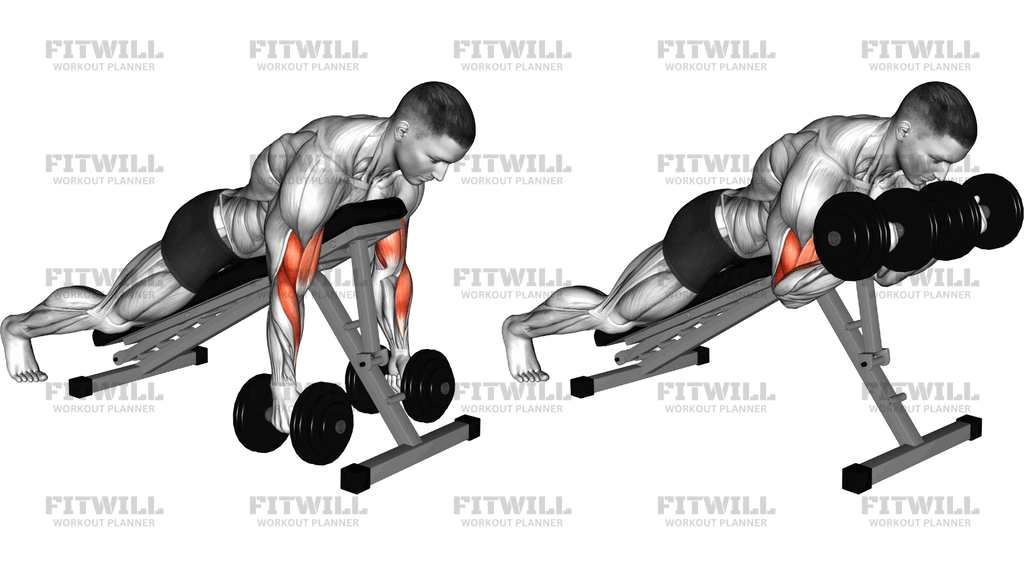
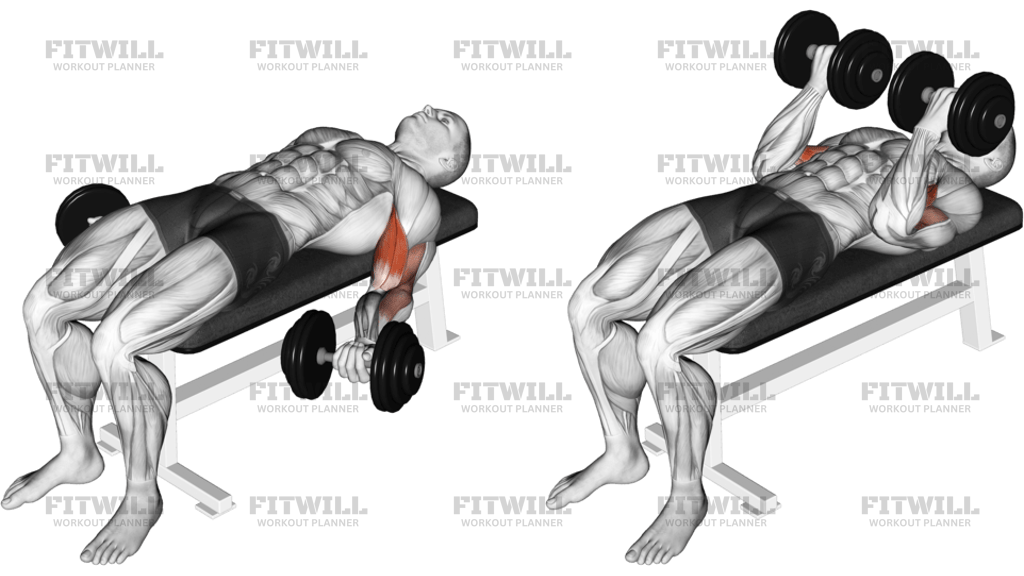
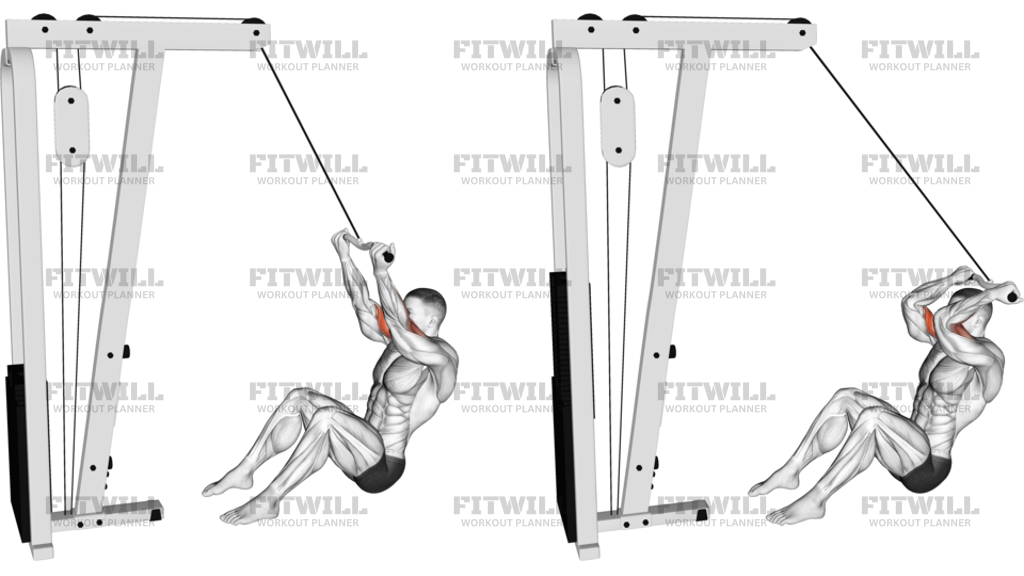
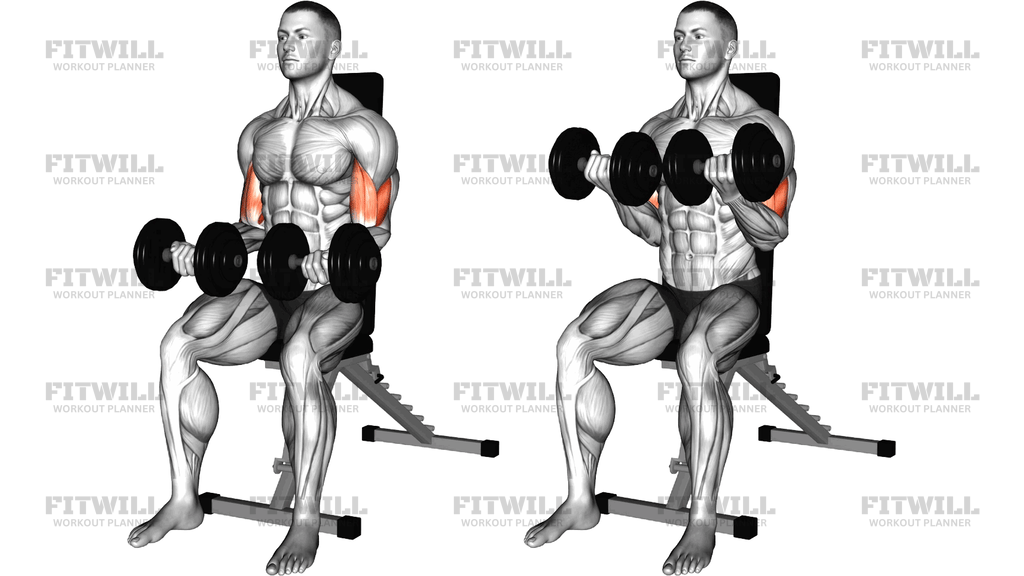
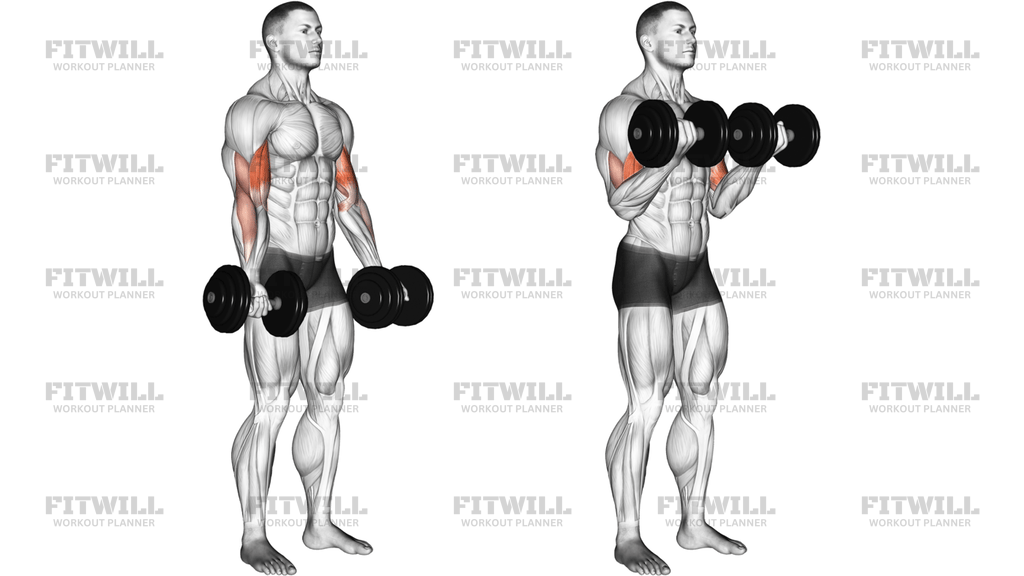
Dumbbell Standing Single Spider Curl is a single-arm dumbbell curl performed upright, with the dumbbell moving in front of the torso instead of swinging at the side. It is a direct arm exercise for the biceps, with the brachialis and brachioradialis helping to control the elbow as the weight rises and lowers. Because only one arm works at a time, the exercise also makes it easier to notice differences in grip strength, elbow position, and clean range of motion from side to side.
The main value of this movement is strict elbow flexion. The body should stay tall, the shoulder should stay down, and the upper arm should remain quiet so the biceps can do the work instead of the lower back or front deltoid. A good setup matters because even a small lean backward or a drifting elbow can turn the curl into a cheat rep and move tension away from the target muscles.
Start with the dumbbell hanging at one thigh, wrist stacked over the forearm, and the working elbow close to the ribcage. From there, curl the weight upward in a smooth arc until the biceps are fully shortened or the dumbbell reaches near shoulder height, then lower it along the same path with control. The top squeeze and the slow descent are both important; they keep the repetition honest and help the arm work through a full contraction and return.
This exercise fits well on arm day, after pulling work, or in any accessory block where you want focused biceps tension without a machine. It is beginner-friendly if the weight stays light enough to keep the torso still, but the set should end as soon as the shoulder starts rolling forward, the wrist bends back, or momentum takes over. Used well, it is a simple but effective way to build biceps size, elbow control, and better left-right symmetry.
Fitwill
Log Workouts, Track Progress & Build Strength.
Achieve more with Fitwill: explore over 9600 exercises with images and videos, access built-in and custom workouts, perfect for both gym and home sessions, and see real results.
Start your journey. Download today!




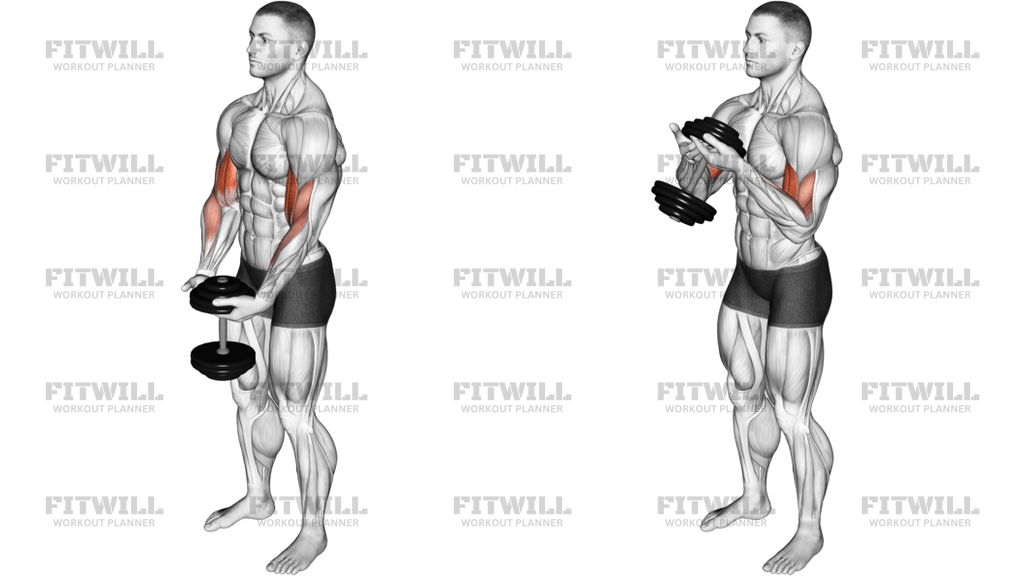
Instructions
- Stand tall with your feet about hip-width apart and hold one dumbbell at one thigh, wrist straight and elbow close to your side.
- Keep the non-working arm relaxed and set both shoulders down so your chest stays open without leaning back.
- Brace your torso before the first rep so the upper body stays stacked over the hips.
- Curl the dumbbell upward by bending only at the elbow and let the forearm travel in front of your body.
- Keep the upper arm still as the weight rises, and avoid letting the elbow drift forward or backward.
- Squeeze the biceps briefly near the top when the dumbbell is close to shoulder height.
- Lower the dumbbell along the same path under control until the arm is fully extended again.
- Breathe out as you curl up and inhale as you return to the start.
- Finish all reps on one side, then switch arms or alternate as programmed.
Tips & Tricks
- Keep the working elbow close to your ribcage so the curl stays on the biceps instead of turning into a shoulder raise.
- If your torso leans back on the way up, the dumbbell is too heavy for this movement.
- A small turn toward supination near the top can sharpen the biceps squeeze, but do not twist the wrist aggressively.
- Lower the dumbbell for about two to three seconds to keep tension on the arm and reduce momentum.
- Let the wrist stay stacked over the forearm; a bent-back wrist usually means the set is too heavy.
- Stop the rep before the shoulder rolls forward and the front delt starts taking over.
- Use the free hand only for balance, not to push or guide the weight.
- If both sides differ a lot, start with the weaker arm and match the stronger side to its range and tempo.
Frequently Asked Questions
What muscles does Dumbbell Standing Single Spider Curl work most?
The biceps are the main target, with the brachialis and brachioradialis helping during elbow flexion.
Why do it one arm at a time?
Single-arm work makes it easier to keep the elbow position strict and exposes strength or control differences between sides.
Where should the dumbbell move during the rep?
It should travel in a smooth arc in front of your torso, not swing out away from the body.
Should my elbow stay fixed?
Yes. Keep it close to your side and mostly still so the movement stays on the elbow joint instead of the shoulder.
Can beginners use this exercise?
Yes, as long as the dumbbell is light enough to prevent torso sway and wrist breakdown.
What grip should I use?
Use a straight wrist with a neutral-to-supinated grip path and let the forearm do the work instead of bending the wrist back.
What is the most common mistake?
Leaning back and using momentum instead of keeping the torso stacked and the curl controlled.
Where does this fit in a workout?
It works well after bigger pulling lifts or as a focused arm accessory when you want direct biceps tension.
How should I make it harder without jumping weight?
Slow the lowering phase, add a brief squeeze at the top, or keep every rep strict enough to eliminate swing.