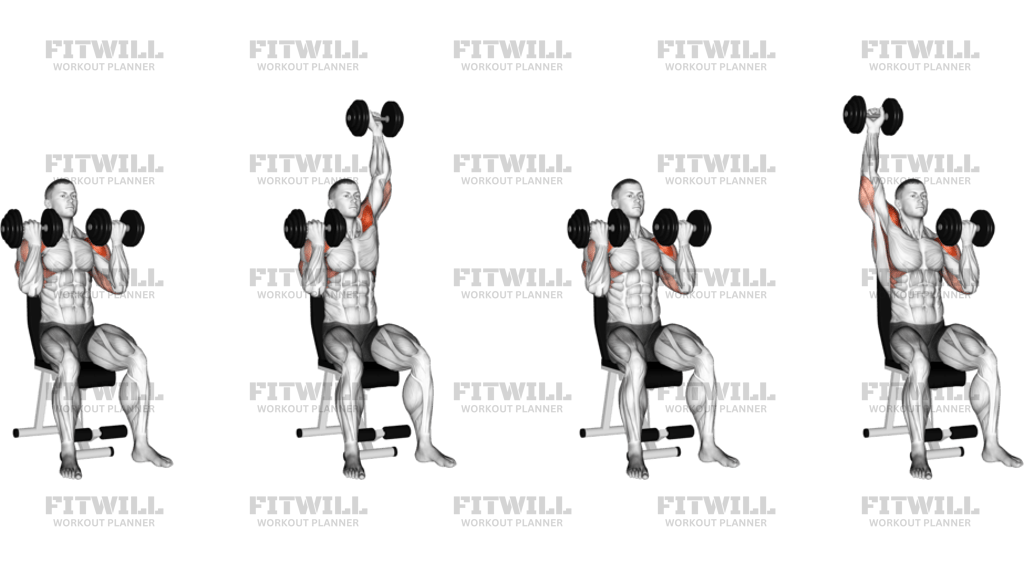
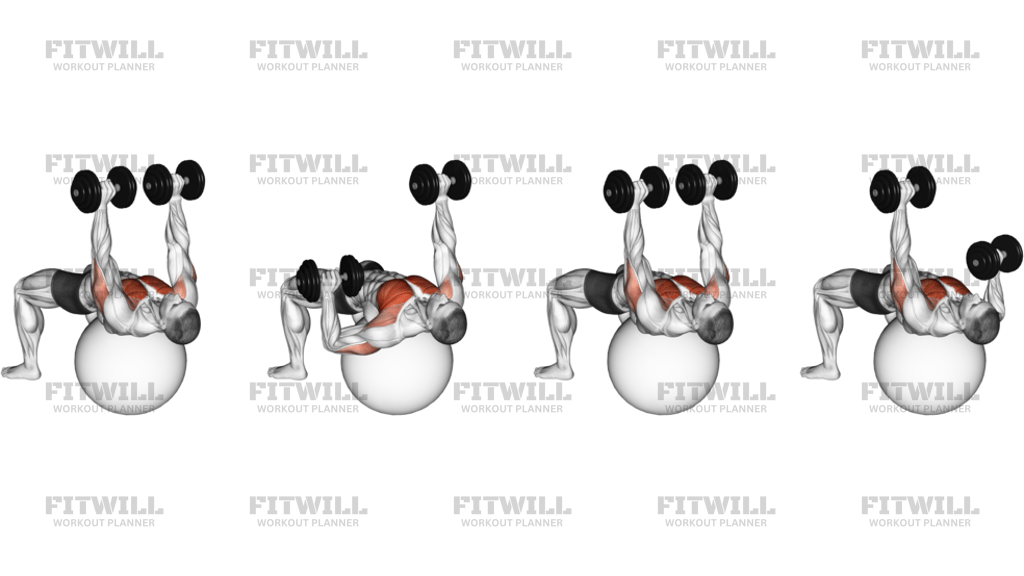
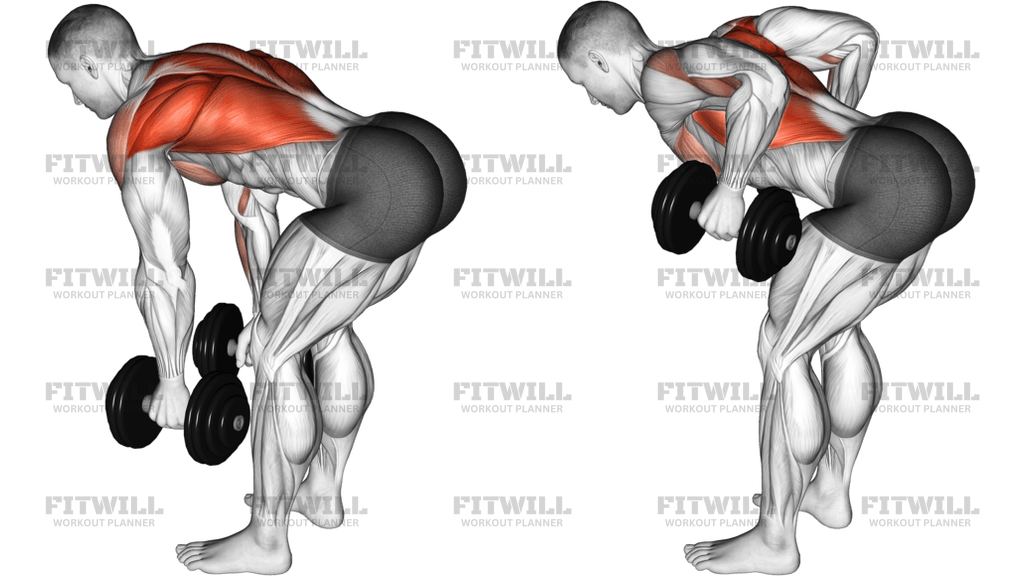
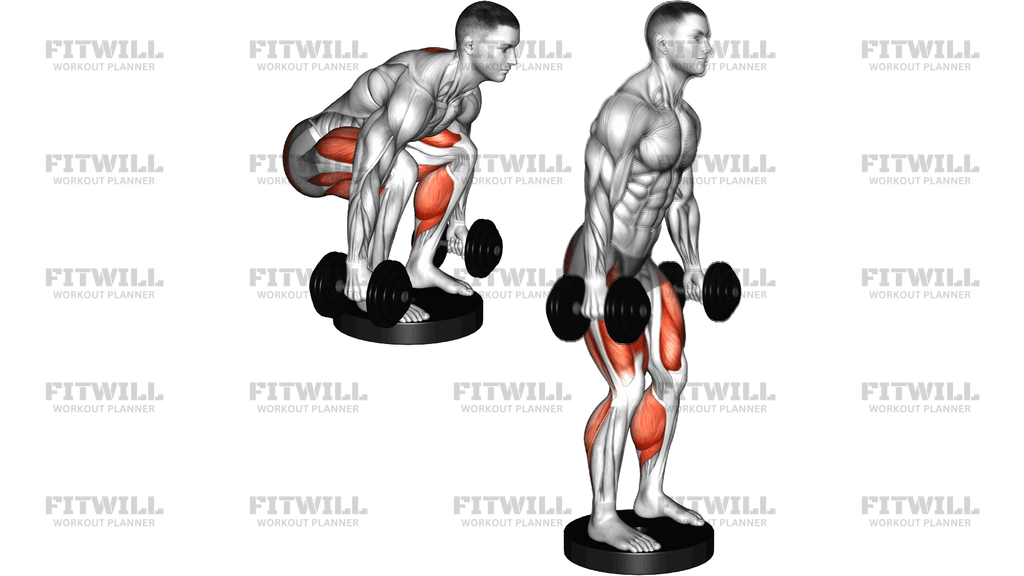
Dumbbell Seated Lateral Raise On Stability Ball
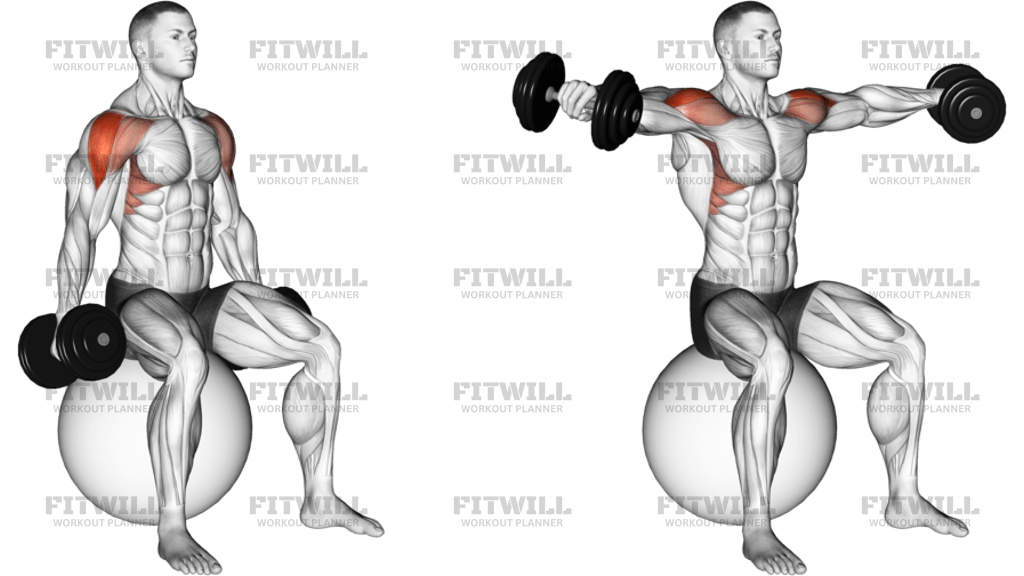
Dumbbell Seated Lateral Raise On Stability Ball is a shoulder isolation exercise built around controlled abduction with a small balance challenge from the ball. Sitting on the stability ball removes leg drive and back support, so the lift has to come from the shoulders instead of body English. The movement is especially useful when you want to train the side delts with strict form while also asking the trunk to stay organized.
The main target is the shoulder complex, especially the middle deltoids that raise the arms out to the sides. The upper traps, rotator cuff, forearms, and core all help, but they should stay in a supporting role. If the load is too heavy or the torso starts rocking, the traps and momentum take over quickly and the shoulder work gets diluted.
The setup matters more here than in a standing raise because the stability ball can shift under you. Sit tall on the center of the ball with your feet planted, knees bent, and dumbbells hanging at your sides with a slight elbow bend. Keep your ribs stacked over your pelvis, your neck long, and your shoulders away from your ears before the first rep begins. A calm, balanced start makes the lift feel smooth instead of wobbly.
From the bottom position, raise the dumbbells out and slightly forward in a wide arc until your upper arms reach about shoulder height. Lead with the elbows, keep the wrists neutral, and stop the lift before the shoulders shrug or the torso leans. Lower the weights under control all the way back to your sides, keeping tension through the descent rather than dropping into the bottom. The goal is a clean arc and a quiet torso, not the biggest possible swing.
This exercise fits well in shoulder accessory work, upper-body hypertrophy sessions, or warm-ups where you want lighter loading and precise tension. It is not meant to be a power move. The most productive reps are the ones that look the same from start to finish, with steady breathing, even tempo, and no loss of balance on the ball. If the setup feels unstable or the shoulders pinch, reduce the load, widen the stance, or shorten the range until the movement stays crisp.
[ Workout Log & Planner ]
Put your next workout in Fitwill
Keep your plan and training log ready when you are.


Instructions
- Sit on the center of a stability ball with your feet flat, hip-width apart, and your torso upright.
- Hold a dumbbell in each hand at your sides with your palms facing in and a soft bend in the elbows.
- Stack your ribs over your pelvis, lengthen your neck, and keep your shoulders down before you start.
- Brace lightly so the ball stays still and your torso does not drift backward.
- Lift both arms out to the sides in a wide arc, leading with the elbows and keeping the wrists neutral.
- Raise the dumbbells until your upper arms reach about shoulder height or just below it.
- Pause briefly at the top without shrugging, leaning, or swinging the weights higher.
- Lower the dumbbells slowly to your sides and keep the motion smooth all the way down.
- Reset your posture between reps and keep breathing steady through the full set.
Tips & Tricks
- Use lighter dumbbells than you would for a standing lateral raise, because the stability ball makes cheating easier to notice.
- If the ball rolls, widen your feet slightly and keep both soles pressed into the floor before you start the next rep.
- Think about lifting the elbows out and away rather than trying to throw the dumbbells upward with the hands.
- Stop the raise when your upper arms reach shoulder level; going higher usually turns the rep into a shrug.
- Keep a small bend in the elbows from start to finish so the shoulder does the work instead of the forearms.
- A slight thumbs-up angle can feel friendlier on the shoulders if a fully pronated grip causes pinching.
- Lower the weights for two to three seconds so the side delts stay loaded instead of dropping the dumbbells.
- If you feel the upper traps taking over, reduce the range and focus on keeping your shoulders away from your ears.
- Keep your ribs stacked and avoid arching back on the ball when the weights get heavy.
Frequently Asked Questions
What muscles does Dumbbell Seated Lateral Raise On Stability Ball work?
It primarily targets the middle deltoids, with the upper traps, rotator cuff, forearms, and core helping to stabilize the motion.
Why do this lateral raise on a stability ball?
The ball adds a balance challenge and removes leg drive, so it is harder to cheat the dumbbells up with body momentum.
How high should the dumbbells go?
Raise them until your upper arms are around shoulder height, or slightly below if going higher makes you shrug or lean back.
Should I sit upright or lean back on the ball?
Sit tall and keep your ribs stacked over your pelvis. Leaning back usually turns the rep into a partial front raise and reduces shoulder isolation.
What grip works best on the dumbbells?
A neutral grip or a slight thumbs-up angle is usually the most shoulder-friendly. Avoid cranking the wrists up or letting the hands lead the motion.
Is this exercise beginner-friendly?
Yes, as long as the load is light and the ball feels stable. Beginners should keep the feet planted and shorten the range if balance is shaky.
What is the most common form mistake?
The biggest mistake is shrugging the shoulders and swinging the torso to get the dumbbells higher. The lift should stay quiet and controlled.
Can I substitute a bench if the ball feels unstable?
Yes. A seated lateral raise on a bench is a good regression if you want to focus on the shoulders without the extra balance demand.