Landmine Romanian Deadlift
Landmine Romanian Deadlift is a hip-hinge variation that trains the back side of the body with a smoother bar path than a free barbell. The landmine setup guides the load in a slight arc, which makes it easier to keep the resistance close to your body while you learn or practice the Romanian deadlift pattern.
This movement is most useful for building hamstrings, glutes, and the trunk muscles that keep the torso braced while the hips move. Because the bar is anchored on one end, the exercise usually feels more stable than a conventional barbell Romanian deadlift, but it still demands control from the hips, midsection, and upper back.
The setup matters. Stand with your feet about hip-width apart, hold the free end of the bar with both hands, and begin with the bar in front of your thighs. Keep a soft bend in the knees and let the shoulders stay slightly in front of the hips so the first rep starts as a hinge rather than a squat.
Each repetition should begin by sending the hips back while the bar stays close to the legs. Lower only as far as you can maintain a neutral spine and tension in the hamstrings, then drive the hips forward to stand tall again. The finish should look long and stacked, not leaned back or shrugged, with the bar returning to the same path in front of the thighs.
Landmine Romanian Deadlift works well as an accessory lift on lower-body day, a hinge-pattern drill for beginners, or a lower-back-friendlier option when a straight bar feels awkward. It is also useful when you want posterior-chain work without turning the movement into a squat or a clean. If your range shortens as fatigue builds, that is usually a better sign to stop than to chase another rep with a rounded back.
Treat the movement as a controlled strength exercise, not a speed lift. Smooth reps, consistent breathing, and a stable foot position matter more than chasing load. If the bar starts drifting away from the legs or your lower back takes over, reduce the range or lighten the load and keep the hinge clean.
[ Workout Log & Planner ]
Put your next workout in Fitwill
Keep your plan and training log ready when you are.


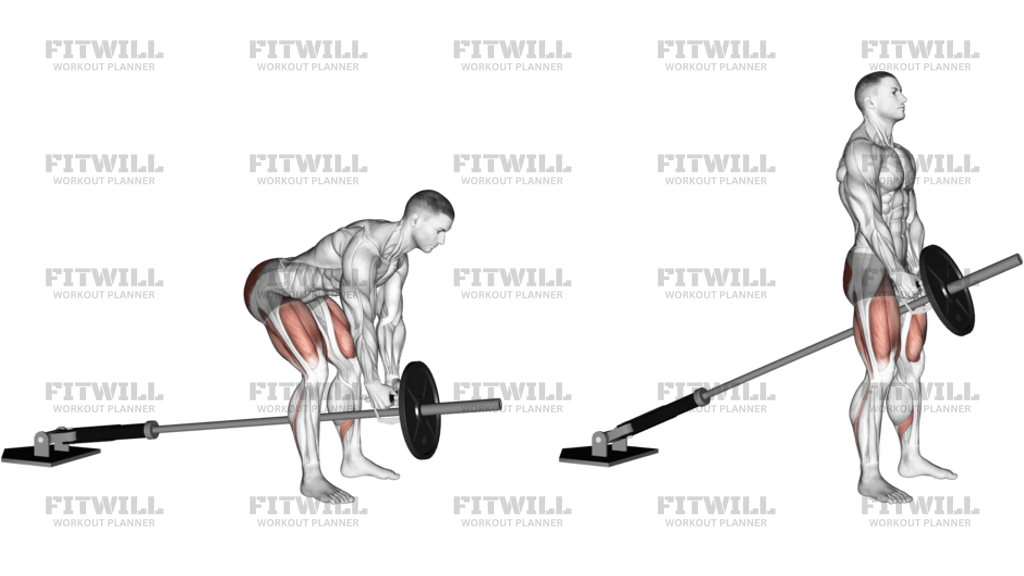
Instructions
- Anchor one end of a barbell in a landmine base and stand at the free end with your feet about hip-width apart, holding the sleeve or bar end with both hands in front of your thighs.
- Set your feet so your weight sits over the midfoot and heels, keep a soft bend in the knees, and let your chest stay long without flaring the ribs.
- Take a breath, brace your midsection, and set your shoulders down and slightly back before the first rep starts.
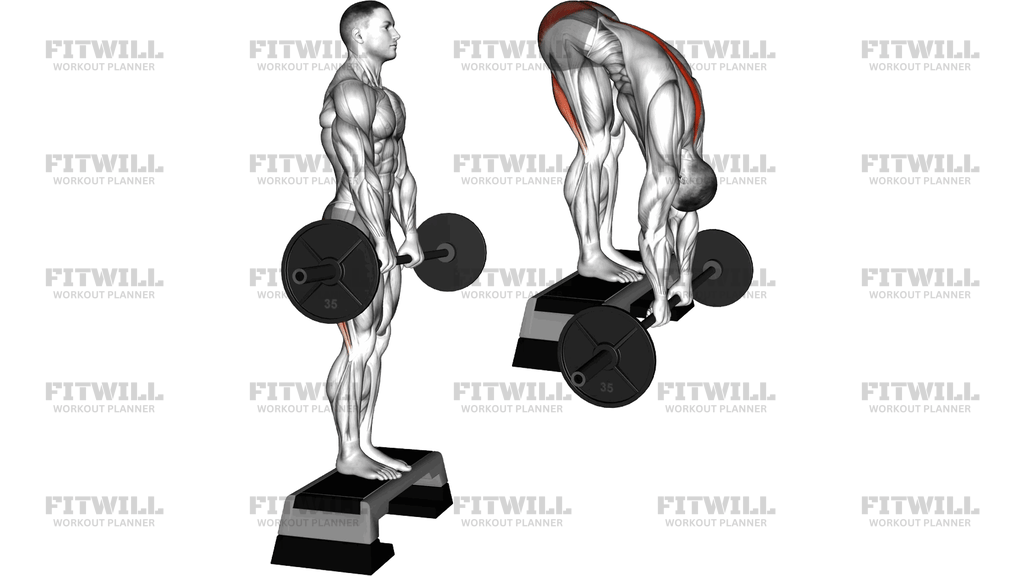
- Push your hips back as if closing a car door with your hips, keeping the bar close to your legs the whole time.
- Let your torso hinge forward while your shins stay nearly vertical and the bar travels down in front of your thighs.
- Lower until you feel a strong stretch in the hamstrings and can still keep your spine neutral and your shoulders packed.
- Drive your hips forward to stand back up, finishing tall with the glutes tight and the bar returned to the starting line in front of your thighs.
- Exhale near the top, reset your brace, and repeat for the planned reps before lowering the bar back under control.
Tips & Tricks
- Keep the bar brushing close to your thighs and shins; if it swings away, the lower back will start doing work that should stay on the hamstrings and glutes.
- A soft knee bend is enough. If you let the knees travel forward too much, the rep becomes more squat-like and the hinge loses tension.
- Stop the descent when your pelvis starts to tuck or your low back wants to round, even if that is well above the floor.
- Think about pushing the hips back first and then driving them through at the top; that cue keeps the movement a hinge instead of a bend-and-lift.
- Keep pressure through the whole foot, especially the heel and big toe, so you do not rock onto your toes as the bar lowers.
- Use a smooth tempo on the way down and avoid bouncing out of the bottom, since the landmine path can tempt you to yank the weight up.
- If your grip on the sleeve fails before your hamstrings do, use straps or reduce the load instead of cutting the set short for the wrong reason.
- Finish each rep tall without leaning back hard at the top; squeezing the glutes is enough.
Frequently Asked Questions
What muscles does Landmine Romanian Deadlift work most?
It emphasizes the hamstrings and glutes, with the core and spinal erectors working hard to keep the torso braced.
How is Landmine Romanian Deadlift different from a regular Romanian deadlift?
The landmine anchor gives the bar a guided arc, so the load feels a little more stable and often stays closer to the body.
How much knee bend should I use in Landmine Romanian Deadlift?
Keep only a soft bend. Your knees should unlock enough to hinge comfortably, but the rep should still feel like a hip hinge rather than a squat.
How low should the bar go?
Lower it until you feel a strong hamstring stretch and can still keep your back neutral. For many people that is around mid-shin, but the exact depth depends on mobility.
Why should the bar stay close to my legs?
A close bar path keeps the resistance over your hips and hamstrings instead of pulling your torso forward and shifting the work into your lower back.
Can beginners do Landmine Romanian Deadlift?
Yes. It is a good hinge variation for beginners because the landmine path is easier to control, especially with a light load and a short range of motion.
What should I do if I feel Landmine Romanian Deadlift mostly in my lower back?
Shorten the range, soften the knees, and push the hips farther back before you lower any more. Also check that the bar is staying close to the thighs and shins.
Can I use straps or a mixed grip?
Straps are a better choice if grip is limiting the set. A mixed grip is usually unnecessary here because the load is anchored and the movement is controlled.