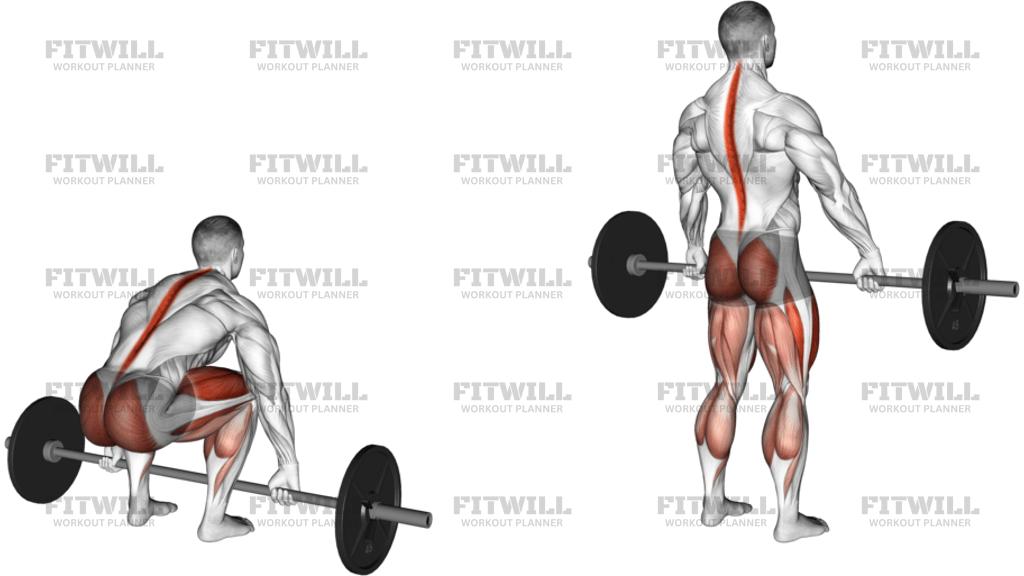
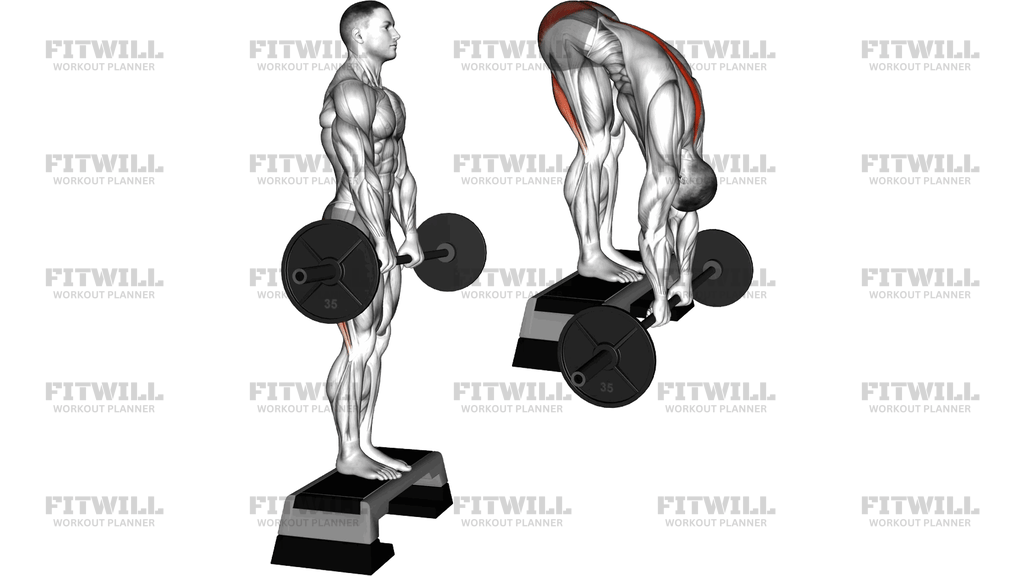
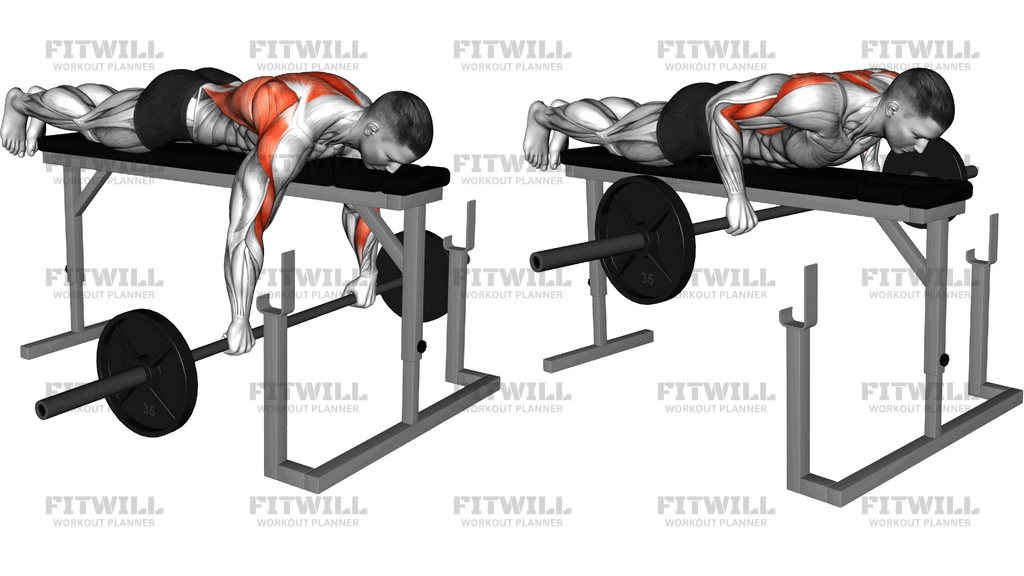
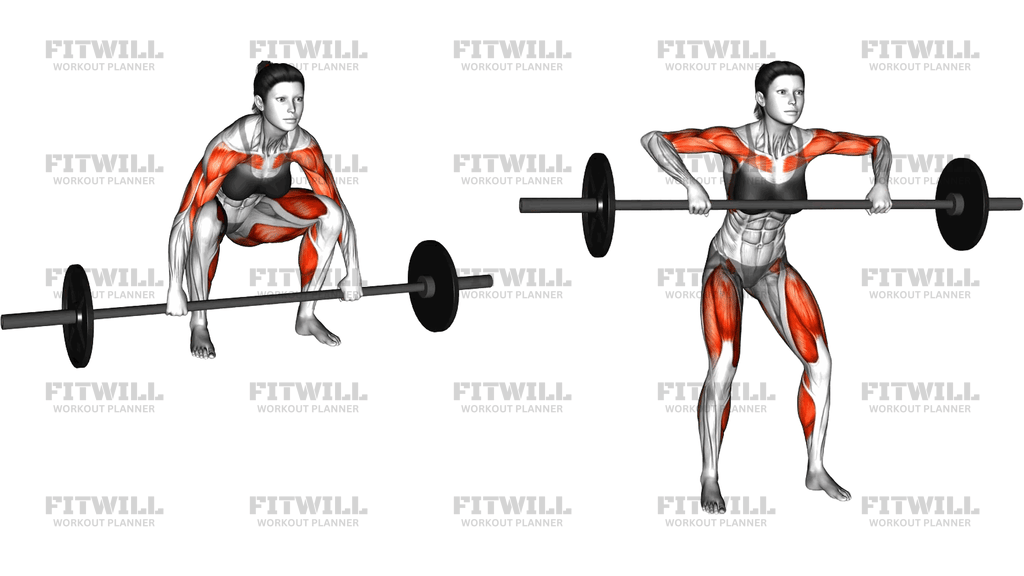
Barbell Deadstop Row With Rack
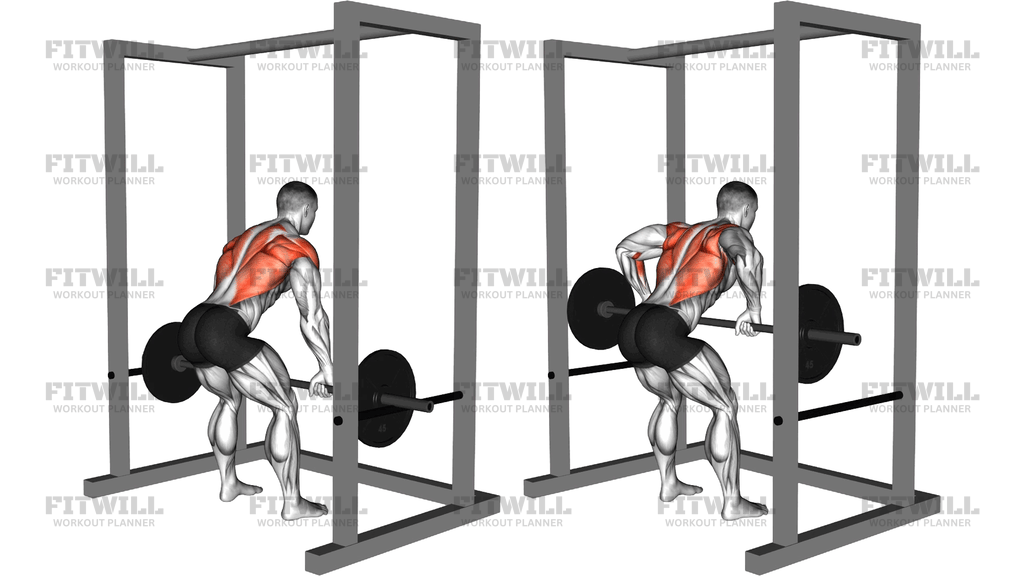
Barbell Deadstop Row With Rack is a rack-supported rowing exercise that starts from a complete stop on the safety pins. Because the bar rests on the rack between repetitions, you have to rebuild tension from a dead start instead of using bounce from the floor or a touch-and-go rebound. That makes the movement especially useful for developing back strength, upper-back thickness, and cleaner scapular control.
The rack setup changes the exercise more than people expect. With the bar set on pins or bars at a fixed height, you can choose a torso angle that you can hold without losing position, then repeat that same hinge every rep. A slightly bent knee stance and a long spine let the hips stay back while the torso stays rigid, which shifts the work toward the lats, rhomboids, mid traps, rear delts, and arm flexors while the trunk stays braced.
The best version of the row is smooth and deliberate: pull the bar close to the body, drive the elbows back, and bring the bar toward the lower ribs or upper abdomen without yanking the shoulders forward at the bottom. At the top, squeeze the back without turning it into a shrug or leaning harder into the lift. Then lower under control until the bar settles fully onto the rack again and everything goes quiet before the next rep.
Use the dead-stop format when you want strict pulling strength, a lower-back-friendly row variation, or a way to keep reps honest when fatigue would normally let the bar bounce. It is also a practical accessory for lifters who need more upper-back work but do not want to row from the floor. Keep the load heavy enough to challenge you, but light enough that every repetition starts from the same position and finishes with the same body angle.
If the bar lands too low or too high on the pins, the setup will change the whole exercise. A lower pin setting makes the hinge deeper and the row more demanding on the posterior chain, while a slightly higher setup can make it easier to keep the torso fixed. Either way, the goal is the same: a consistent hinge, a clean pull, and a full reset on the rack before each rep.
[ Workout Log & Planner ]
Put your next workout in Fitwill
Keep your plan and training log ready when you are.


Instructions
- Set the barbell on the rack safety pins at about mid-shin to just below knee height, then stand inside the rack with your feet about hip-width apart and the bar over your midfoot.
- Hinge at the hips, soften the knees, and grab the bar with an overhand grip just outside your legs so your arms hang straight down.
- Brace your torso, keep your spine long, and let your chest stay open without overextending your lower back.
- Start from the dead stop on the pins, then pull the slack out of the bar before you begin the row.
- Drive your elbows back and pull the bar toward your lower ribs or upper abdomen while keeping the bar close to your body.
- Keep your torso angle steady and avoid jerking your shoulders upward or standing taller to finish the rep.
- Squeeze your back briefly at the top, then lower the bar under control until it settles fully back onto the pins.
- Reset your breath and body position at the bottom before the next rep so every pull starts from the same still position.
Tips & Tricks
- Let the bar come to a true stop on the pins between reps; a light touch is not the same as a dead stop.
- Choose a pin height that lets you keep the hinge fixed. If your torso keeps drifting upright, raise the bar slightly.
- Think about pulling the elbows toward the hips if you want more lat involvement, or slightly wider if you want more upper-back emphasis.
- Keep the bar path tight to your thighs and torso so the rep stays in the back instead of turning into a swing.
- Do not shrug at the top. The shoulders should move back and down, not up toward your ears.
- If your lower back starts doing most of the work, lower the load and shorten the range until the torso stays steady.
- Use lifting straps if your grip fails before your back; the dead-stop start makes grip fatigue show up fast.
- A short pause on the pins can make the set much harder because it removes all momentum from the next rep.
Frequently Asked Questions
What muscles does the Barbell Deadstop Row With Rack work most?
It mainly trains the lats, rhomboids, mid traps, rear delts, and elbow flexors, with the lower back and core working to hold the hinge.
Why use the rack instead of rowing from the floor?
The rack gives you a fixed start height and a true dead stop, which removes bounce and makes every rep more strict.
How high should the bar be on the rack pins?
Set it around mid-shin to just below knee height, then adjust so you can keep a strong hinge without rounding or standing up early.
Where should the bar touch during the row?
Pull it to the lower ribs or upper abdomen, keeping it close to the body instead of letting it drift forward.
Should the bar rest on the pins every rep?
Yes. The bar should settle completely on the pins before the next pull so each rep starts from a full reset.
Is this a beginner-friendly back exercise?
Yes, if the load is light and the rack height lets you keep a stable hinge and neutral spine.
What grip should I use on the bar?
An overhand grip is the standard choice. It keeps the row strict and usually feels best for mid-back work.
What if I feel the exercise mostly in my lower back?
Raise the pins slightly, reduce the load, and focus on keeping the torso angle fixed while the elbows drive the bar.