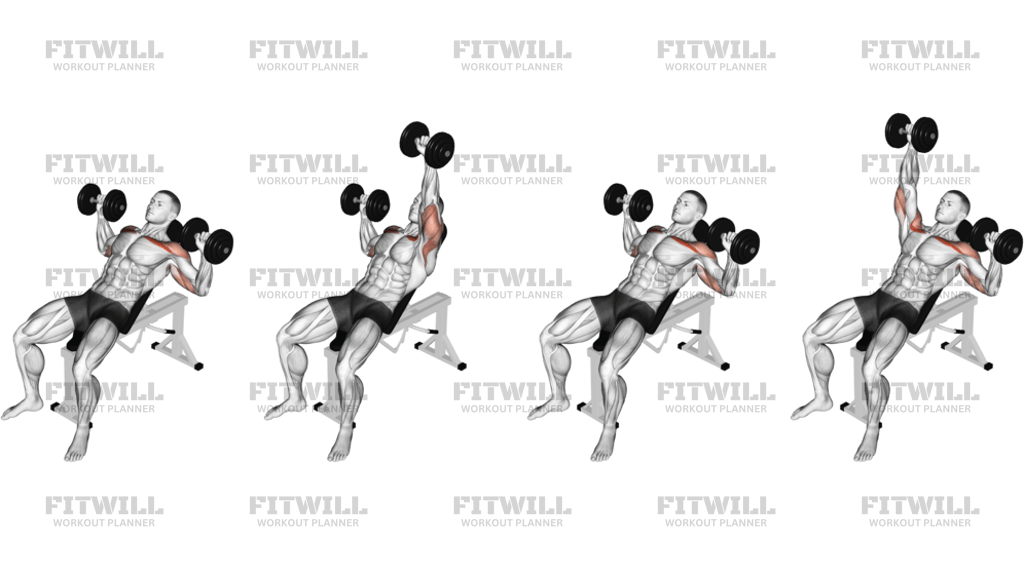
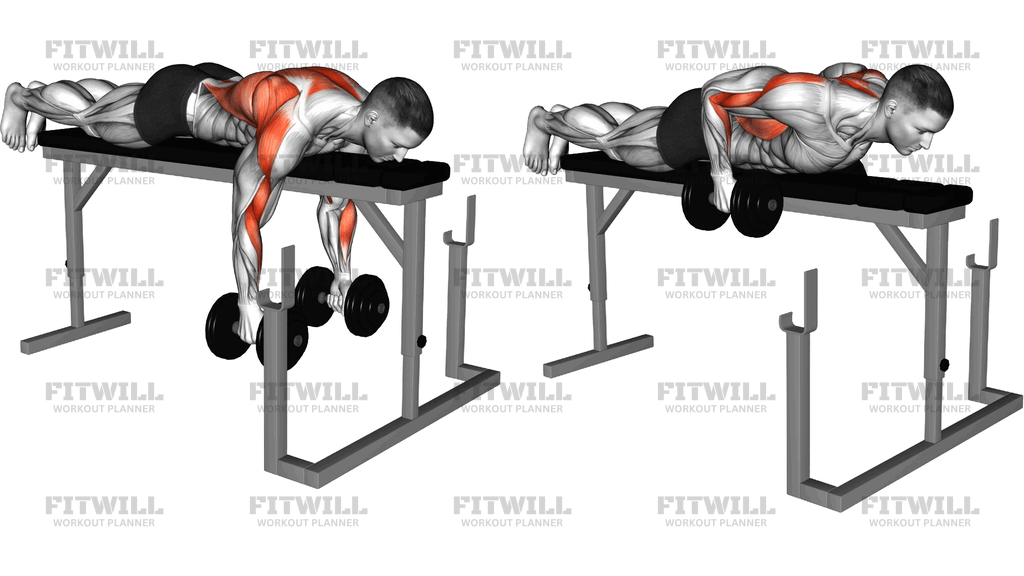
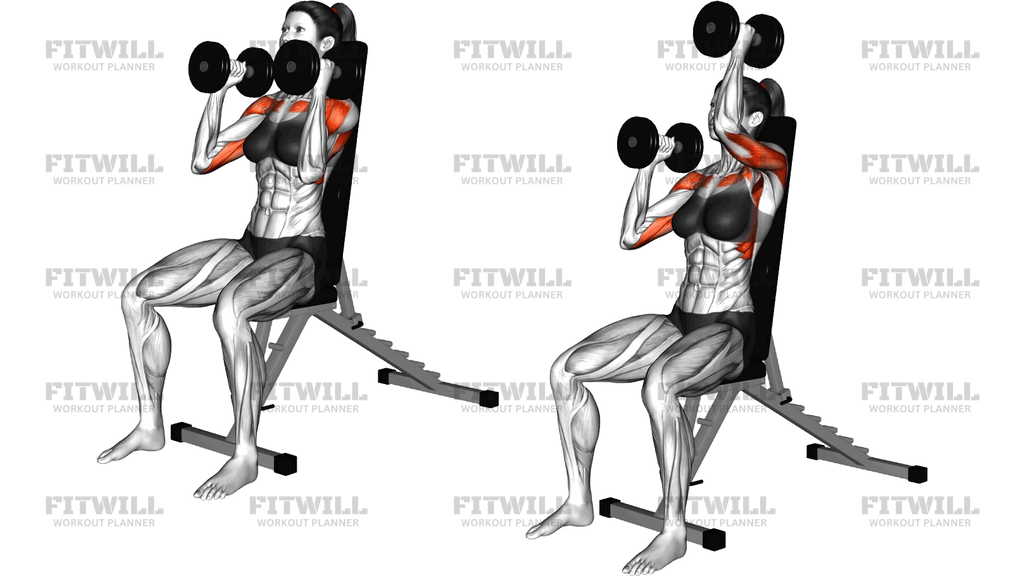
Dumbbell Seated Cuban Press
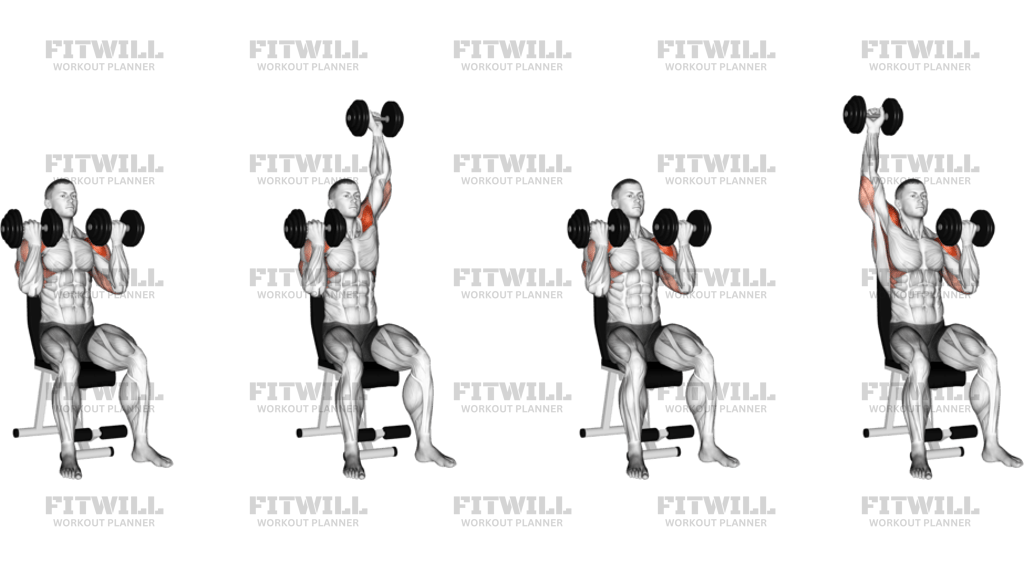
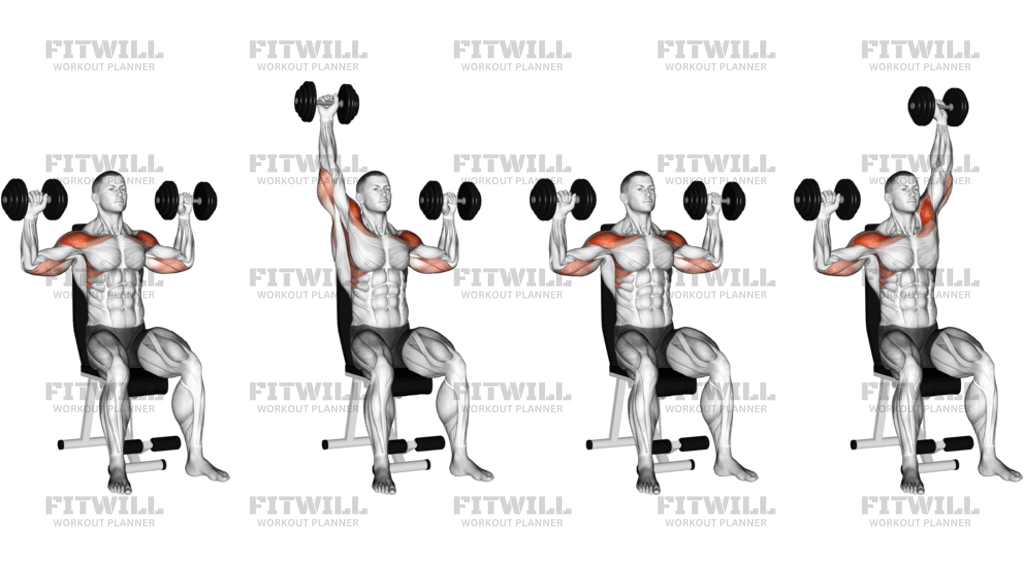
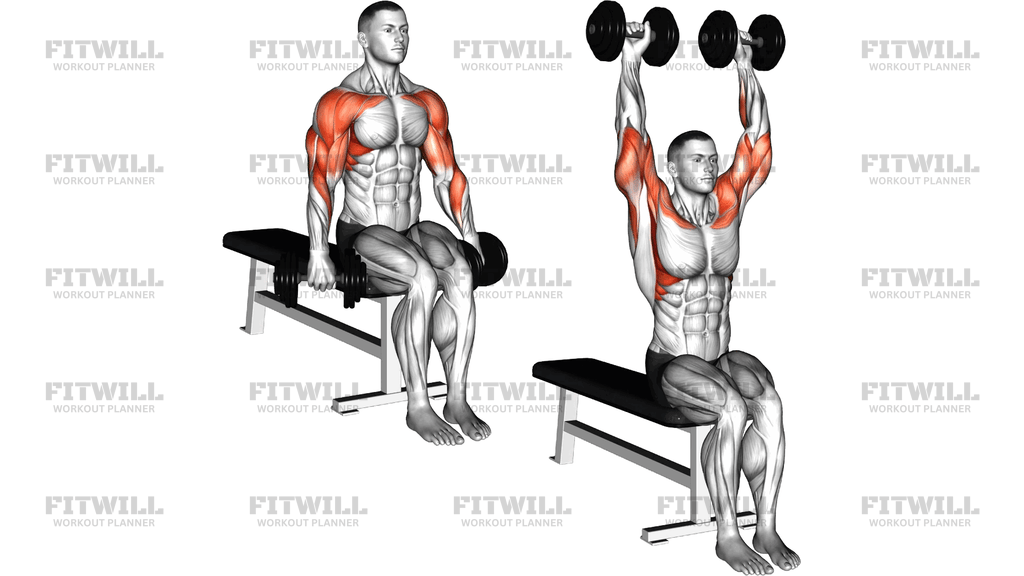
Dumbbell Seated Cuban Press is a seated shoulder exercise that combines an upright row, external rotation, and overhead press in one controlled sequence. The image shows the lifter sitting tall on a bench with dumbbells starting by the thighs, then raising the elbows, rotating the forearms to a goalpost position, and pressing the weights overhead. It is a technical movement, not a heavy strength press, so the best results come from light to moderate loads and crisp positioning.
This exercise is useful for building shoulder control through the full arc from arms at the sides to the overhead lockout. It asks the rotator cuff, rear delts, upper back, and triceps to work together while the torso stays quiet. Because the elbows and shoulders move through a demanding range, the setup matters: if the chest collapses, the ribs flare, or the dumbbells drift forward, the shoulders lose the clean line the movement is meant to train.
A good Cuban press begins with the dumbbells hanging close to the thighs, palms facing in, and the ribs stacked over the pelvis. From there, the elbows lead the weights upward to about shoulder height, the forearms rotate so the hands are vertical, and the press finishes with the arms overhead. Each phase should look deliberate and connected, with no swing from the torso and no shrugging into the ears.
Use this lift when you want a shoulder accessory that emphasizes coordination, scapular control, and overhead stability. It fits well in warmups, prep blocks, or lighter accessory work before heavier pressing. The movement is not ideal for maximal loading, and it should never be forced through shoulder pain or pinching. If the external-rotation step feels unstable, reduce the load and shorten the range until the motion stays smooth.
The most productive reps are the ones that keep the elbows under control, the wrists stacked, and the finish position steady. Lower the dumbbells slowly back through the same path you used to raise them, and stop the set as soon as the shoulders start to shrug, the wrists bend back, or the body starts leaning to finish the press.
[ Workout Log & Planner ]
Put your next workout in Fitwill
Keep your plan and training log ready when you are.


Instructions
- Sit on the end of a flat bench with your feet flat, torso tall, and a dumbbell in each hand hanging beside your thighs with palms facing in.
- Set your ribs over your pelvis, brace lightly, and keep the shoulders down before the first pull.
- Lead the dumbbells upward by driving the elbows out and up until the upper arms reach about shoulder height.
- Rotate the forearms so the hands stack over the elbows and the dumbbells move into a goalpost or upright-catch position.
- Press the dumbbells overhead in one smooth line without letting the chest flare or the lower back arch.
- Finish with the arms straight overhead, biceps near the ears, and the weights balanced over the midfoot.
- Lower under control, reversing the press, then the external rotation, then the upright-row path back to the thighs.
- Keep the neck long and breathe out as you press, then inhale as you lower.
- Stop each rep cleanly if the elbows drop, the wrists wobble, or the shoulders start to shrug.
Tips & Tricks
- Use very light dumbbells at first; the external rotation is usually the limiting part, not the press.
- Keep the dumbbells close to the body on the way up so the shoulders do not drift forward.
- Think of lifting the elbows, not yanking with the hands, during the first half of the rep.
- If the elbows cannot reach shoulder height comfortably, shorten the range instead of forcing the rotation.
- Keep the wrists stacked over the elbows in the rotated position so the shoulders do not collapse backward.
- Do not turn this into a heavy overhead press; the Cuban press is meant to be precise and controlled.
- Avoid leaning back on the bench; your torso should stay almost motionless from start to finish.
- Lowering slowly through the same path trains the shoulder better than dropping the dumbbells quickly.
Frequently Asked Questions
What does the Dumbbell Seated Cuban Press train?
It trains shoulder control through upright rowing, external rotation, and pressing, with strong involvement from the rotator cuff, rear delts, upper back, and triceps.
Is this a good exercise for beginners?
Yes, but only with very light dumbbells and a short, controlled range until the shoulder rotation feels smooth.
Where should the dumbbells start?
They should start hanging by the thighs with the palms facing in, while you sit tall on the bench.
Why do the elbows have to rise before the press?
The elbow-led pull gets the shoulders into the correct setup before you rotate and press overhead.
Should I keep my back against the bench?
No, this version is seated on the end of the bench. Stay upright and avoid using a backrest to swing the dumbbells.
What are the most common mistakes?
Shrugging the shoulders, bending the wrists back, leaning the torso to finish the press, and using too much weight.
Can I use this as a main shoulder strength lift?
Usually no. It works better as accessory or warmup work because the rotation makes it more technical than a standard press.
When should I stop the set?
Stop when the dumbbells start drifting forward, the elbows drop, or you feel pinching instead of smooth shoulder work.