Dumbbell Banded Bench Press
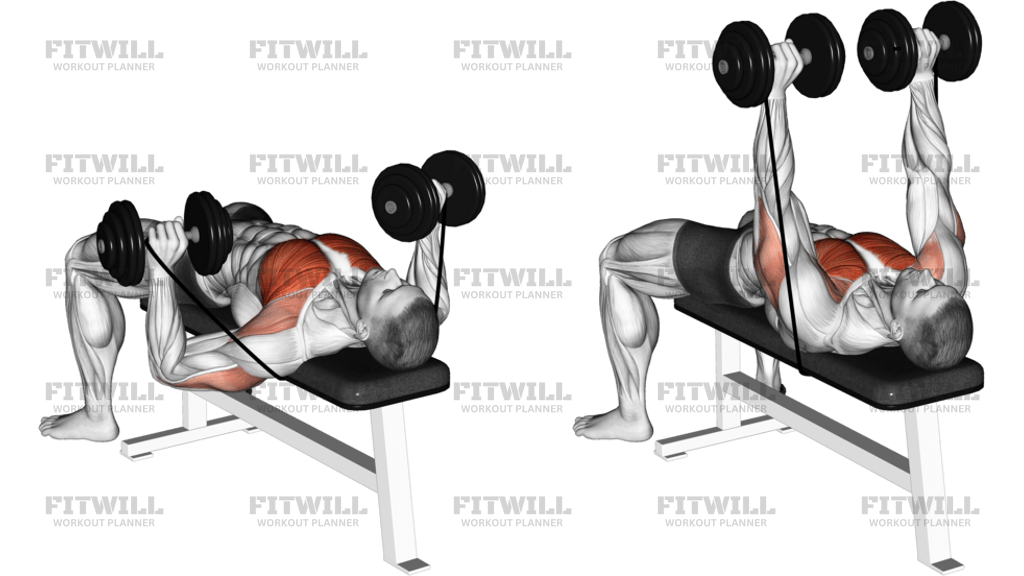
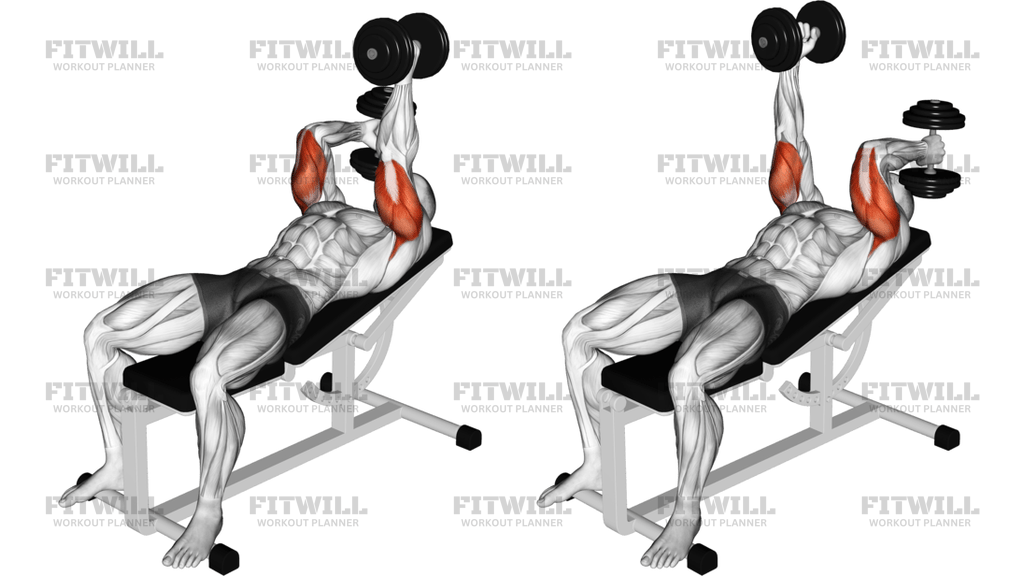
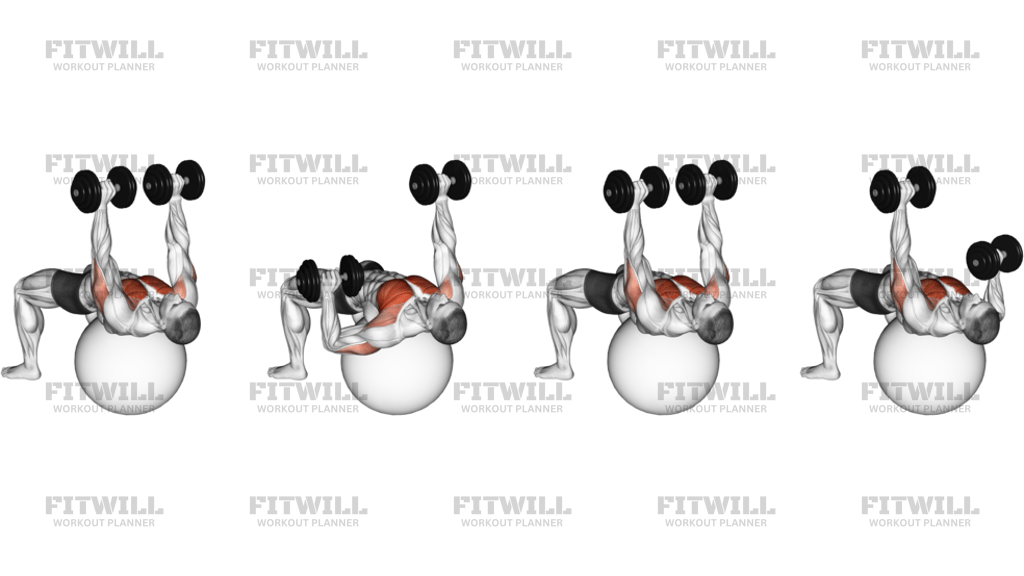
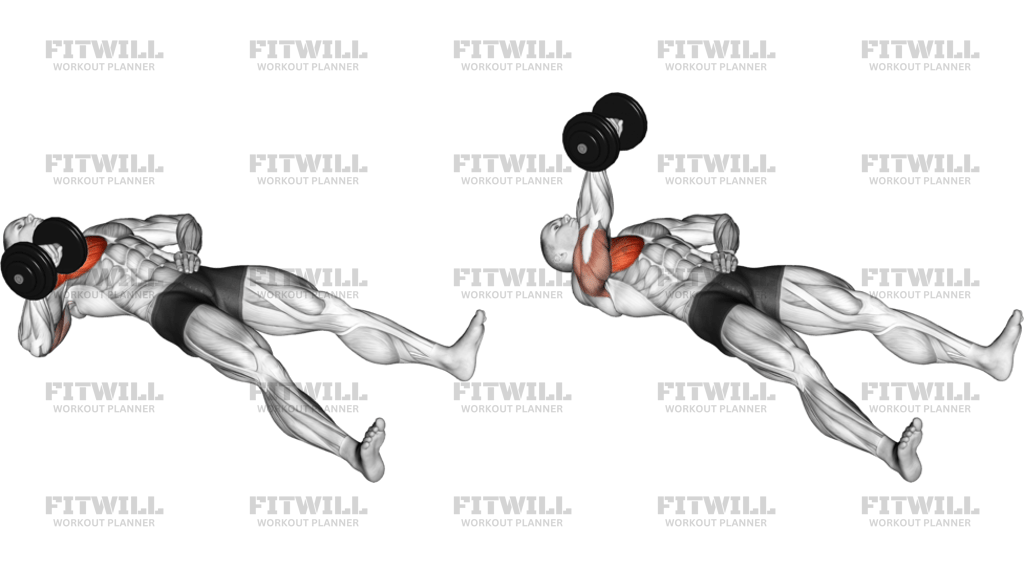
Dumbbell Banded Bench Press is a flat-bench pressing variation that combines dumbbells with a resistance band so the press gets harder as the hands move toward lockout. The setup shown here uses a band routed under the bench and over the dumbbells, which adds accommodating resistance without changing the basic dumbbell bench pattern. That makes the exercise useful for building chest, triceps, and front-shoulder strength while also demanding stable wrists, a steady upper back, and clean shoulder control.
The band changes the feel of the lift in a useful way: the bottom position is still controlled by the dumbbells, but the top half becomes more demanding as the band stretches. That means the exercise rewards a deliberate press path and punishes sloppy lockout mechanics. If the bench is unstable, the band is uneven, or the shoulder blades are loose, the dumbbells will drift and the press will feel awkward long before the set is actually hard. A solid setup matters more here than with a plain dumbbell press.
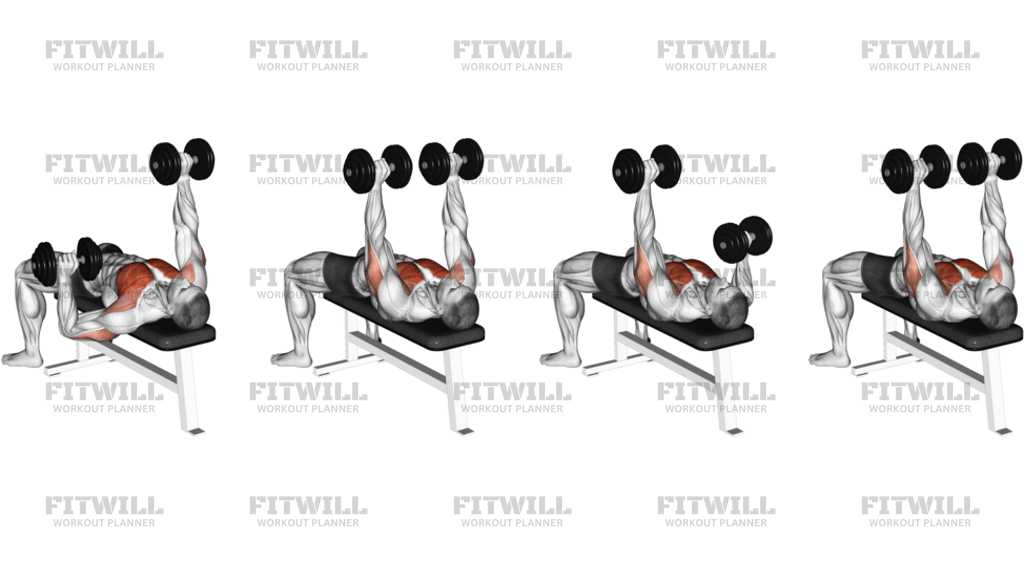
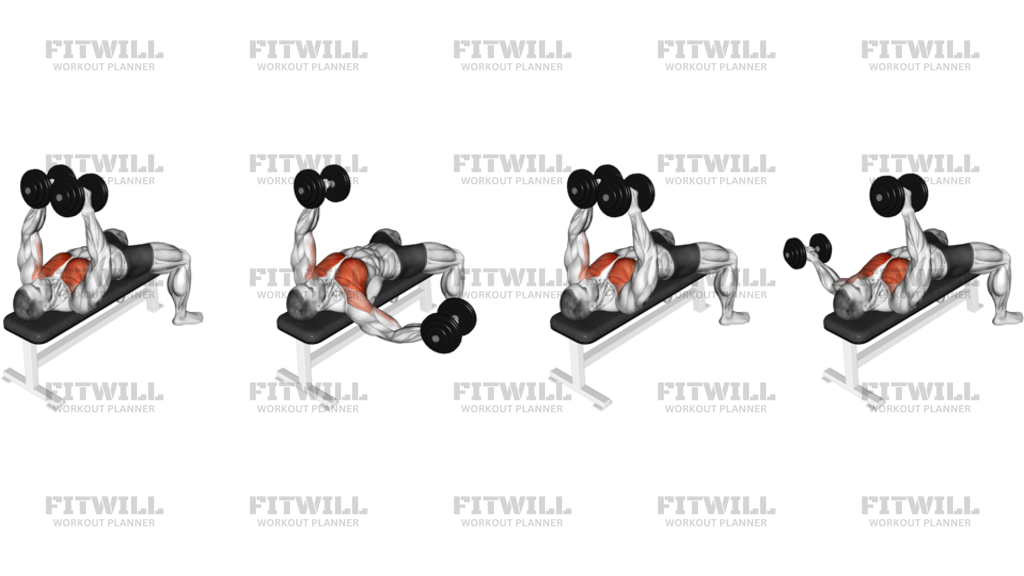
Start by lying on a flat bench with your feet planted and your upper back pinned into the pad. Keep your shoulder blades set back and down, stack your wrists over your elbows, and begin each rep from a stable position over the mid-chest. Lower the dumbbells in a controlled arc toward the lower chest or outer ribs, then press up and slightly inward so the weights finish directly over the shoulders while the band tension rises.
This variation is a strong choice when you want more lockout demand without turning the lift into a barbell press. It can fit hypertrophy work, speed-strength work, or an accessory block after heavier pressing. Use a band and dumbbells that let you control the full range with no shoulder pinch, no wrist collapse, and no bouncing off the chest. The best reps look smooth from the first inch off the bottom all the way to the top, with the band increasing the challenge instead of stealing your position.
[ Workout Log & Planner ]
Put your next workout in Fitwill
Keep your plan and training log ready when you are.


Instructions
- Lie on a flat bench with your feet planted, your shoulder blades pulled back and down, and the band routed under the bench and over both dumbbells so it adds tension as you press.
- Hold the dumbbells just outside the chest with your wrists stacked over your elbows and the band already taking light tension at the start position.
- Brace your torso, keep your ribs down, and bring the dumbbells to a stable start above the mid-chest before the first rep.
- Lower the weights in a controlled arc toward the lower chest or outer ribs, keeping the elbows at a moderate angle instead of flaring them straight out.
- Pause briefly at the bottom without letting the shoulders roll forward or the dumbbells sink too deep.
- Press the dumbbells up and slightly inward, pushing hardest through the top half as the band stretches.
- Finish with the dumbbells stacked over the shoulders and the elbows extended without snapping the lockout.
- Lower the weights under control for the next rep, then set the dumbbells down carefully before releasing the band.
Tips & Tricks
- Choose a band tension that still lets you control the bottom; the top of the press should feel noticeably harder than the start, not chaotic.
- Keep both dumbbells on the same path each rep. If one hand drifts wider than the other, the band will twist your torso and shoulder position.
- Let the dumbbells travel in a slight arc rather than straight up and down; a small inward finish usually keeps the wrists stacked better at the top.
- Keep your upper back glued to the bench. If your shoulders slide forward, the band will exaggerate the loss of position.
- If your wrists bend back under the band tension, reduce the load before the set turns into a wrist stability drill.
- Touch lower on the chest or outer ribs, not high on the sternum, so the elbows can stay in a safer pressing groove.
- Exhale as you drive through the banded top half and inhale as the dumbbells come back down.
- Use a controlled lowering phase; dropping fast makes the band feel looser on the way down and harder to control on the next rep.
- Stop the set when the dumbbells stop stacking cleanly over the shoulders or the band starts pulling you out of position.
Frequently Asked Questions
What muscles does the dumbbell banded bench press train?
It mainly trains the chest, triceps, and front shoulders, with the upper back and core helping keep the bench position stable.
Why add a band to a dumbbell bench press?
The band makes the top half of the press harder, so you have to keep driving instead of relaxing once the dumbbells leave the chest.
Where should the dumbbells travel on the way down?
Lower them toward the lower chest or outer ribs in a controlled arc, then press back up and slightly inward.
Should my elbows flare out on this press?
No. Keep a moderate elbow angle so the shoulders stay packed and the band does not yank the dumbbells off line.
Can beginners use this variation?
Yes, but only with light band tension and dumbbells you can control. A plain dumbbell bench press is usually the better first step.
What is the most common mistake with a banded dumbbell bench press?
Losing shoulder-blade position at the bottom and letting the band pull the weights out of the pressing groove.
Is this a good exercise for lockout strength?
Yes. The band increases resistance near the top, so the finishing range gets extra emphasis.
What bench setup works best for this exercise?
A flat bench matches the movement shown here and keeps the banded press path consistent.