Weighted Seated One-Arm Reverse Wrist Curl
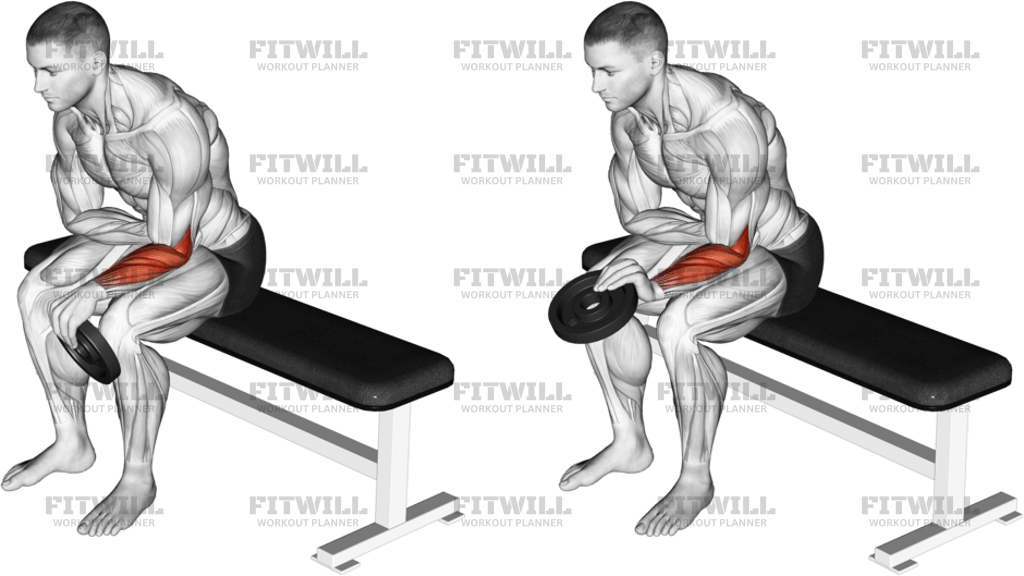
Weighted Seated One-Arm Reverse Wrist Curl is a seated forearm isolation exercise where one forearm rests on the thigh or bench and the hand hangs just past the knee. With the palm facing down, you lower and raise the wrist against a dumbbell or plate to train the wrist extensor side of the forearm. The movement is small, but the setup matters a lot because the wrist should move while the elbow, shoulder, and torso stay quiet.
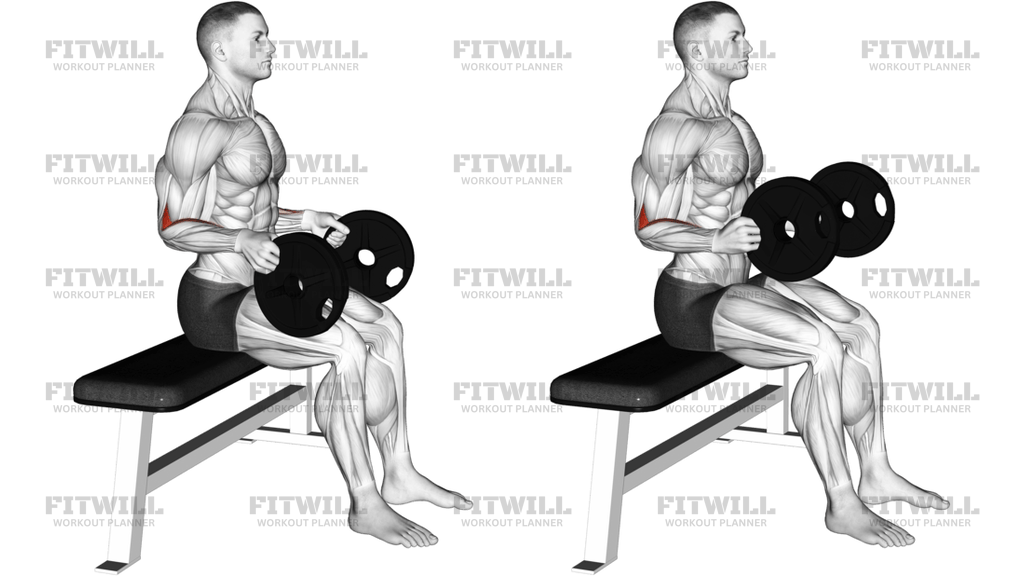
This exercise is useful when you want direct forearm work without involving large amounts of upper-arm or back movement. The image shows the working arm braced on the leg, which is the key detail: that support keeps the forearm fixed so the wrist can flex through a clean arc. If the hand is too far back on the thigh, the range gets cramped; if it hangs too far off, the lift turns sloppy and the load starts swinging.
The easiest way to feel the target muscles is to start with the wrist dropped into a controlled stretch, then curl the back of the hand upward until the knuckles travel toward the forearm. The forearm should stay planted, the grip should stay secure but not crushing, and the elbow should not chase the weight. A short pause at the top makes the contraction more honest and keeps the rep from turning into momentum.
Use this movement as accessory work after larger pulling or pressing exercises, or as a focused finisher when you want better wrist strength and forearm endurance. Choose a load that lets you move only at the wrist and lower the weight slowly. If the wrist aches sharply, the elbow starts lifting off the thigh, or the dumbbell/plate starts swinging, the set is too heavy or the range is too aggressive for that day.
Fitwill
Log Workouts, Track Progress & Build Strength.
Achieve more with Fitwill: explore over 9600 exercises with images and videos, access built-in and custom workouts, perfect for both gym and home sessions, and see real results.
Start your journey. Download today!




Instructions
- Sit on a flat bench with both feet planted and hold a dumbbell or plate in one hand using a pronated grip, palm facing down.
- Rest that forearm on the same-side thigh or across the top of the knee so the wrist and hand hang just past the edge of support.
- Set the elbow and upper arm in place before the first rep so the forearm stays still throughout the set.
- Let the wrist drop into a controlled stretch until the weight sits low in your fingers without letting the forearm roll.
- Exhale and lift the back of the hand upward by extending the wrist, bringing the knuckles toward the forearm.
- Pause briefly at the top and keep the wrist stacked instead of bending the elbow or shrugging the shoulder.
- Lower the weight slowly back into the stretched position under control while inhaling.
- Finish the set on that side, then repeat with the other arm after resetting your forearm on the thigh.
Tips & Tricks
- Keep the forearm glued to the thigh; if the elbow slides around, the set is too heavy.
- Let the wrist, not the hand or forearm, create the motion. The knuckles should travel in a short arc, not the whole arm.
- Use a smaller range if the bottom position tugs hard on the wrist or irritates the elbow tendons.
- A dumbbell is usually easier to control than a plate; choose the tool that lets you keep the wrist centered.
- Lower for two to three seconds so the extensors work through the eccentric phase instead of dropping the weight.
- Keep your grip firm enough to prevent slipping, but do not squeeze so hard that the forearm turns into a forearm-and-biceps isometric.
- If your shoulder starts drifting forward or your torso leans to help the lift, reduce the load immediately.
- Match both sides for reps and range so one wrist does not become noticeably stiffer or weaker than the other.
Frequently Asked Questions
What does the seated one-arm reverse wrist curl train most?
It mainly trains the wrist extensors on the back of the forearm, with grip strength helping to hold the weight.
Why is the forearm resting on the thigh?
The thigh support keeps the upper arm and elbow quiet so the wrist can work through a clean, isolated range.
Should my palm face up or down on this exercise?
Palm down. That reverse grip is what shifts the work toward the wrist extensor side of the forearm.
Can I use a dumbbell instead of a plate?
Yes. A dumbbell is often easier for beginners, while a plate can feel more awkward and demands a steadier wrist.
How do I know if I am cheating the movement?
If the elbow lifts off the thigh, the shoulder leans forward, or the weight starts swinging, the wrist is no longer doing the work alone.
Is a big range of motion necessary here?
Use the largest pain-free range you can control, but do not force a deep bottom stretch if the wrist or elbow starts to complain.
Where should I put this in my workout?
It usually works best as accessory or finish work after your main lifts, when you can focus on strict control.
What should I do if the set irritates my wrist?
Shorten the range, lower the load, and stop if the pain feels sharp rather than like normal forearm fatigue.