Dumbbell Seated Bent-Over Rear Delt Row
Dumbbell Seated Bent-Over Rear Delt Row is a bent-over pulling exercise for the rear shoulders, upper back, and arms. Sitting on a flat bench takes away most of the lower-body help, so the torso angle, shoulder position, and elbow path matter more than the load. That makes it a useful choice for lifters who want a strict rear-delt row instead of a bigger, body-driven dumbbell row.
The main emphasis is on the delts, especially the rear fibers, with the traps and rhomboids helping to control the shoulder blades and the arms working as moving levers. Because the dumbbells hang under the shoulders at the bottom, you get a clear stretch through the upper back before each pull. That bottom position is part of the exercise, so the rep should start controlled rather than yanked off the floor.
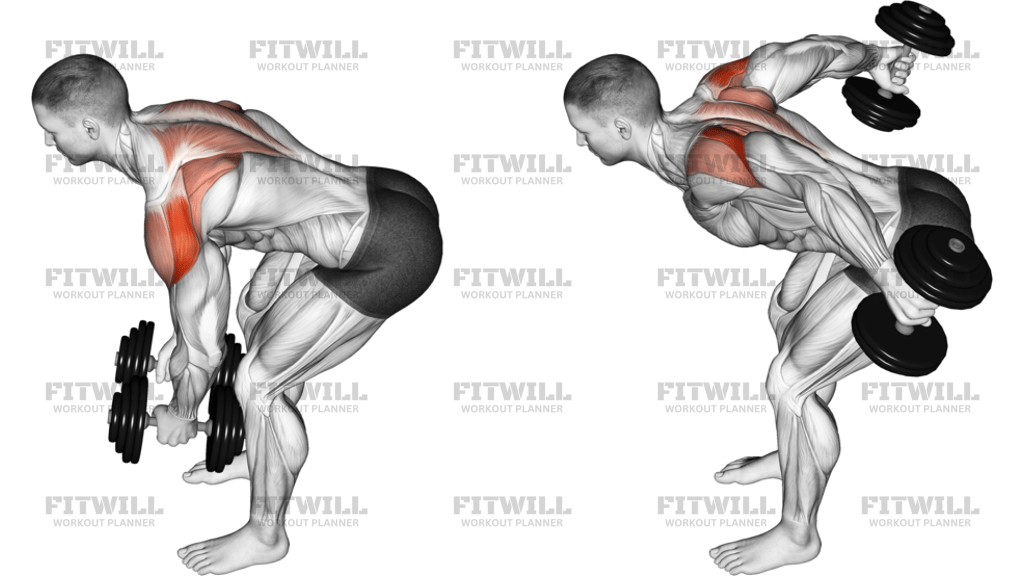
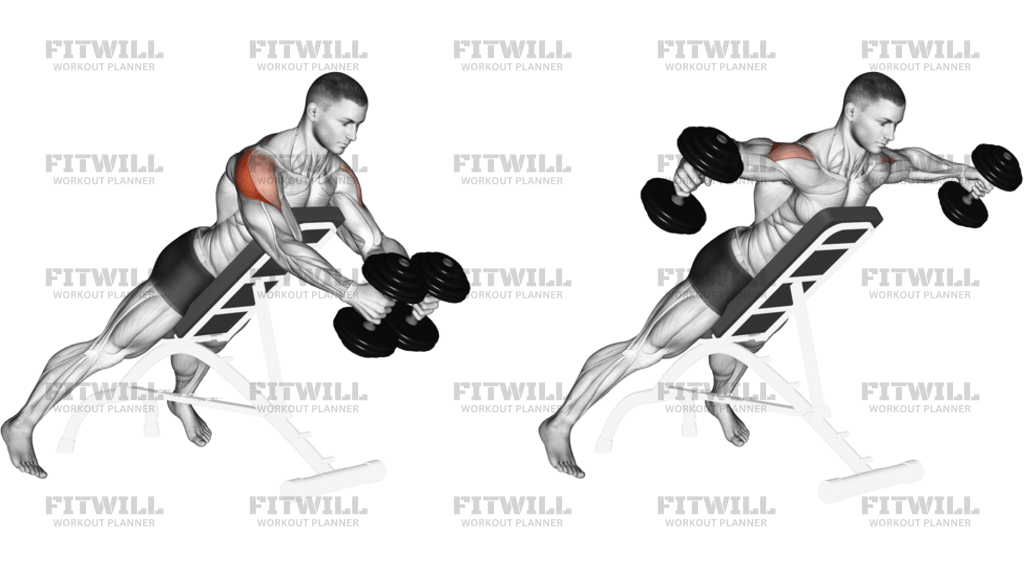
The setup is what makes the movement work. Sit near the front of a flat bench, plant both feet, and hinge forward until your chest is close to your thighs and your back stays long and neutral. Let the dumbbells hang straight down with a neutral grip, then set your shoulders without rounding your lower back. If the torso keeps drifting upright, the row turns into momentum instead of rear-delt work.
From there, pull the dumbbells out and slightly back by driving the elbows wide, not by curling the hands. Think about moving the upper arms rather than swinging the weights. Stop the pull when the elbows are in line with or just behind the torso, squeeze the rear shoulders briefly, and lower the dumbbells under control until the arms are nearly straight again.
Dumbbell Seated Bent-Over Rear Delt Row works well as accessory work after pressing, as a shoulder-balance movement, or anywhere you want targeted upper-back tension without a machine. Beginners can use it effectively with light dumbbells if they can hold the hinge position and keep the neck relaxed. The safest sets are the ones where the torso angle stays fixed, the shoulders do the work, and every repetition looks nearly identical.
[ Workout Log & Planner ]
Put your next workout in Fitwill
Keep your plan and training log ready when you are.


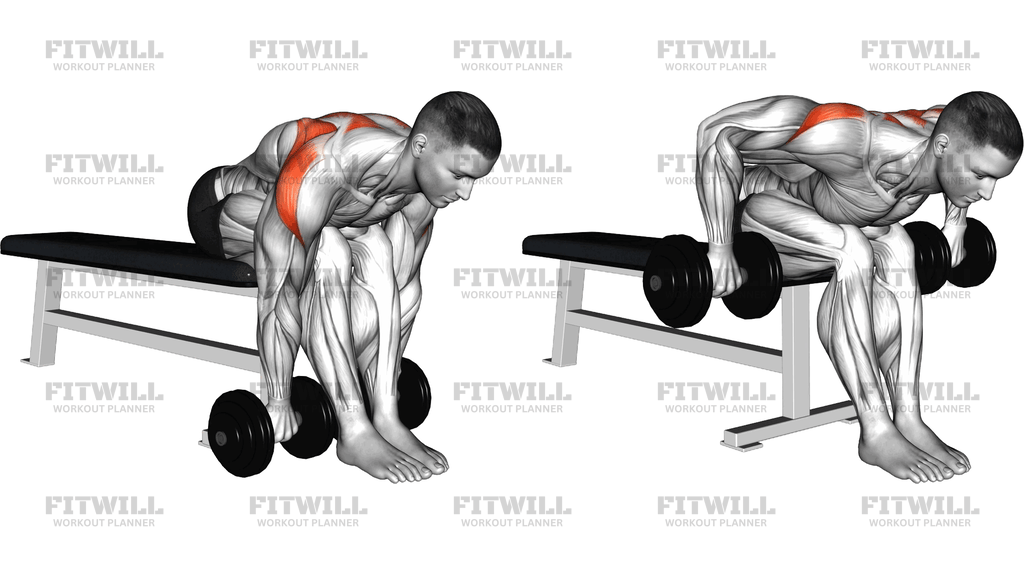
Instructions
- Sit on the front edge of a flat bench with both feet flat and a dumbbell in each hand near the outside of your shoes.
- Hinge forward from the hips until your chest is close to your thighs, keep your spine long, and let the dumbbells hang straight under your shoulders with a neutral grip.
- Set your shoulders down and slightly forward, then brace your midsection so your torso stays fixed before the first pull.
- Pull the dumbbells out and slightly back by driving your elbows wide, keeping the hands following the line of the elbows.
- Lift until the dumbbells reach the outside of your lower ribs or until your upper arms line up with your torso.
- Squeeze the rear shoulders briefly at the top without shrugging or letting the chest rise off the hinge.
- Lower the dumbbells slowly until your arms are nearly straight and the stretch returns to the rear shoulders.
- Reset the dumbbells on the floor or keep the same bent-over position for the next rep without standing up between reps.
Tips & Tricks
- Choose a pair of dumbbells that lets you hold the same torso angle on every rep; if your chest pops up, the set is too heavy.
- Lead with the elbows, not the hands, so the row stays rear-delt biased instead of turning into a curl.
- Keep the dumbbells a little away from your thighs at the bottom to preserve tension instead of letting them rest and bounce.
- Let your gaze stay down toward the floor so your neck does not crane up as the set gets harder.
- A wider elbow path usually shifts more work to the rear delts; a tucked path will pull more from the lats and lower back.
- If your traps take over, lower the weights and stop trying to yank the shoulders upward at the top.
- Use a short pause near the top to remove momentum and make each rep feel like a clean rear-shoulder contraction.
- Stop the set when your lower back starts rounding, because that usually means the hinge position has been lost.
Frequently Asked Questions
What muscles does Dumbbell Seated Bent-Over Rear Delt Row work most?
It mainly targets the rear delts, with the traps and rhomboids helping control the pull. The arms help move the dumbbells, but they should not take over the set.
Why do I need to sit on a flat bench for Dumbbell Seated Bent-Over Rear Delt Row?
Sitting on the bench makes it easier to hold a fixed hip hinge and stop the rep from turning into a standing swing. It also keeps the movement focused on the rear shoulders instead of your legs.
How far should I pull the dumbbells on Dumbbell Seated Bent-Over Rear Delt Row?
Pull until your elbows are about level with your torso or just behind it, usually around the outside of the lower ribs. If you need to heave the weights higher than that, the load is probably too heavy.
Should my palms face each other or face down?
A neutral grip, with palms facing each other, matches the setup shown here and usually feels best on the shoulders. It also makes it easier to keep the elbows slightly flared during the row.
What is the biggest mistake on Dumbbell Seated Bent-Over Rear Delt Row?
The most common error is straightening the torso and turning the rep into a momentum row. Keep your chest close to your thighs and let the rear shoulders move the dumbbells.
Can beginners do Dumbbell Seated Bent-Over Rear Delt Row?
Yes, as long as they start light enough to hold the bent-over position without strain. A small, controlled range is better than chasing a heavy pull.
What if I feel it mostly in my traps instead of my rear delts?
Use lighter dumbbells, keep the shoulders from shrugging, and think about driving the elbows out instead of up. A brief pause at the top often helps the rear delts take over.
How many reps should I use for Dumbbell Seated Bent-Over Rear Delt Row?
This movement usually works well in moderate to higher reps because the rear delts respond best to strict control. Use a rep range that lets you keep the torso angle and elbow path consistent.