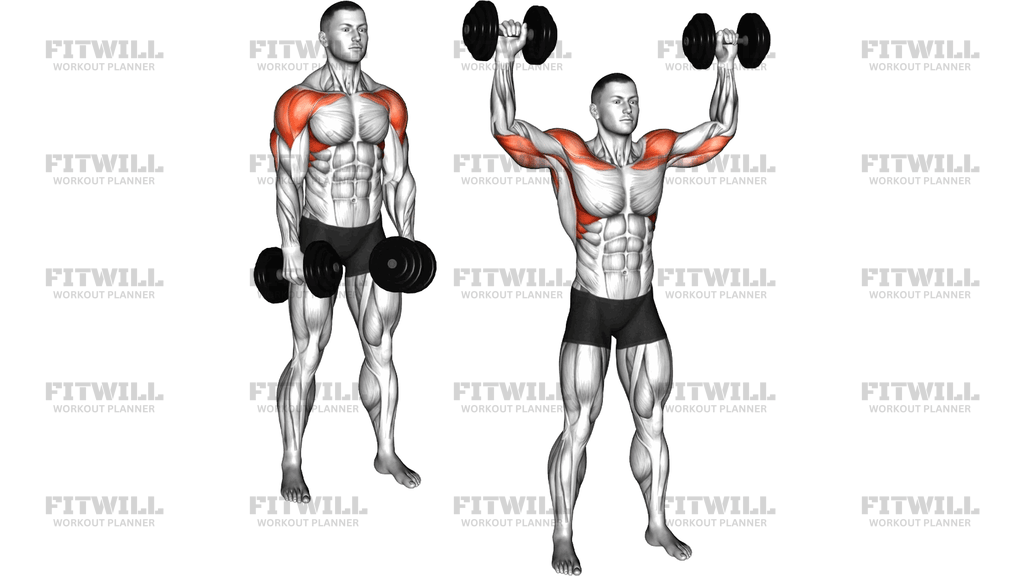
Dumbbell Seated Close-Grip Press
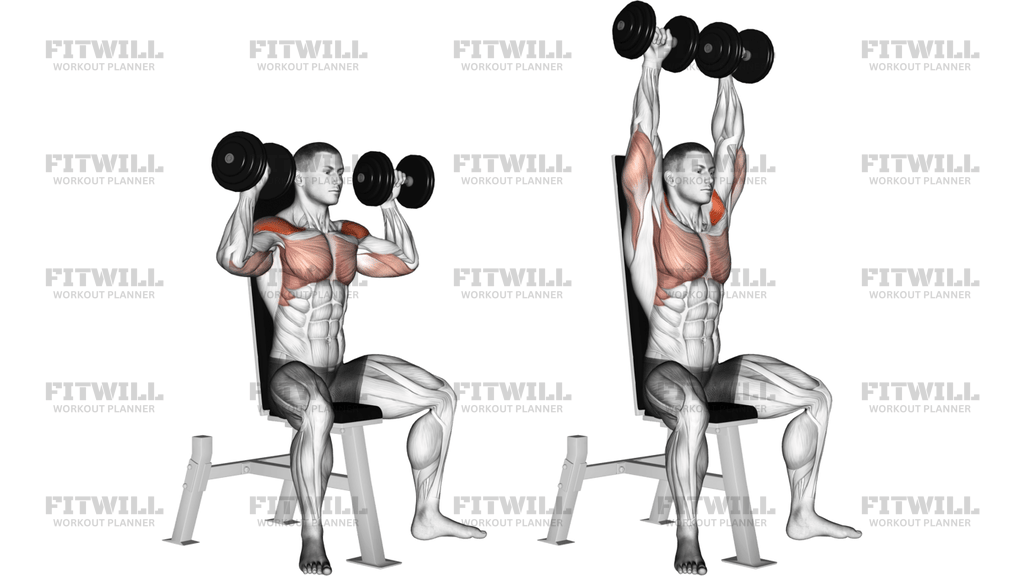
Dumbbell Seated Close-Grip Press is a seated pressing exercise that builds shoulder strength while teaching you to keep both dumbbells moving together in a tight, controlled path. With the back supported and the elbows traveling close to the torso and face line, it places most of the demand on the delts and triceps while the upper back helps keep the torso steady.
The close grip changes the feel of the press compared with a wider dumbbell shoulder press. Instead of letting the elbows flare, you keep the bells almost touching, which encourages a straighter pressing line and makes it easier to stay organized through the shoulders and ribs. That makes Dumbbell Seated Close-Grip Press a useful choice for lifters who want focused shoulder work without a lot of body English.
The setup matters because the seat height, back support, and dumbbell start position all influence how stable the rep feels. Sit tall with your feet planted, set the dumbbells at shoulder height with the palms facing in, and keep the forearms stacked under the weights before you press. When the bells start too wide or the ribs flare early, the movement turns into a sloppy incline press instead of a clean seated shoulder press.
On the way up, drive the dumbbells together overhead until the elbows are straight or nearly straight, then pause without shrugging hard into the neck. Lower the weights under control to the same shoulder-height start, keeping the wrists neutral and the dumbbells close to each other. The goal is smooth repetition after repetition, not bouncing the bells off momentum or turning the set into a back-arched heave.
Dumbbell Seated Close-Grip Press fits well in upper-body strength work, shoulder accessory blocks, or any session where you want direct pressing volume without relying on a barbell. It can be a solid option for beginners if the load is light and the seat allows the feet to stay anchored, but it still rewards disciplined positioning. Treat it as a precision press: stable base, tight grip, controlled descent, and a strong finish overhead.
[ Workout Log & Planner ]
Put your next workout in Fitwill
Keep your plan and training log ready when you are.


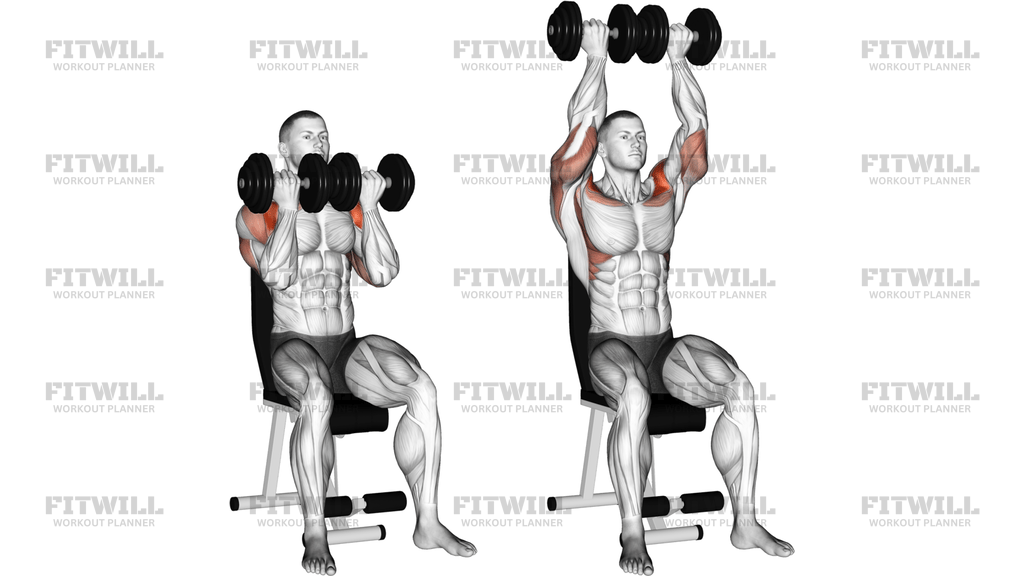
Instructions
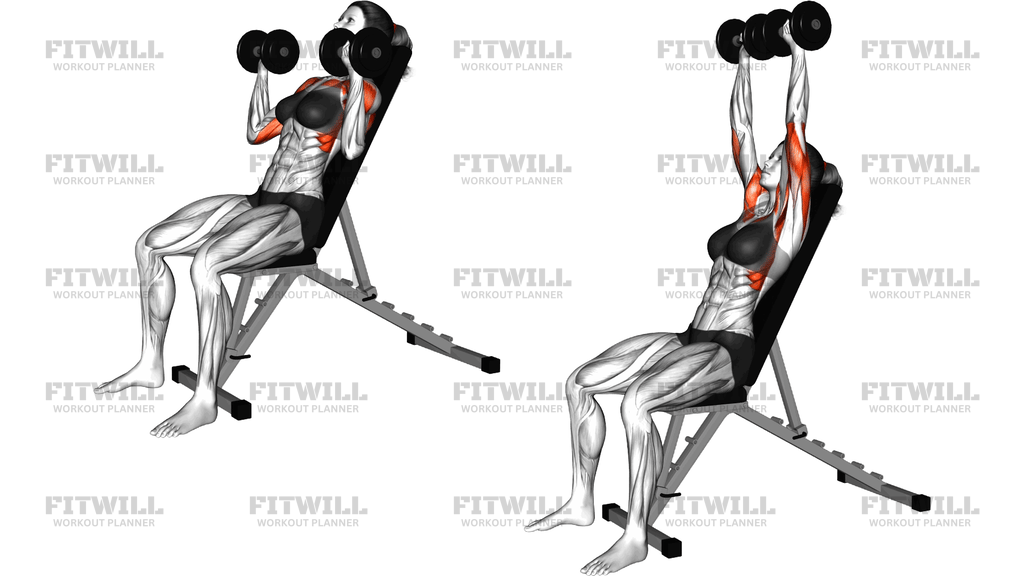
- Sit on a bench with a backrest, plant both feet flat on the floor, and hold a dumbbell in each hand at shoulder height with the palms facing in and the heads of the dumbbells close together.
- Stack each wrist over its elbow, keep your chest tall against the backrest, and set your shoulders down and back without over-arching your lower back.
- Brace your midsection and keep your ribs from flaring as you prepare to press.
- Press both dumbbells upward together in a tight line, keeping the weights close and the elbows tracking just in front of your torso.
- Finish with the dumbbells over the shoulders and arms straight or nearly straight without shrugging into the ears.
- Pause briefly at the top while keeping the dumbbells steady and your neck relaxed.
- Lower the weights slowly back to shoulder height along the same path, resisting the drop on the way down.
- Reset the dumbbells at shoulder level and repeat for the planned number of reps, then lower them to your thighs before standing up.
Tips & Tricks
- Keep the dumbbells almost touching throughout the set so the press stays narrow instead of drifting into a wide shoulder press.
- If the weights bang together overhead, slow the top half of the rep and finish under control instead of forcing a clap.
- Do not let your elbows drift far behind the torso at the start; start with the forearms vertical so the press begins from a strong stack.
- A small amount of upper-back tension is helpful, but a hard shrug usually means the load is too heavy for clean shoulder work.
- Stop the descent at shoulder height rather than dropping lower if the front of the shoulder rolls forward or the chest caves.
- Exhale as the dumbbells rise and inhale on the way down to keep the torso from popping off the bench.
- If your lower back arches hard, bring your feet slightly farther forward and lighten the load until the ribs stay down.
- Choose a weight that lets you pause cleanly at the top; this movement gets sloppy fast when you chase speed.
Frequently Asked Questions
What muscle does Dumbbell Seated Close-Grip Press target most?
The front and middle delts do most of the work, with the triceps helping to finish the press.
Can beginners perform this exercise?
Yes. A light load, a stable bench with back support, and a short controlled range make it beginner-friendly.
How should my dumbbells travel in Dumbbell Seated Close-Grip Press?
They should stay close together and move in a straight overhead line, not drift wide like a standard dumbbell shoulder press.
What is the most common mistake with this press?
Most people flare the ribs and turn it into a back-arched heave. Keep the back supported and the torso quiet.
Should my palms face forward or in?
Palms facing in is the usual setup here. That neutral grip keeps the elbows tucked and matches the close-grip path.
Can I lower the dumbbells below shoulder level?
Only if your shoulders stay stacked and pain-free. For most lifters, stopping at shoulder height keeps the motion cleaner.
Is Dumbbell Seated Close-Grip Press a chest exercise or a shoulder exercise?
It is mainly a shoulder press. The chest helps a little, but the setup is designed to bias the delts and triceps.
What can I use instead of this exercise?
A seated neutral-grip dumbbell shoulder press or a machine shoulder press is the closest substitute if you need more stability.