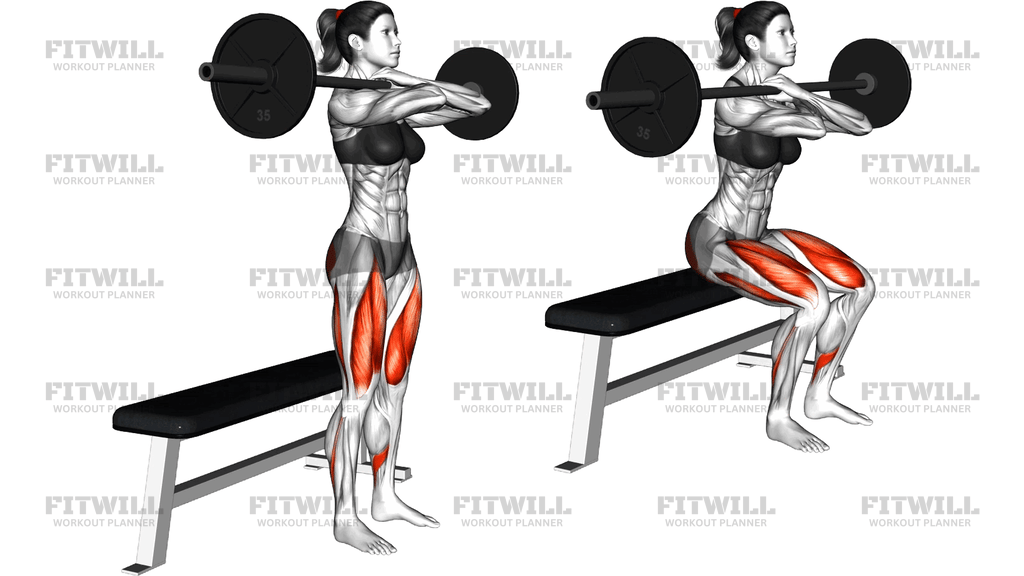
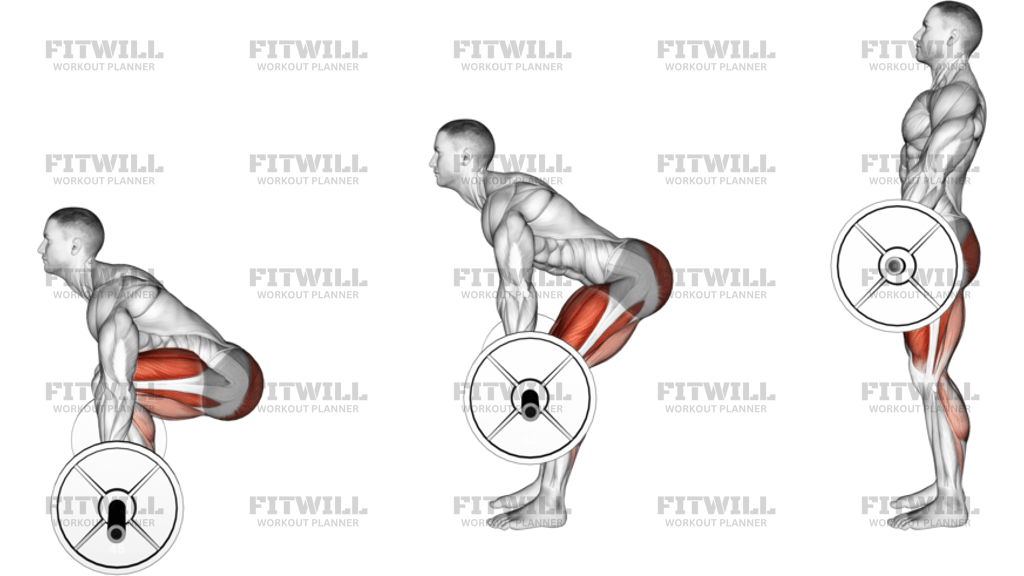
Landmine Front Squat
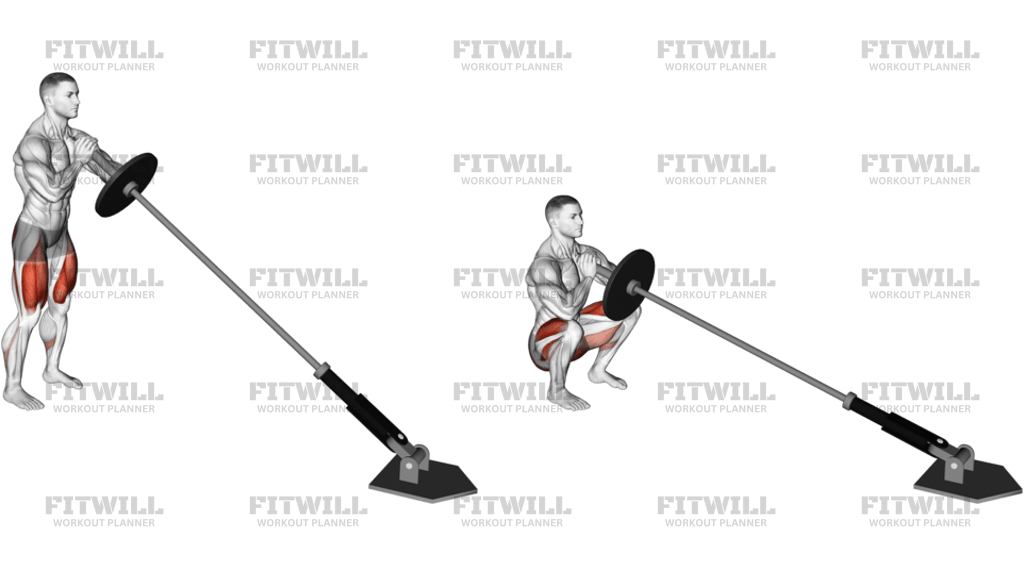
Landmine Front Squat is a front-loaded squat using a barbell anchored in a landmine attachment. The fixed bar path makes it easier to stay upright while still training the legs, glutes, core, and upper back through a deep squat pattern. It is useful when you want a squat that feels more guided than a free barbell front squat, but still demands good brace, knee tracking, and controlled depth.
The setup matters because the bar starts in front of your chest and the path of the weight pulls you forward if you relax. Stand with your feet about shoulder width apart, hold the sleeve or loaded end close to your chest, and keep your elbows lifted so the torso stays tall. In the lowering phase, the hips move back and down while the knees travel forward in line with the toes. The fixed angle of the bar lets you sit between your legs with less balance demand than a straight bar squat, but you still need strong midfoot pressure and a steady torso.
This exercise strongly challenges the glutes and quadriceps through knee and hip extension, while the hamstrings, core, and spinal erectors help stabilize the descent and drive back up. Because the bar is anchored, the rep feels smoother than a standard front squat, and many lifters can use it to build squat mechanics, leg strength, and trunk control without needing a full rack setup. It is also a practical option for home gyms or accessory work when front-rack mobility is limited.
Perform each rep by inhaling before the descent, bracing through the abdomen and ribs, and lowering until the thighs reach a comfortable depth without rounding the lower back or collapsing the chest. At the bottom, keep the heels down and push the floor away as you stand. The bar should travel on the same angled line every rep, not drift forward or swing away from the chest. Exhale near the top, reset your stance if needed, and keep the reps smooth rather than bouncy.
Use Landmine Front Squat as a strength builder, a leg accessory, or a squat-pattern option when you want more support than a free barbell but still want real loading. It works well for beginners learning squat mechanics, for advanced lifters adding volume without as much shoulder stress, and for anyone who needs a more upright squat pattern with clear control over tempo and depth.
[ Workout Log & Planner ]
Put your next workout in Fitwill
Keep your plan and training log ready when you are.


Instructions
- Place one end of the barbell in the landmine anchor and load the free sleeve if needed.
- Stand facing the bar with your feet about shoulder width apart and the bar end centered in front of your chest.
- Cup the sleeve or handle close to your upper chest with both hands and lift your elbows to keep your torso tall.
- Set your feet flat, brace your trunk, and keep your ribs stacked over your pelvis before you descend.
- Sit your hips down and back as your knees bend forward in line with your toes, letting the bar travel on its angled path.
- Lower until your thighs reach a comfortable depth without losing heel contact or letting your chest collapse.
- Drive through the midfoot and heels to stand back up, keeping the bar close and the elbows lifted.
- Exhale near the top, then reset your stance and brace before the next repetition.
- Finish the set by returning the bar to the start position with control and clearing the landmine area safely.
Tips & Tricks
- Keep the bar end close to your sternum; if it drifts forward, your torso will tip and the squat will feel unstable.
- Think about pointing your elbows forward and up so the front-loaded position stays active through the whole rep.
- Let your knees travel forward naturally instead of forcing them to stay vertical; the landmine angle is designed for a more upright squat.
- Use a stance that lets your heels stay down and your hips drop between your legs without pinching the knees.
- Pause for a beat at the bottom if you tend to bounce out of the squat or lose brace on the way up.
- Choose a load that lets you keep the bar path smooth; the anchor removes some balance demands, but heavy cheating is still obvious.
- Keep your chin neutral and avoid craning your neck toward the bar.
- If your upper back rounds, reduce the load and shorten the depth until you can keep the chest tall.
- Treat each rep like a front squat, not a hinge: the descent should be controlled and the drive should come from the legs.
Frequently Asked Questions
What muscles does a landmine front squat work?
It primarily trains the glutes and legs, with the core, hamstrings, and lower back helping to stabilize the torso and support the squat.
Why keep the bar end close to my chest?
Holding the sleeve or handle close to the chest keeps the load centered and helps you stay upright instead of folding forward.
Is this easier than a regular front squat?
Usually yes. The anchored bar gives you a guided path, so the exercise is often easier on balance and shoulder position while still being demanding for the legs and trunk.
How deep should I squat in this movement?
Go as deep as you can while keeping your heels down, knees tracking with the toes, and your lower back neutral.
What is the most common mistake with the landmine setup?
Letting the bar drift too far away from the chest is the biggest issue, because it increases forward pull and makes the squat harder to control.
Can beginners use this exercise?
Yes. The fixed bar path makes it a useful squat variation for beginners, especially when front-rack mobility or balance is a limitation.
Should I feel this in my quads or glutes more?
Both should work, but a more upright torso and deeper knee bend usually make the quads and glutes share the load in a balanced way.
Can I use this instead of a barbell front squat?
Yes, especially for accessory work or when you want a front-loaded squat pattern with less setup complexity and less shoulder stress.
How should I breathe during each rep?
Take a breath and brace before you descend, hold tension through the bottom, and exhale as you finish the stand.