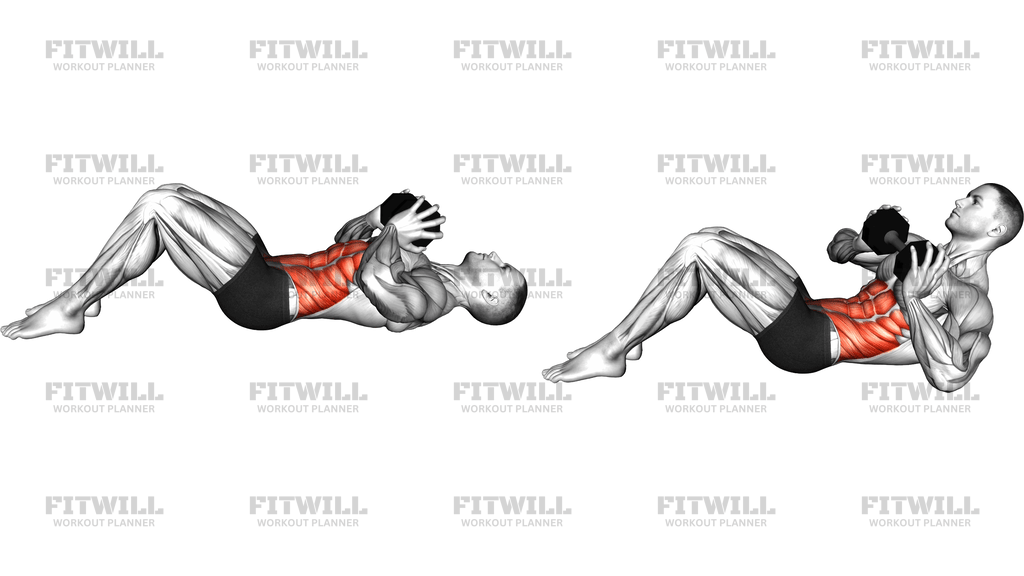
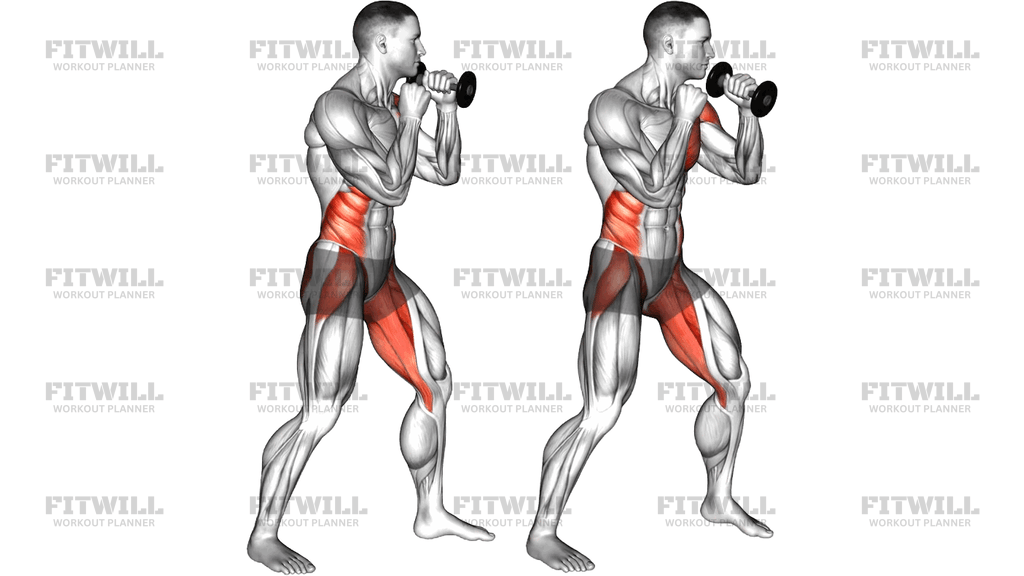
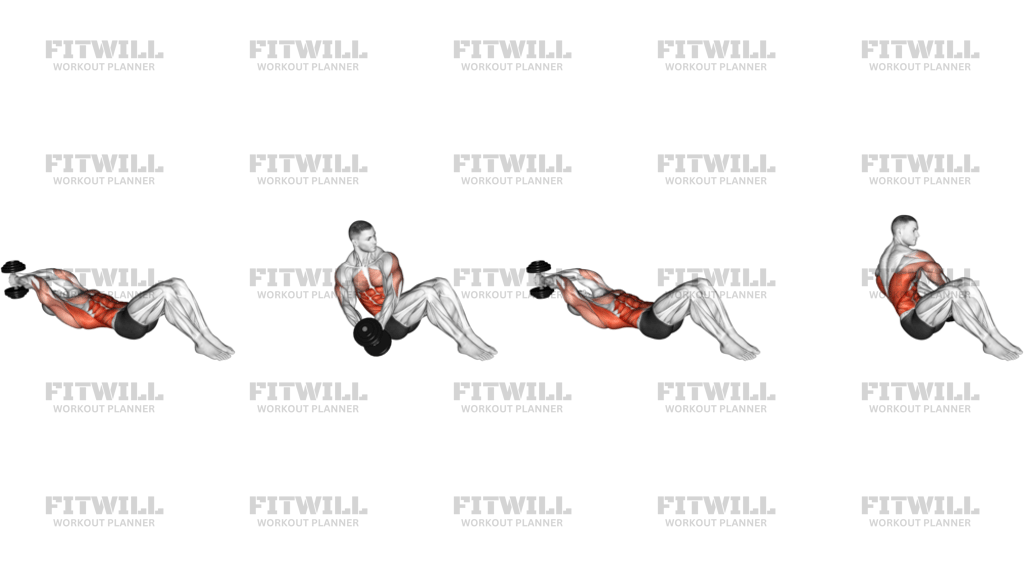
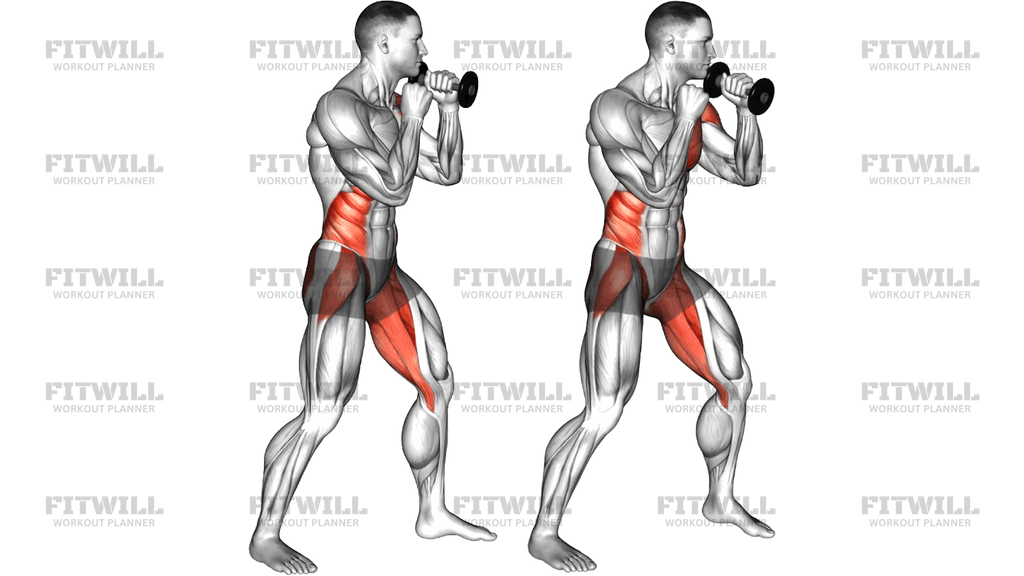
Dumbbell V Up Version 2
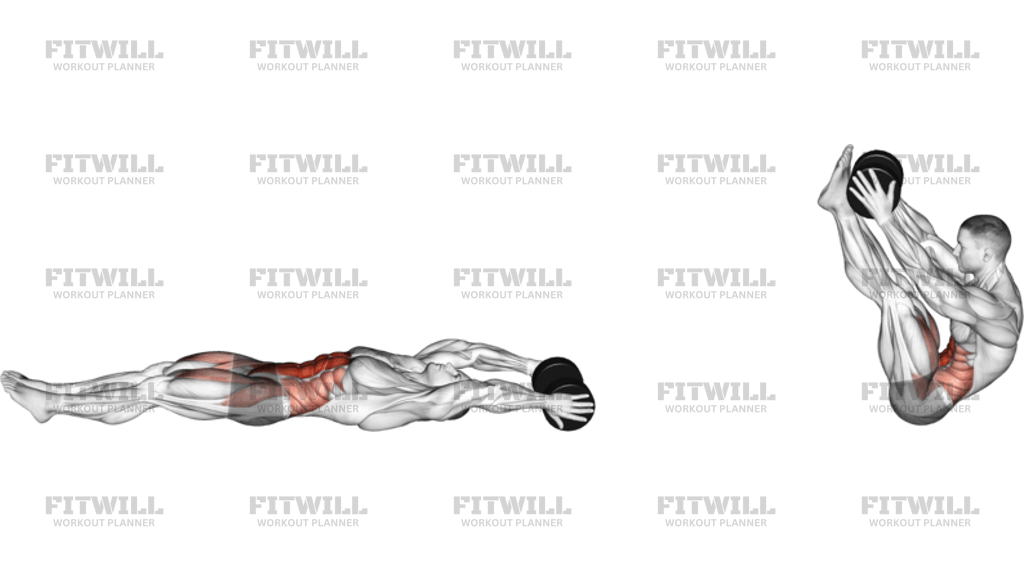
Dumbbell V Up Version 2 is a floor-based core exercise that combines a straight-leg V-up with a dumbbell held in both hands. The movement asks you to fold the torso and legs together while keeping the load centered, so the rep becomes a test of trunk control rather than a fast sit-up. The dumbbell adds enough resistance to make the abdominal brace matter, but the quality of the position still matters more than the weight.
The main target is the rectus abdominis, with the obliques, hip flexors, and deep core muscles helping to keep the shape of the rep organized. In practical terms, the exercise should feel like a controlled compression from ribs to pelvis. If the hips snap open, the neck pulls forward, or the lower back loses contact with the floor too early, the dumbbell is probably too heavy or the range is too large.
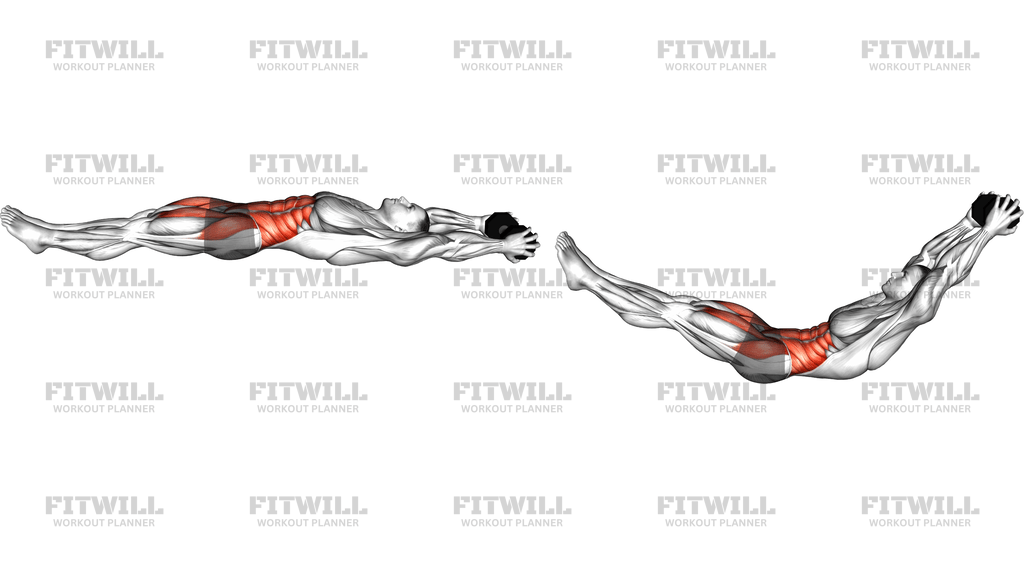
Setup is critical because the floor position dictates how clean the first rep will be. Lie on a mat with the legs long and together, hold the dumbbell in both hands, and start with the arms extended so the load is stable and centered. Keep the ribs down, lightly tuck the pelvis, and press the low back toward the floor before you begin. That starting shape gives you a consistent path for every rep instead of a scattered curl.
As you lift, bring the shoulders and straight legs up together and guide the dumbbell toward the shins or feet. The best version of the movement looks compact and deliberate, with the torso and legs closing like a hinge instead of a swing. Pause briefly at the top if you can hold the V position without shaking, then lower slowly until your shoulders and heels are close to the floor again. A smooth exhale on the way up and a controlled inhale on the way down help keep the trunk from opening too early.
This exercise fits well in abs sessions, accessory blocks, or conditioning work when you want a loaded core drill that still rewards precision. It is also easy to scale: shorten the leg raise, bend the knees slightly, or reduce the dumbbell weight if the low back arches or the hip flexors take over. Done well, Dumbbell V Up Version 2 builds stronger abdominal flexion, better hip control, and cleaner coordination between the upper and lower body.
[ Workout Log & Planner ]
Put your next workout in Fitwill
Keep your plan and training log ready when you are.


Instructions
- Lie on a mat with your legs straight and together, then hold one dumbbell with both hands and extend your arms overhead.
- Press your low back toward the floor, keep your ribs down, and brace before the first rep starts.
- Exhale as you lift your shoulders and straight legs together, bringing the dumbbell toward your shins or feet.
- Keep the knees as straight as your hamstrings allow and let the torso and legs rise as one controlled fold.
- Pause briefly in the top V position without shrugging your shoulders or yanking the dumbbell forward.
- Lower the torso and legs together under control until your shoulder blades and heels are close to the floor.
- Reset the brace at the bottom so the next rep starts from the same long, quiet position.
- Repeat for the planned number of repetitions without using momentum to finish the set.
Tips & Tricks
- Pick a dumbbell you can keep centered; if your wrists wobble, the load is too heavy for this variation.
- Keep the dumbbell in line with your sternum and shins instead of reaching it all over the place.
- If your lower back arches, shorten the leg lift before you add more weight or more reps.
- Think about folding your ribs toward your pelvis, not just throwing your hands toward your feet.
- Let the exhale start before the hardest part of the lift so the torso can curl without forcing your neck.
- Keep your chin slightly tucked and your eyes up to avoid pulling the head forward.
- A tiny knee bend is better than a sloppy swing if your hamstrings limit the range.
- Lower slowly enough that you can feel the abs resist the opening of the V on every rep.
Frequently Asked Questions
What muscle does Dumbbell V up (VERSION 2) target most?
The rectus abdominis is the main target, with the obliques and hip flexors helping to complete the fold.
Can beginners perform this exercise?
Yes, but beginners should start with a very light dumbbell or no load at all until they can keep the lower back quiet.
Where should the dumbbell travel during the rep?
Keep it moving in a straight path from overhead toward the shins or feet as the torso and legs fold together.
What is a common mistake with the V-up shape?
Most breakdowns come from swinging the legs or rounding the neck instead of controlling the fold from the abs.
Should my knees stay straight?
Mostly yes, but a slight bend is fine if it helps you keep the movement controlled and protect your hamstrings.
Is this more of an abs exercise or a hip flexor exercise?
It should feel like an abs-driven core fold, even though the hip flexors help lift the legs.
How can I make the movement easier?
Use a lighter dumbbell, shorten the range, or bend the knees slightly so you can keep the rep smooth.
When should I stop the set?
Stop when the dumbbell starts drifting, your neck tightens, or your low back no longer stays controlled on the floor.